Port McNeill to the Muirhead Islands

The recent weather pattern seems to be stuck on a permanent playback loop: low clouds in the morning, gradually giving way to blue skies and increasing winds in the afternoon.

Knowing the routine, we timed our departure from Port McNeill to reach Stuart Narrows at slack water. The narrows are the gateway to Drury Inlet, and with calm water and light winds, the trip across Queen Charlotte Strait could hardly have been more pleasant.

Once through the narrows, Drury immediately offered up a surprise.

We have seen hundreds of humpback whales during our years cruising the Pacific Northwest, but never one inside Drury Inlet. Today changed that. About halfway down the inlet, we spotted a humpback feeding.

Another first.

It was a wonderful reminder that no matter how many years we spend cruising these waters—or how familiar we think a place has become—there is always something new waiting around the next corner.

We were hoping the same good fortune might extend to our anchorage.

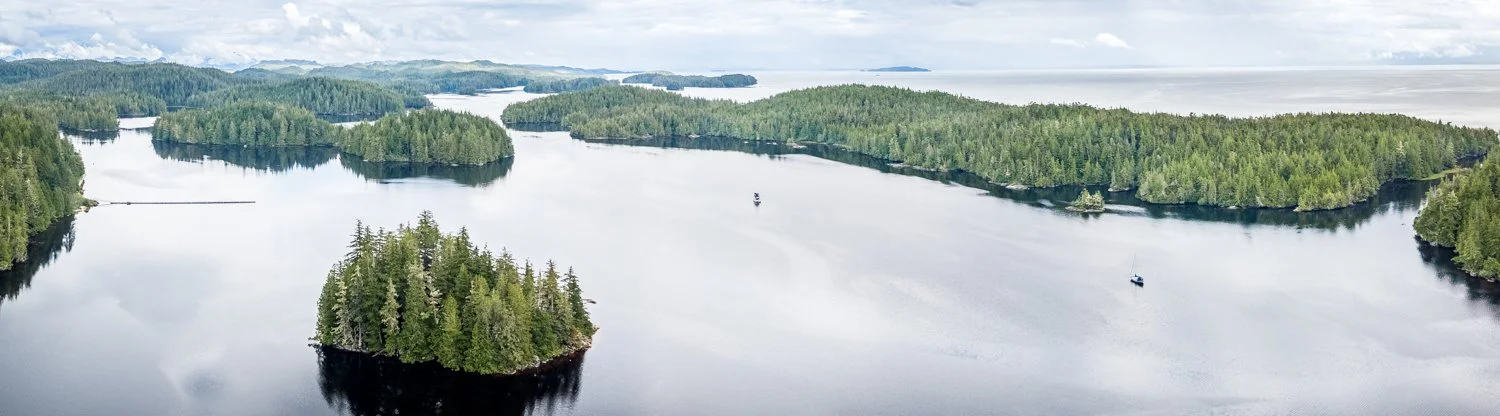
We have a favorite spot tucked among the Muirhead Islands, a tiny one-boat hole that feels as though it was designed specifically for OceanFlyer. Karen had spotted four boats in the area on AIS the previous day, so we weren't particularly optimistic about finding it vacant.

Then, as we entered Drury, we passed two sailboats heading out through Stuart Narrows on the slack.

Maybe.

Farther in, two of the remaining AIS targets turned out to be rafted together in the cove adjacent to ours.

Maybe indeed.

As we rounded the final corner, there it was—our little cove, completely empty.

Some days everything simply falls into place.

We dropped the hook in 28 feet on an 8-foot tide, as reported at Jennis Bay, almost exactly where we had anchored the year before. As we finished setting the anchor, the clouds began breaking apart and patches of brilliant blue appeared overhead.
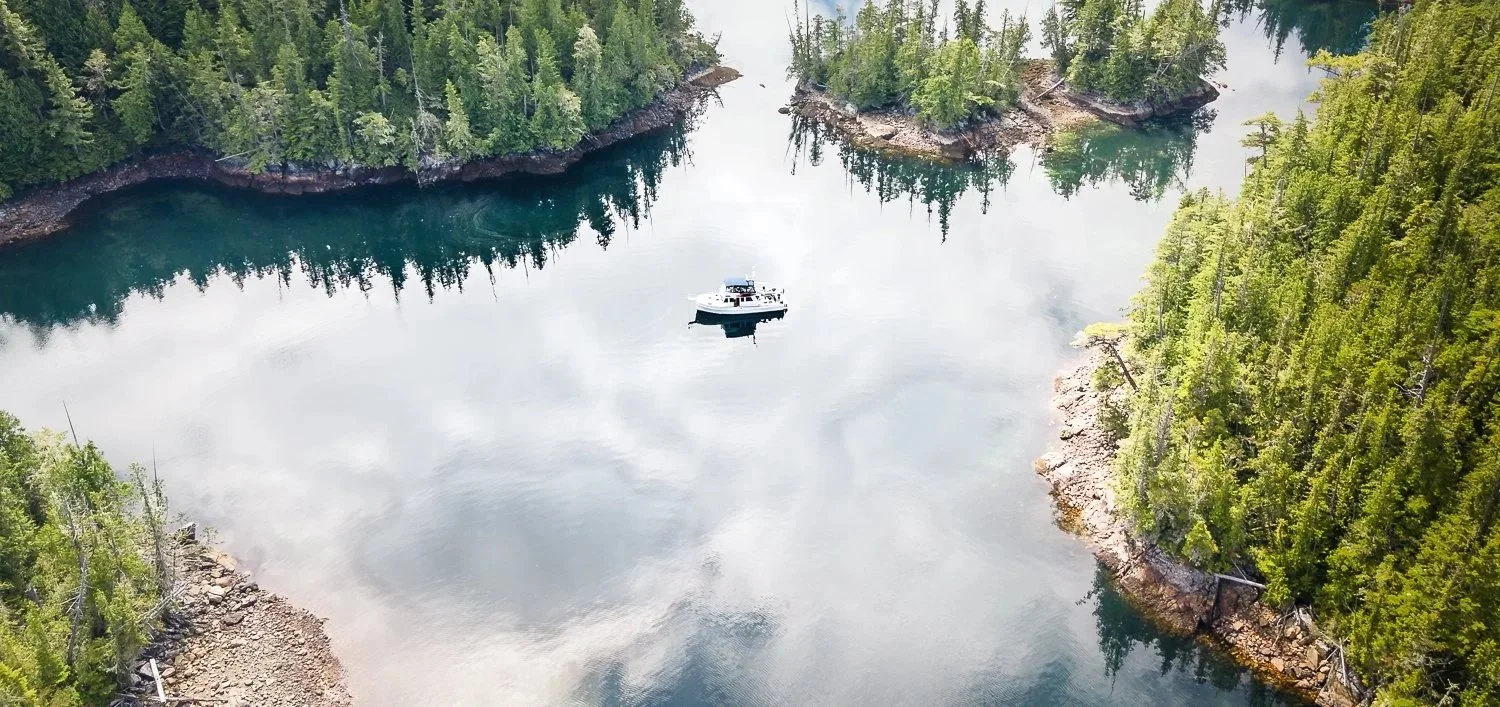
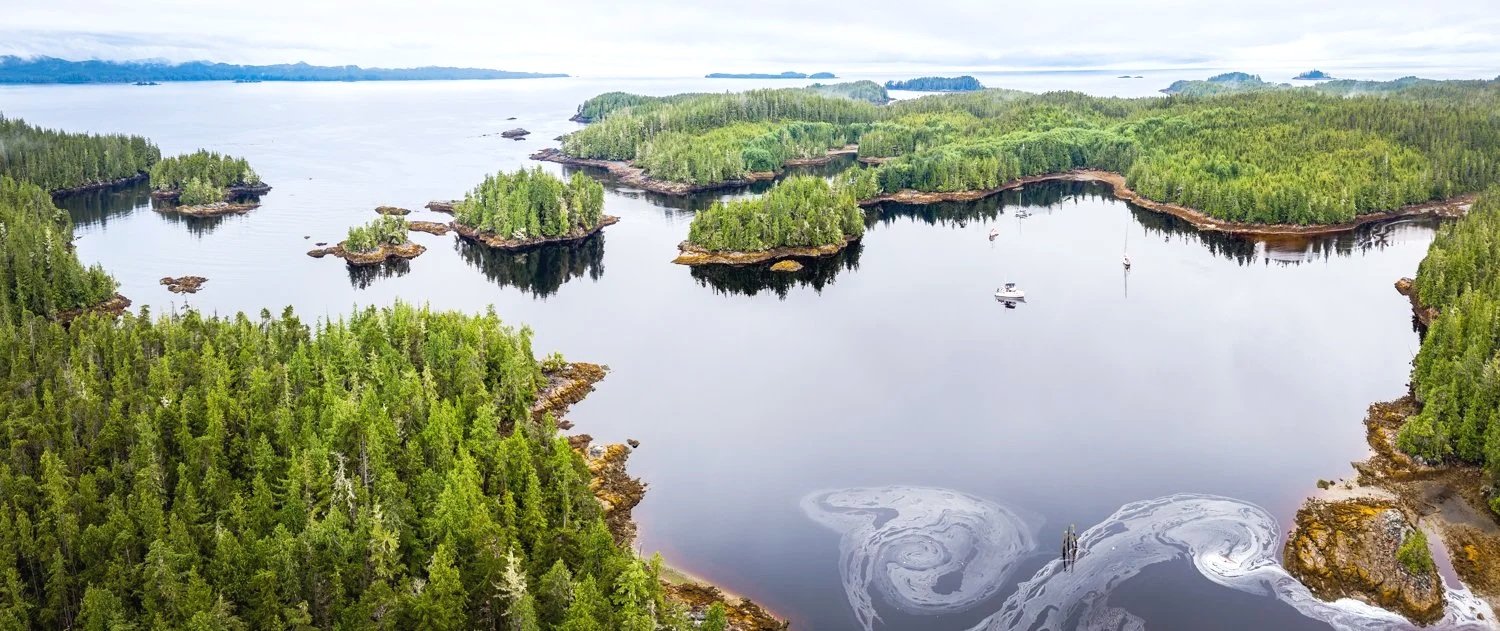
our favoirte spot in the muirheads
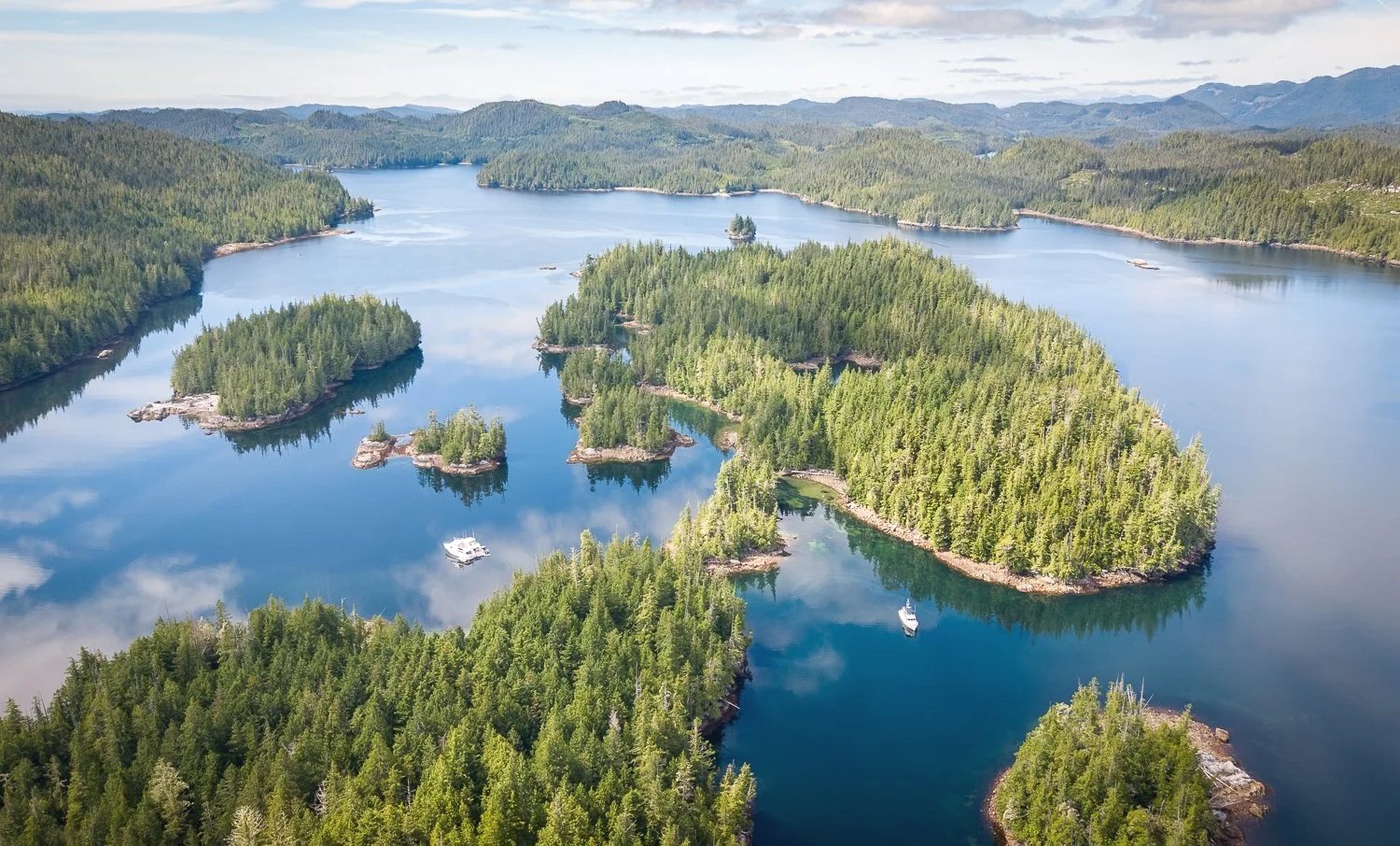
there are many great spots to drop the anchor in the muirheads

We had our favorite anchorage. The sun was coming out. Now we could turn our optimism toward another important matter: prawns.

Drury has historically been very good to us when it comes to prawning, and this year proved better than average. The weather followed suit, with calm mornings and sunshine breaking through most afternoons. It was shaping up to be one of those stays where there was very little incentive to move on.

Then came another first.

Across from our anchorage, on the northeast shore, we spotted a black bear working the beach. Then there were two. By our third day, we had seen three bears, each independently working adjacent stretches of shoreline.

We had heard recent reports of bears in Drury, but despite all our previous visits, we had never seen one here.

Drury itself continues to change. Logging has a long history in the inlet, and when we first began coming here, much of the activity had subsided and the old scars were slowly disappearing back into the forest. In recent years, logging has returned. Jennis Bay now supports a sizable camp, and evidence of harvesting can be seen throughout the inlet. It isn't always the most attractive addition to the landscape, but forestry remains an important part of the local economy and part of Drury's long history.
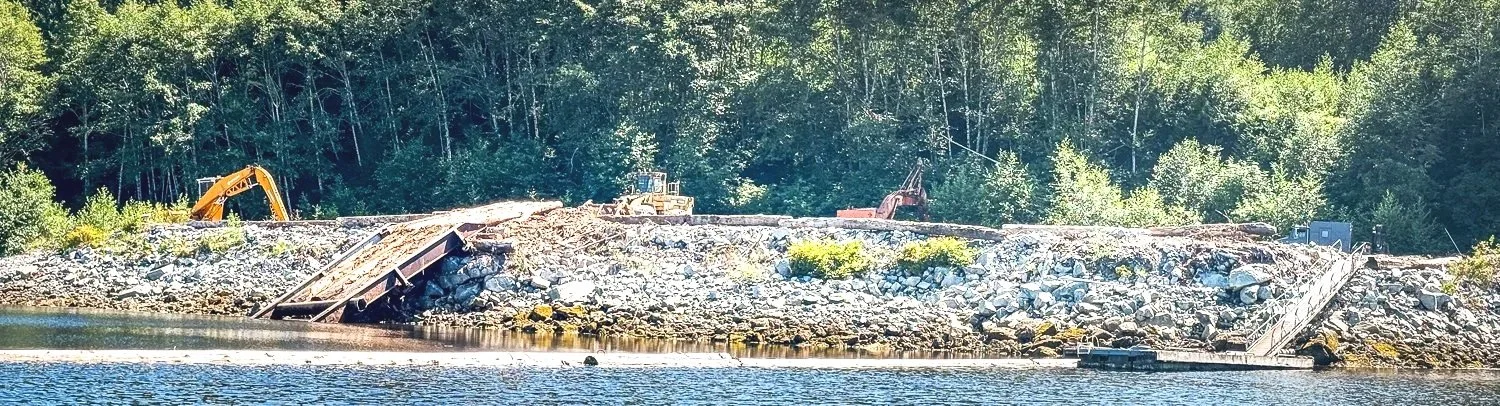
active log dump in druy inlet

Our own activities were decidedly more recreational.

With the prawn pots producing nicely, we invited the crew from M/V Voyager over to share the bounty. They are a delightful couple from Kentucky, relatively new to cruising this part of the world, and listening to them recount their adventures reminded us of our own first years exploring this coast.

After so many seasons, we sometimes wonder whether we have lost a little of the wide-eyed amazement that accompanied those early trips. Places that once seemed impossibly remote are now familiar names on the chart. Passages that once felt like expeditions have become old friends.

But enthusiasm is wonderfully contagious.

Listening to the Voyager crew describe what they had seen and discovered, their excitement impossible to miss, reminded us just how extraordinary this place really is. We found ourselves enjoying their discoveries almost as much as they were.

Perhaps that helped inspire our next adventure.

It had been many years since we had traveled all the way back into Actaeon Sound, so we climbed into the dinghy and set off on a 16-mile round trip.

There is plenty to explore along the way, including remnants of old logging operations slowly being reclaimed by the forest. To our delight, the old dock at the end of a logging road just past England Point was still there.
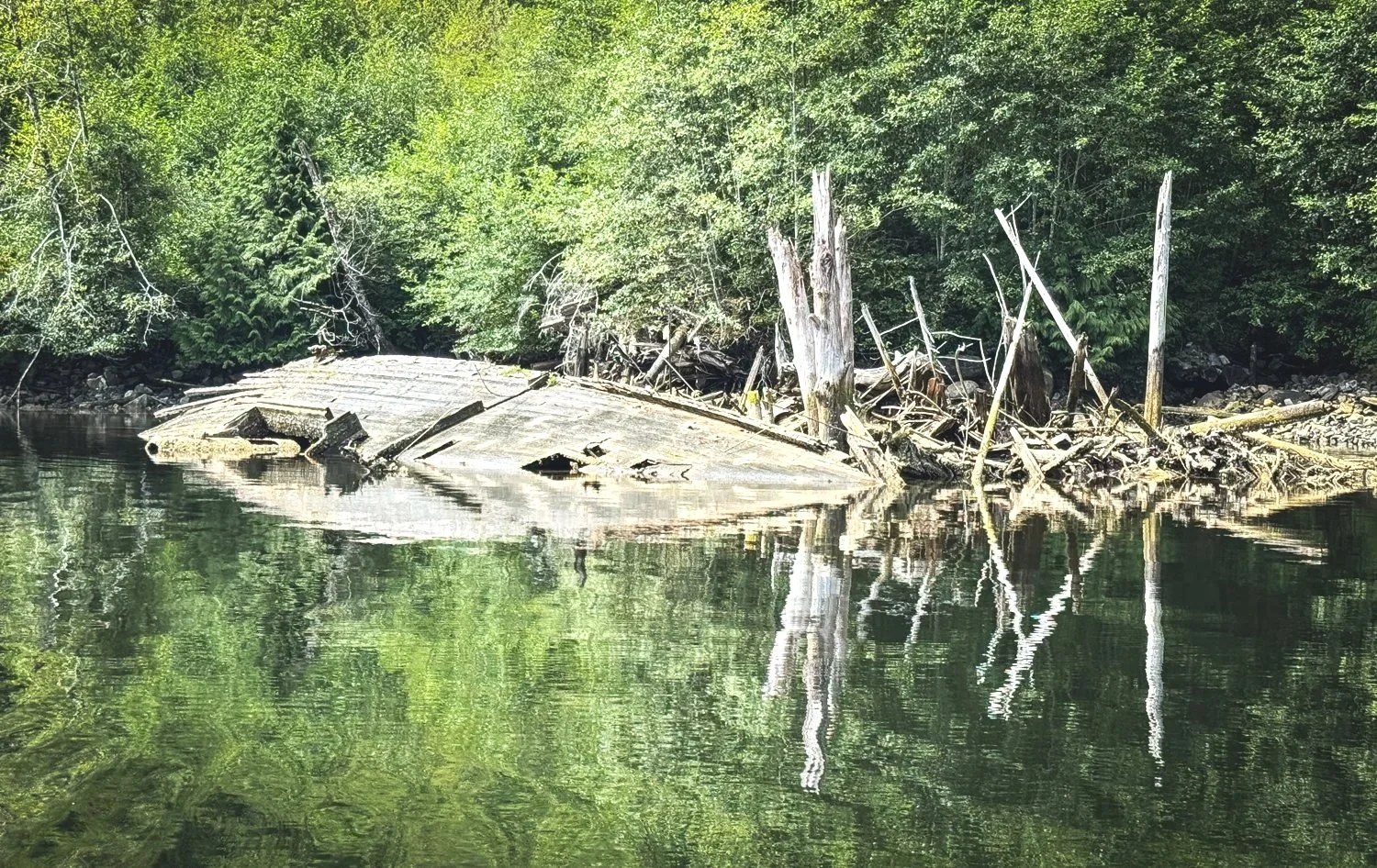
abandoned logging camp in Actaeon Sound

We tied up and went ashore to stretch our legs. The road was considerably more overgrown than we remembered, and the vegetation eventually discouraged us from going very far. Still, it was worth the stop. From the old logging road, the views back down Actaeon Sound are spectacular.
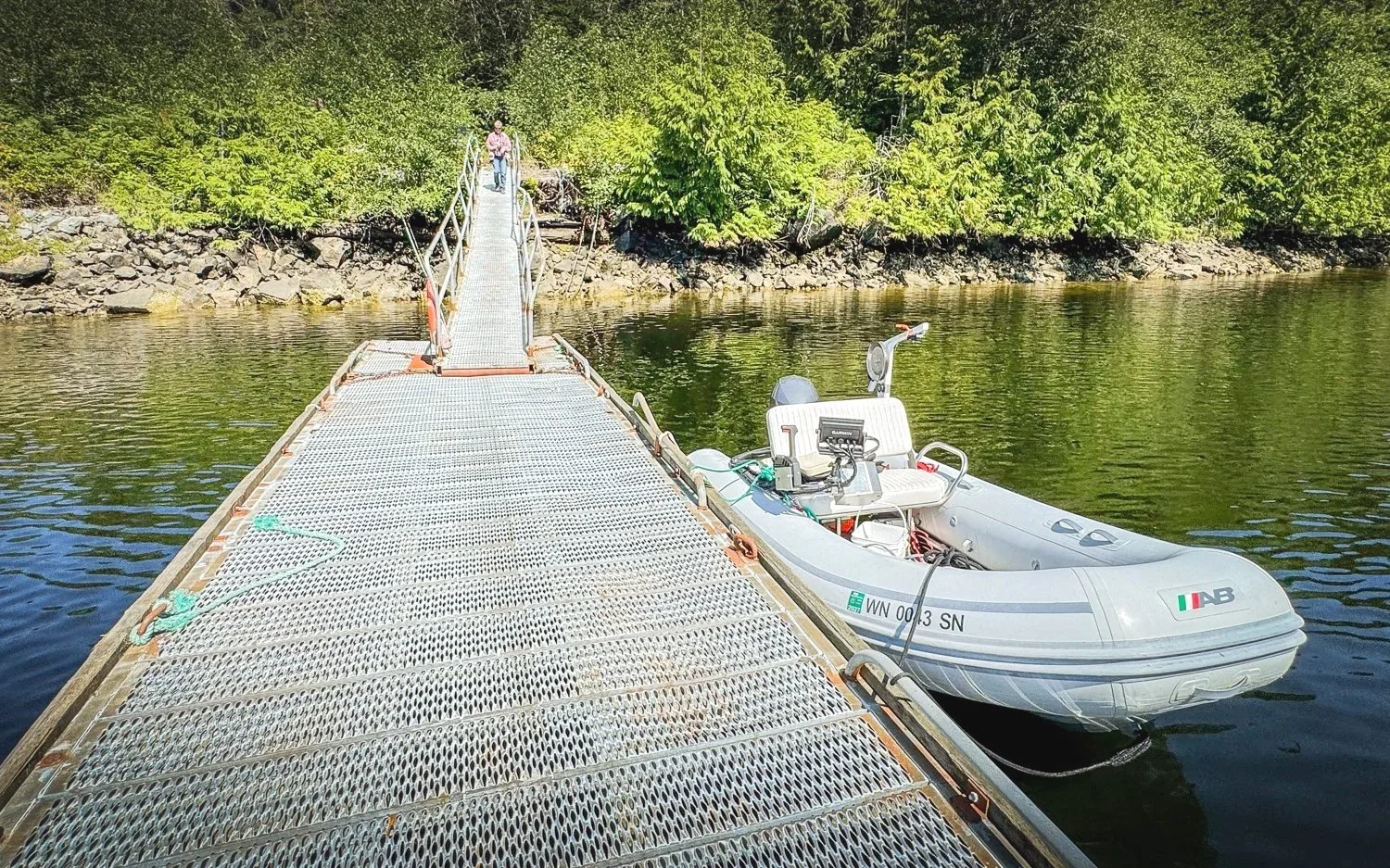
old logging dock provides a welcomed walk on the land
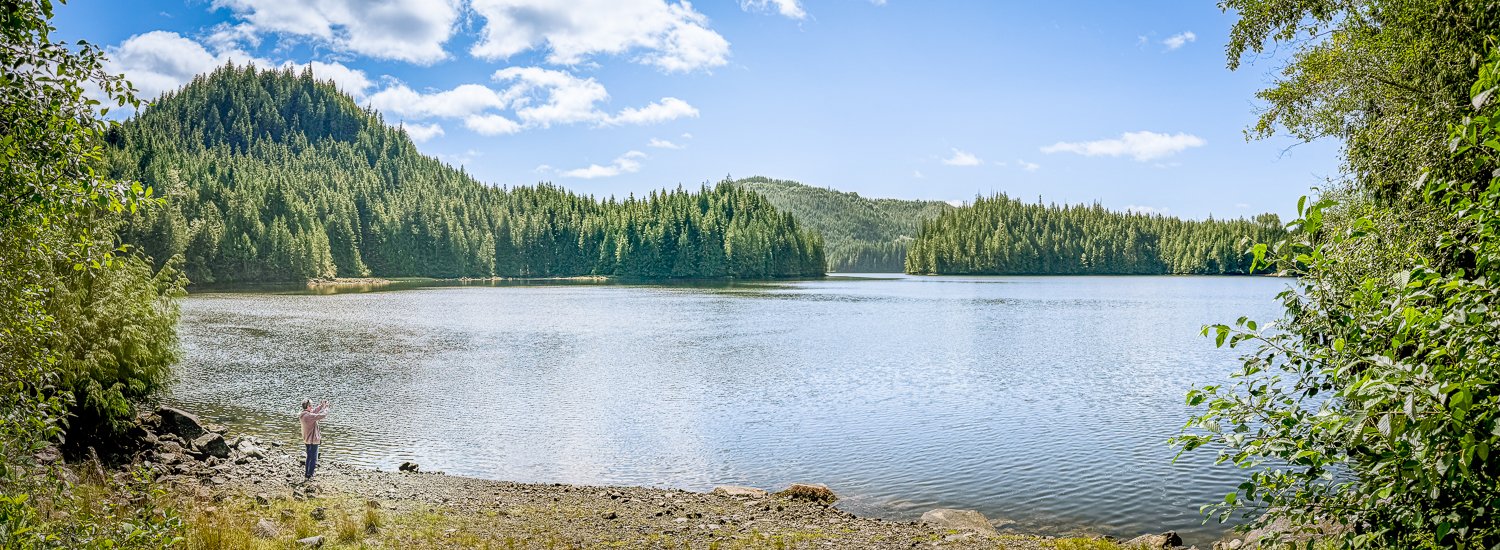
the view back down Actaeon Sound

At the head of the sound awaited one more surprise: Tsibass Lagoon.

Every previous time we visited, the entrance has been a mass of seething whitewater. We headed up expecting to take another look at the spectacle and then turn around.

Instead, we found the entrance almost calm.

That changed everything.

We have a hard time passing up an opportunity to poke our bow into a lagoon, and this one had been taunting us for years. With only about a knot of current running through the entrance, we carefully pushed through.

And just like that, after all these years, we could finally say we had been inside Tsibass Lagoon.

We didn't linger.

The current was already beginning to build behind us, and the previously quiet water was starting to boil. Curiosity satisfied, we turned around and made our exit while conditions were still manageable.

Based on the depths we observed in the rocky entrance, I would only consider taking OceanFlyer through at the maximum tide and absolute slack water. The pass would need to be navigated at dead slow speed to carefully pick a route through the rocks, and that is not something I would want to attempt with any meaningful current pushing the boat.

The dinghy, however, had finally allowed us to satisfy a curiosity that had been lingering for years.

Back at OceanFlyer, another successful haul of the prawn pots ensured that dinner would begin with fresh-caught prawns.
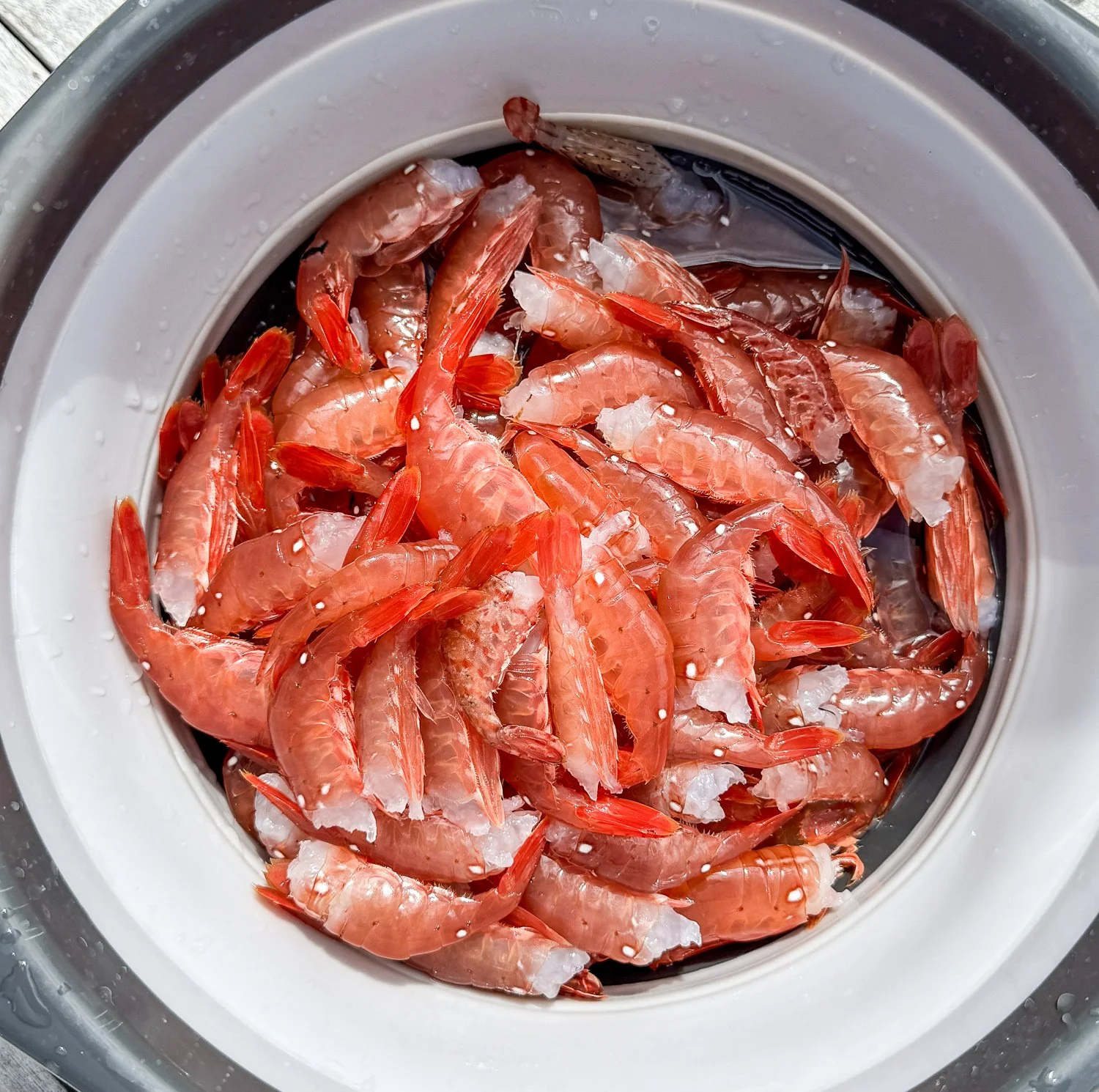
these are the parts we keep
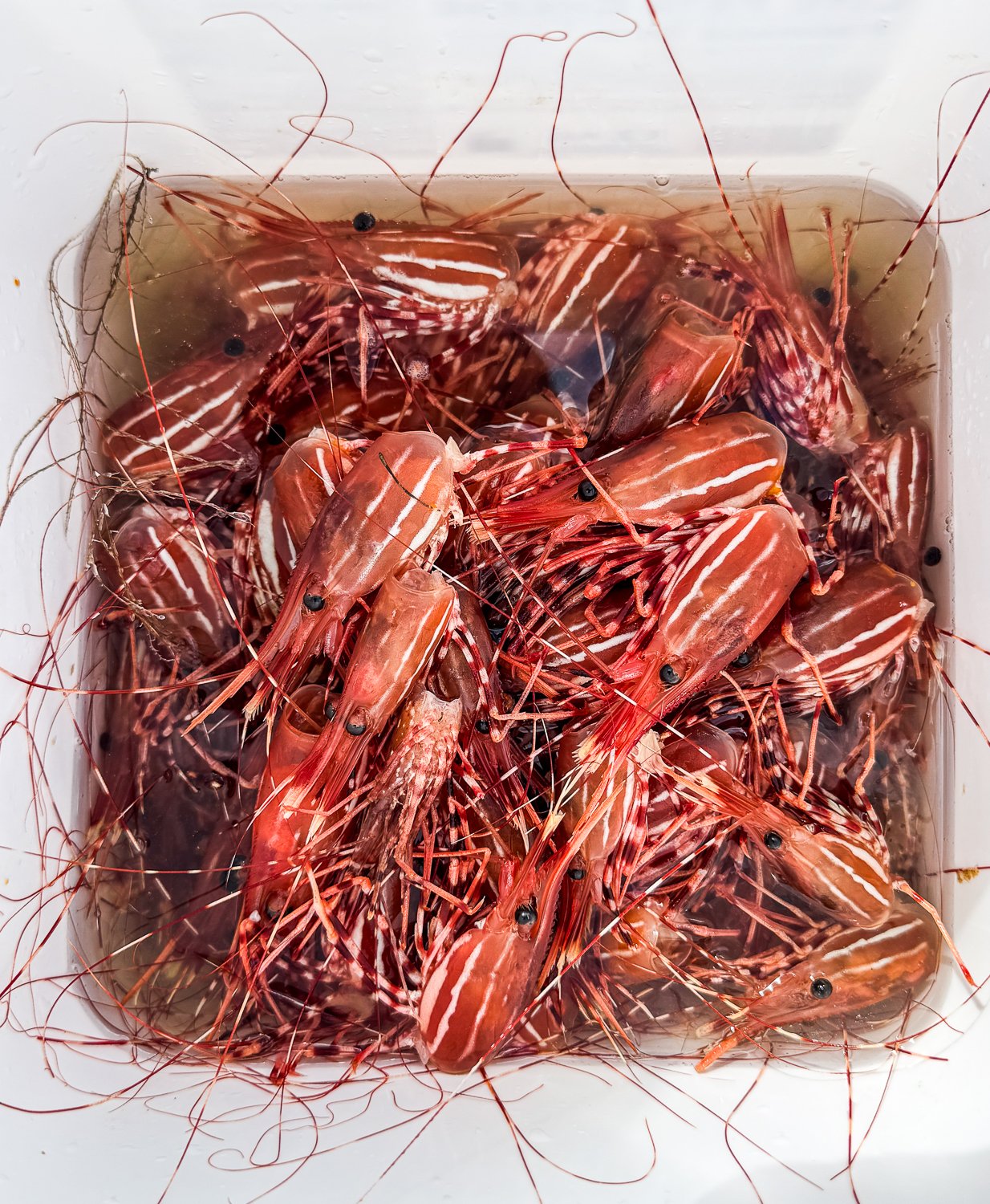
these are the parts that we return to the ocean

Humpbacks where we had never seen them before. Three bears working the shoreline. Our favorite one-boat anchorage waiting empty for us. A return to Actaeon Sound. Finally slipping through the entrance into Tsibass Lagoon. Plenty of prawns. And, perhaps best of all, the opportunity to see this coast again through the eyes of people discovering it for the first time.

We came to the Muirheads expecting to revisit an old favorite.

Instead, over three wonderful days, an old favorite managed to feel new again.

And that may have been the greatest delight of all.
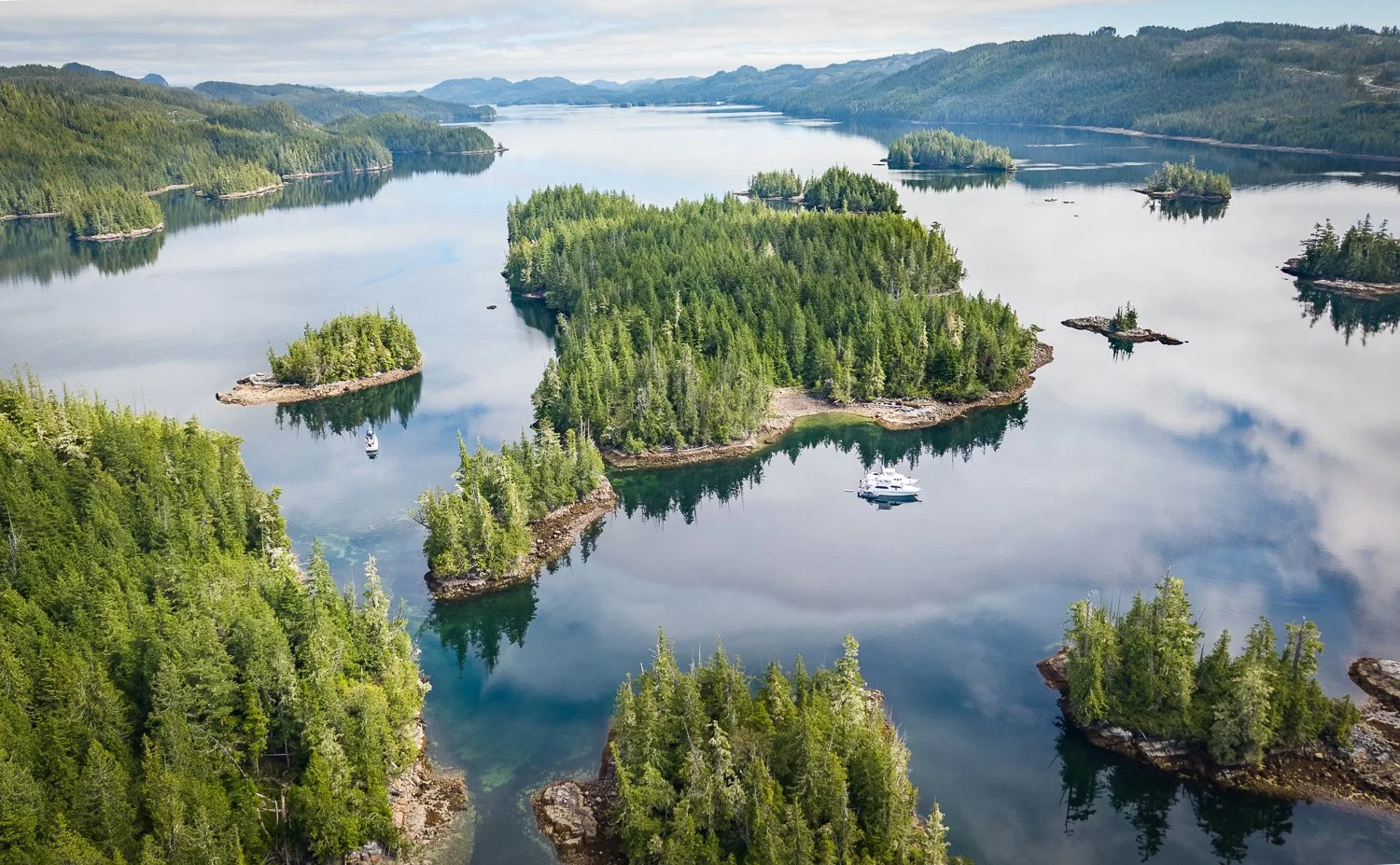
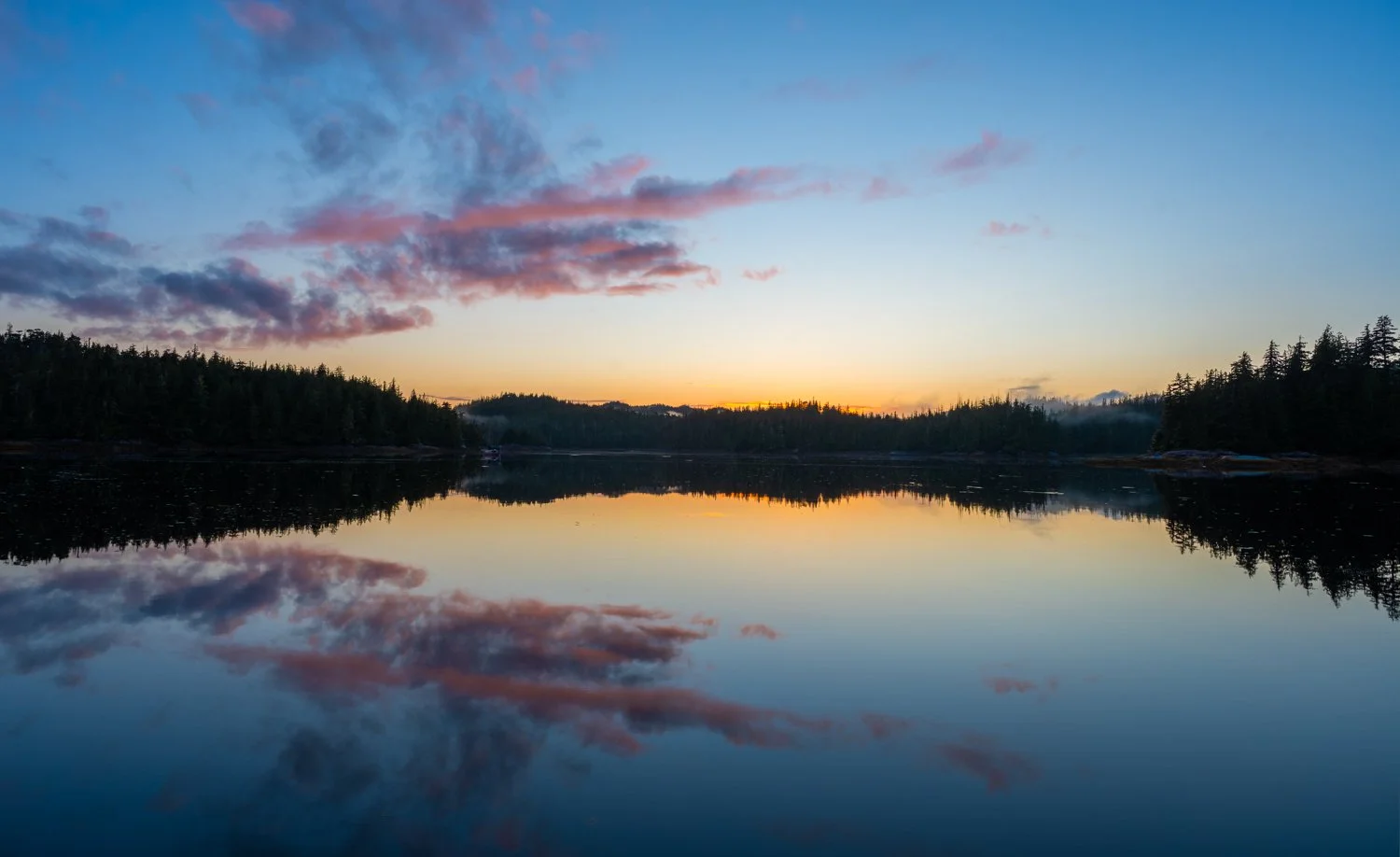
looking east down drury sosund from the muirheads
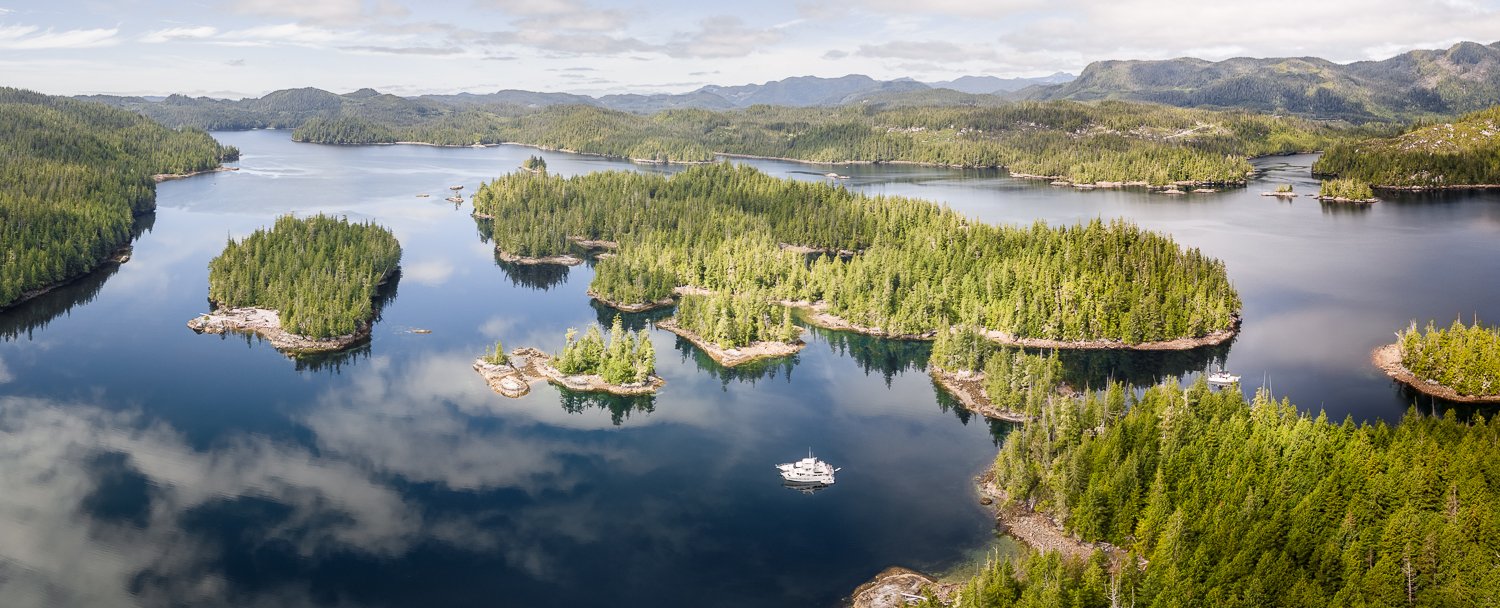
from the muirheads looking west into sutherland bay
Blunden Harbour to Sointula Harbour

We left Blunden Harbour unsure whether we would actually make Sointula our destination for the day.

That was not an ominous prediction—just the reality of visiting a busy, first-come, first-served harbor. Sointula is home to a sizable fishing fleet, and when the boats are in port rather than out working, finding space for a cruising boat can be difficult.

A cruising friend had secured the last available spot only a few days earlier, and even then had barely managed to squeeze in.

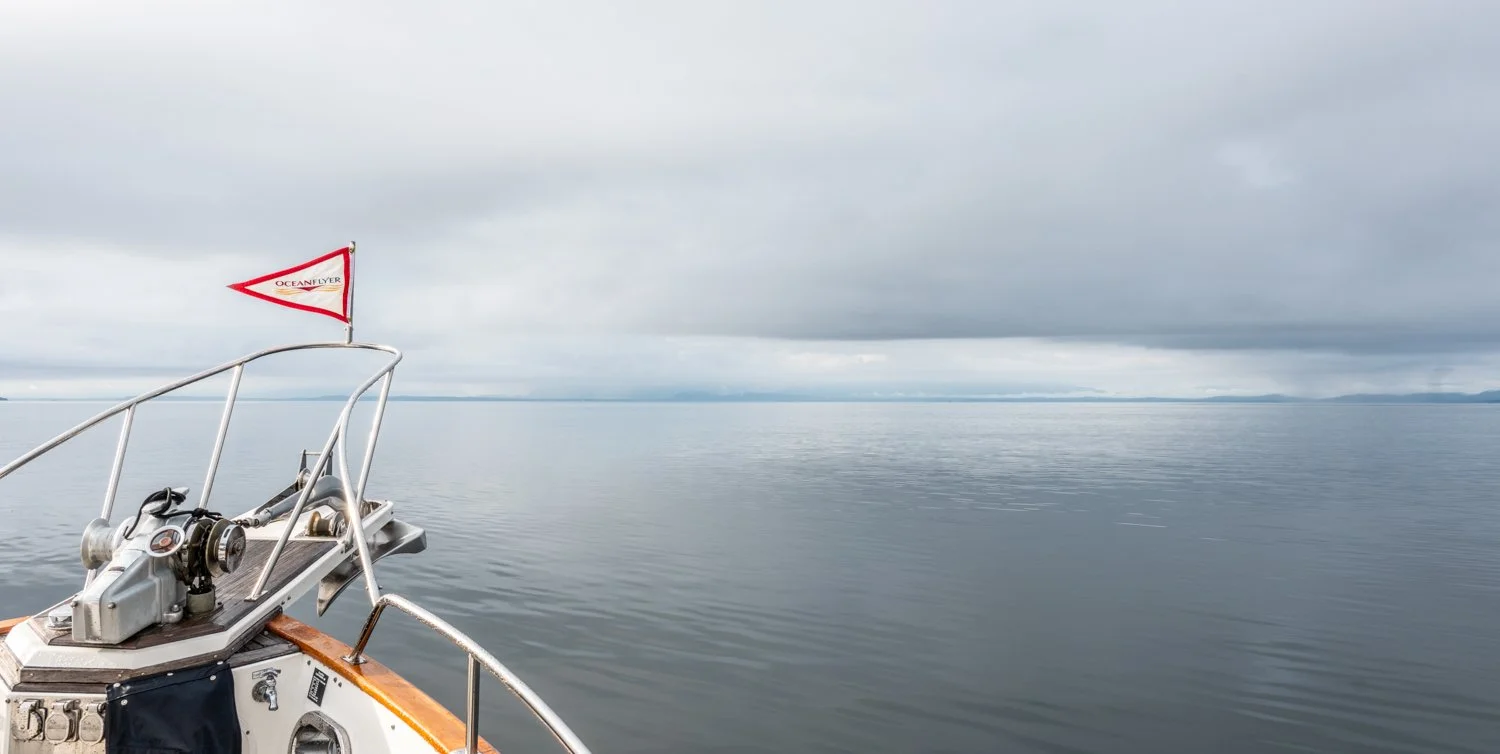
Regardless of where we eventually tied up, the crossing of Queen Charlotte Strait was one for the record books. The water was flat, the wind remained calm, and the easy conditions continued for the entire passage.

It does not get any smoother than this

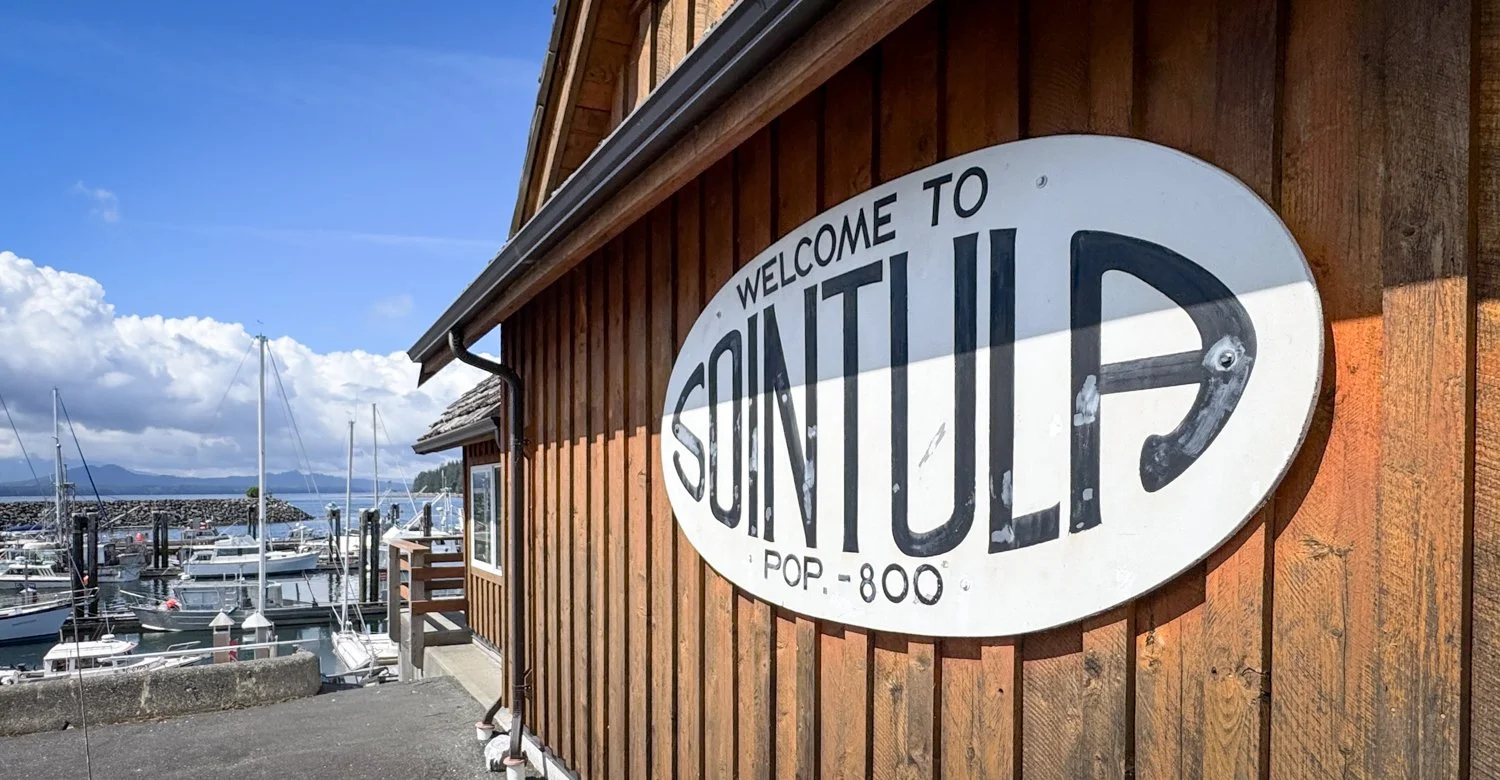
Our good fortune held when Karen called the harbor master. Rather than hearing that the harbor was full, she was told we could choose from five available spaces spread among three docks.

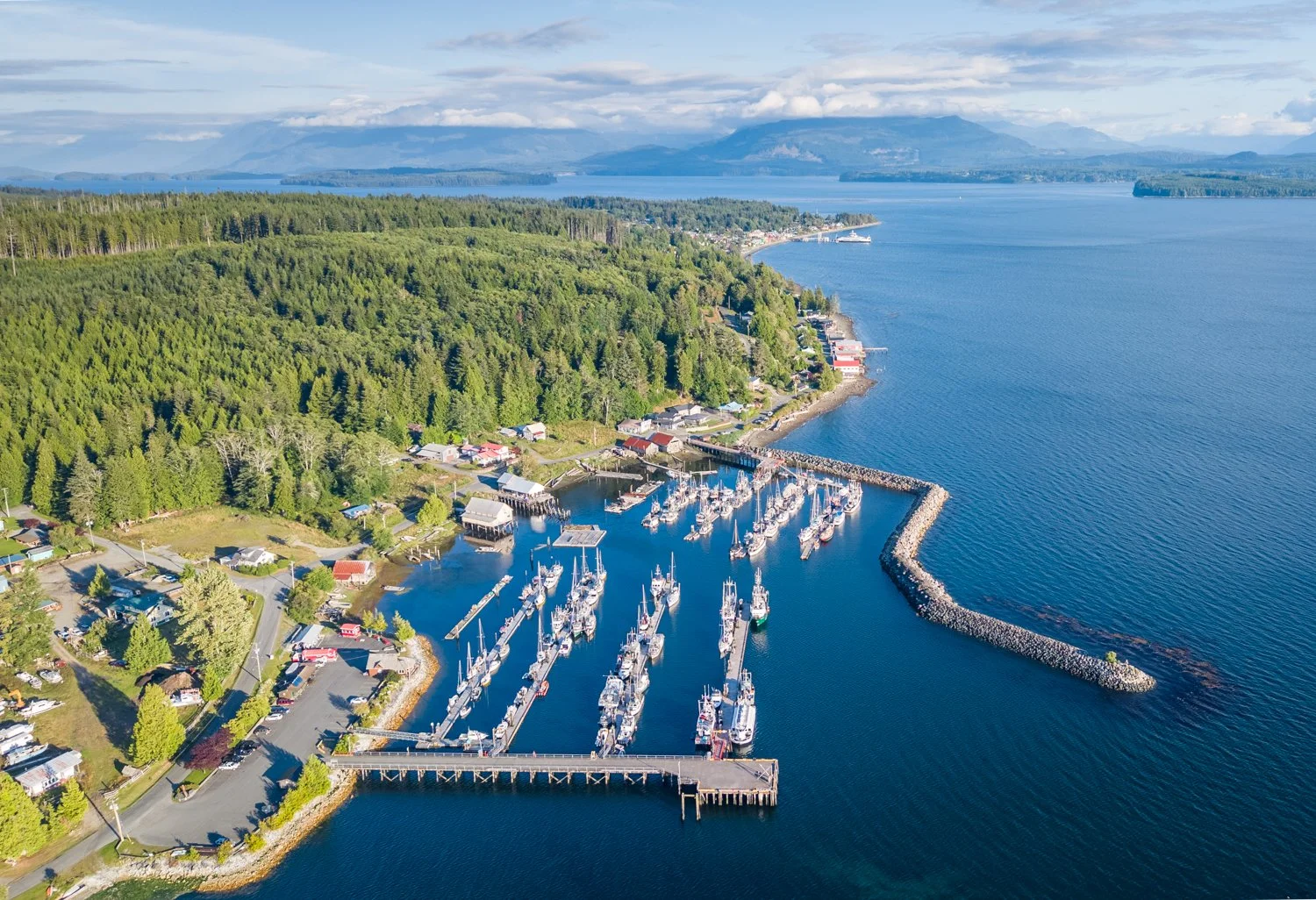
A fine welcome form Sointula Harbour

We were happy to accept the unexpected abundance of options, while knowing that Mother Nature will undoubtedly have something quite different waiting for us on a future crossing.

It had been a very long time since we visited Sointula aboard our own boat. More often, we have left OceanFlyer in Port McNeill and taken the ferry across, avoiding the uncertainty of finding moorage.

That made tying up in Sointula Harbour feel like a special treat.

It 1.5 miles from the docks to the town where the ferry arrives

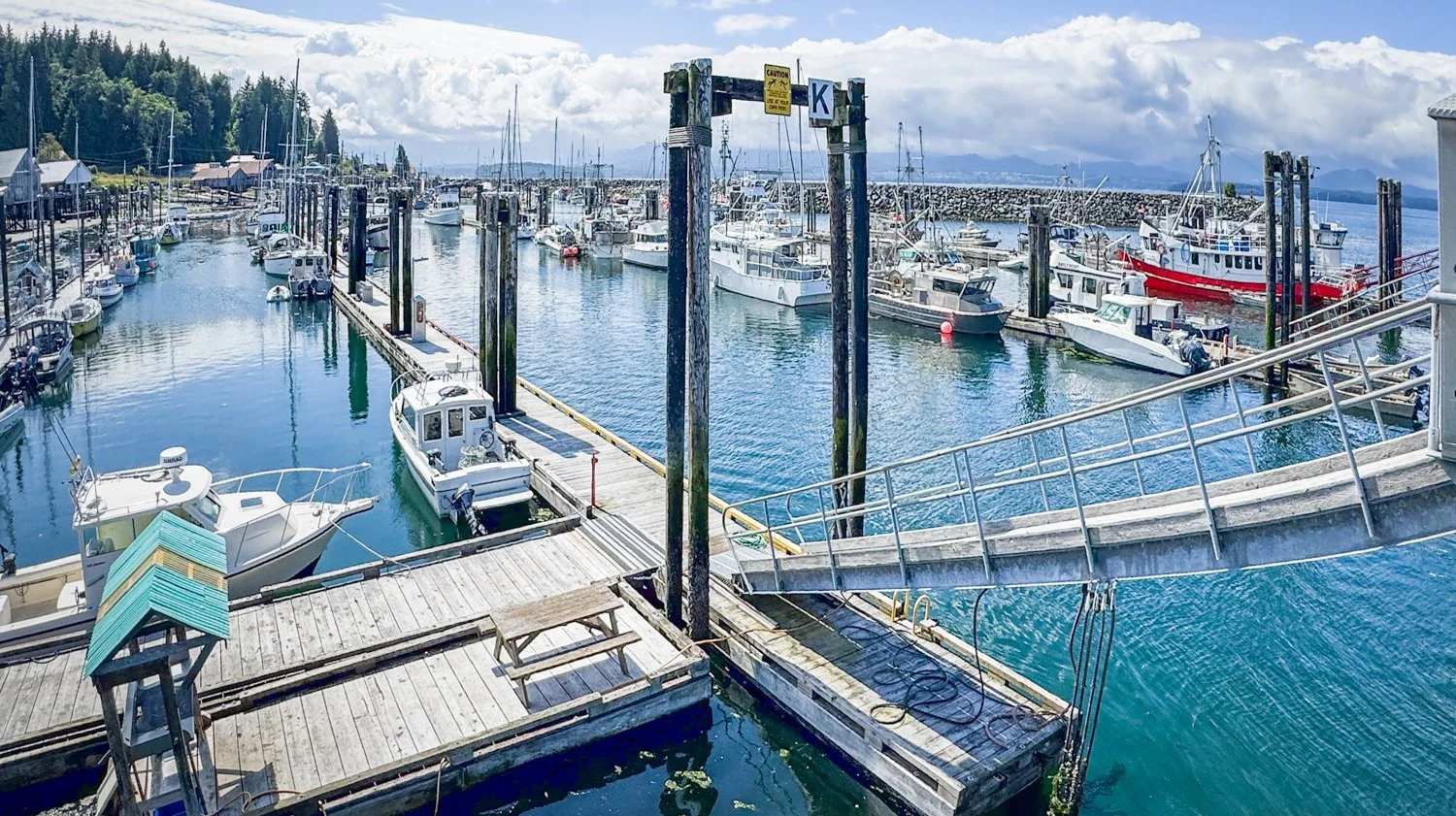
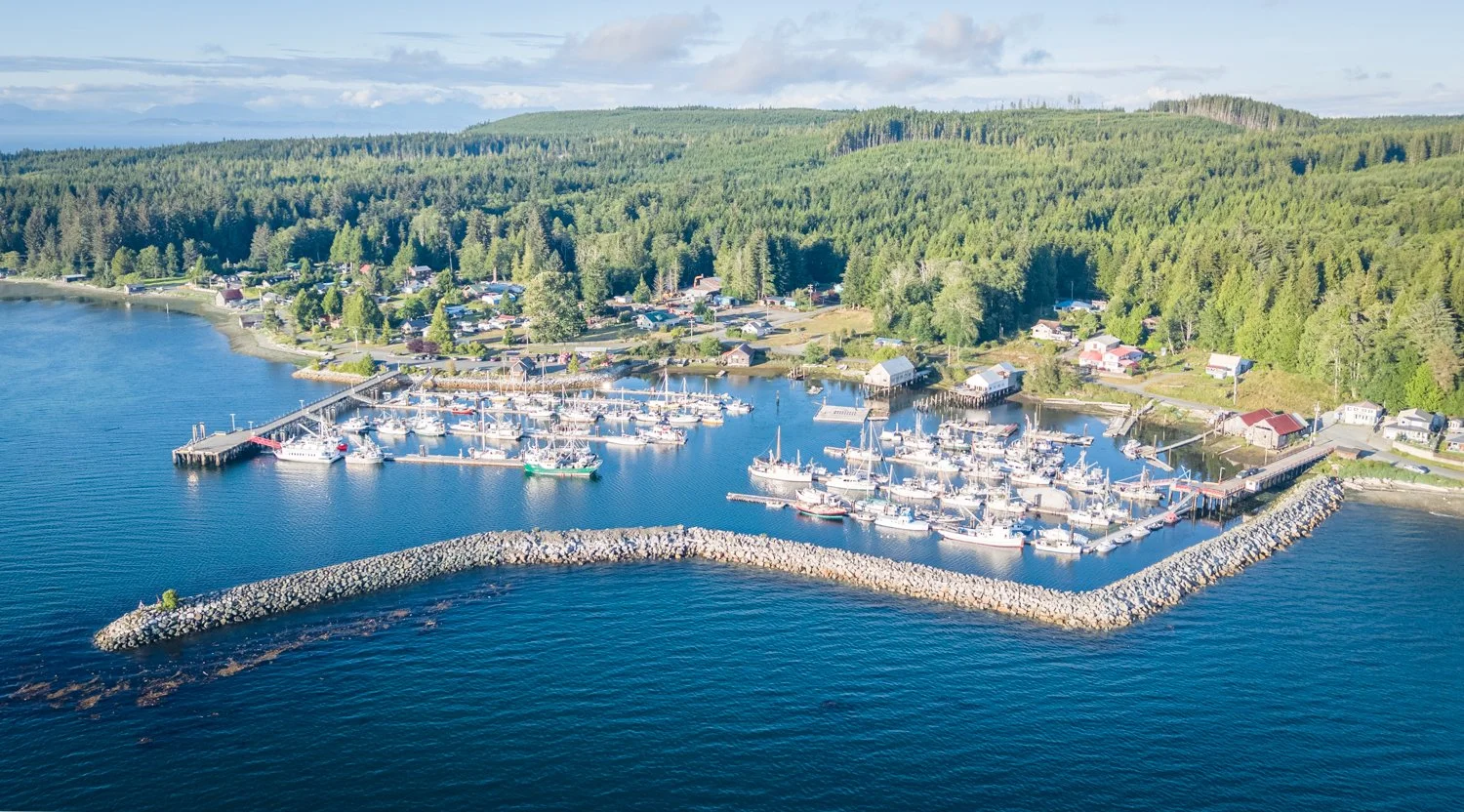
busy sointula harbour

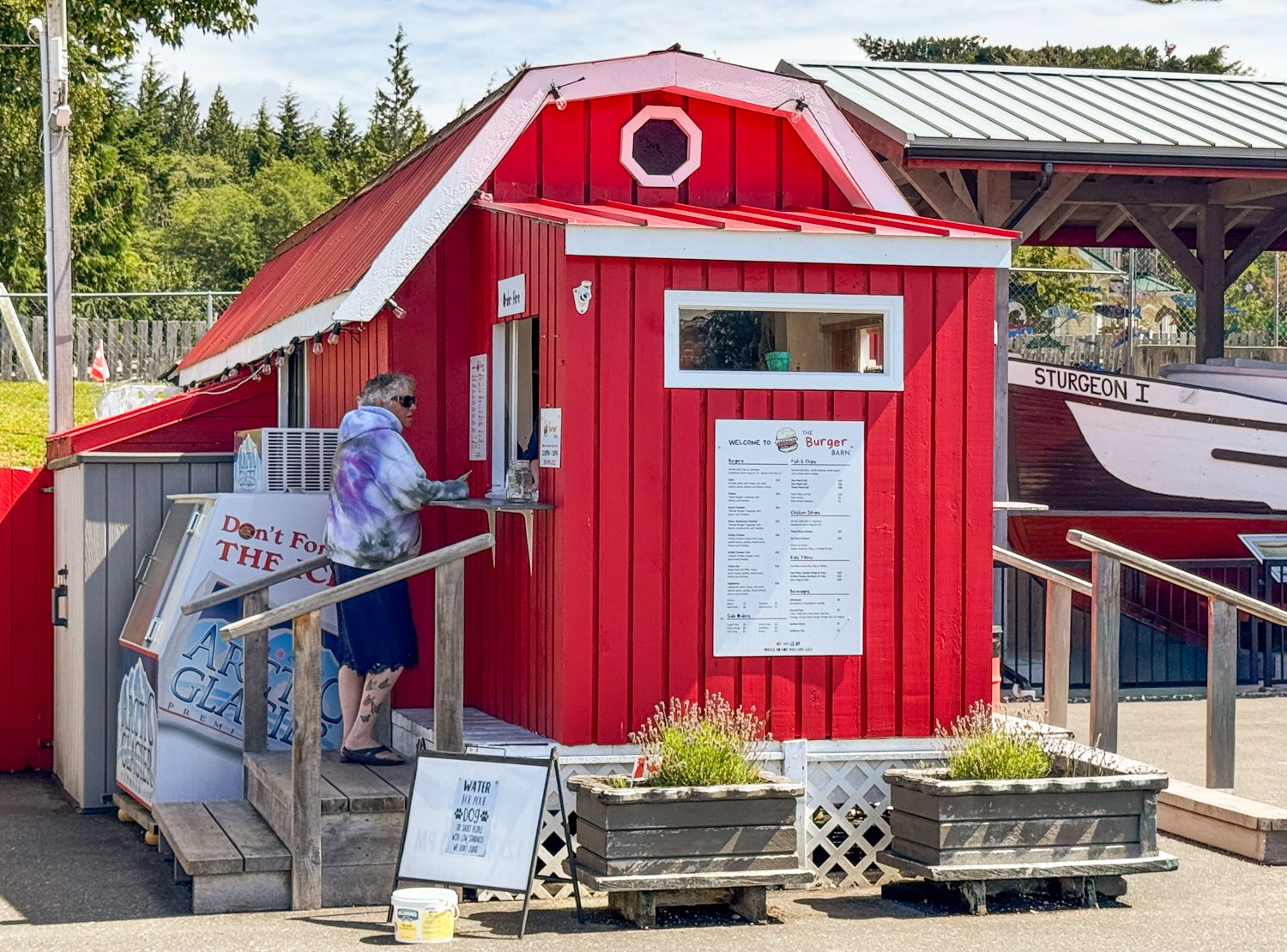
Our first stop was the Burger Barn at the head of the dock. Restaurants are scarce on Malcolm Island, so this small red shack with outdoor seating is a favorite among locals and visitors alike. Our burgers hit the spot, and my vanilla milkshake did not disappoint.

the famous burger barn

After spending much of the previous week boat-bound by rain, we made good use of the newly arrived sunshine and walked the mile and a half into town.

First Avenue follows the waterfront, offering views across the water and a look at the many new or beautifully restored homes occupying this prized stretch of shoreline.

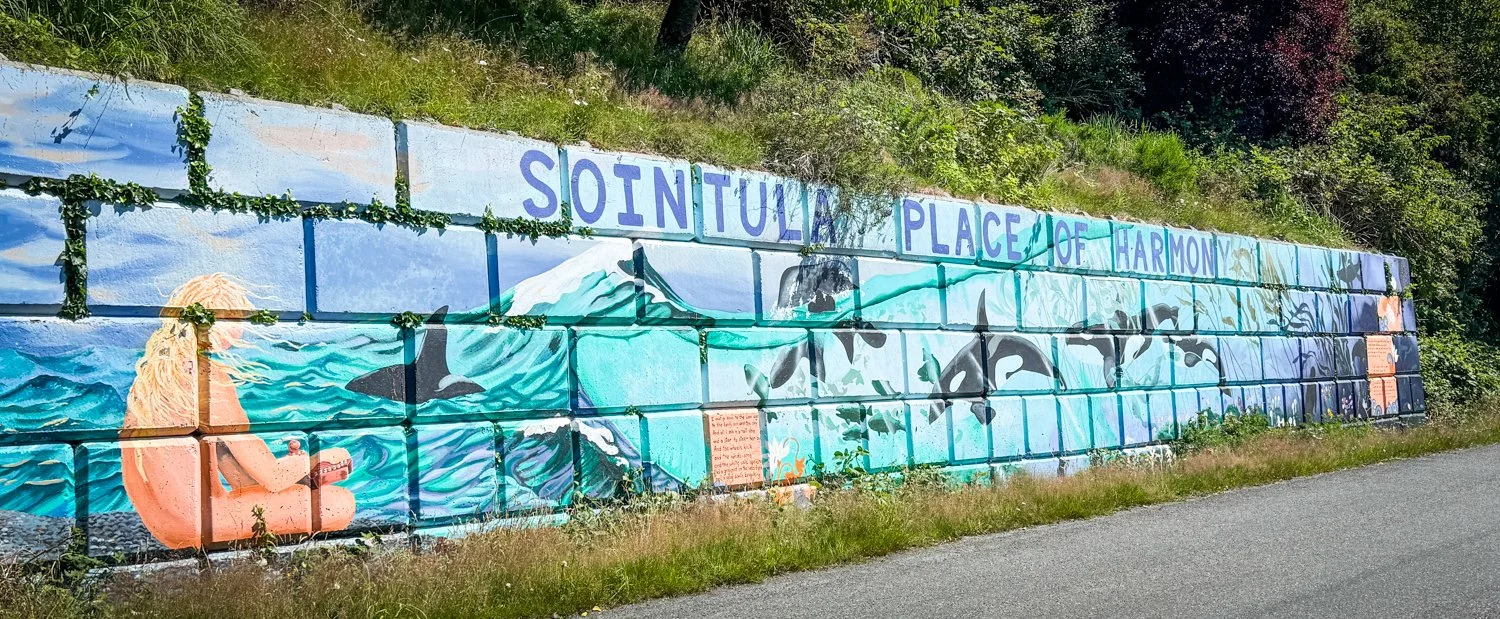
even the retaining wall shows the pride the people have in their community

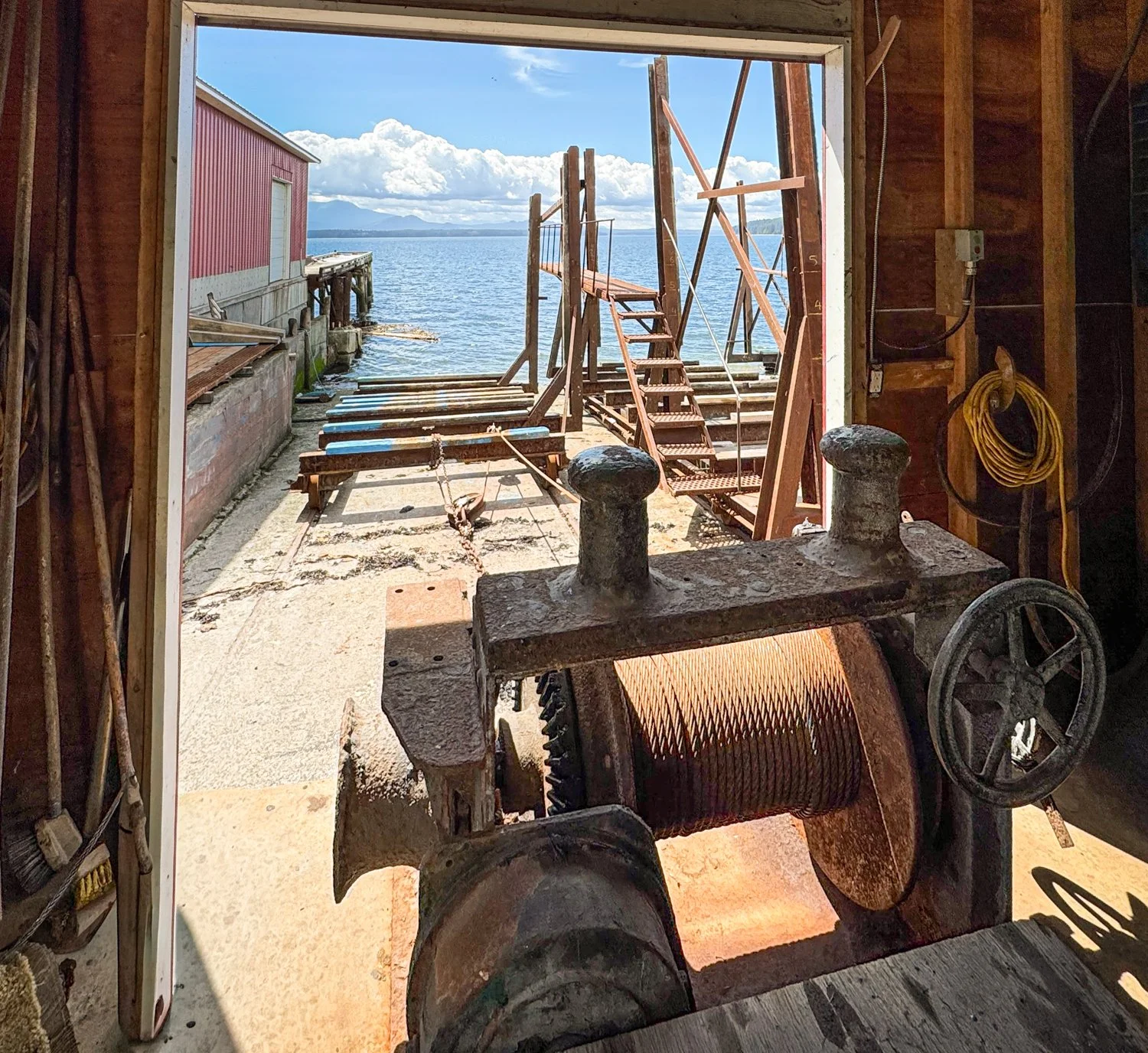
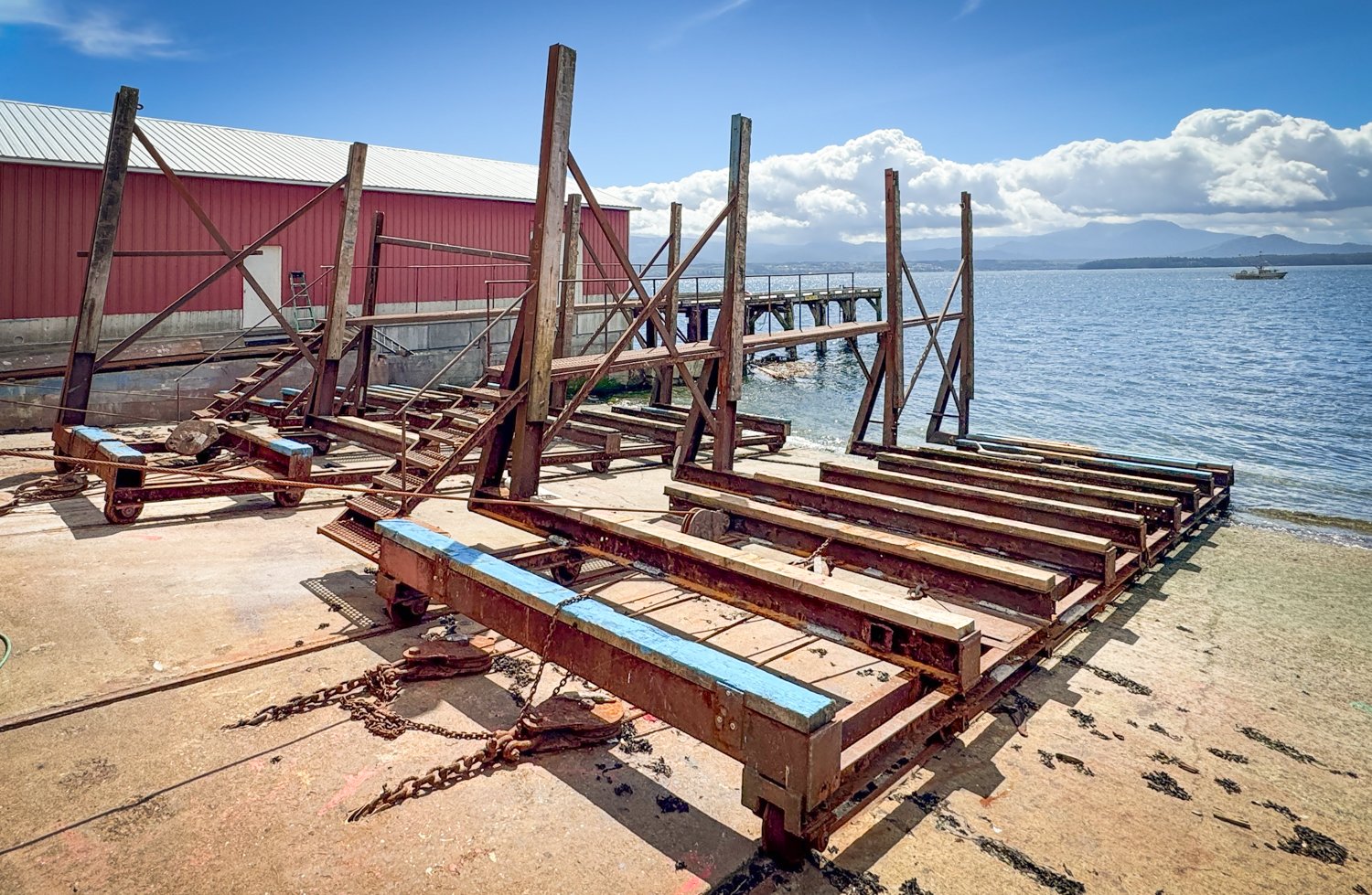
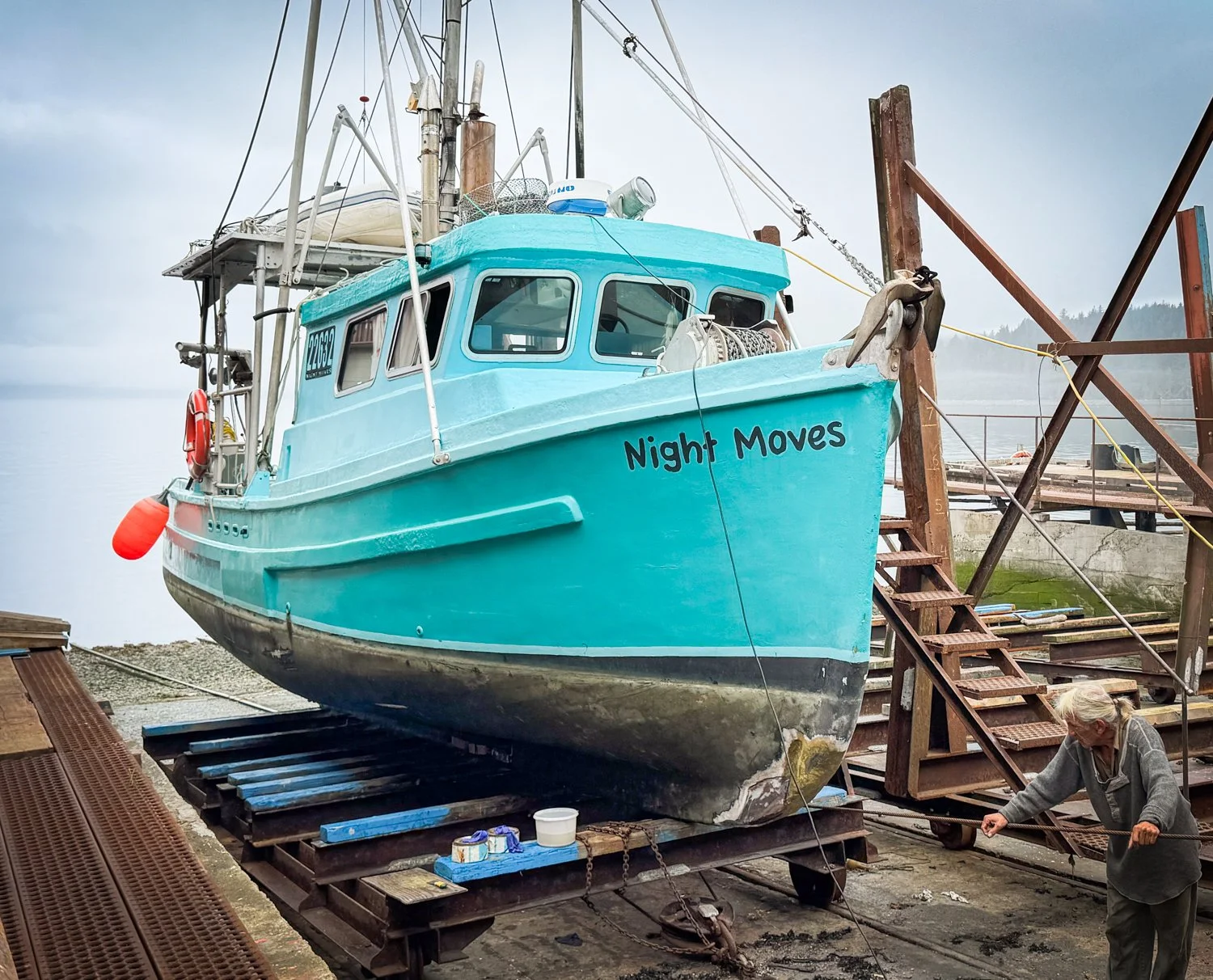
Not every historic waterfront enterprise has given way to residential development. Tarkanen Marine Ways remains in operation and is one of the few places in this part of British Columbia capable of hauling a boat.
one of the ways at Tarkanen Marine

there are three ways available

f/V Night Moves gets some love on the ways at Tarkanen Marine

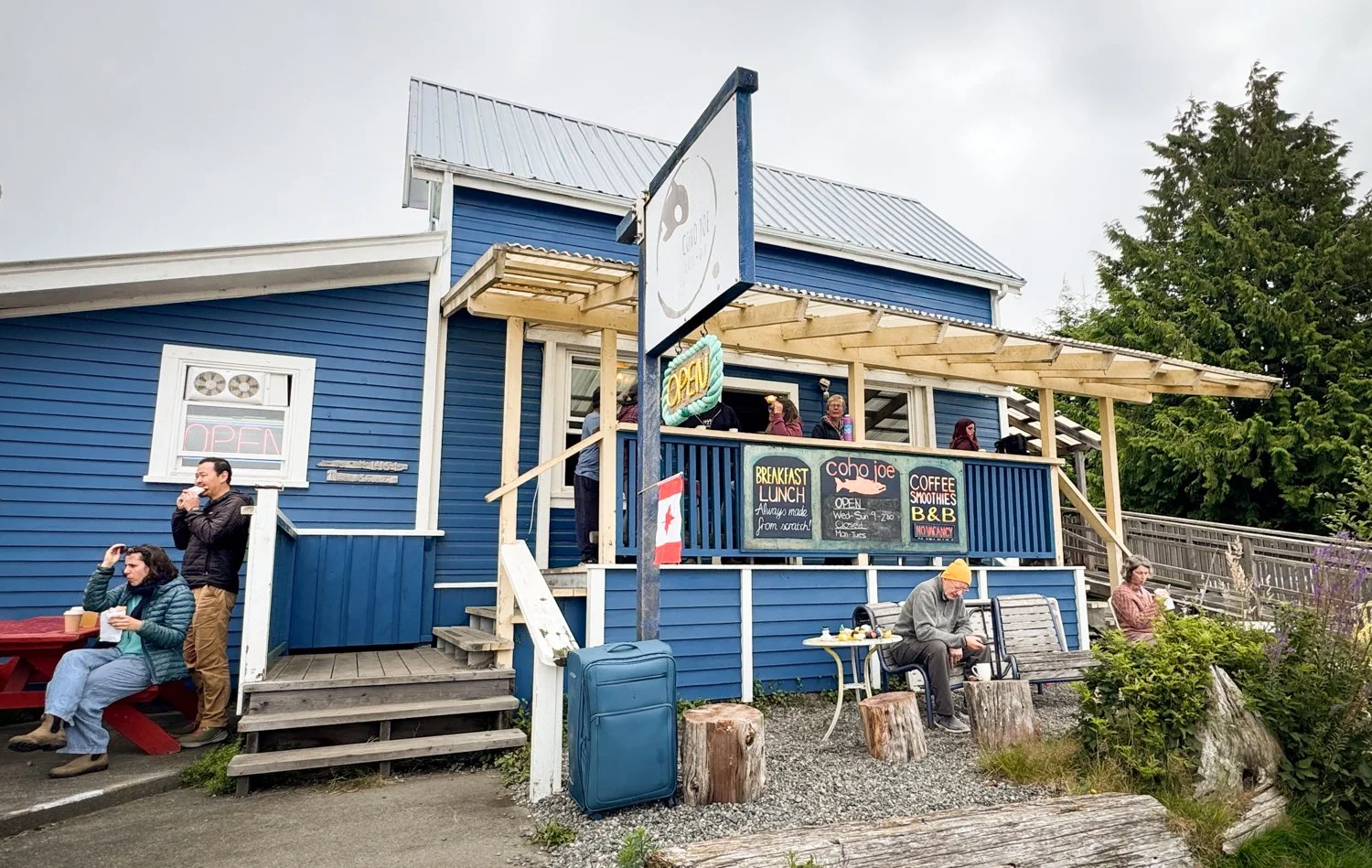
The following morning, after coffee aboard OceanFlyer, we walked up to Coho Joe’s Café & B&B for breakfast—or perhaps brunch by the time we arrived.

Coho Joe’s is essentially Sointula’s only traditional restaurant, with a menu centered on breakfast, lunch, coffee, and baked goods. Its regular hours are Wednesday through Sunday from 9:00 a.m. to 2:30 p.m. Because it was British Columbia Day, we were pleased to find them open.

Coho joe’s is a busy place for good reason

After brunch, we stopped at Malcolm Island Food Company to survey the prepared foods, baked goods, and other tempting offerings.

We first discovered this little gem shortly after it opened several years ago. Judging by the selection and steady stream of customers, they have clearly made a success of it.

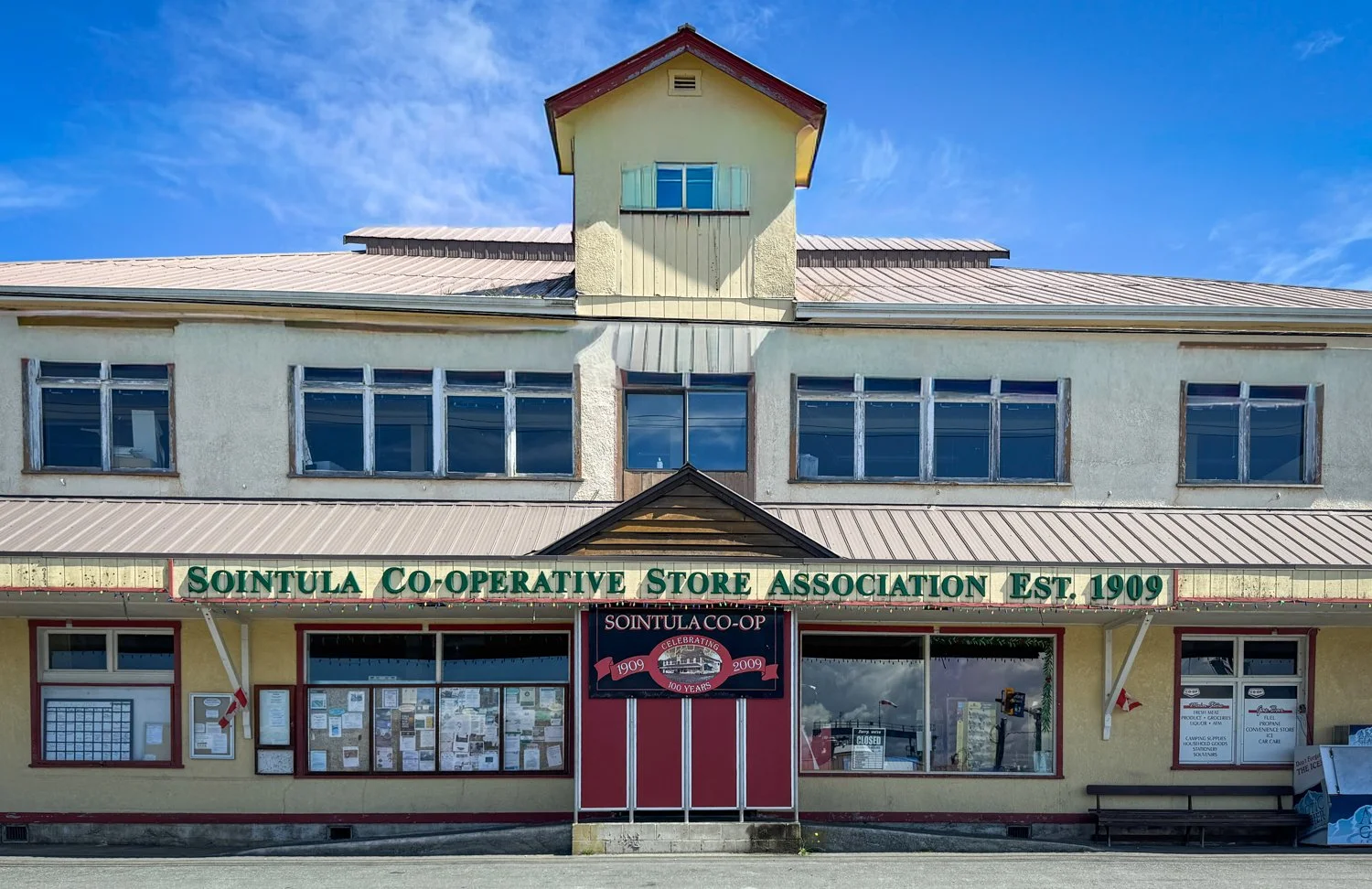
the co-op is the heaart of sointula

With our bags filled with a mixture of practical provisions and indulgent treats, we began the walk back toward the harbor.

About halfway there, a pickup truck pulled alongside us and the driver asked whether we would like a ride to the docks.

Naturally, we accepted.

Our driver turned out to be one of those wonderfully friendly people who make small communities so memorable. He had spent nearly his entire life on the island, apart from summers working in Prince Rupert. He was on his way to complete a few projects aboard a large fishing boat before the crew headed out for the next sockeye run.

During the ride, he also corrected our pronunciation of Sointula. We had always said it more like “Sun-tula,” but the first syllable is closer to a long “o”—“Sōin-tula.”

It was a small lesson, delivered during an unexpected ride from a complete stranger.

And, as so often happens while cruising, it was the unplanned experience that became one of the most memorable parts of the visit.

Sointula Harbour. We’ll be back!


Millbrook Cove to Blunden Harbour

For the past week, we have been closely tracking the weather in preparation for rounding Cape Caution. Based on the forecasts, today looked like it should provide a good crossing.

It turned out to be much better than good.

The sky remained overcast, with the occasional shower, but the wind stayed below eight knots. At its most, the sea was little more than a light ripple over a two-foot swell with a long, comfortable period.

a very nice ride under the clouds

In more than a decade of crossing Cape Caution, this was easily the most pleasant passage we have experienced.

the light at cape caution

Once around the cape, we continued to Blunden Harbour, a large and popular anchorage that serves as an ideal staging point for boats traveling either north or south.

OCeanFlyer and S/V Grasal enjoy all of Blunden Harbour

Safely tucked inside, our attention now shifts toward Port McNeill, which we plan to reach in three days. By putting a couple of longer days behind us, we have earned the luxury of slowing down again and choosing our next stop without the pressure of another major crossing ahead.

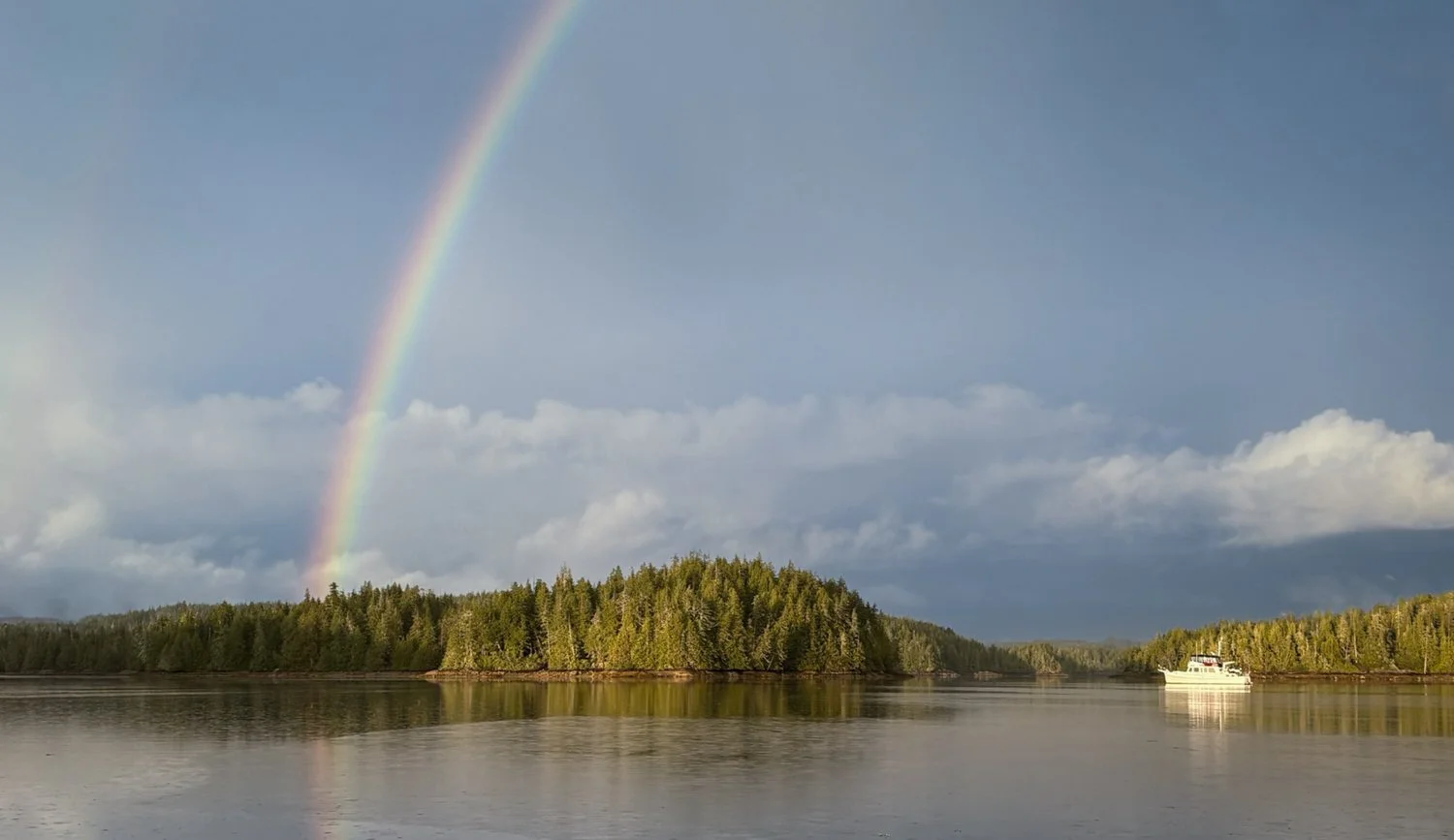
S/V Grasal sent us a photo of OceanFlyer under the rainbow in Blunden Harbour

Another peaceful night in Blunden Harbour


Pruth Bay to Millbrook Cove

With rain settling in for the next several days, it seemed like a good opportunity to make some southbound progress.

Our destination today was Millbrook Cove, with a predetermined bailout option if the conditions deteriorated before we reached Smith Sound. Fortunately, that contingency never came into play.

The run down Fitz Hugh Sound could hardly have been better. A favorable current gave us a welcome push, the wind remained light, and the seas were mostly calm. Once we cleared the southern end of Calvert Island and became exposed to the Pacific, the swell built as expected, but never to the point of making the ride uncomfortable. It was one of those days that reminds you why weather windows are worth waiting for—a perfect opportunity to put some miles behind you.

Millbrook Cove, just inside Smith Sound, is a convenient staging anchorage for boats preparing to round Cape Caution. Although it appears small on the chart, we found considerably more room than expected. We followed a sailboat into the anchorage, joining one boat already at anchor. By nightfall, five boats had comfortably settled in, and with careful anchor placement we believe the cove could accommodate another boat or two if necessary.

Millbrook Cove

For those planning a visit, a few observations may be helpful. The drying flat to the northwest extends all the way to the old pilings, and the drying area to the north-northwest reaches farther than it first appears.

Boats seem to split almost evenly between the two available entrances. The passage between the larger islet and the mainland is the more direct route, but it is shallower and should be transited with appropriate attention to the tide. The alternate entrance, between the two islets, is deeper but requires a more deliberate approach. Favor the larger islet, delay the turn to starboard until well into the gap, and give the western point of the smaller islet a generous berth. The charted depths hint at this, but cutting the corner at lower stages of the tide brings the bottom much closer than most skippers would find comfortable.

Following that deeper route between the two islets, our sounder never displayed less than 30 feet, with the tide at +3.0 feet referenced to Leroy Bay.


Shearwater to Ocean Falls

There are plans... and then there are cruising plans.

Today's plan was straightforward: make the short run north to one of our favorite places, Ocean Falls, spend a couple of days there, and then begin our gradual journey south.

The trip itself is only about three hours, but it is made more interesting by transiting Gunboat Passage. Although well charted and not particularly tide sensitive, the route keeps you engaged as it winds through a series of narrow bends before lining up with the navigation range that leads safely through the final section.

By late morning, OceanFlyer was securely tied to the Ocean Falls dock.

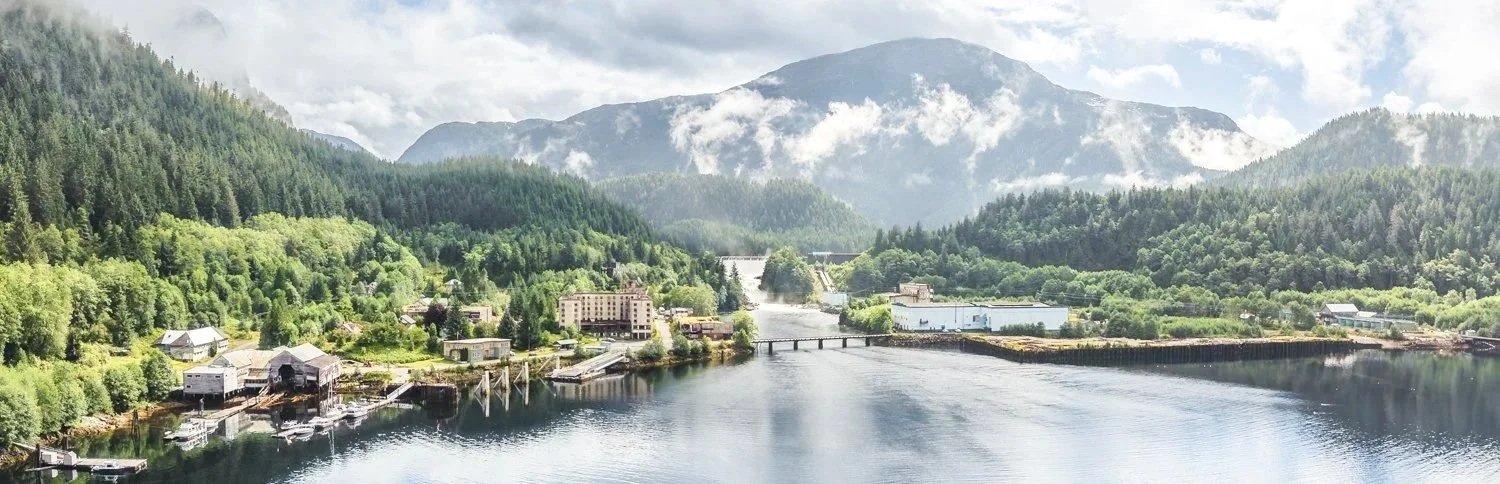
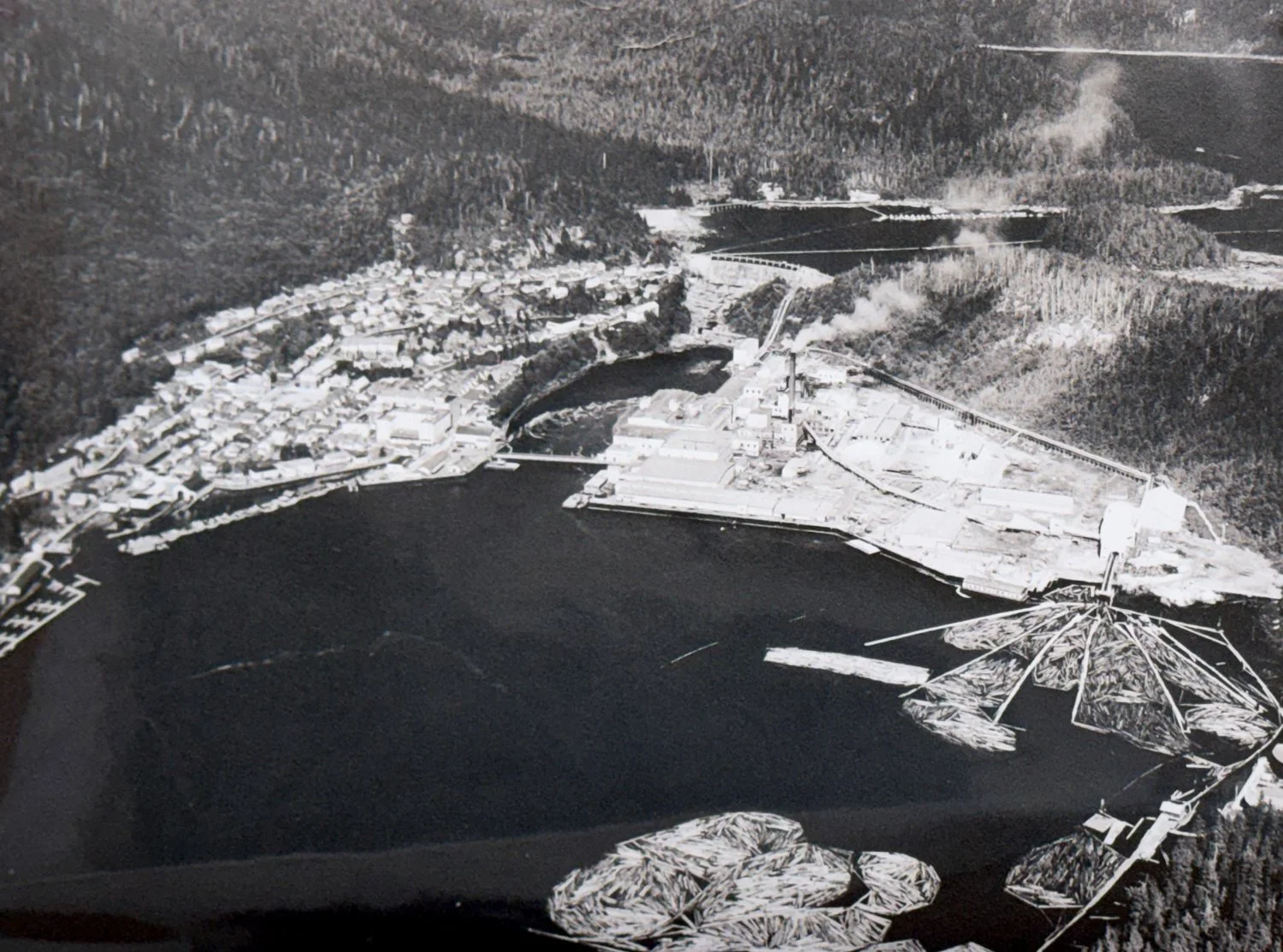
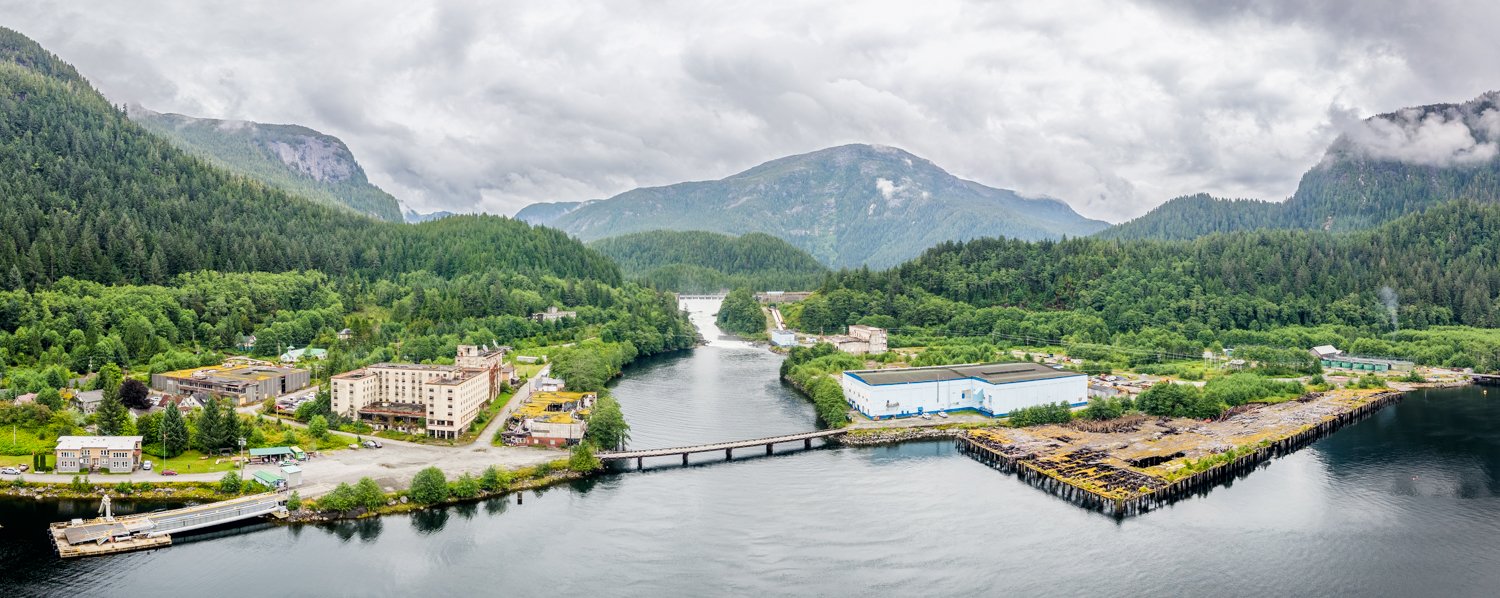
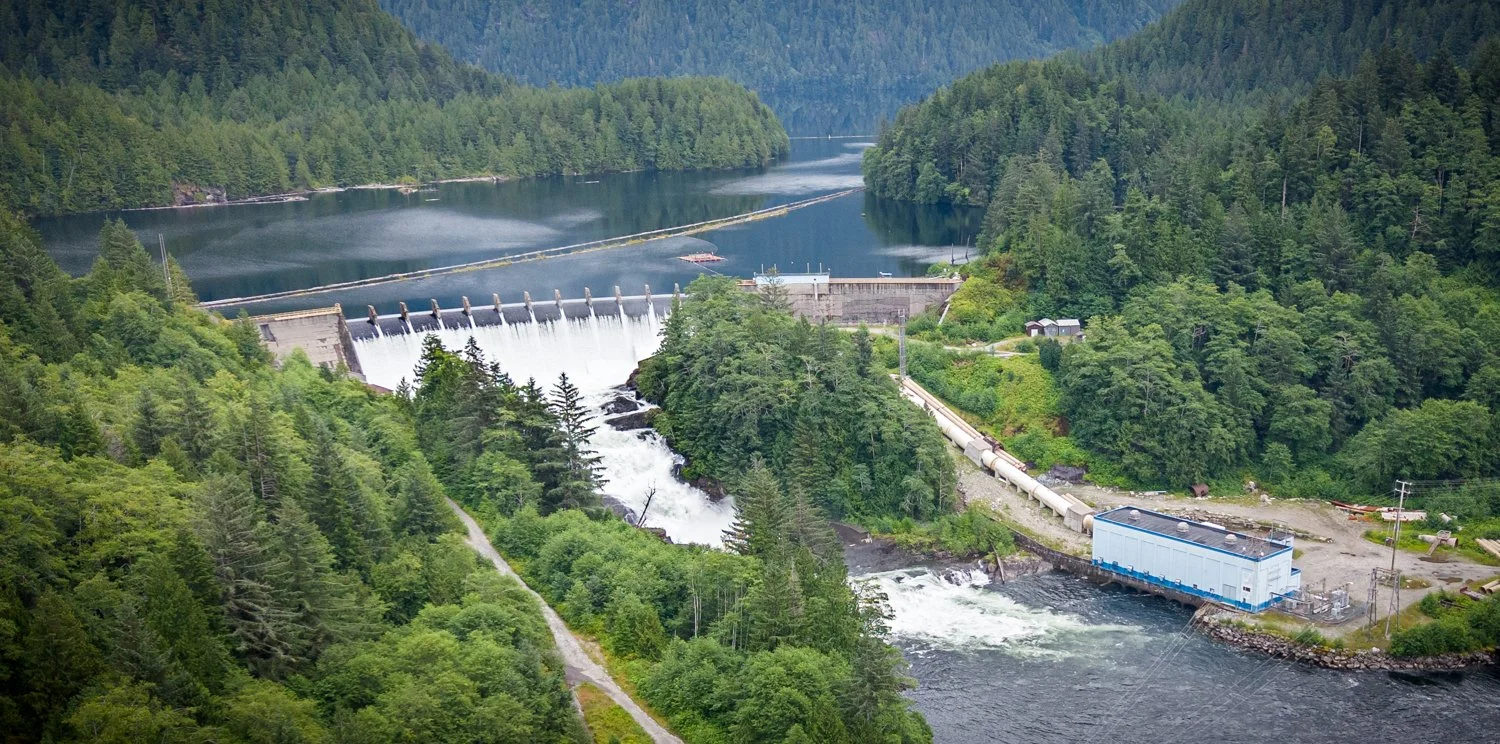
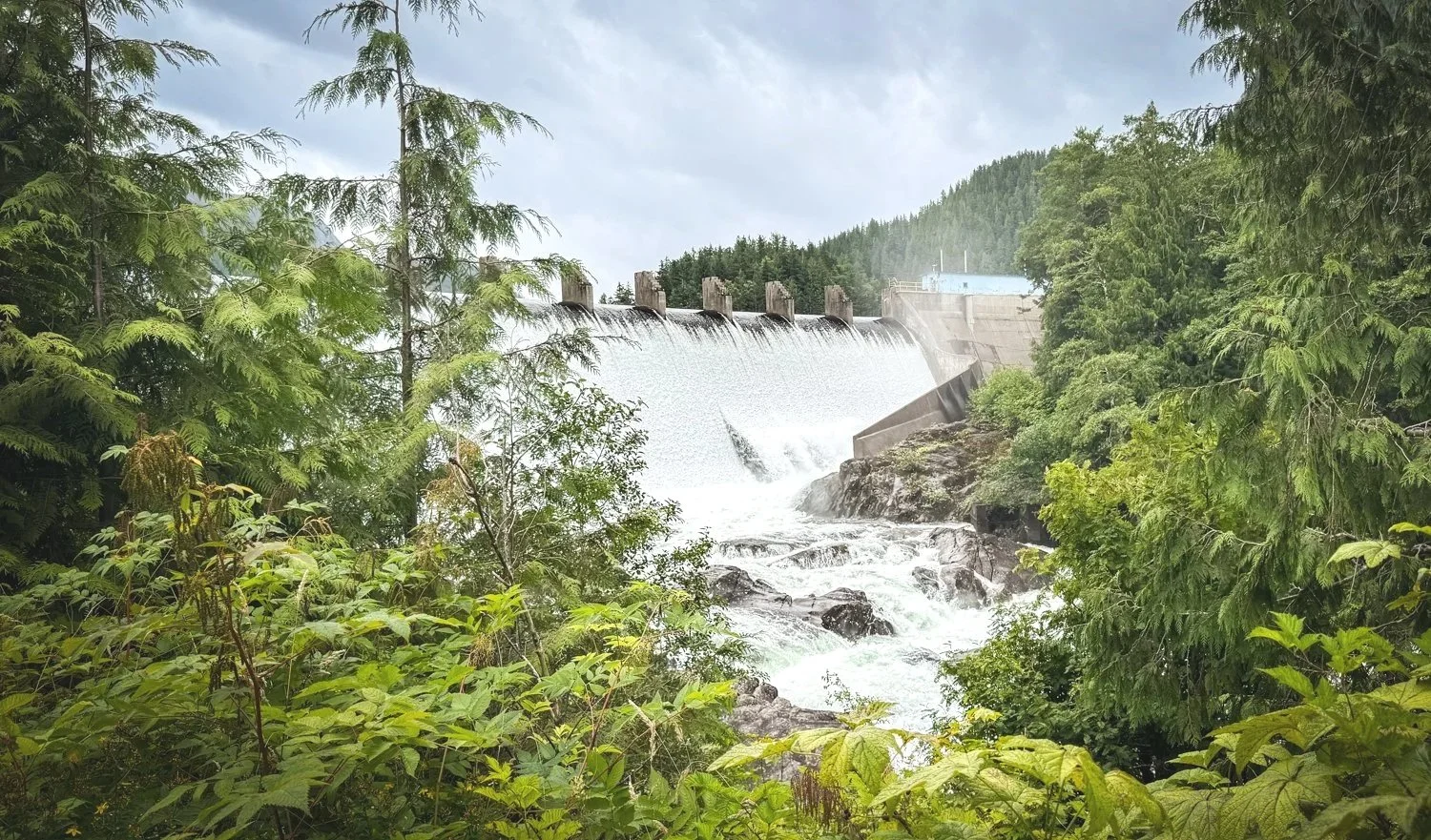
One of our favorite walks here begins almost immediately. We headed into town and continued on to Link Lake to visit the massive dam that made Ocean Falls possible. For decades, the tremendous hydroelectric potential of the lake powered one of the largest pulp and paper mills on the British Columbia coast. Although the mill is long gone, the dam remains an impressive reminder of the engineering that gave birth to this remarkable community.

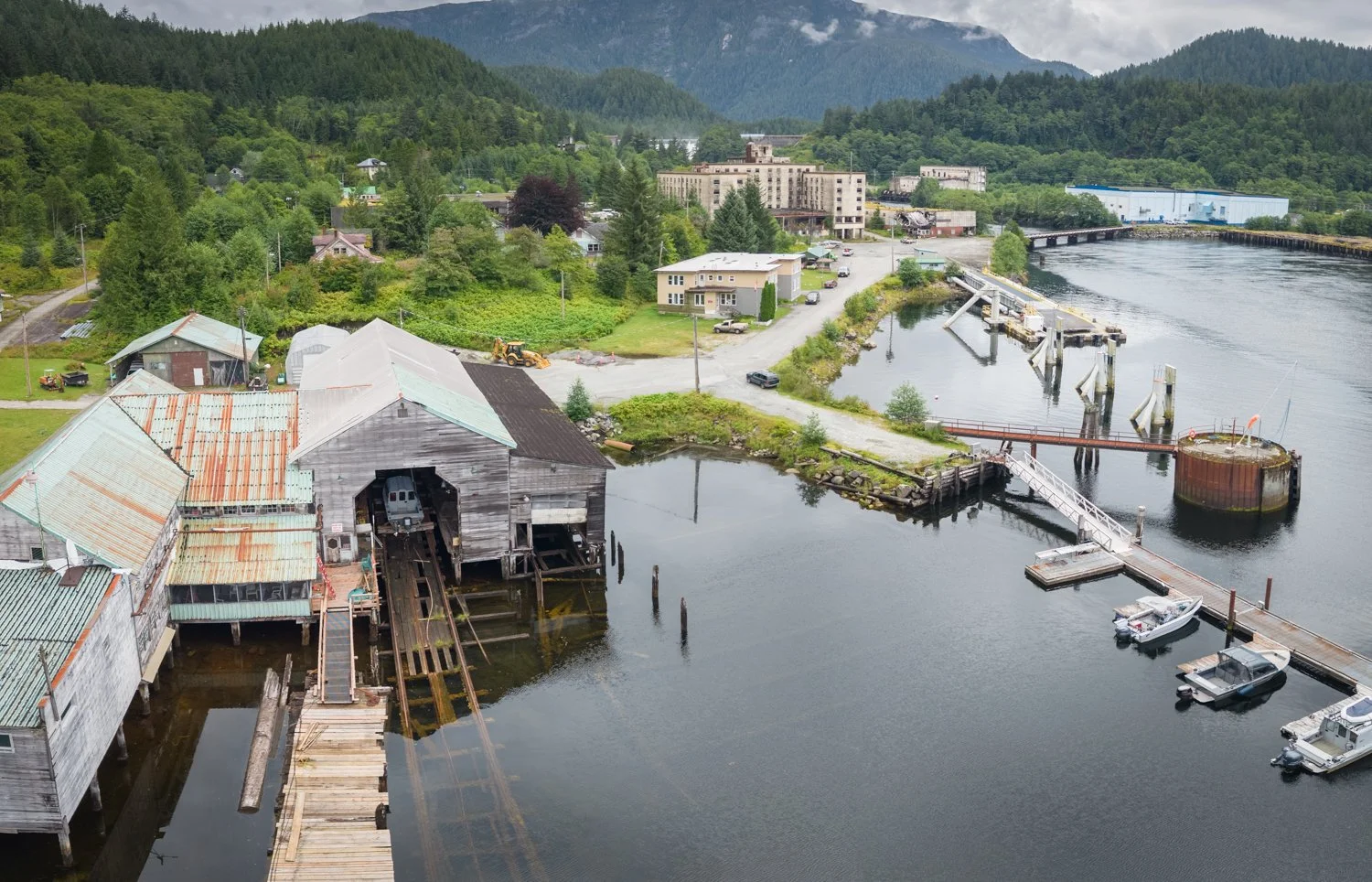
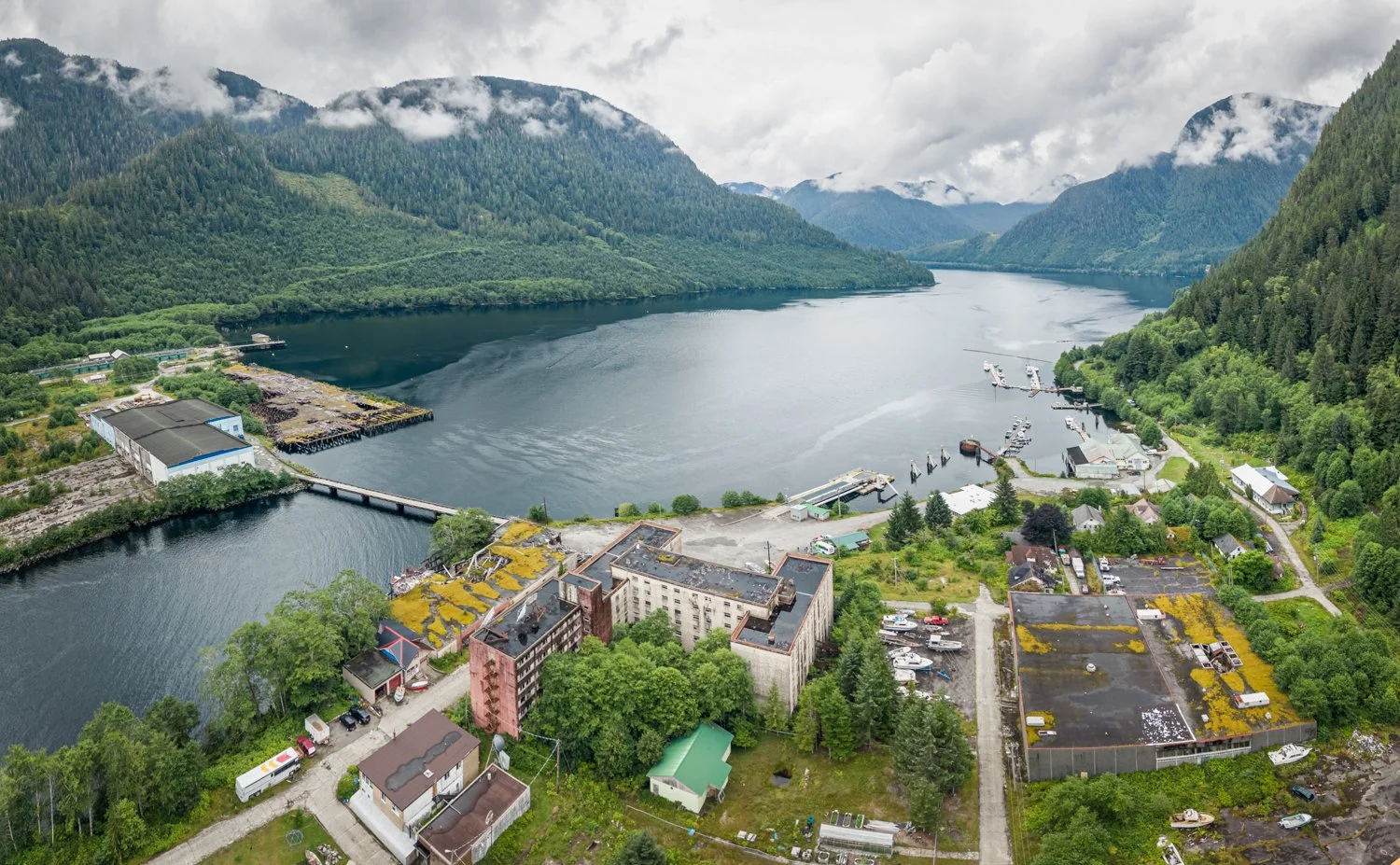
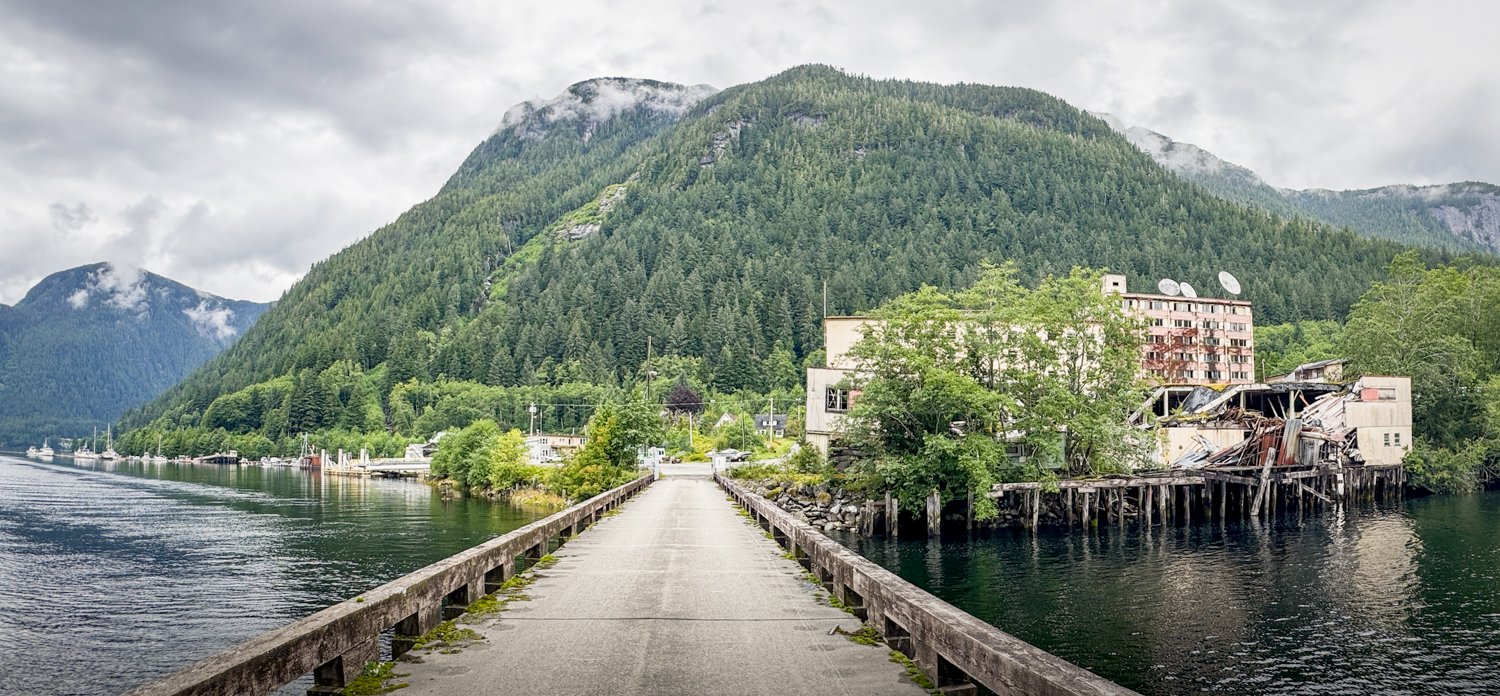
ocean falls today

ocean falls in the glory days

Ocean Falls, Link River leading to the dam

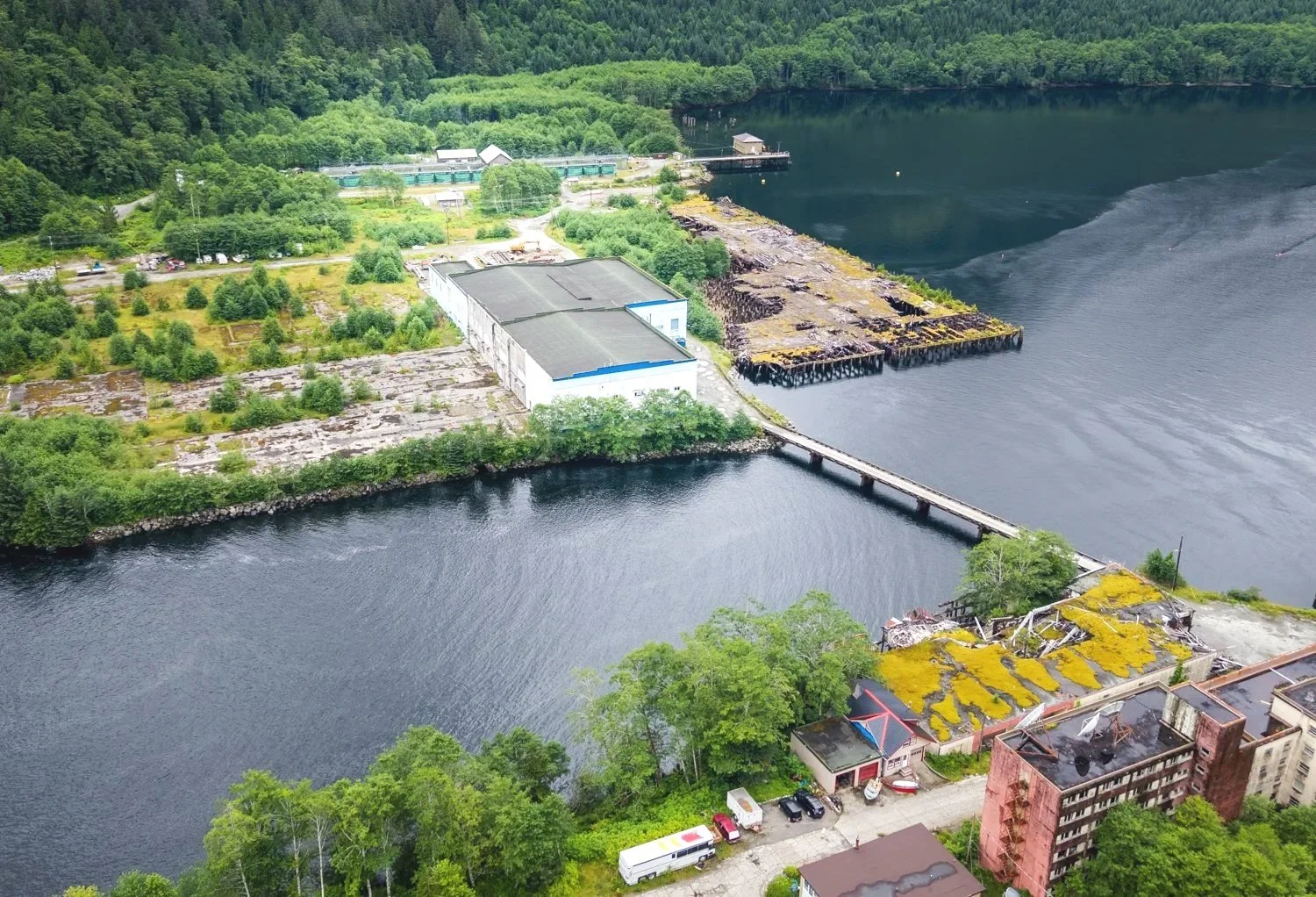
BitCoin Mine and Fish Farm, both now closed

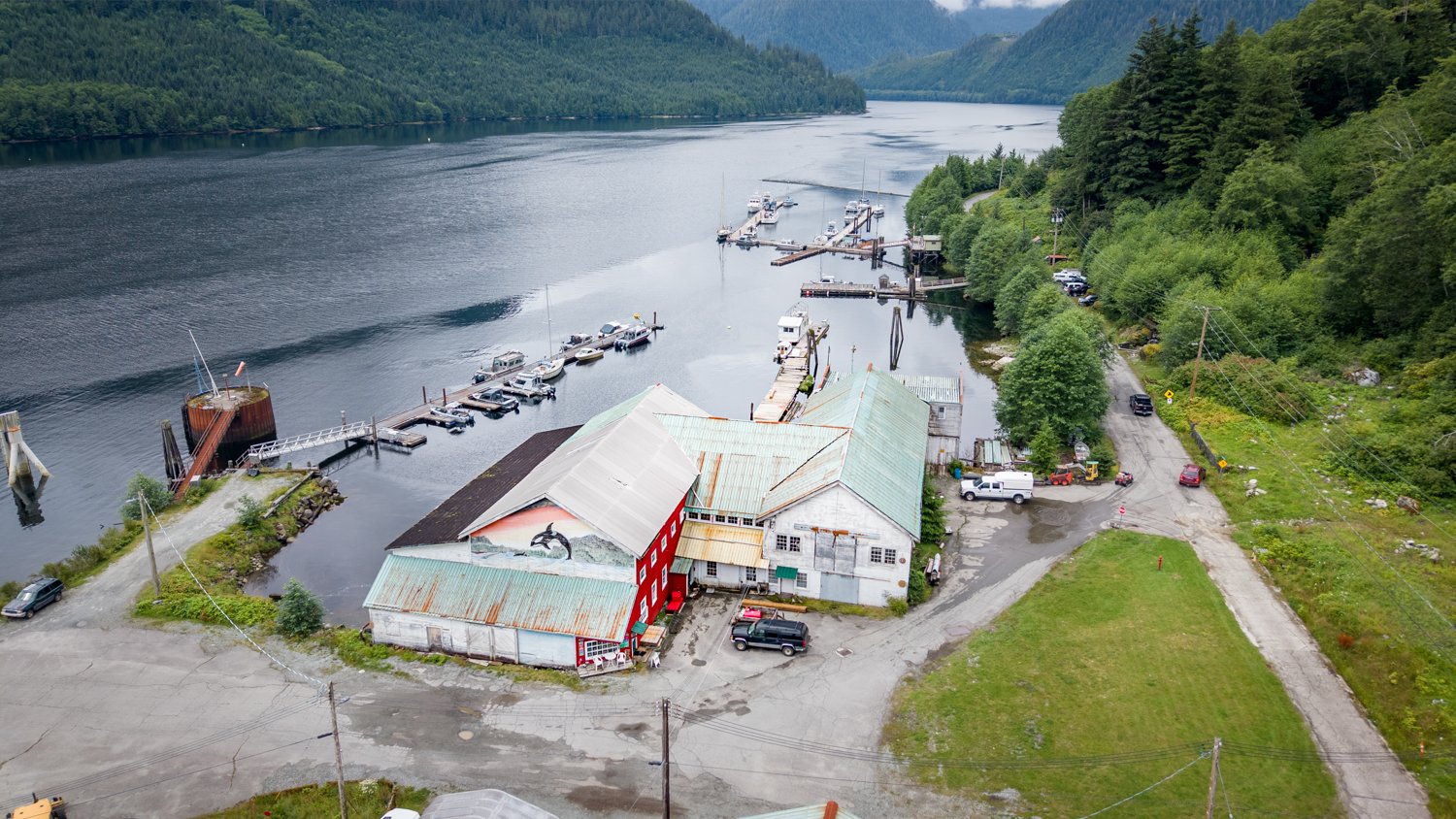
gift shop is at the corner of the Ways (the red building)

the ways is still in use

looking back to the head of cousins inlet

link lake damn and power plant

the hydo dam that created and sustains ocean falls

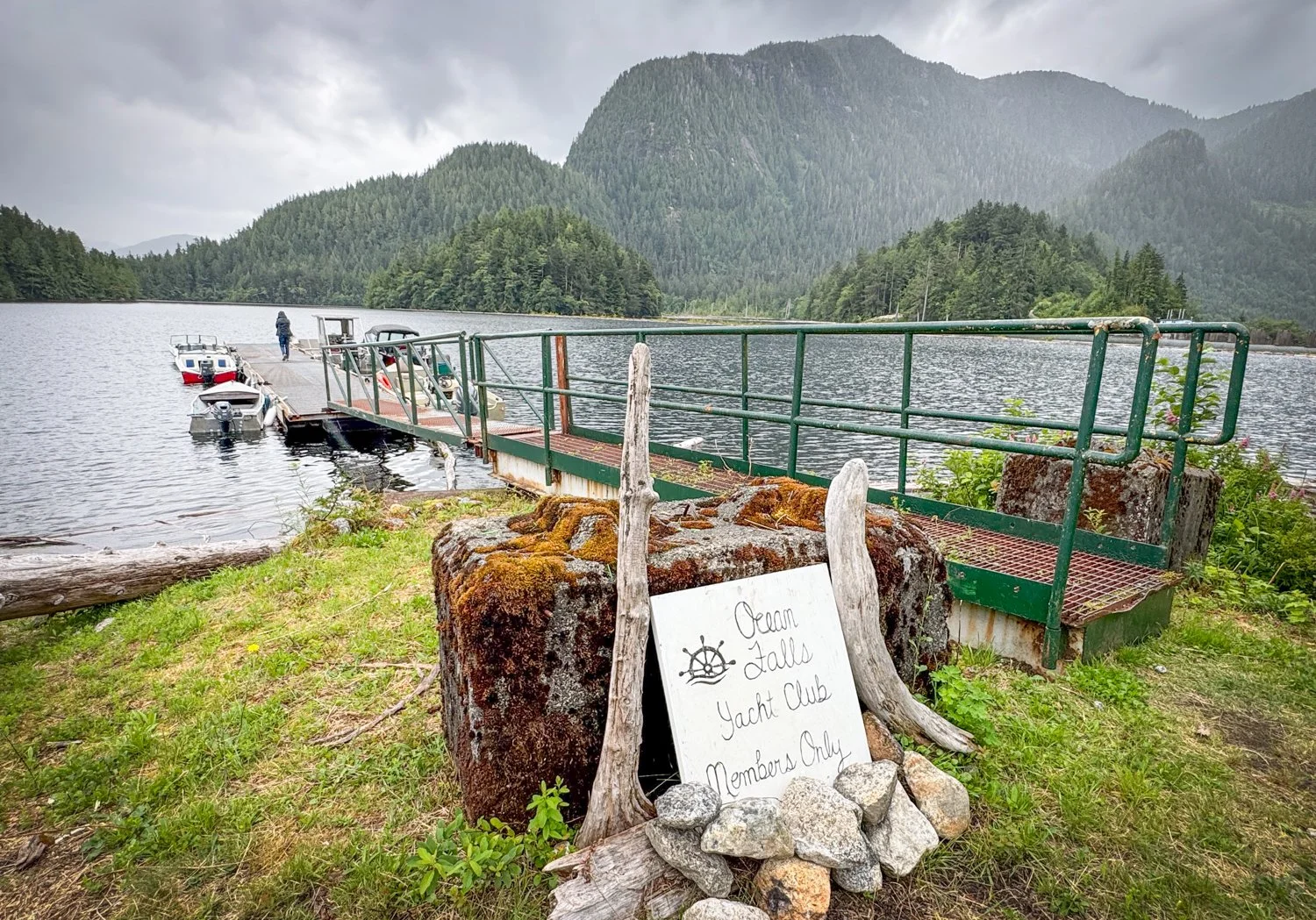
behind the dam, link lake is the home of the ocean falls yacht club

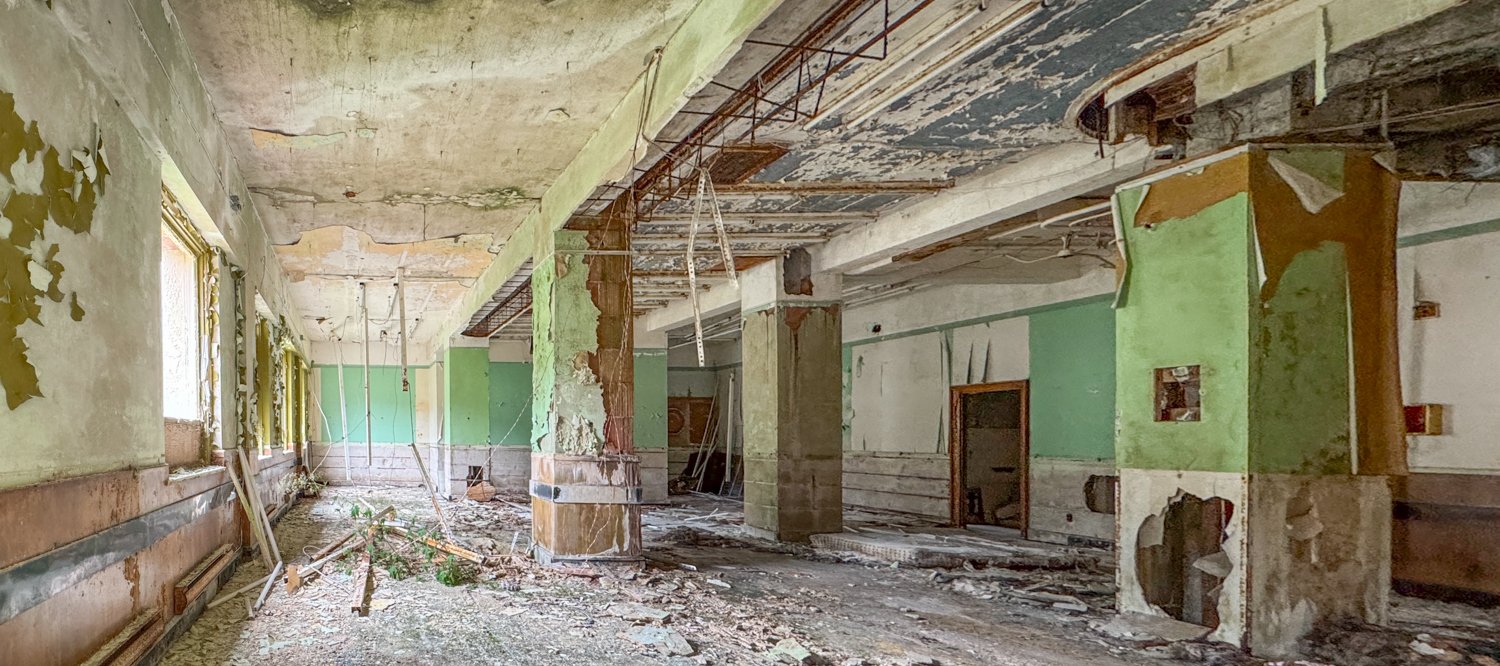
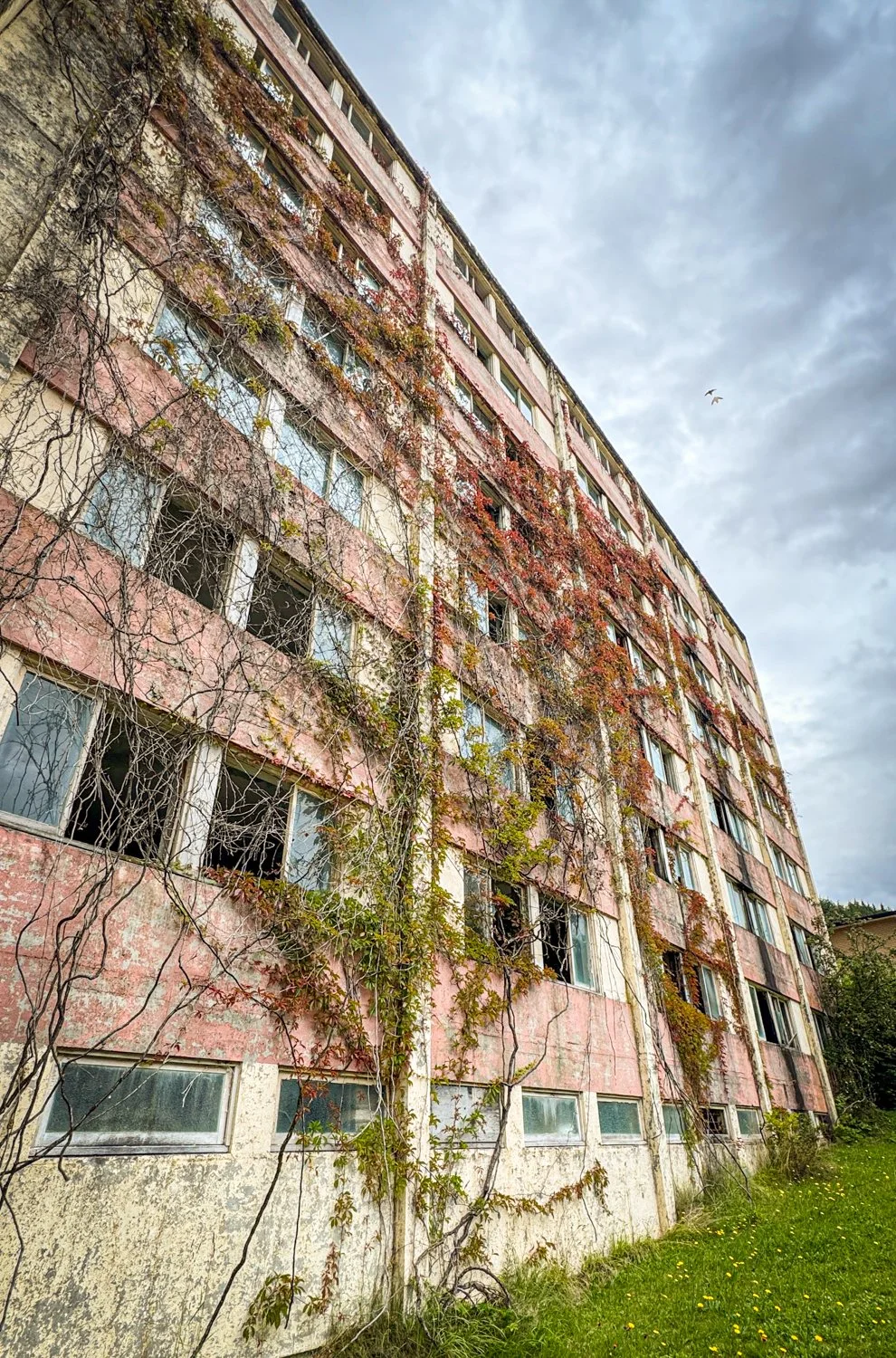
most of the buildings in ocean falls are sad relics from their past

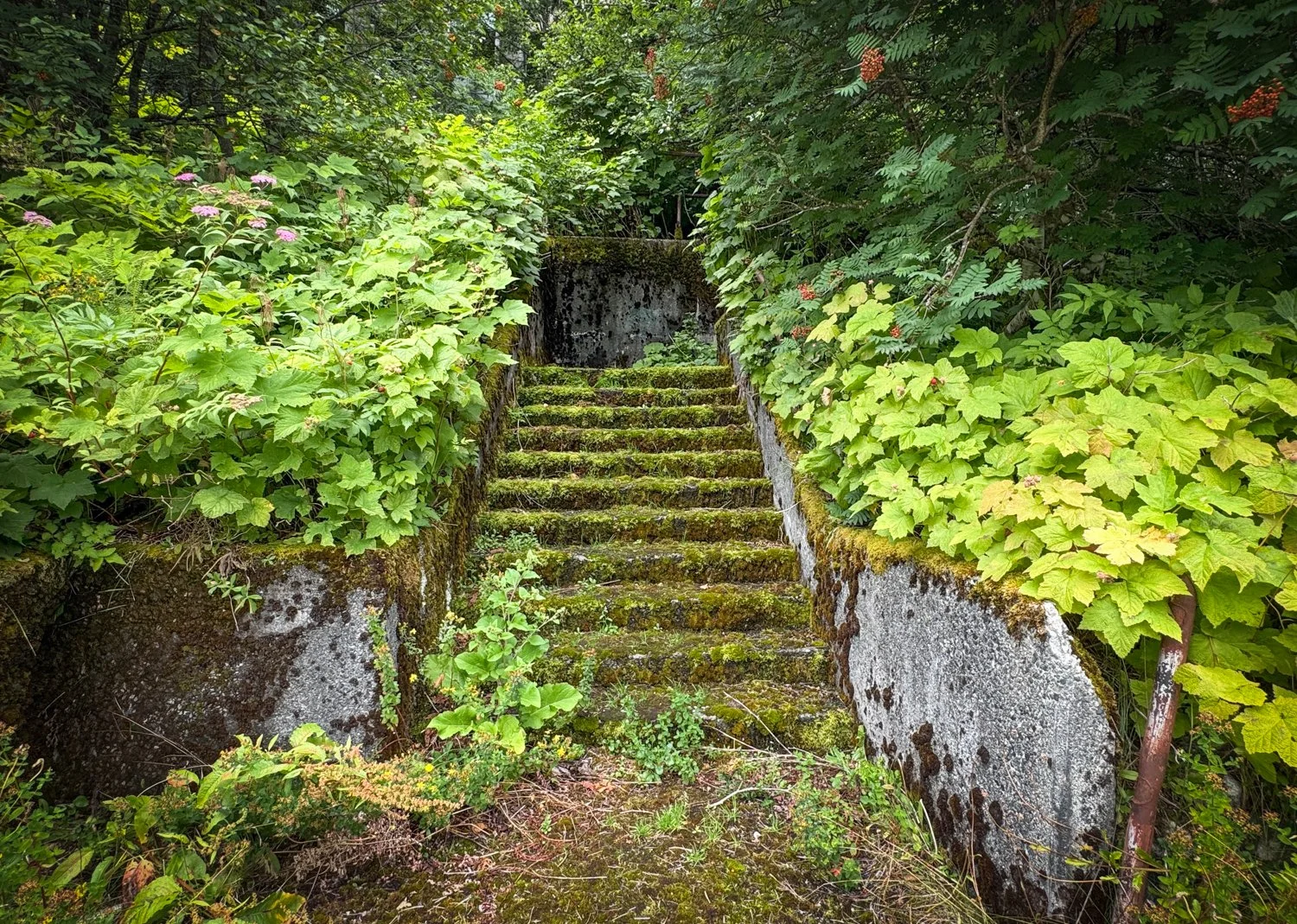
steps to one of the homes distryed in the landslide a long time ago

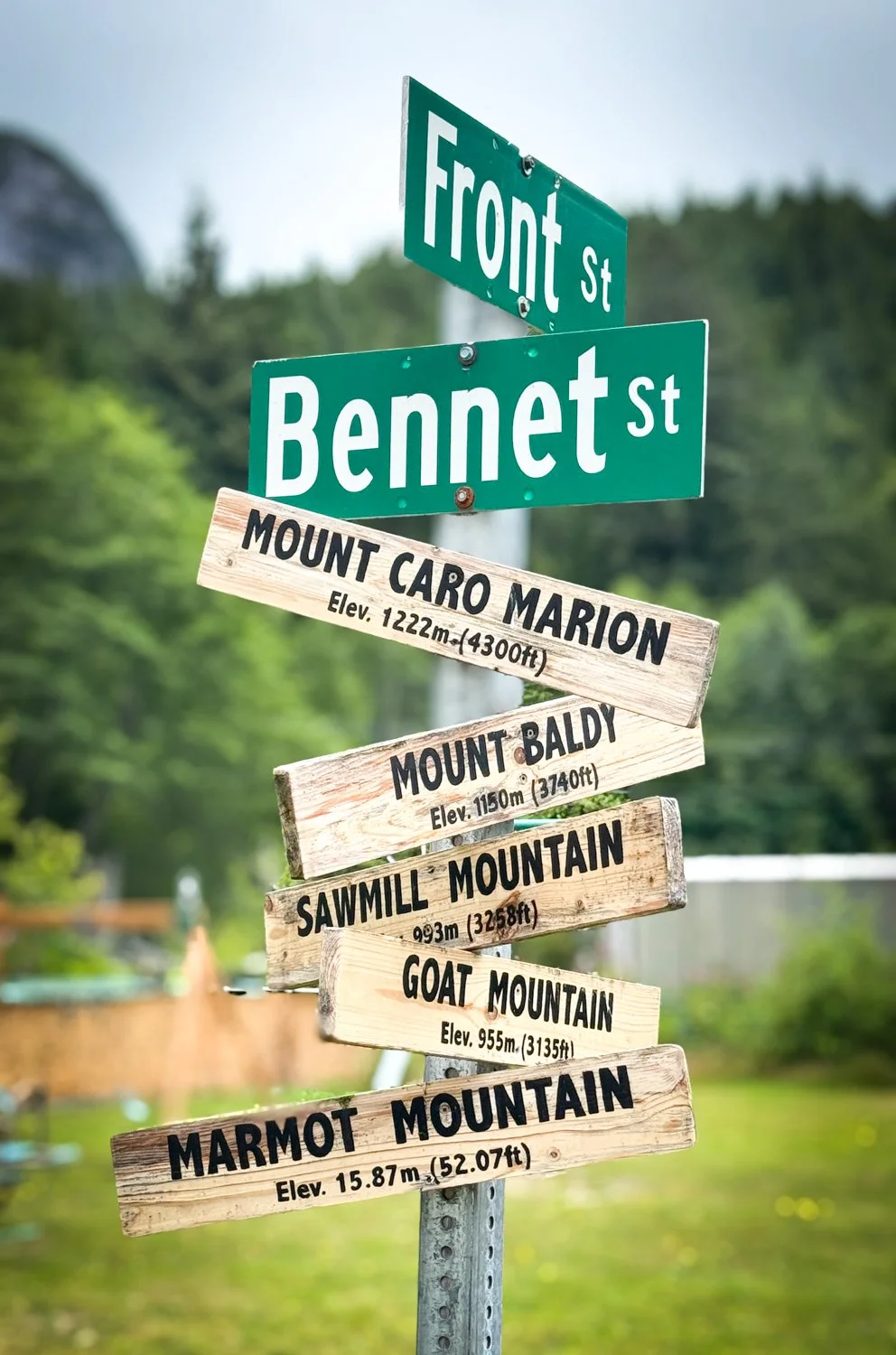
a new sign in twon helps you get you bearings

mother nature continues to reclaim Ocean Falls

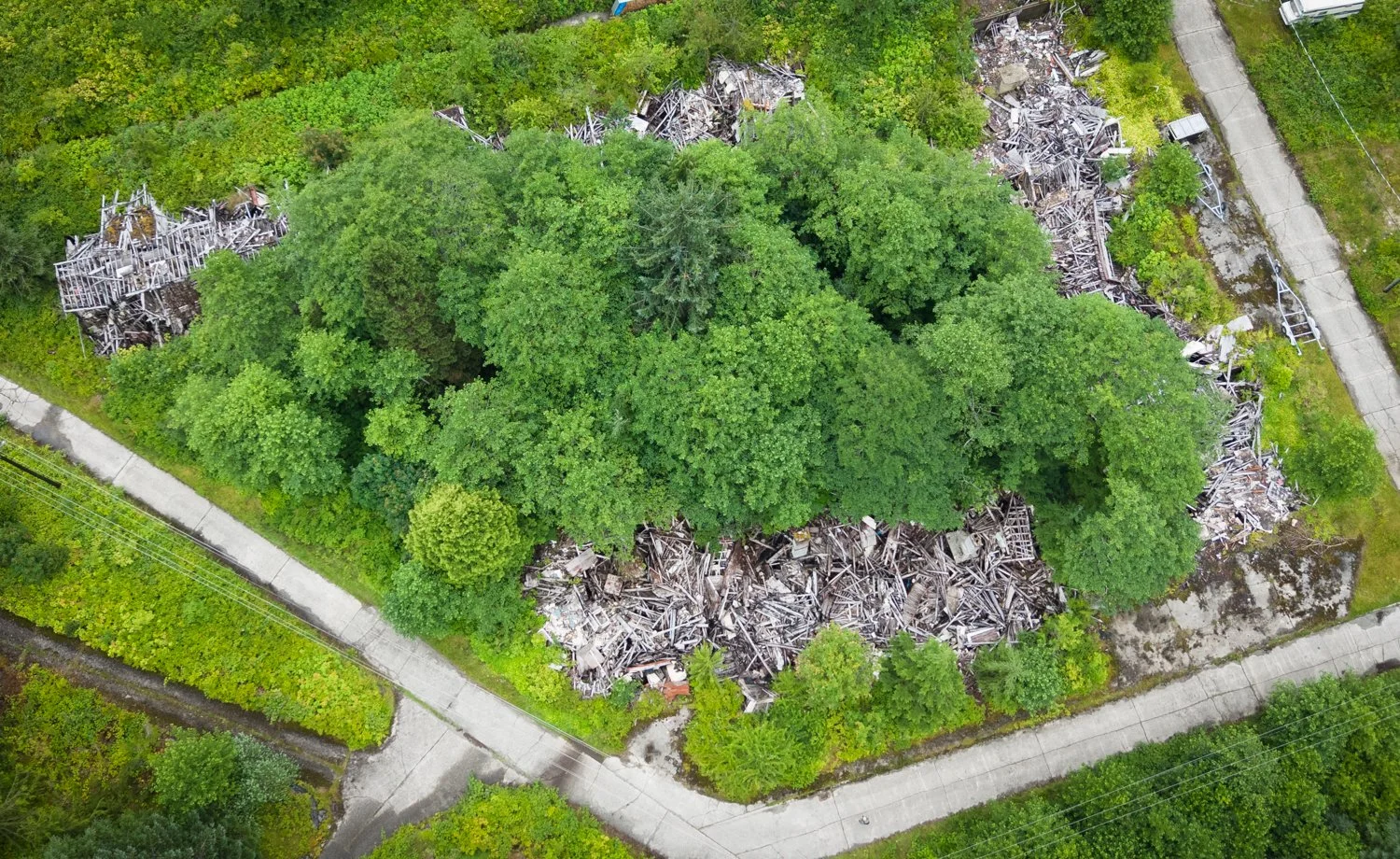
this neighborhood of company houses has fallen into themselves

oceanfalls from across the bridge that crosses link river

On our walk, we passed the old courthouse just as Amber was setting out the sign for the small gift shop inside, featuring artwork created by local residents. Naturally, we wandered in for a look.

That unplanned stop changed the next several days.

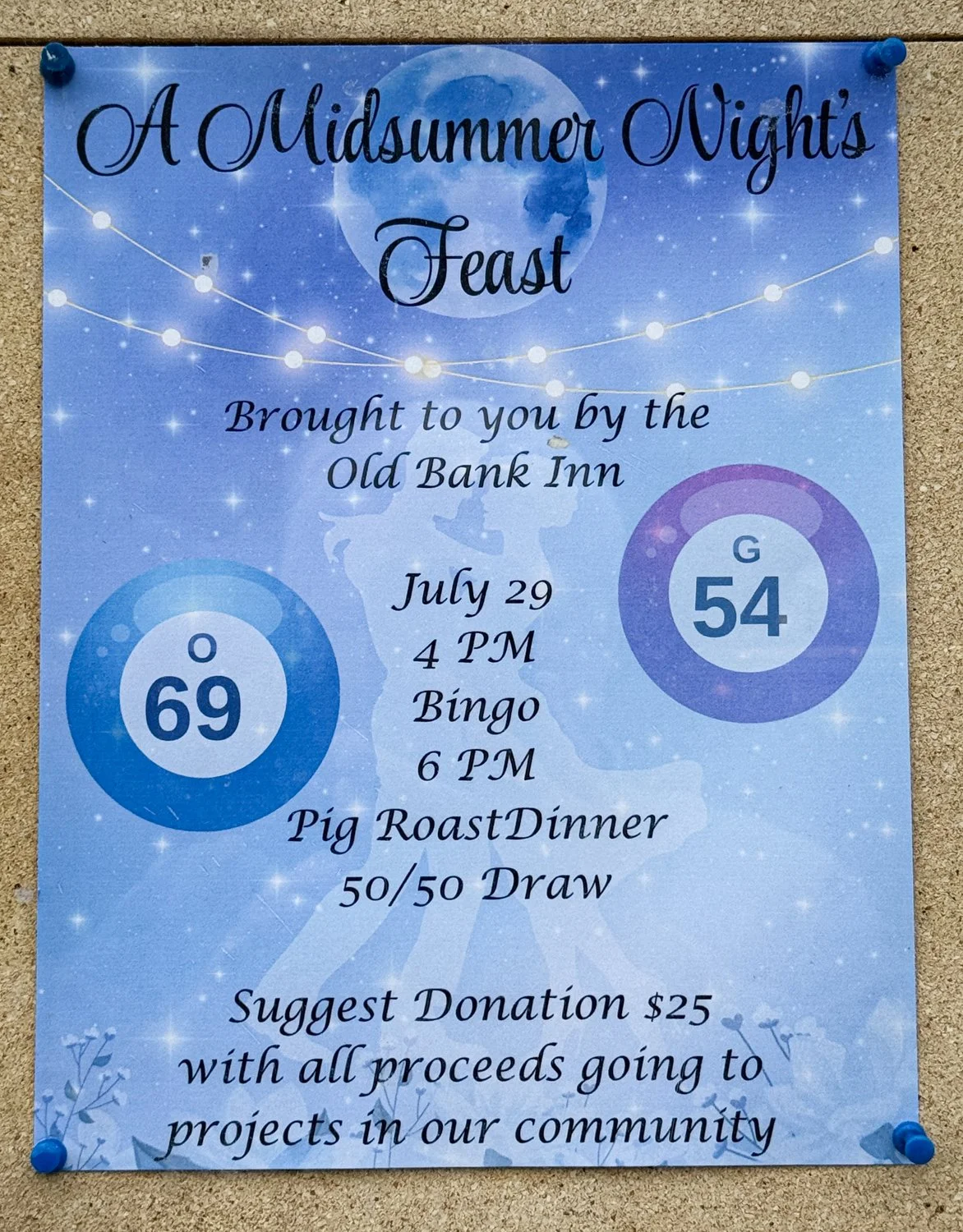
As we visited with Amber, she mentioned that the community's annual Mid-Summer night’s Feast was scheduled for Wednesday. Everyone was welcome, including transient boaters. The afternoon would begin with bingo, followed by the feast, all provided free of charge with only a suggested donation for those who wished to contribute.

all are welcome

There was no way we were going to miss an event like that.

The only disappointing news was that the bakery had been so busy preparing for the pig roast that there hadn't been time to make any fresh banana bread. Such are the tradeoffs of life in a small coastal community. We decided that was simply the yin and yang of cruising the Pacific Northwest.

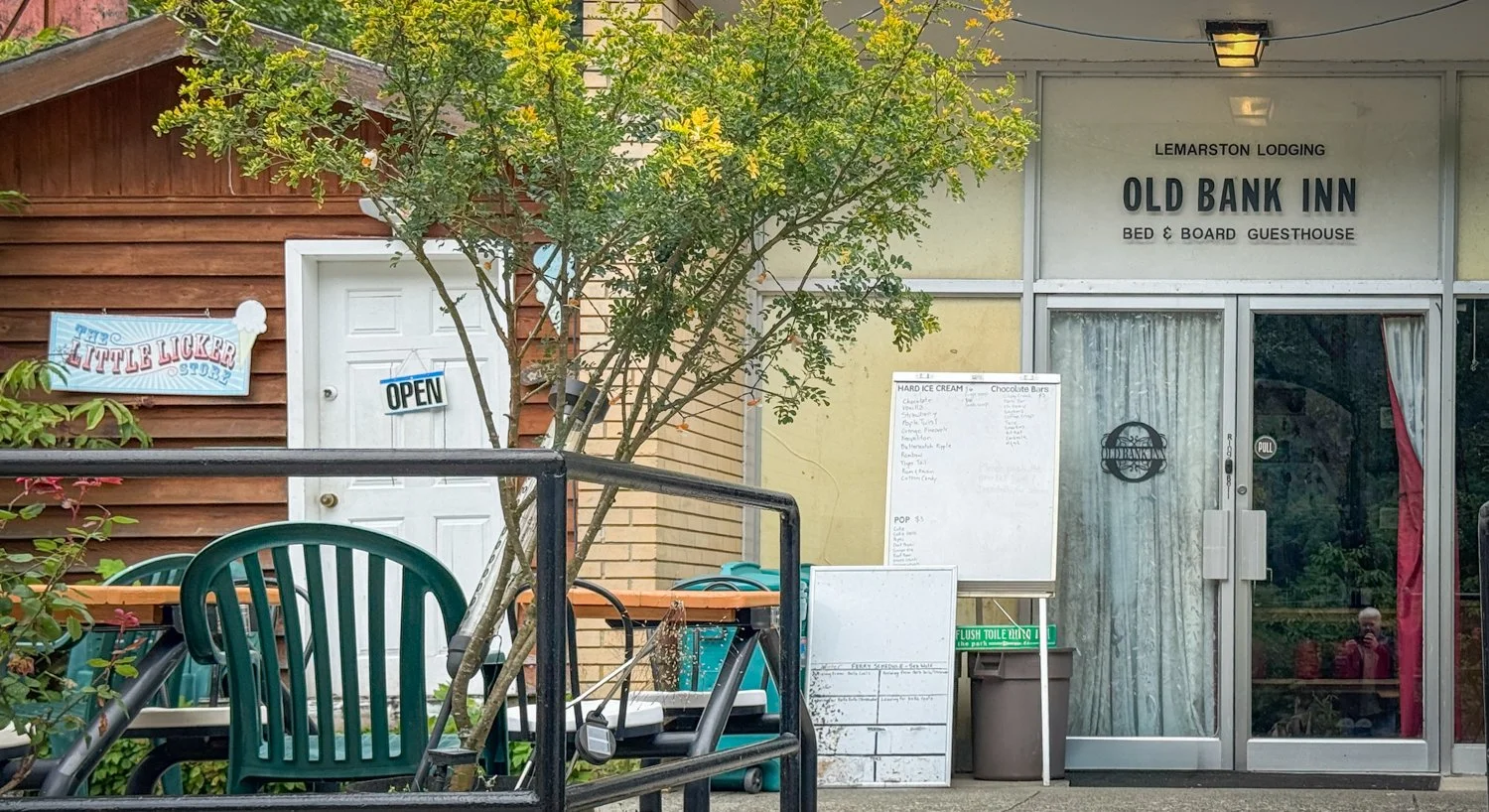
what would ocean falls be without a stop at the little licker for ice cream, twice

The weather, meanwhile, was making its own plans.

Rain was forecast to begin overnight and continue through the following day, accompanied by strengthening southeast winds. It sounded like the perfect excuse to enjoy a leisurely breakfast of pancakes and sausage before settling into a productive day aboard. Engine room projects, interior cleaning, catching up on blog posts, and listening to the wind whistle through the rigging filled the hours while rain swept across the harbor.

The forecast proved accurate. Winds gusted to nearly 40 knots, making OceanFlyer feel even more welcoming tied securely to the dock.

When Wednesday arrived, the community gathering began with bingo.

I honestly can't remember the last time I played, but it didn't take long to rediscover why the game has endured. Between plenty of laughs and a little beginner's luck, I somehow managed to win three games.

Bingo! Bingo!

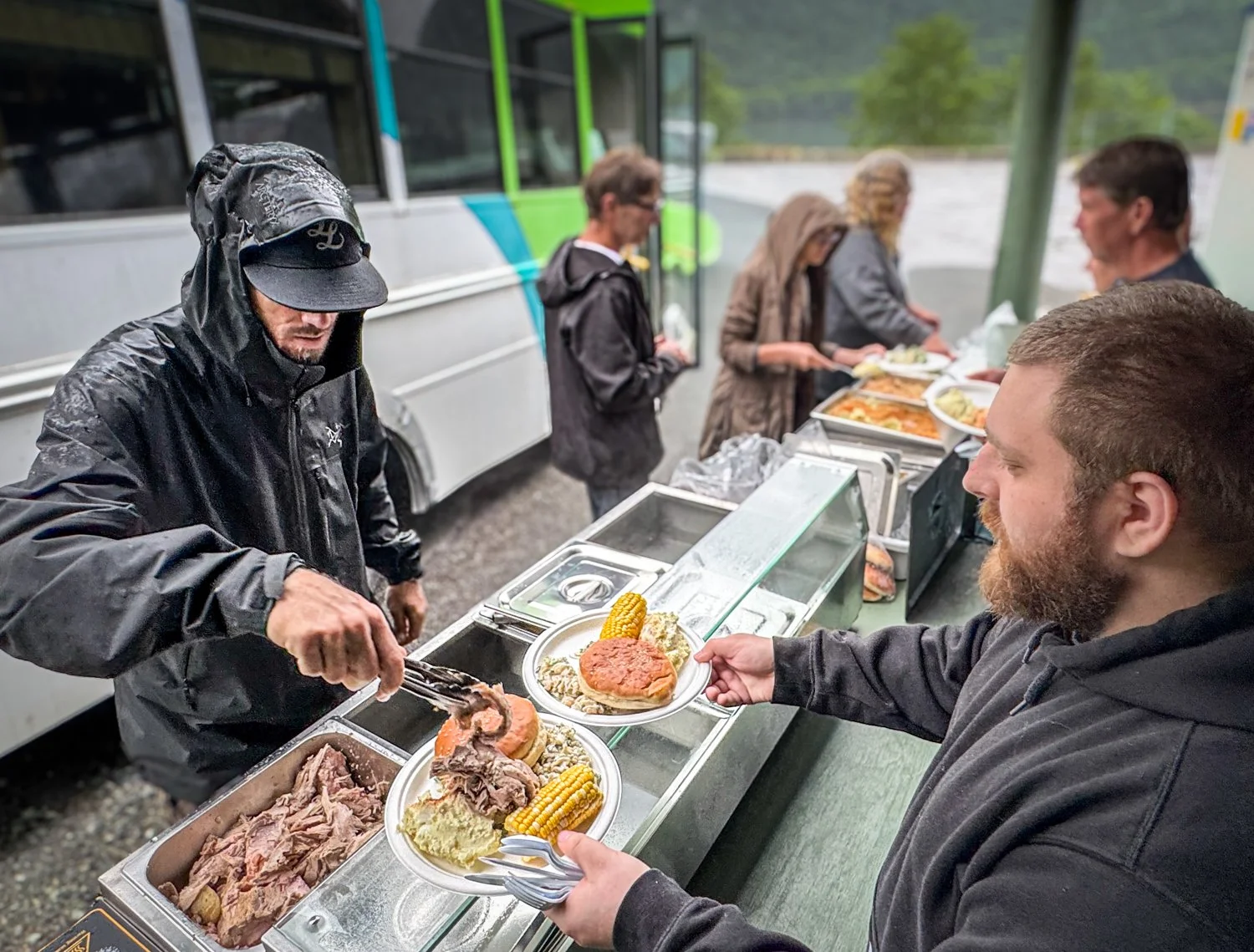
The festivities continued with a generous buffet sponsored by the Old Bank Inn. We certainly didn't leave hungry, but the meal wasn't the highlight of the evening.

everyone pitched in to serve up a delicious feast in the rain

What we'll remember most is the warm welcome extended by the residents of Ocean Falls. In a place as remote as this, it would have been easy for visitors to remain outsiders. Instead, we spent the evening sharing stories with local residents and fellow cruisers, leaving with new friendships and another reminder that some of the most memorable experiences afloat are the ones you never planned.