

Port McNeill to the Muirhead Islands
/The recent weather pattern seems to be stuck on a permanent playback loop: low clouds in the morning, gradually giving way to blue skies and increasing winds in the afternoon.
Knowing the routine, we timed our departure from Port McNeill to reach Stuart Narrows at slack water. The narrows are the gateway to Drury Inlet, and with calm water and light winds, the trip across Queen Charlotte Strait could hardly have been more pleasant.
Once through the narrows, Drury immediately offered up a surprise.
We have seen hundreds of humpback whales during our years cruising the Pacific Northwest, but never one inside Drury Inlet. Today changed that. About halfway down the inlet, we spotted a humpback feeding.
Another first.
It was a wonderful reminder that no matter how many years we spend cruising these waters—or how familiar we think a place has become—there is always something new waiting around the next corner.
We were hoping the same good fortune might extend to our anchorage.
We have a favorite spot tucked among the Muirhead Islands, a tiny one-boat hole that feels as though it was designed specifically for OceanFlyer. Karen had spotted four boats in the area on AIS the previous day, so we weren't particularly optimistic about finding it vacant.
Then, as we entered Drury, we passed two sailboats heading out through Stuart Narrows on the slack.
Maybe.
Farther in, two of the remaining AIS targets turned out to be rafted together in the cove adjacent to ours.
Maybe indeed.
As we rounded the final corner, there it was—our little cove, completely empty.
Some days everything simply falls into place.
We dropped the hook in 28 feet on an 8-foot tide, as reported at Jennis Bay, almost exactly where we had anchored the year before. As we finished setting the anchor, the clouds began breaking apart and patches of brilliant blue appeared overhead.
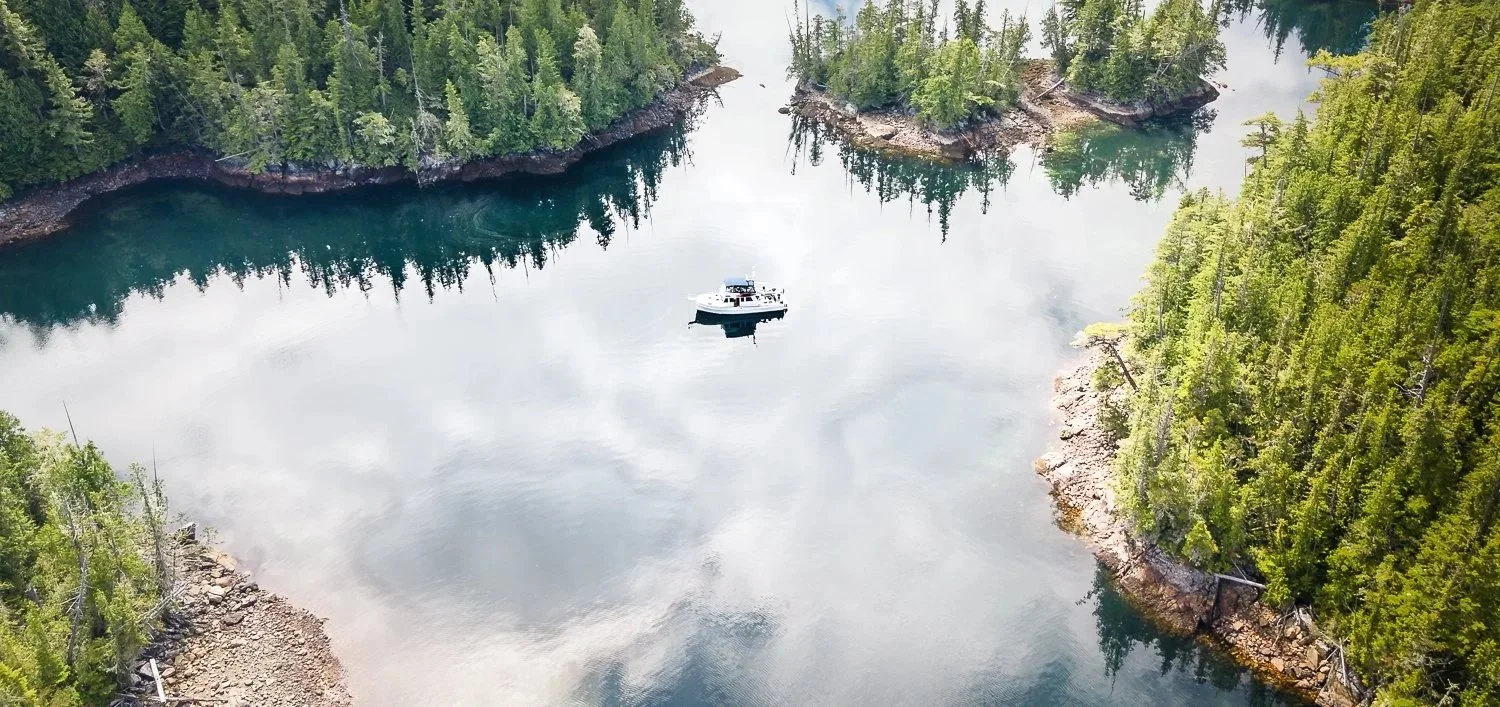
our favorite spot in the muirheads
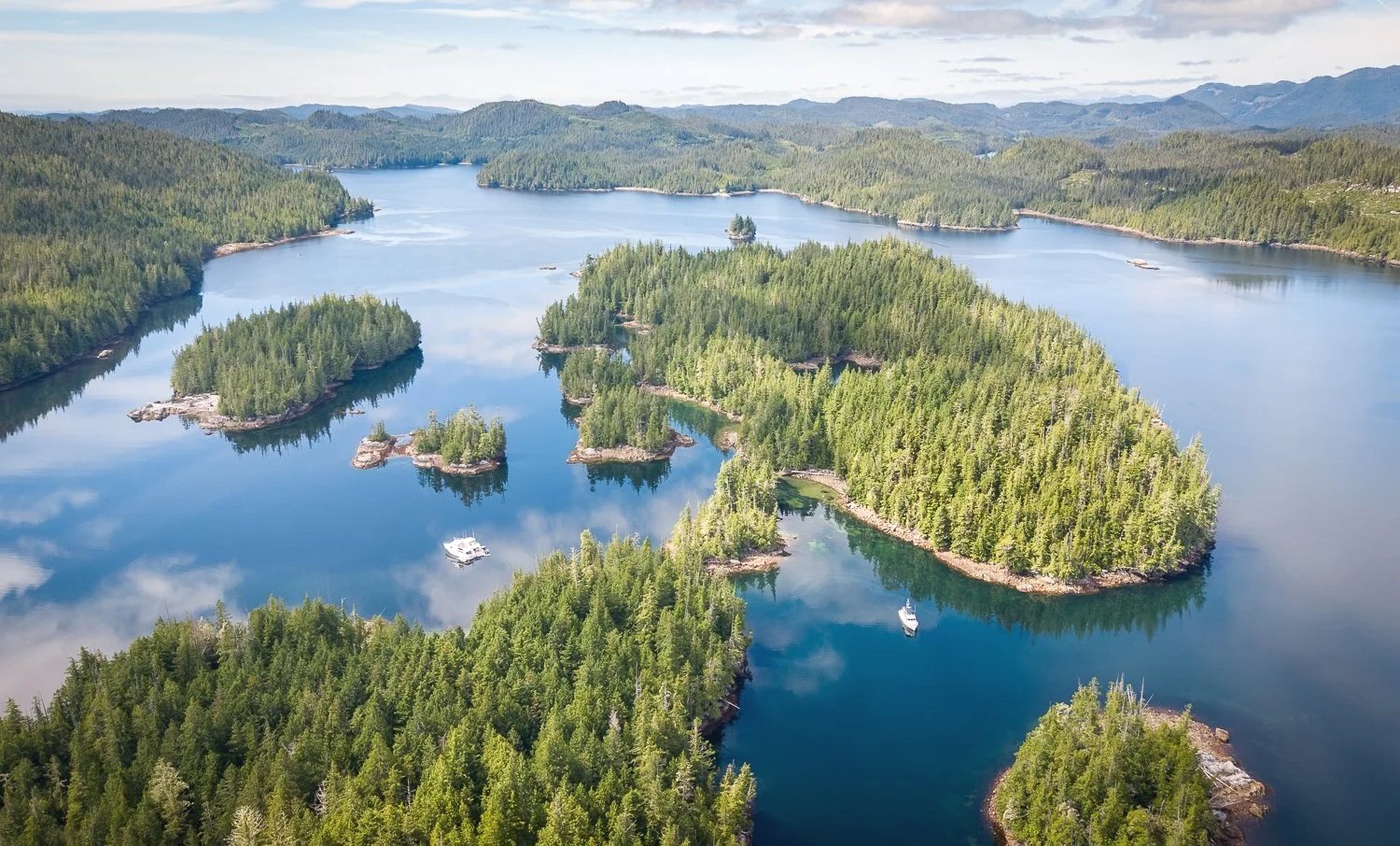
there are many great spots to drop the anchor in the muirheads
We had our favorite anchorage. The sun was coming out. Now we could turn our optimism toward another important matter: prawns.
Drury has historically been very good to us when it comes to prawning, and this year proved better than average. The weather followed suit, with calm mornings and sunshine breaking through most afternoons. It was shaping up to be one of those stays where there was very little incentive to move on.
Then came another first.
Across from our anchorage, on the northeast shore, we spotted a black bear working the beach. Then there were two. By our third day, we had seen three bears, each independently working adjacent stretches of shoreline.
We had heard recent reports of bears in Drury, but despite all our previous visits, we had never seen one here.
Drury itself continues to change. Logging has a long history in the inlet, and when we first began coming here, much of the activity had subsided and the old scars were slowly disappearing back into the forest. In recent years, logging has returned. Jennis Bay now supports a sizable camp, and evidence of harvesting can be seen throughout the inlet. It isn't always the most attractive addition to the landscape, but forestry remains an important part of the local economy and part of Drury's long history.
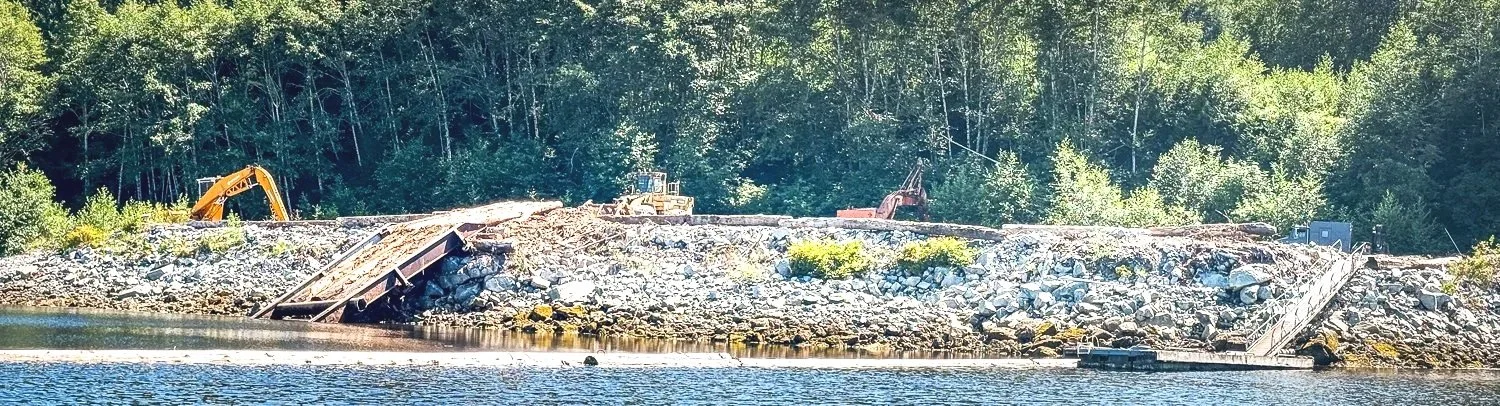
active log dump in druy inlet
Our own activities were decidedly more recreational.
With the prawn pots producing nicely, we invited the crew from M/V Voyager over to share the bounty. They are a delightful couple from Kentucky, relatively new to cruising this part of the world, and listening to them recount their adventures reminded us of our own first years exploring this coast.
After so many seasons, we sometimes wonder whether we have lost a little of the wide-eyed amazement that accompanied those early trips. Places that once seemed impossibly remote are now familiar names on the chart. Passages that once felt like expeditions have become old friends.
But enthusiasm is wonderfully contagious.
Listening to the Voyager crew describe what they had seen and discovered, their excitement impossible to miss, reminded us just how extraordinary this place really is. We found ourselves enjoying their discoveries almost as much as they were.
Perhaps that helped inspire our next adventure.
It had been many years since we had traveled all the way back into Actaeon Sound, so we climbed into the dinghy and set off on a 16-mile round trip.
There is plenty to explore along the way, including remnants of old logging operations slowly being reclaimed by the forest. To our delight, the old dock at the end of a logging road just past England Point was still there.
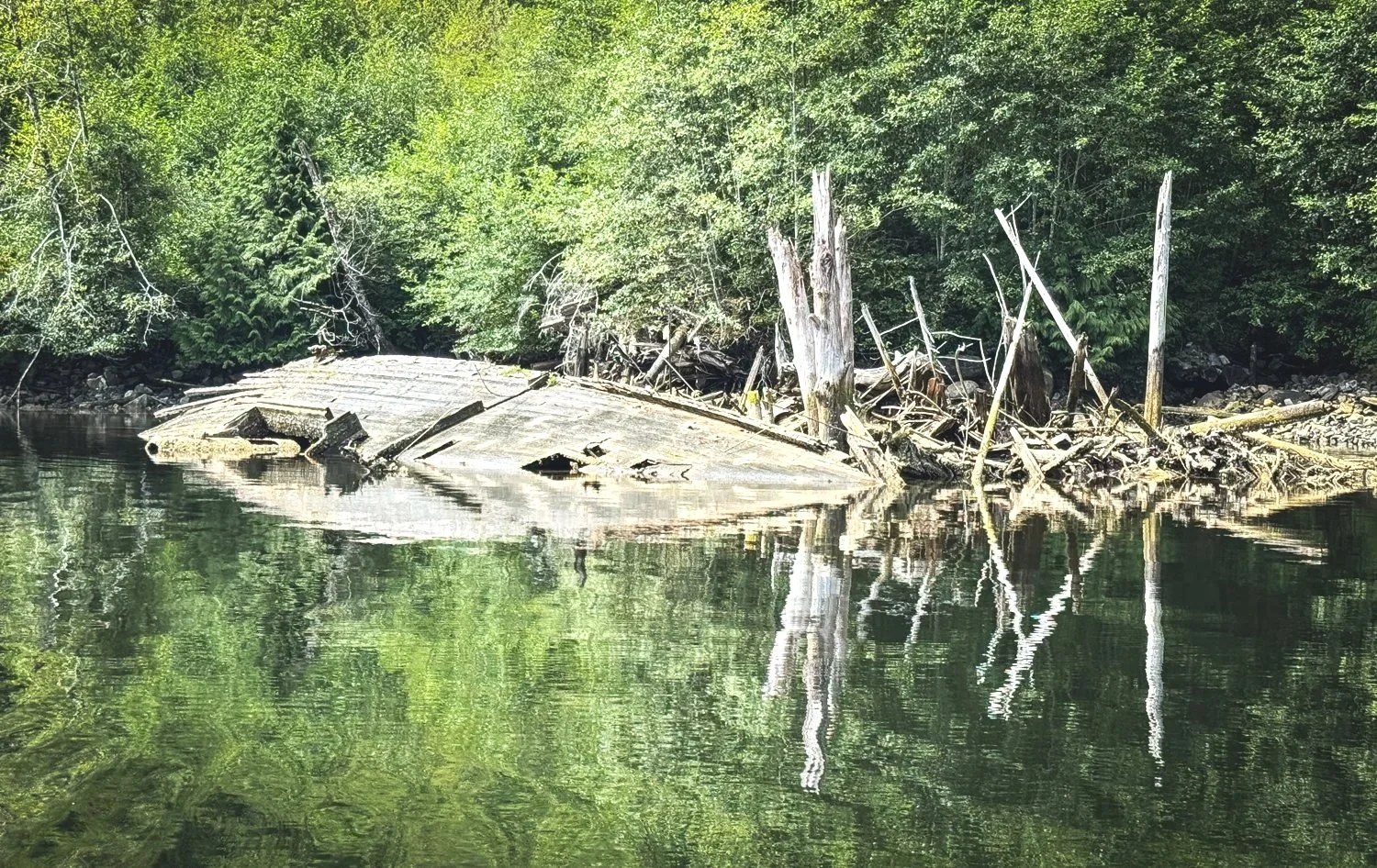
abandoned logging camp in Actaeon Sound
We tied up and went ashore to stretch our legs. The road was considerably more overgrown than we remembered, and the vegetation eventually discouraged us from going very far. Still, it was worth the stop. From the old logging road, the views back down Actaeon Sound are spectacular.
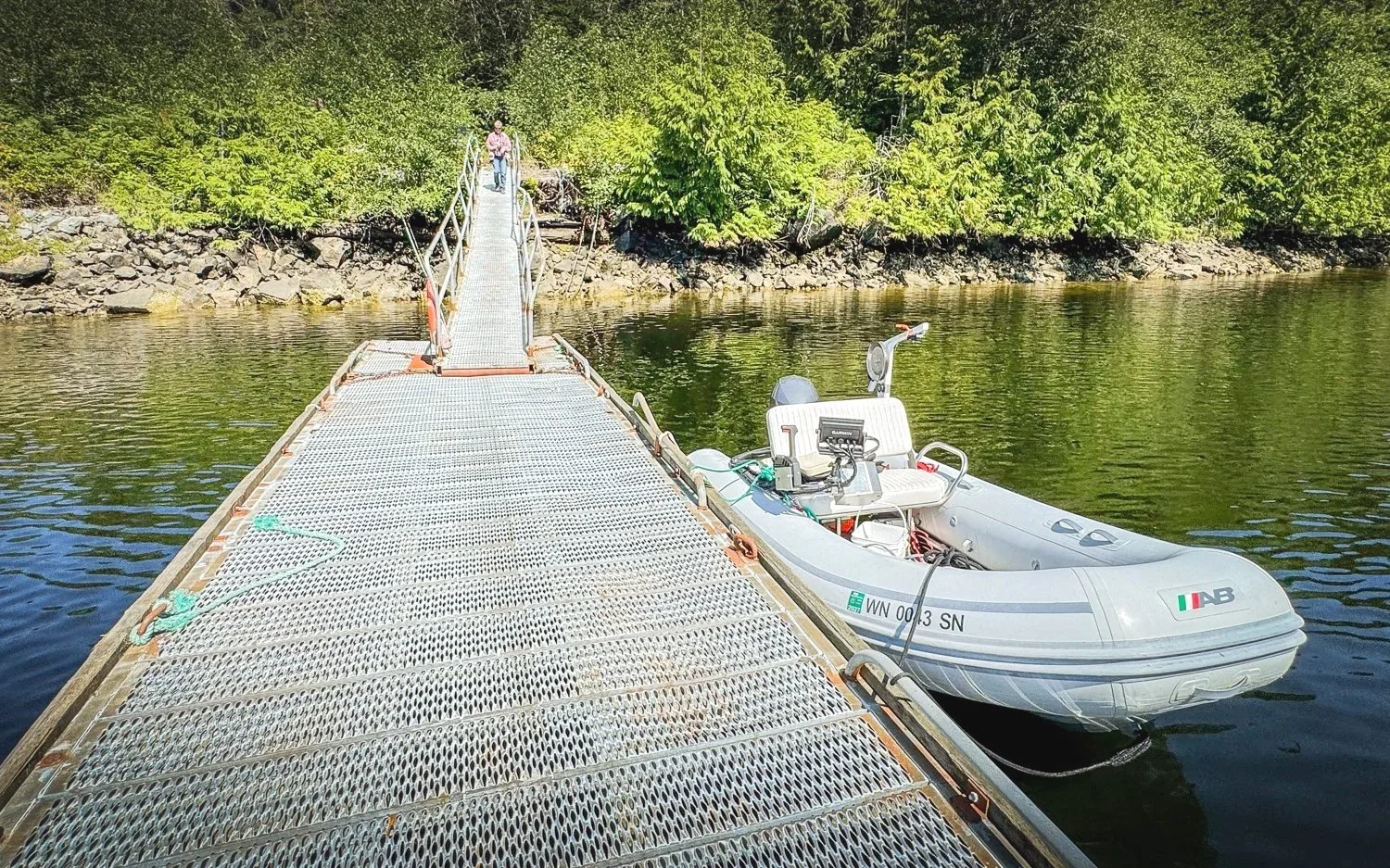
old logging dock provides a welcomed walk on the land
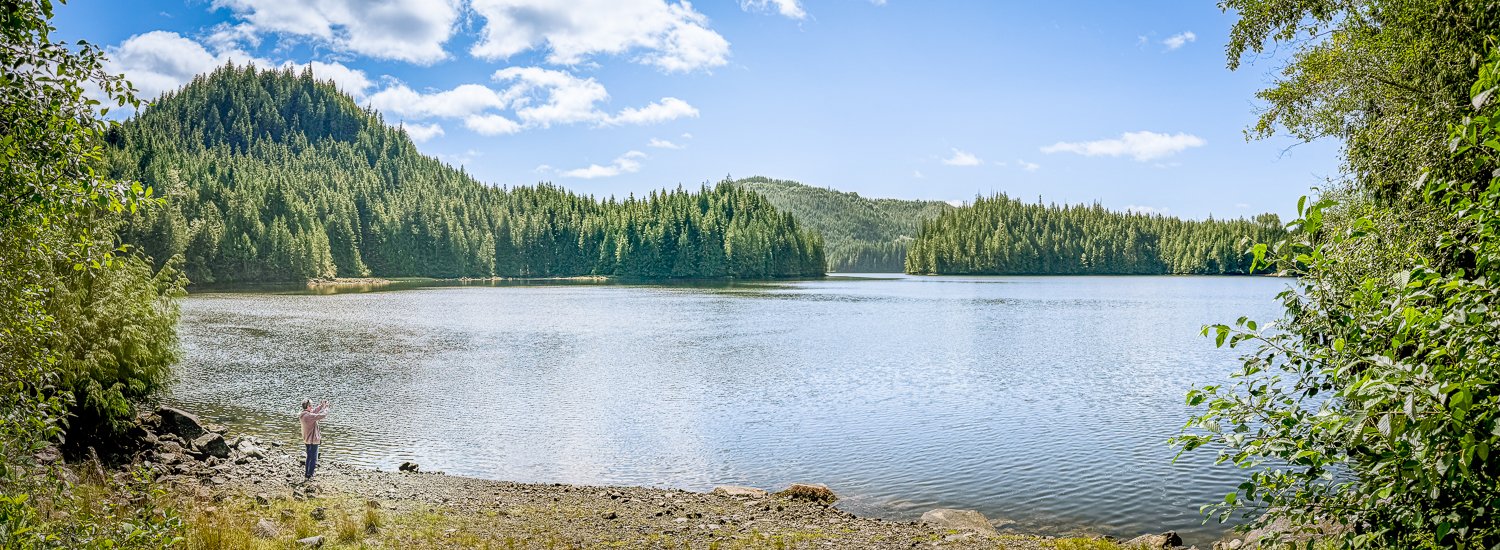
the view back down Actaeon Sound
At the head of the sound awaited one more surprise: Tsibass Lagoon.
Every previous time we visited, the entrance has been a mass of seething whitewater. We headed up expecting to take another look at the spectacle and then turn around.
Instead, we found the entrance almost calm.
That changed everything.
We have a hard time passing up an opportunity to poke our bow into a lagoon, and this one had been taunting us for years. With only about a knot of current running through the entrance, we carefully pushed through.
And just like that, after all these years, we could finally say we had been inside Tsibass Lagoon.
We didn't linger.
The current was already beginning to build behind us, and the previously quiet water was starting to boil. Curiosity satisfied, we turned around and made our exit while conditions were still manageable.
Based on the depths we observed in the rocky entrance, I would only consider taking OceanFlyer through at the maximum tide and absolute slack water. The pass would need to be navigated at dead slow speed to carefully pick a route through the rocks, and that is not something I would want to attempt with any meaningful current pushing the boat.
The dinghy, however, had finally allowed us to satisfy a curiosity that had been lingering for years.
Back at OceanFlyer, another successful haul of the prawn pots ensured that dinner would begin with fresh-caught prawns.
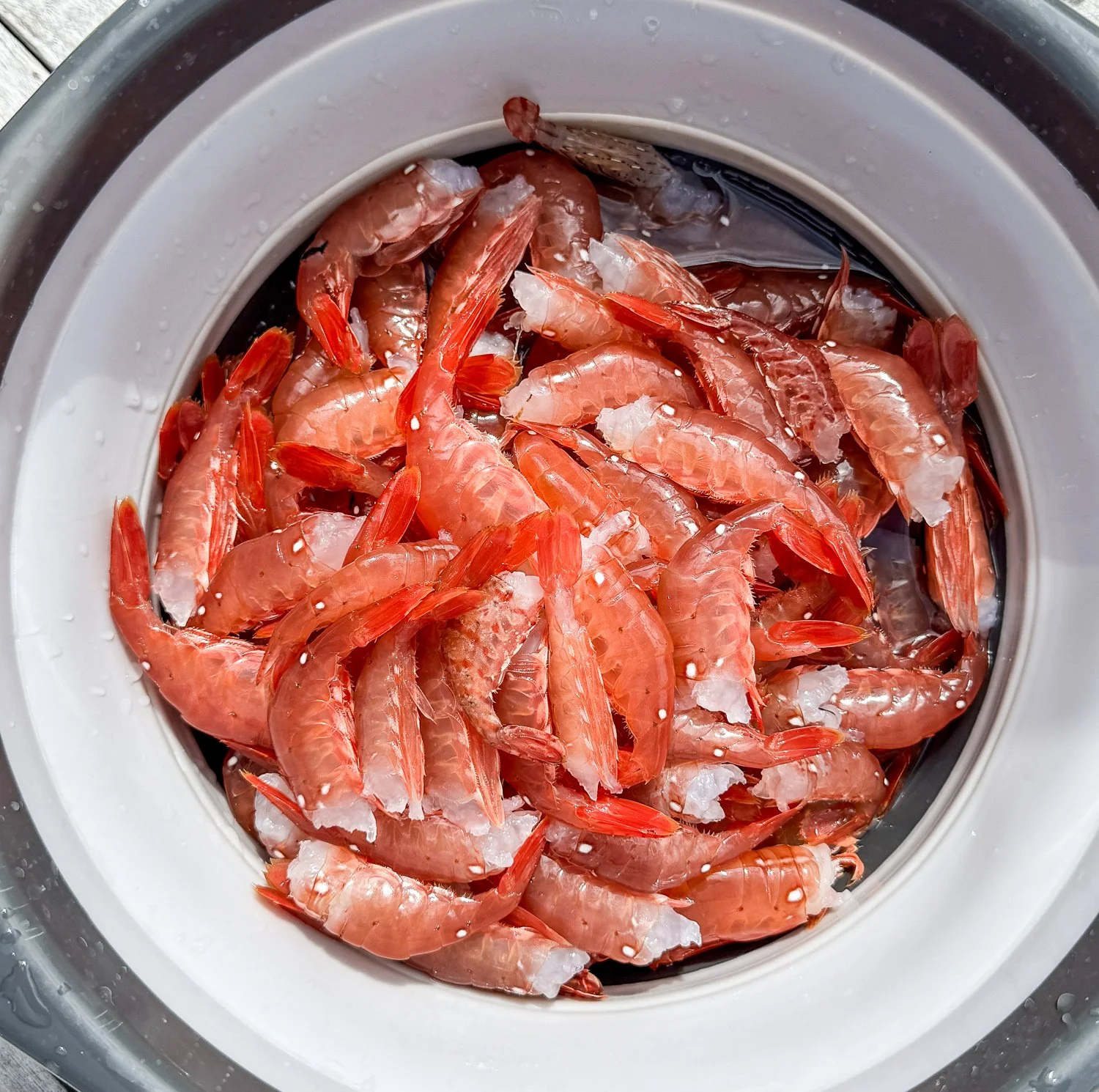
these are the parts we keep
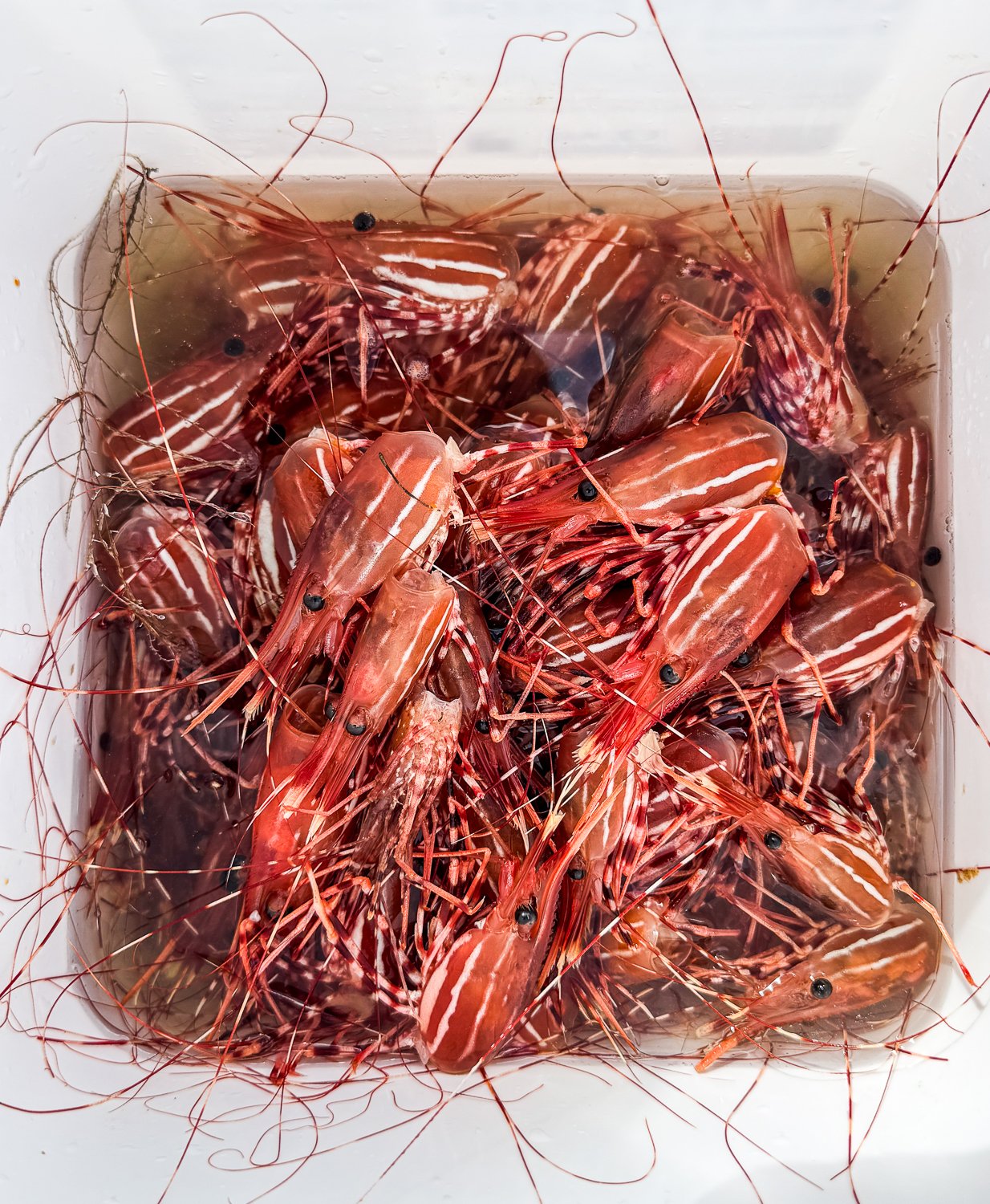
these are the parts that we return to the ocean
Humpbacks where we had never seen them before. Three bears working the shoreline. Our favorite one-boat anchorage waiting empty for us. A return to Actaeon Sound. Finally slipping through the entrance into Tsibass Lagoon. Plenty of prawns. And, perhaps best of all, the opportunity to see this coast again through the eyes of people discovering it for the first time.
We came to the Muirheads expecting to revisit an old favorite.
Instead, over three wonderful days, an old favorite managed to feel new again.
And that may have been the greatest delight of all.
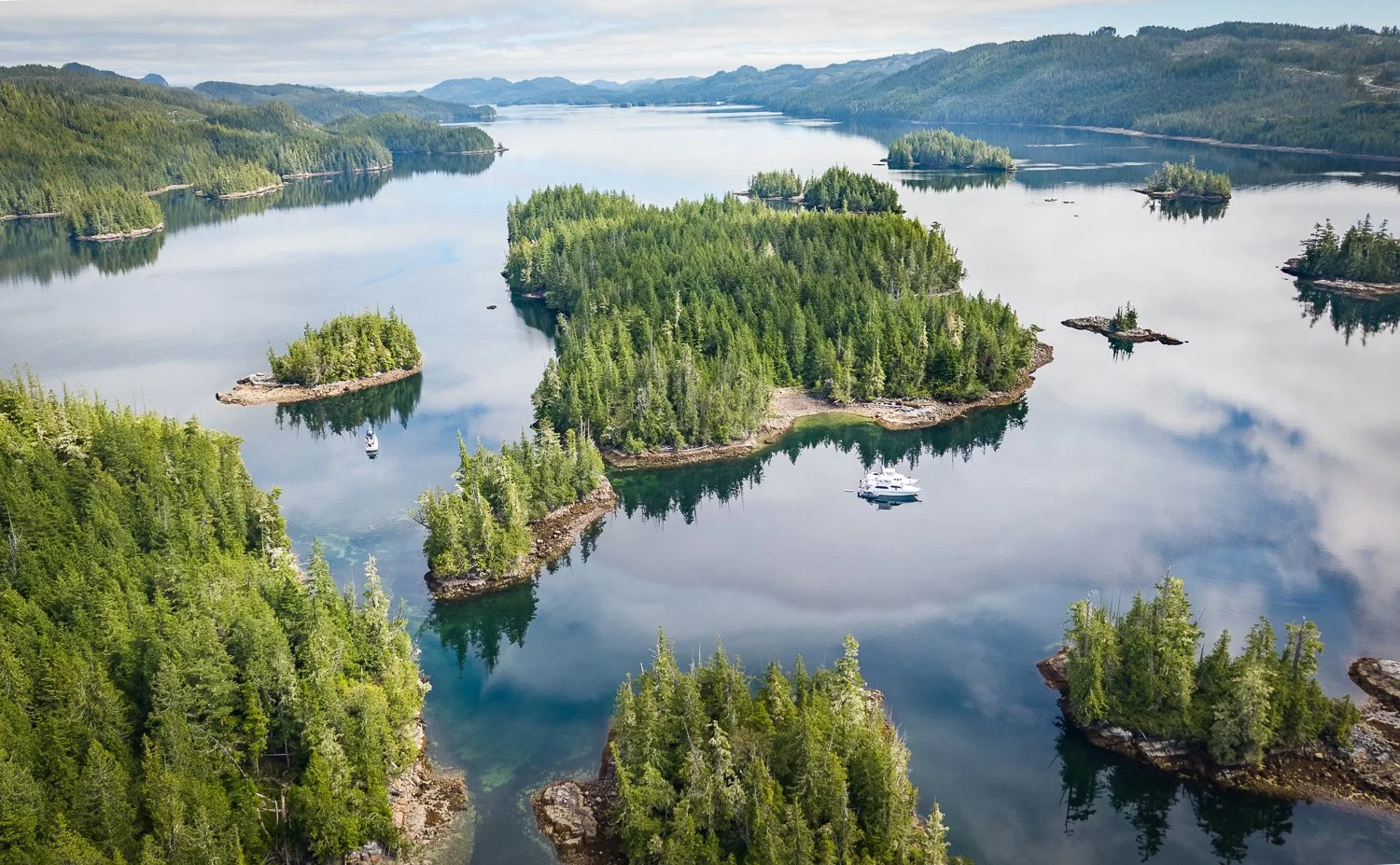
looking east down drury sosund from the muirheads
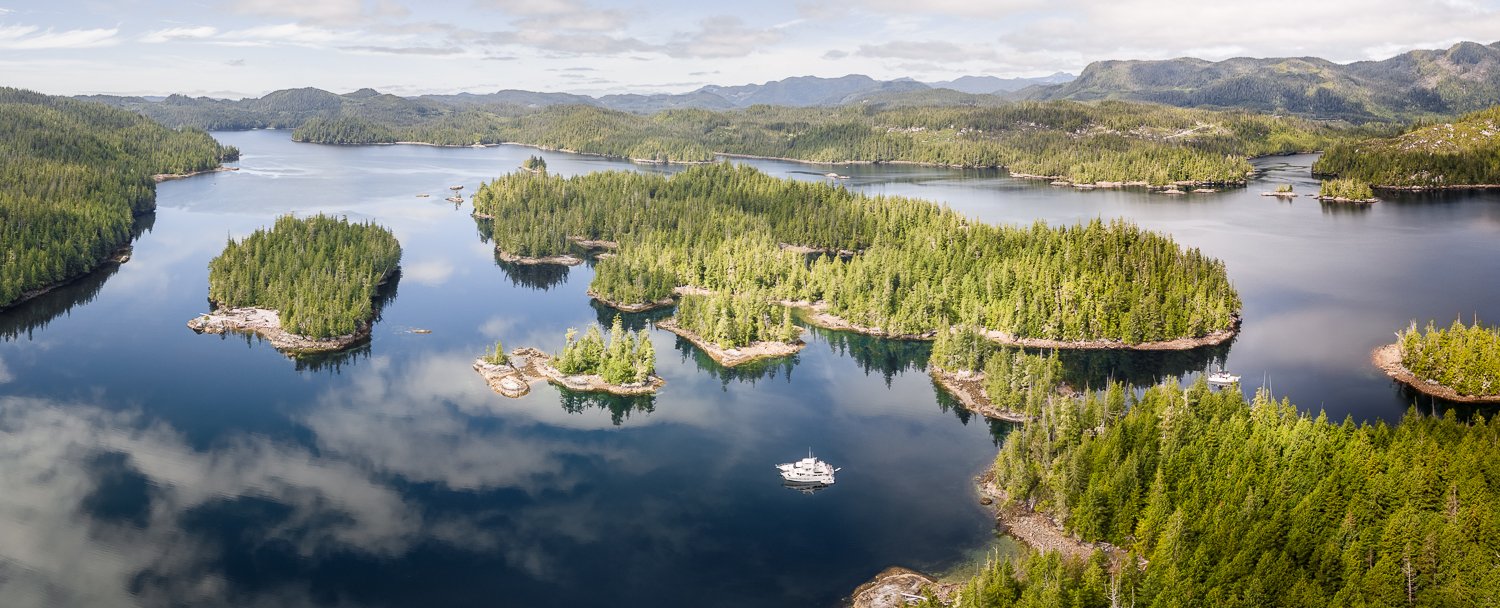
from the muirheads looking west into sutherland bay