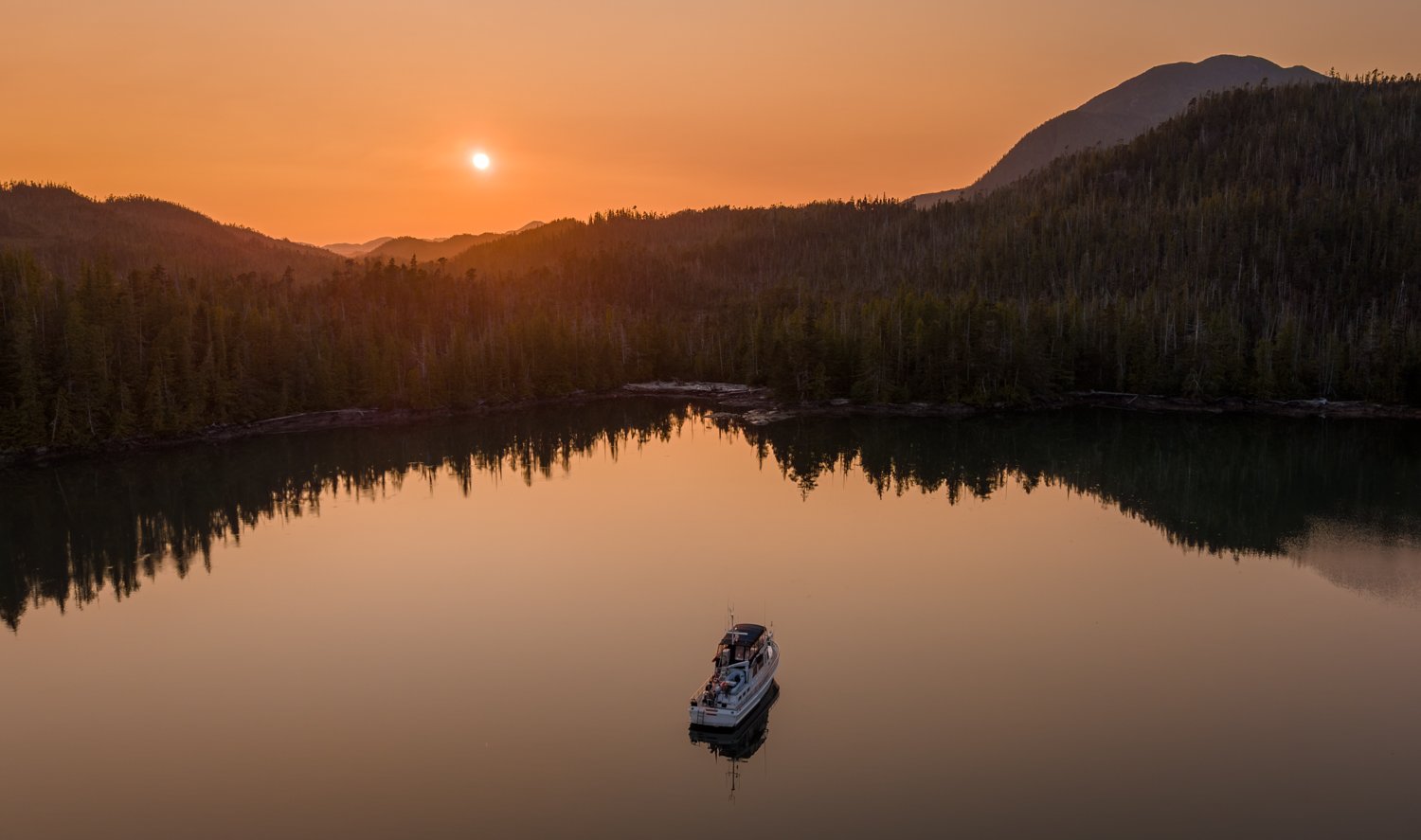
Shearwater to Pruth Bay

Today wasn't about reaching a particular destination.

It was about positioning ourselves for rounding Cape Caution in two days.

Our original plan called for a five-hour run to Kwakume Inlet, just off Fitzhugh Sound. It would put us in good position for the next leg while providing another comfortable night at anchor.

The day, however, had other ideas.

A favorable current gave OceanFlyer an unexpected push, allowing us to cover considerably more distance than planned. Rather than arrive early and stop short, we decided to take advantage of the extra miles and changed our destination to Green Island Anchorage.

It seemed like the perfect adjustment.

Until it wasn't.

As we continued south, the southeast wind steadily increased, along with the accompanying sea state. Green Island is one of our favorite anchorages, but it does have one weakness. During strong southeast winds, especially near high tide when the drying reefs and islets become submerged, enough fetch develops between the islands to make the anchorage a bit uncomfortable. The forecast was calling for exactly those conditions.

Time for Plan C.

We altered course once again and headed for familiar Pruth Bay.

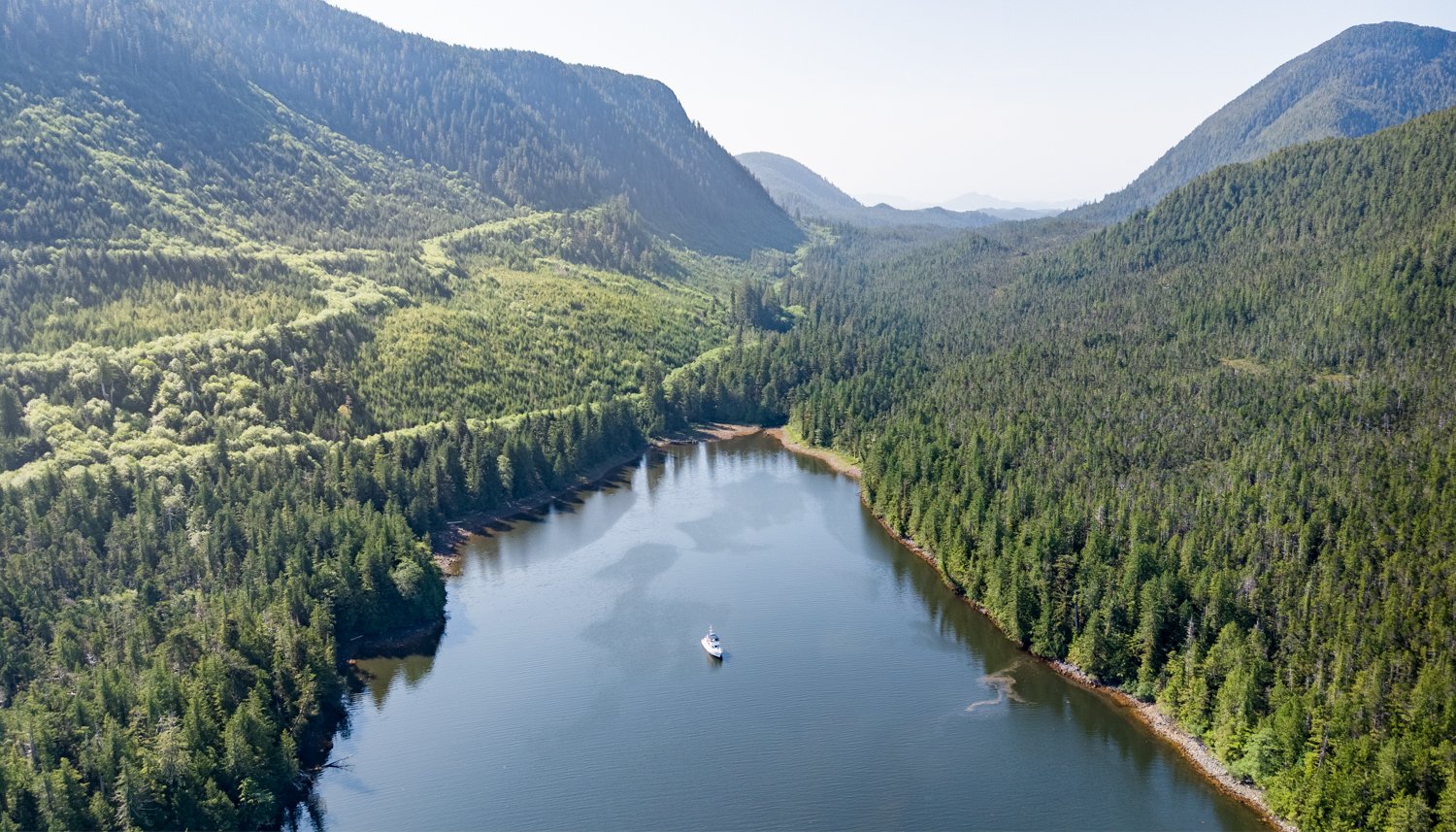
Pruth has proven itself time and again to be a dependable refuge in southeast weather. While some wind still finds its way into the bay, the surrounding land prevents any significant sea from developing, making it a far more comfortable place to spend the night.

It was another reminder that successful cruising is often less about faithfully following the original float plan and more about continually adapting it to the conditions at hand.

Tomorrow will be much the same.

Our float plan includes two possible destinations. Which one ultimately becomes home for the night will depend entirely on the sea conditions we encounter as we approach the first option.

Out here, flexibility isn't simply convenient.

It's one of the most valuable pieces of safety equipment on the boat.
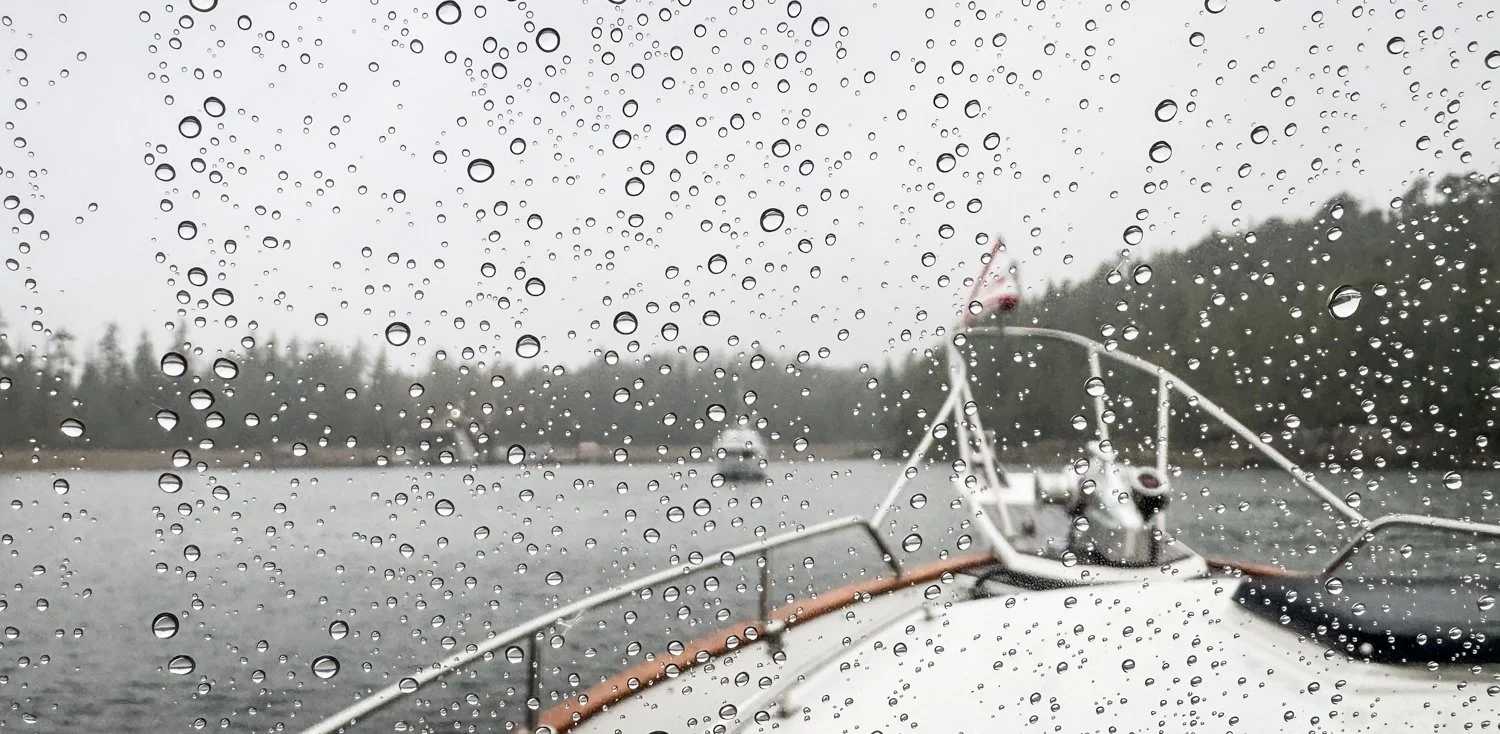
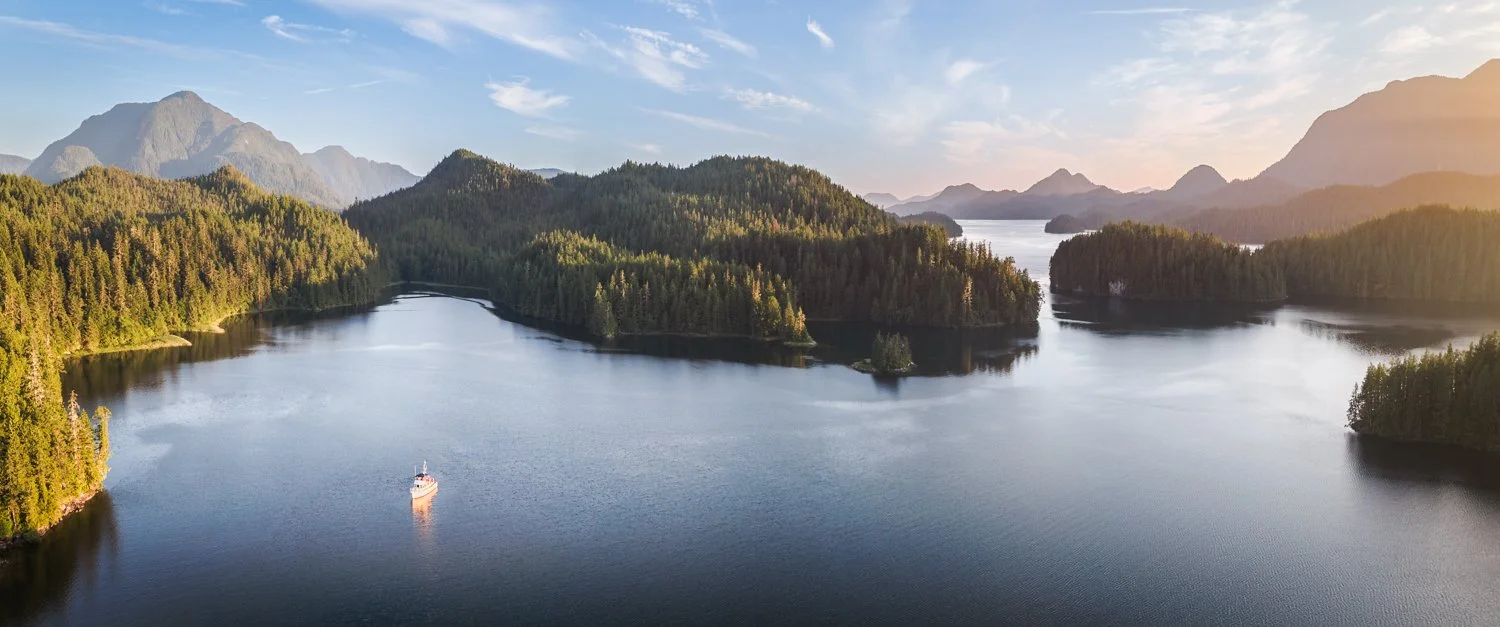
Rain settles into Pruth Bay
Troop Narrows to Shearwater

Not every cruising day is defined by a challenging passage or a spectacular destination. Some days simply serve as a bridge between adventures, and today was one of them.

The run from Troop Narrows to Shearwater was about as straightforward as they come. Despite its name, Troop Narrows presents few challenges. It is well charted, with ample depth and currents that rarely dictate when you can safely transit. Before long, we were approaching familiar docks at Shearwater.

Our first stop wasn't our slip, but the fuel dock. We topped off with 100 gallons of diesel—not because we needed it immediately, but because it gives us greater flexibility as we begin the journey south toward our next planned fuel stop in Port McNeill. One of the lessons we've learned over the years is that having options is almost always worth more than squeezing every last mile from a tank of fuel.

Shearwater also marks a return to the practical side of cruising. The next couple of days will be filled with laundry, routine maintenance, planning the next leg of the trip, and checking off the collection of small boat projects that seem to accumulate after weeks of exploring remote anchorages.

Of course, not every stop in civilization has to be about chores.

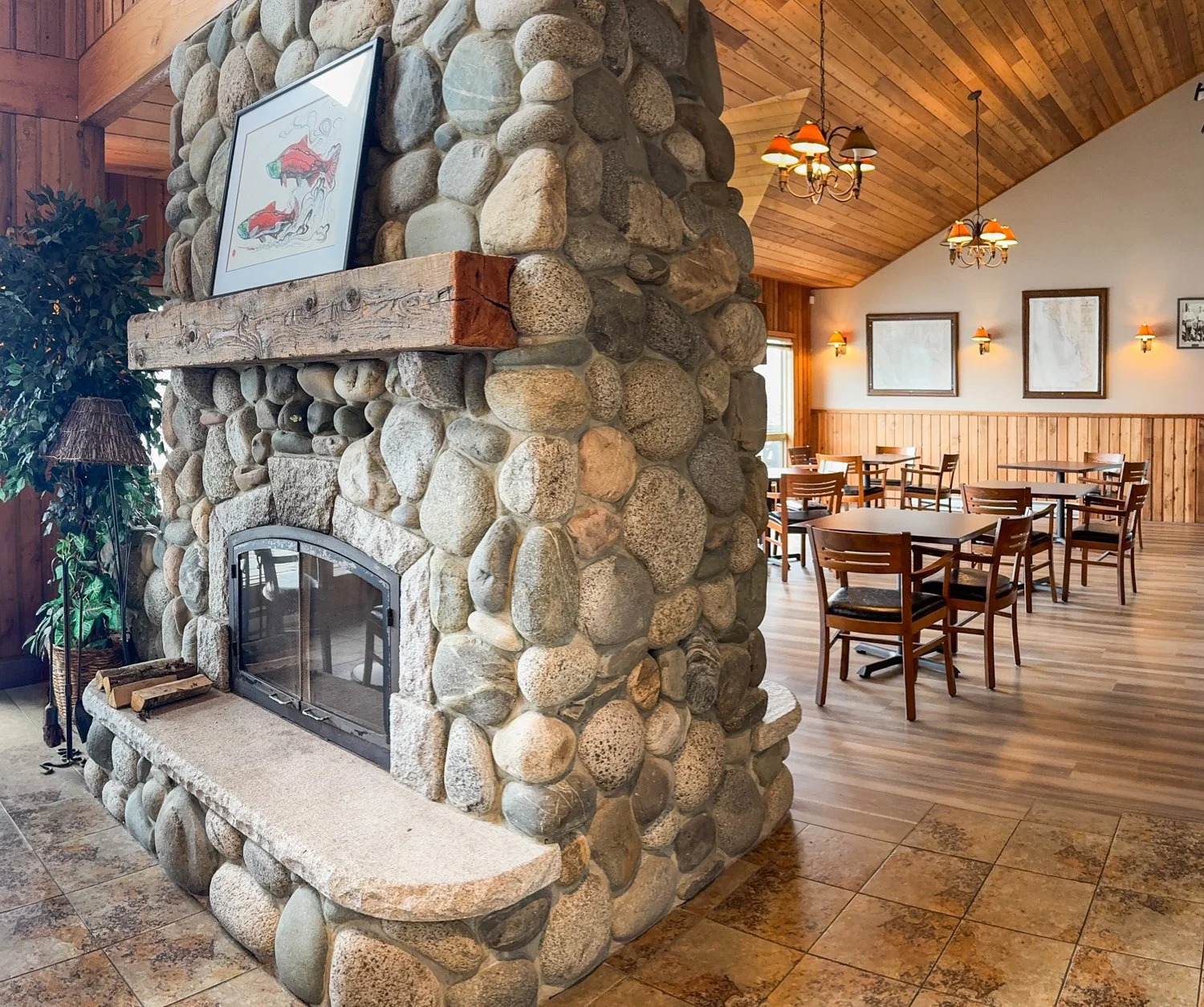
During Karen's trip back to the States earlier this summer, I discovered the Lodge's new restaurant and enjoyed it enough to return twice. Karen missed those meals, so she made it clear that our first evening back in Shearwater would include dinner there. It proved to be an excellent choice. Our dock neighbors aboard Leigh Ann joined us, and all of us came away impressed by both the food and the relaxed atmosphere.

the new resturant at the lodge is worth a visit

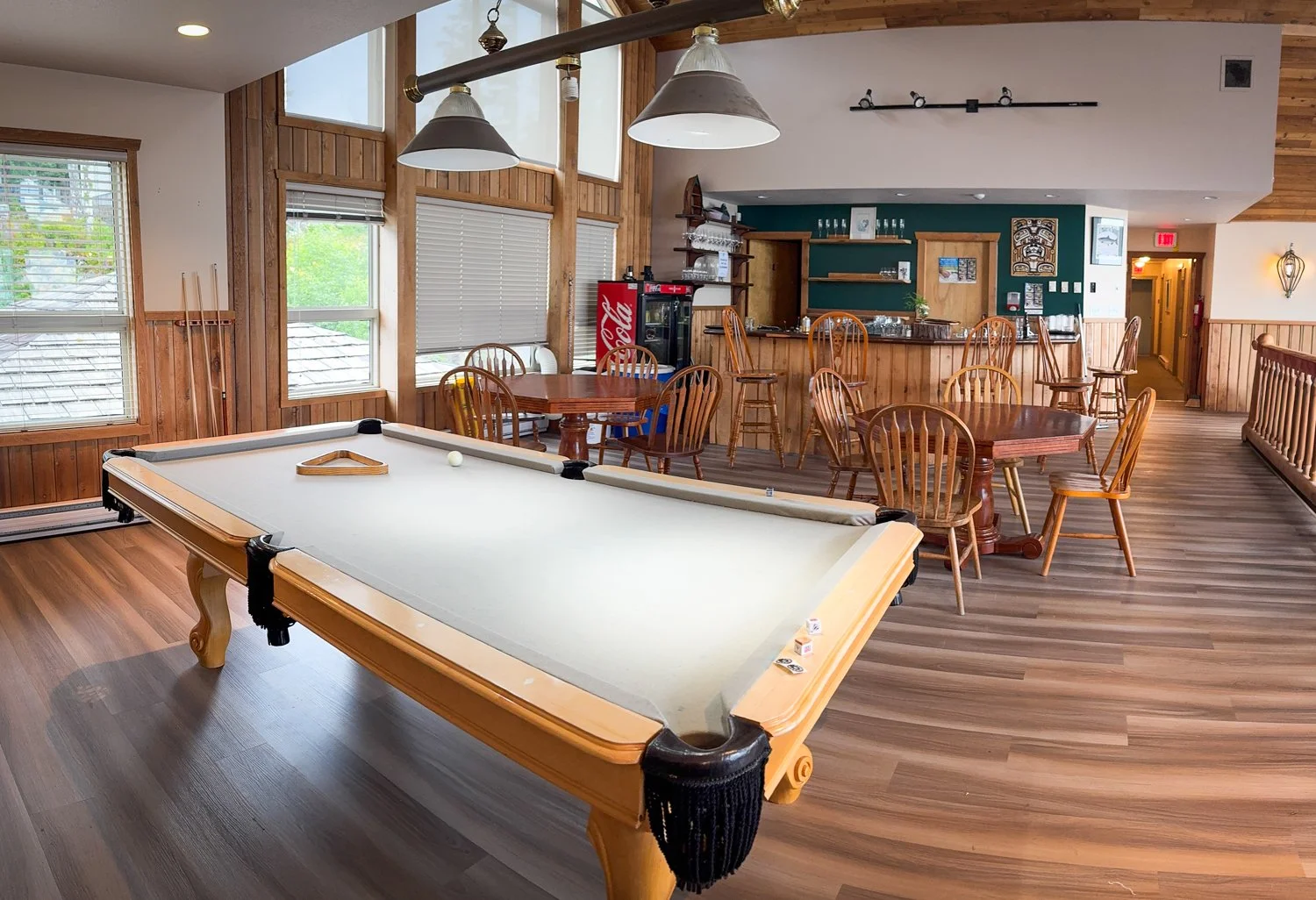
As we were leaving, Karen noticed a small sign in the lobby pointing upstairs to a lounge. Curious, we returned the following evening when it opened. What we found felt like one of those discoveries that somehow escapes most visitors. Comfortable couches overlook the harbor through large windows, while the adjoining bar offers a handful of tables, a pool table, and, best of all, the ability to order anything from the restaurant menu.

fun and games and a full menu at the lounge

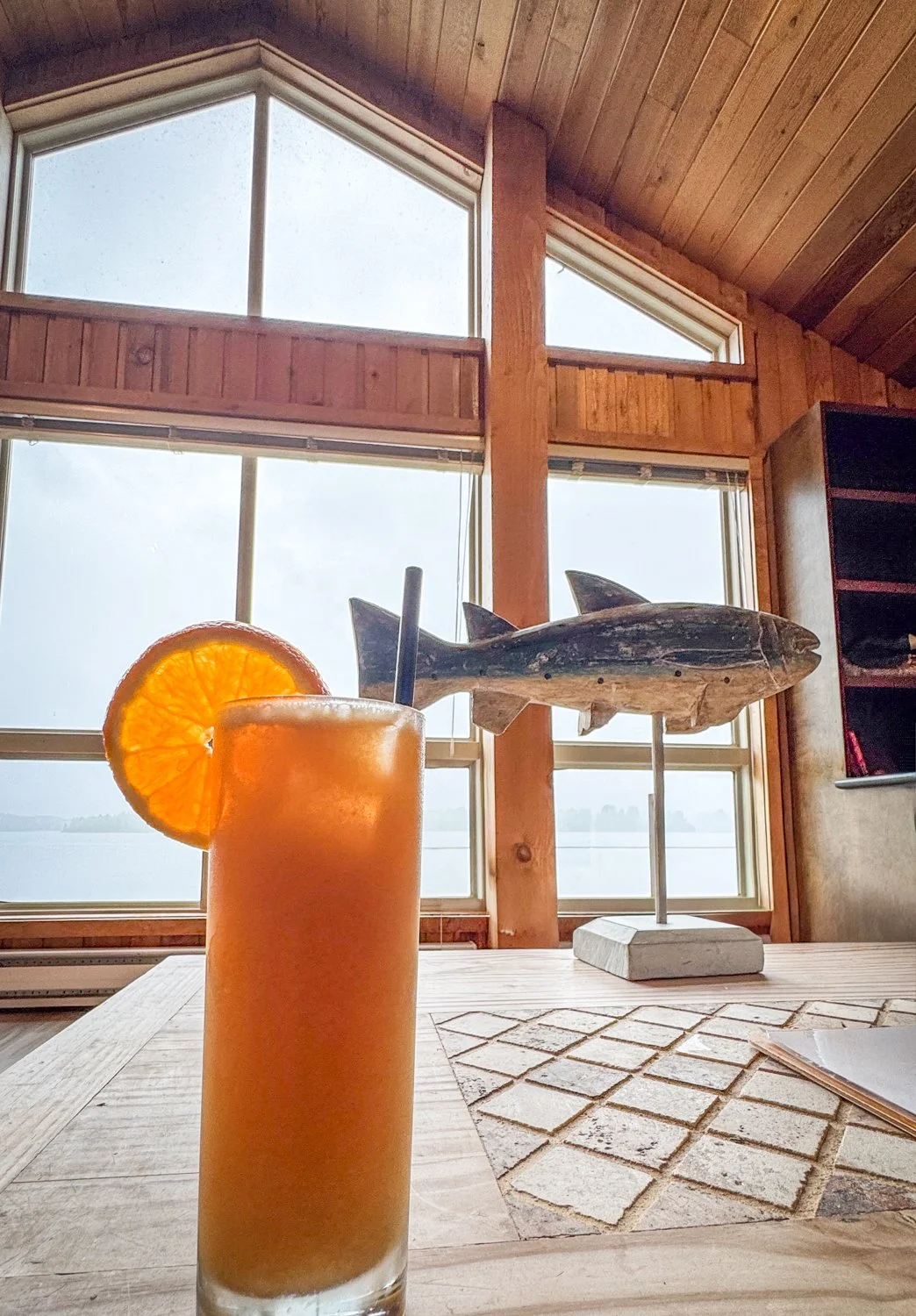
comfy couch and a delicious pain killer overlooking kliktsoath harbour

It's the kind of place that invites you to linger long after your meal is over.

Like many of our favorite discoveries on this cruise, it wasn't something we'd planned to find. Sometimes all it takes is following a small sign, opening an unfamiliar door, and being willing to see what's on the other side. We have a feeling the Shearwater Lounge will become a regular stop whenever our travels bring us back this way.

Tom Bay to Troop Narrows

2026.7.22 – Tom Bay to Troop Narrows

One of the advantages of traveling at displacement speeds is that time is often your greatest tool. Rather than forcing the boat through marginal conditions, we simply adjust our schedule and let the tide work for us.

Today's departure from Tom Bay was dictated by Perceval Narrows. While the narrows themselves are wide, well charted, and straightforward to navigate, the real consideration lies just outside. When a strong ebb collides with incoming Pacific swells, the water can become surprisingly rough as the opposing forces stack the seas.

Fortunately, neither the tide nor the weather had any interest in making things difficult. By timing our passage near slack water and with only a gentle swell rolling in from the ocean, we slipped through in calm conditions. It was another reminder that a little patience often pays far greater dividends than horsepower.

Our destination, Troop Narrows, is one of those places that doesn't attract attention because of dramatic scenery or challenging navigation. Instead, its charm lies in the collection of small coves tucked along the passage, each offering a secure anchorage with a different perspective on the surrounding mountains and scattered islets. It's the kind of place where moving a few hundred yards can completely change the view from your salon windows.

At the southern anchorage, the sage grass lined shoreline becomes excellent bear habitat early in the season, adding another reason many cruisers linger here. This time, however, our visit is less about wildlife and more about preparation.

We'll spend a couple of quiet days at anchor before returning to Shearwater. Civilization, at least by our recent standards, awaits us there—laundry, fresh water, a handful of boat projects, route planning for the next leg south, and, perhaps most importantly, treating the ship's chef to a few well-earned meals ashore before we once again trade marina docks for remote anchorages.

troop narrows is one of those undiscovered ancorages

Alexander Inlet to Tom Bay

Our destination today isn't far, but the morning is anything but leisurely.

The alarm goes off at seven, and although we don't raise the anchor until nine, those two hours disappear quickly. Showers. Coffee. Launch the dinghy to retrieve the prawn traps. The reward for yesterday's effort is a welcome one—68 beautiful spot prawns. They are cleaned, packed away for tonight's dinner, and the dinghy is hoisted back aboard. With the course entered into the chartplotter, we're finally ready to get underway.

Our route to Tom Bay includes a planned stop at Klemtu, one of the larger First Nations communities along this stretch of coast. We have a simple shopping list: refill a dinghy fuel can, take on about 60 gallons of fresh water, and visit the community's newly opened Band Store.

Before arriving, we call the fuel dock on VHF Channel 6 to make sure our plan fits with their schedule. The dock attendant couldn't have been more welcoming. We quickly topped off one fuel container, then filled our water tanks with what has earned a reputation among cruisers as excellent drinking water.

The real highlight, however, turns out to be the new Band Store.

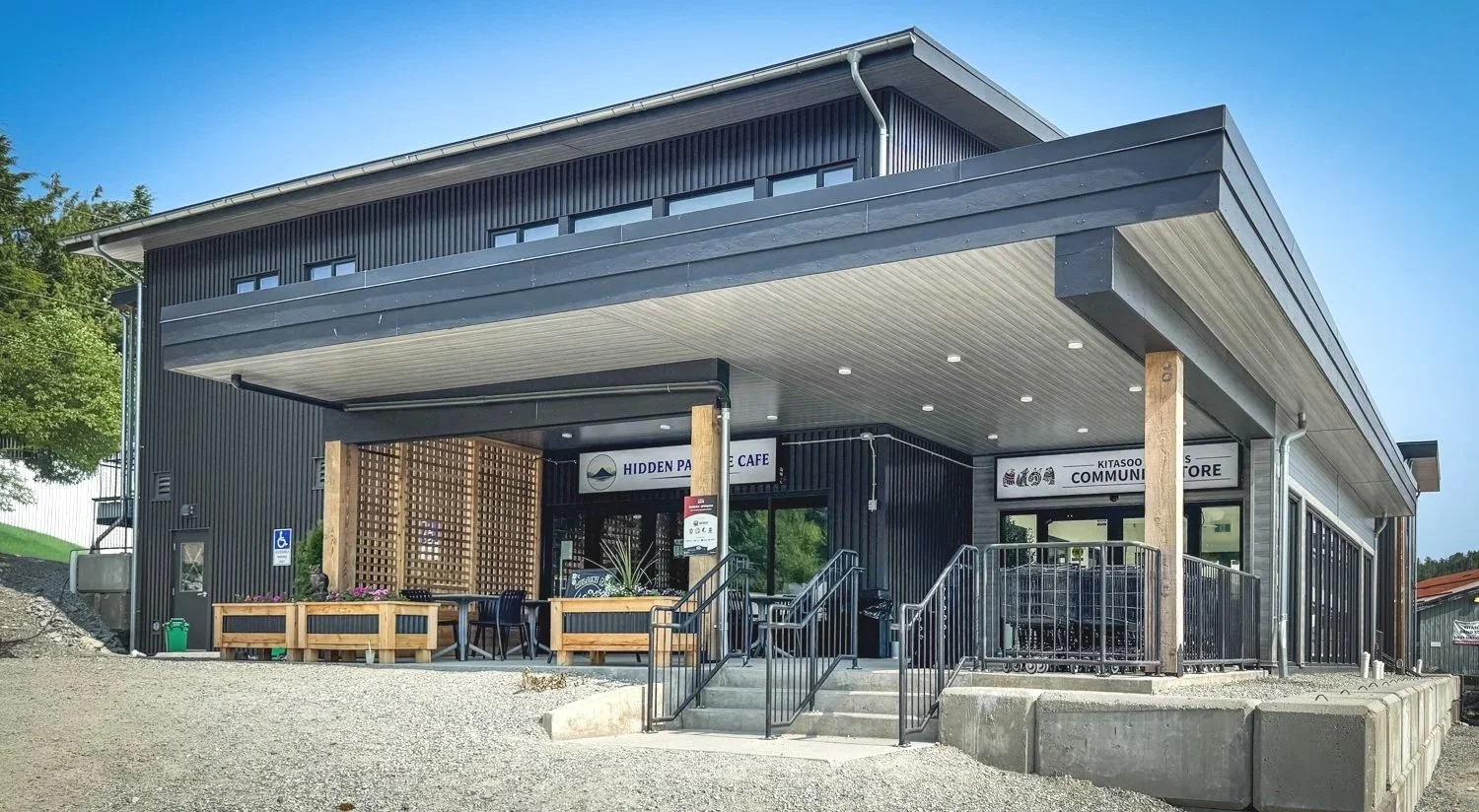
The modern building opened only last month, and we had heard favorable reports from other boaters. Even so, it exceeded our expectations. The store is bright, spacious, and remarkably well stocked. Like most grocery stores serving remote coastal communities, there are a few empty shelves from time to time, but the produce looked fresh, the meat selection was impressive, and the overall selection was better than we anticipated.

impressive new band store at klemtu

One thoughtful addition over the previous store is a small café attached to the market. Freshly baked muffins proved impossible to resist, so we picked up a couple to enjoy as an early lunch while underway.

As we continued toward Tom Bay, the persistent high-pressure system remained firmly in control. The skies were a flawless blue, yet the horizon had taken on the familiar smoky haze that often accompanies long periods of summer high pressure. Nearby mountains stood out in crisp detail, while those farther away gradually faded into soft blue silhouettes.

Boat traffic remained almost nonexistent. We crossed paths with only a single cruising yacht during the day, and as we departed Klemtu, a lone 25-foot sailboat was just arriving at the fuel dock. Encounters like these are a reminder of how quickly the crowds disappear once you venture beyond the more popular cruising routes.

Tom Bay is less of a destination than a convenient overnight stop that fits tomorrow's schedule. Still, we've learned that even the simplest anchorages can surprise you. When we visited in June of 2024, three black bears wandered the shoreline, providing an evening's entertainment from the cockpit.

Tom Bay looking west to mathieson channel

you cannot see the old logging roads from the anchorage

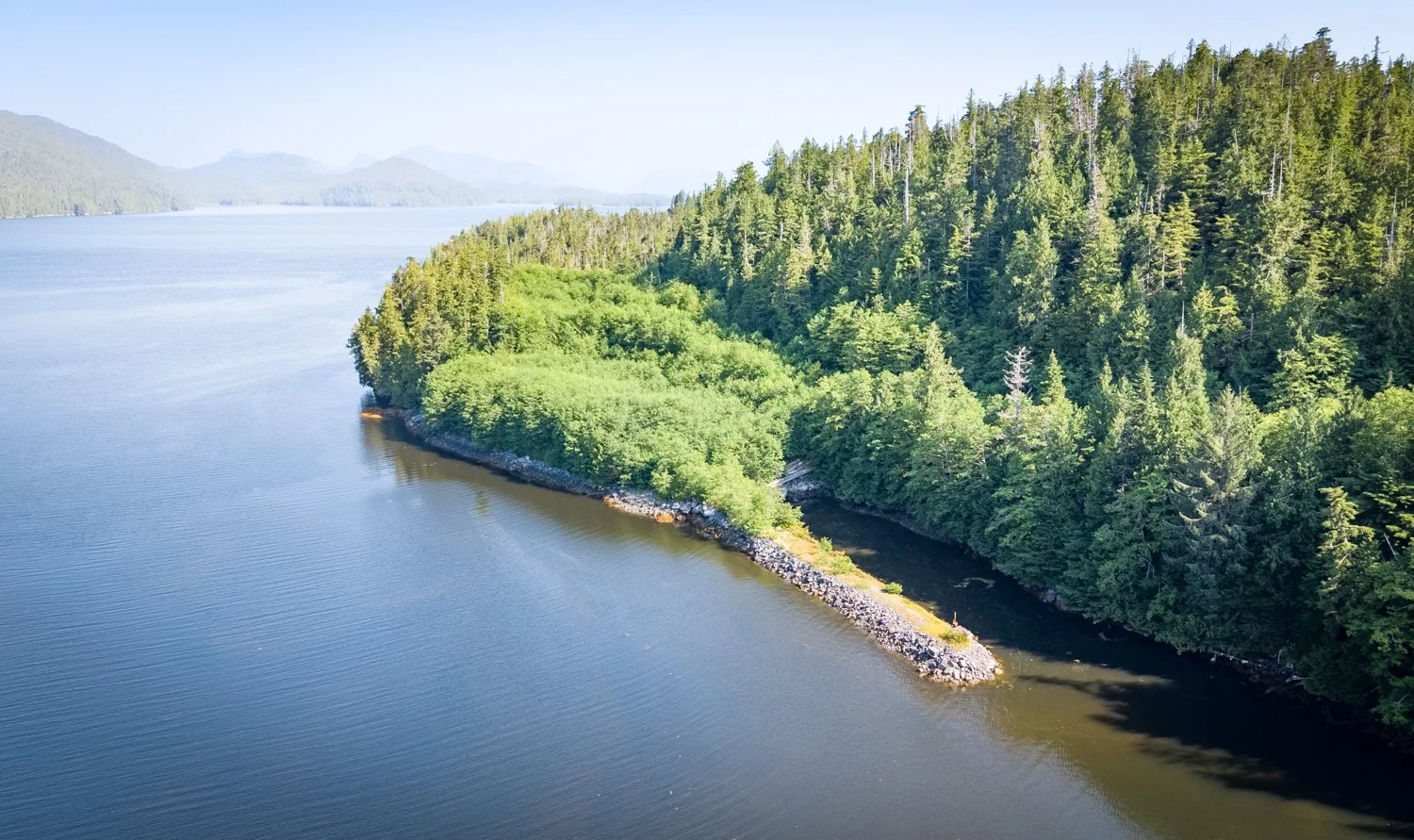
the old log dump is the only feature of past looging you can still see

Being nearly a month later in the season, we aren't expecting a repeat performance.

A quiet anchorage, another dinner of fresh spot prawns, and perhaps one more colorful sunset will be more than enough to end another memorable day on British Columbia's central coast.

Quigley Creek to Alexander Inlet

Alexander Inlet is only 2.6 miles away as the crow flies. Unfortunately, boats don't fly like crows.

Our route follows the winding shoreline, turning what looks like a short hop on the chart into a 2-hour, 15-minute run at our usual cruising speed of 8.5 knots.

The day's schedule is dictated by Meyers Narrows. High-water slack is forecast for 6:00 p.m., so we weigh anchor at 4:00, timing our arrival to enjoy roughly 2.5 knots of favorable current pushing us through the narrows.

Meyers Narrows is well charted, and in our experience the published depth and current tables have proven to be remarkably accurate. For OceanFlyer, we prefer at least six feet of tide for a comfortable transit. Today's crossing was almost exactly as predicted. We entered on a 14.5-foot tide, leaving us with 16.6 feet beneath the keel, while the current matched the tables almost perfectly.

One additional consideration here is the kelp. At higher tides, much of the floating canopy lies lower in the water, making it easier to pick a path through the channel. Even so, there are times when cruising over long strands is unavoidable. Whenever the channel allows, we make small course adjustments to weave between the thicker patches. It is a minor inconvenience, but one we prefer to avoid whenever possible.

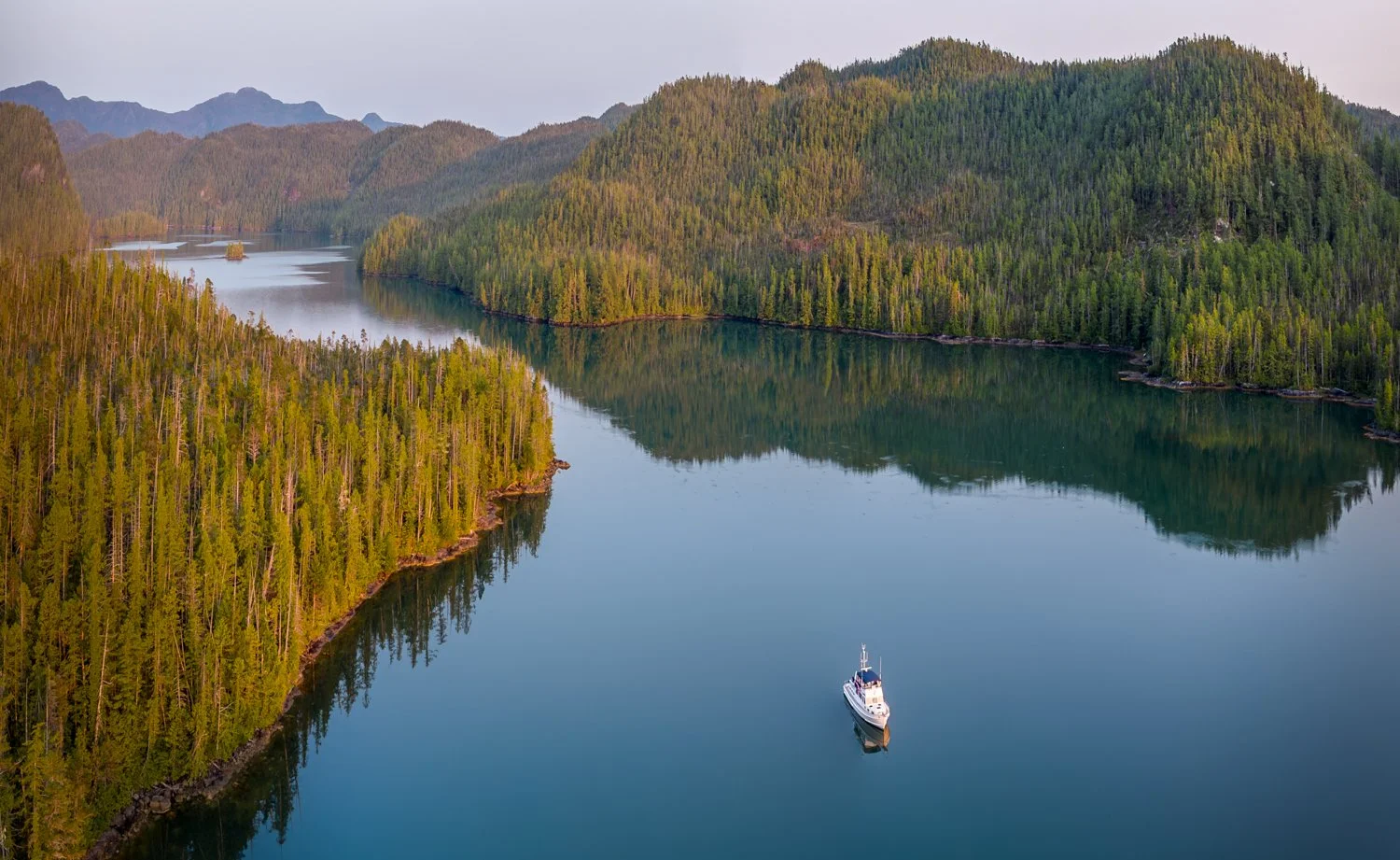
Alexander Inlet is long, narrow, and full of gentle bends before finally opening into a well-protected anchorage at its head. It is not one of the more dramatic inlets along this coast. There are no towering waterfalls or granite cliffs demanding your attention. Instead, it offers something we value just as much: dependable holding in about 35 feet of water, complete solitude, and, if fortune smiles, excellent prawning.

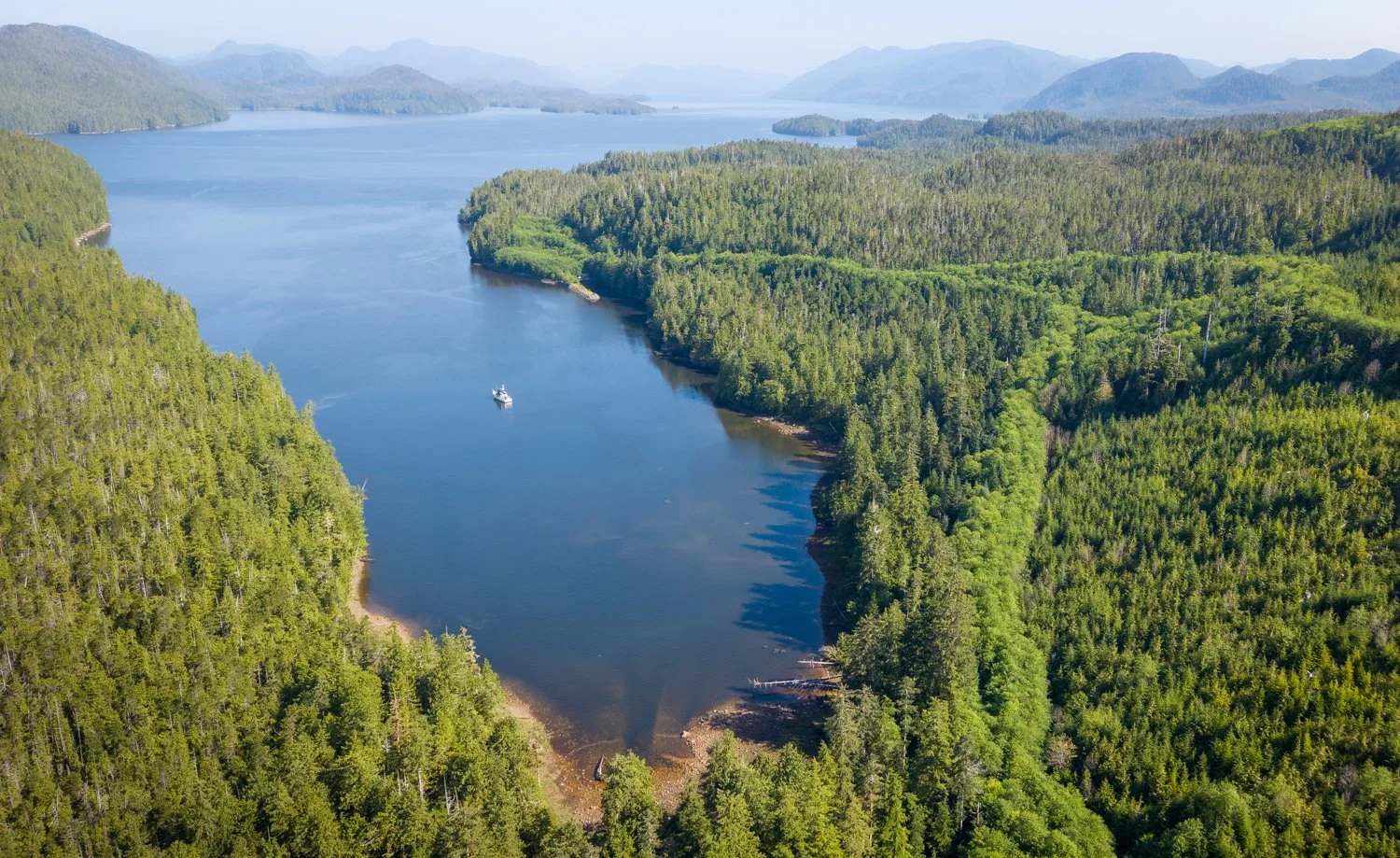
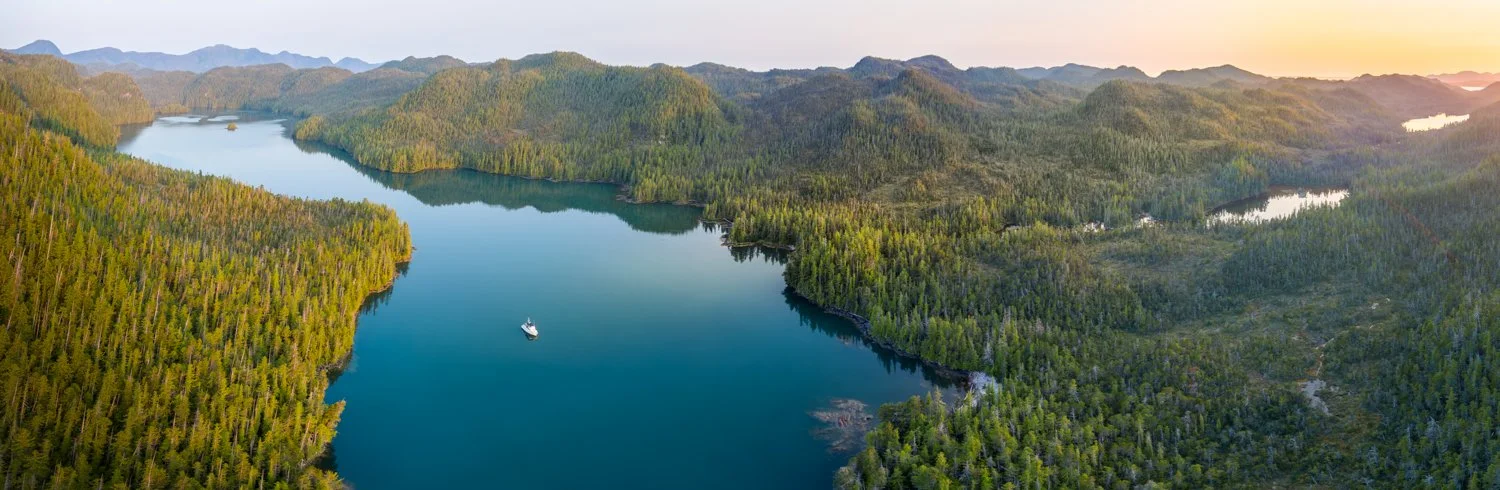
just a small portion of alenander inlet visable in the distance

It would be nice to explore the small lagoon at the head of the inlet, but the entrance now appears to be permanently blocked by rocks and debris, putting an end to that little side trip.

the lagoon can be seen in the upper left

No matter. If tomorrow's prawn traps are as generous as they have been in the past, we'll happily trade lagoon exploring for a feast of fresh spot prawns. Some destinations impress you with their scenery. Others win you over at the dinner table. Alexander Inlet has always belonged in the second category.

As it turned out, the prawns did not disappoint. Two trap pulls produced a total of 82 spot prawns, with each soak yielding an almost identical catch of 41. Alexander Inlet has consistently produced some of the largest prawns we harvest, and just as importantly, the traps rarely come up filled with unwanted bycatch. It is one of those places where the rewards almost always justify the effort.

The evening ended quietly. The persistent high-pressure ridge had built enough haze to mute what might otherwise have been a spectacular sunset. Still, as the last light faded over the inlet and another successful day came to a close, we had little reason to complain. After all, tomorrow's dinner was already waiting in the refrigerator.

hazy but peaceful