

Quigley Creek to Alexander Inlet
/Alexander Inlet is only 2.6 miles away as the crow flies. Unfortunately, boats don't fly like crows.
Our route follows the winding shoreline, turning what looks like a short hop on the chart into a 2-hour, 15-minute run at our usual cruising speed of 8.5 knots.
The day's schedule is dictated by Meyers Narrows. High-water slack is forecast for 6:00 p.m., so we weigh anchor at 4:00, timing our arrival to enjoy roughly 2.5 knots of favorable current pushing us through the narrows.
Meyers Narrows is well charted, and in our experience the published depth and current tables have proven to be remarkably accurate. For OceanFlyer, we prefer at least six feet of tide for a comfortable transit. Today's crossing was almost exactly as predicted. We entered on a 14.5-foot tide, leaving us with 16.6 feet beneath the keel, while the current matched the tables almost perfectly.
One additional consideration here is the kelp. At higher tides, much of the floating canopy lies lower in the water, making it easier to pick a path through the channel. Even so, there are times when cruising over long strands is unavoidable. Whenever the channel allows, we make small course adjustments to weave between the thicker patches. It is a minor inconvenience, but one we prefer to avoid whenever possible.
Alexander Inlet is long, narrow, and full of gentle bends before finally opening into a well-protected anchorage at its head. It is not one of the more dramatic inlets along this coast. There are no towering waterfalls or granite cliffs demanding your attention. Instead, it offers something we value just as much: dependable holding in about 35 feet of water, complete solitude, and, if fortune smiles, excellent prawning.
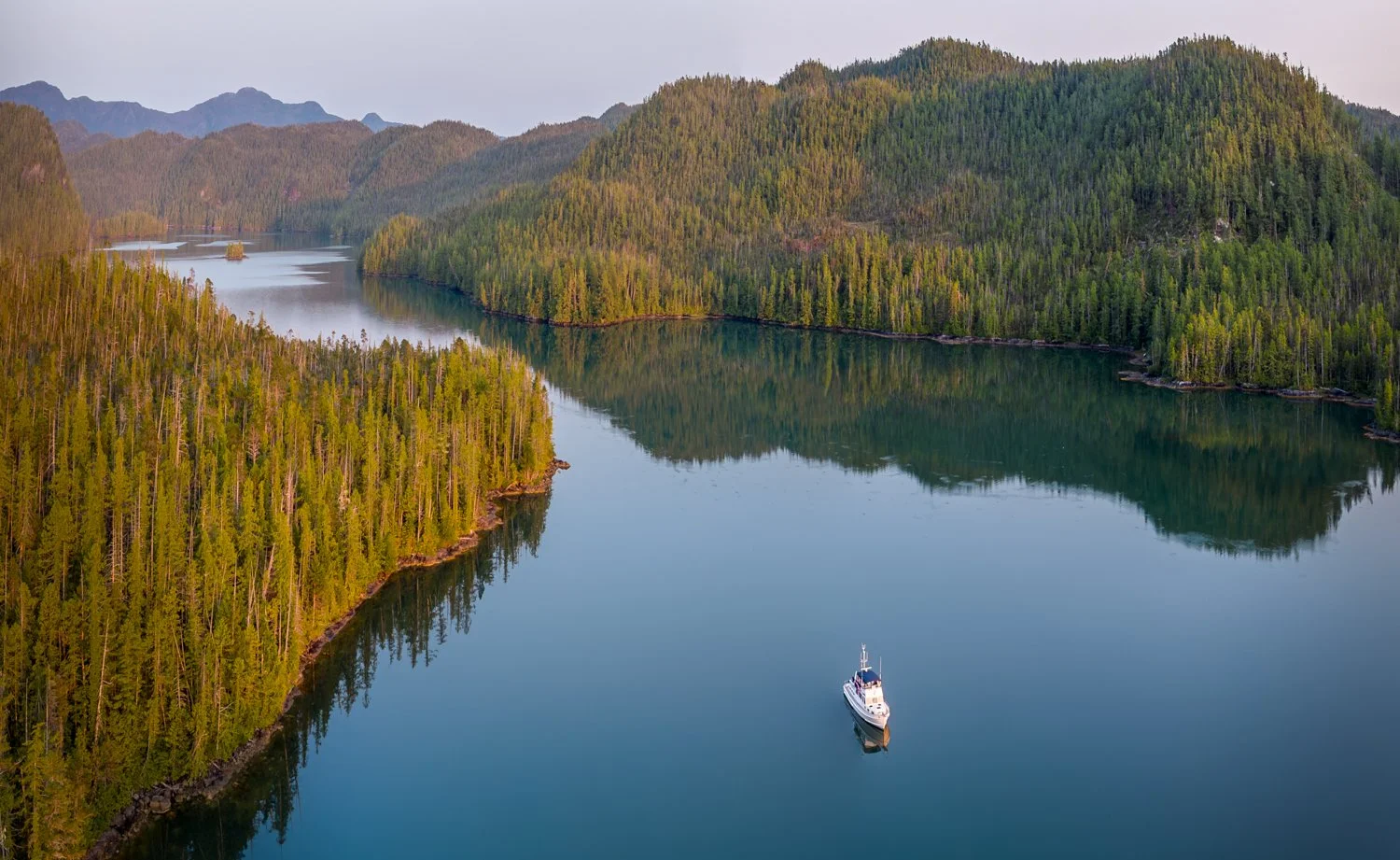
just a small portion of alenander inlet visable in the distance
It would be nice to explore the small lagoon at the head of the inlet, but the entrance now appears to be permanently blocked by rocks and debris, putting an end to that little side trip.
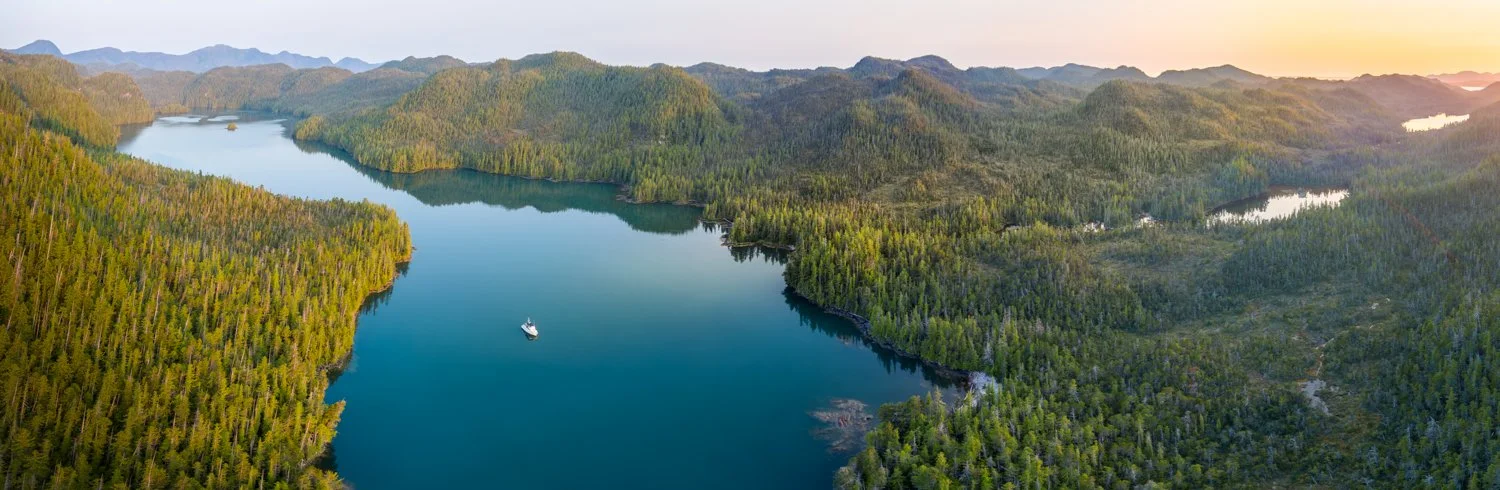
the lagoon can be seen in the upper left
No matter. If tomorrow's prawn traps are as generous as they have been in the past, we'll happily trade lagoon exploring for a feast of fresh spot prawns. Some destinations impress you with their scenery. Others win you over at the dinner table. Alexander Inlet has always belonged in the second category.
As it turned out, the prawns did not disappoint. Two trap pulls produced a total of 82 spot prawns, with each soak yielding an almost identical catch of 41. Alexander Inlet has consistently produced some of the largest prawns we harvest, and just as importantly, the traps rarely come up filled with unwanted bycatch. It is one of those places where the rewards almost always justify the effort.
The evening ended quietly. The persistent high-pressure ridge had built enough haze to mute what might otherwise have been a spectacular sunset. Still, as the last light faded over the inlet and another successful day came to a close, we had little reason to complain. After all, tomorrow's dinner was already waiting in the refrigerator.
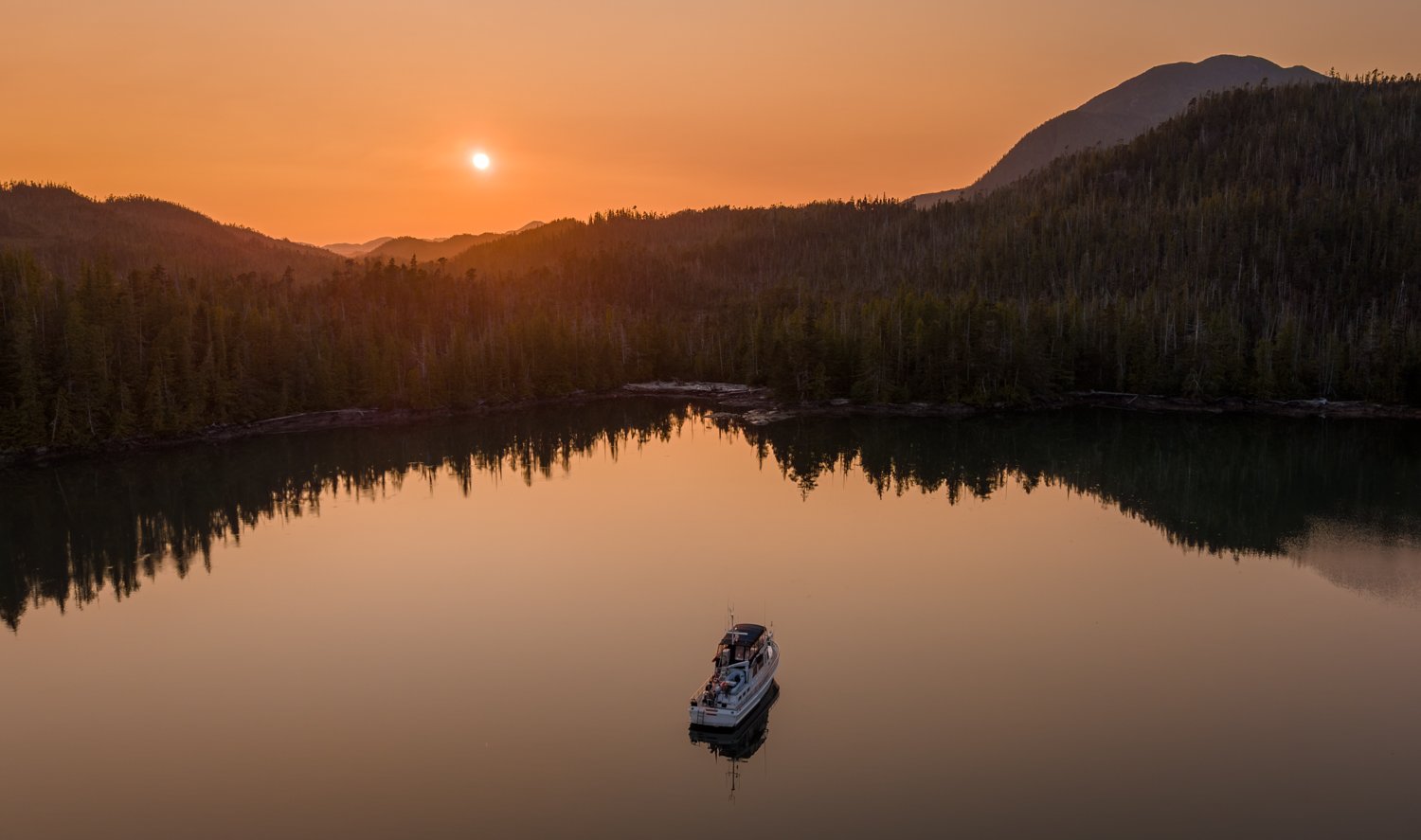
hazy but peaceful