Crease Island to Lagoon Cove

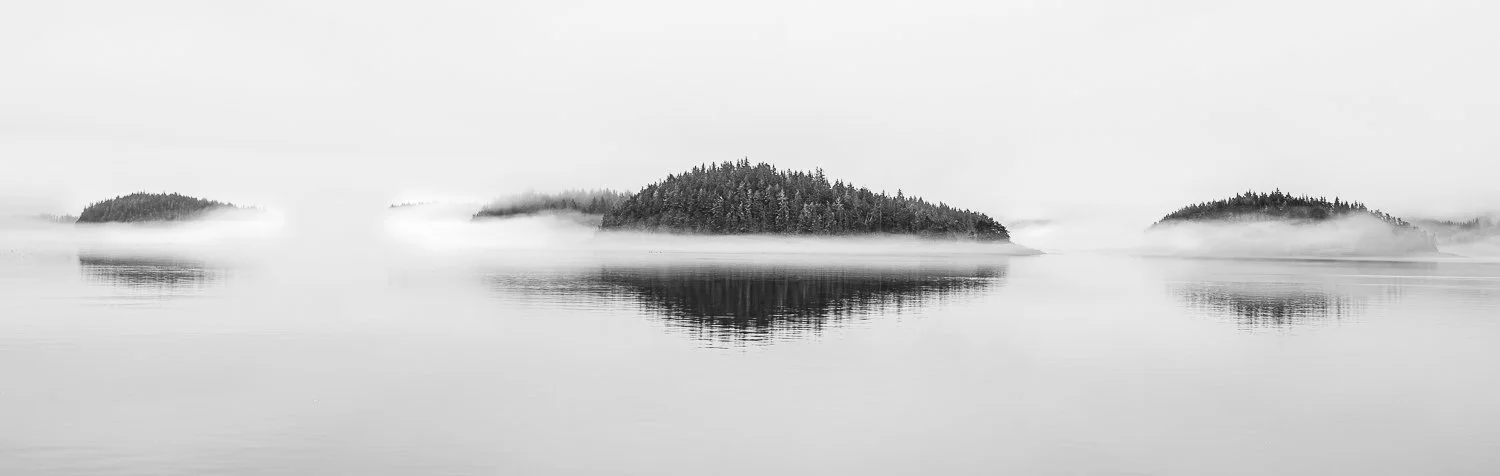
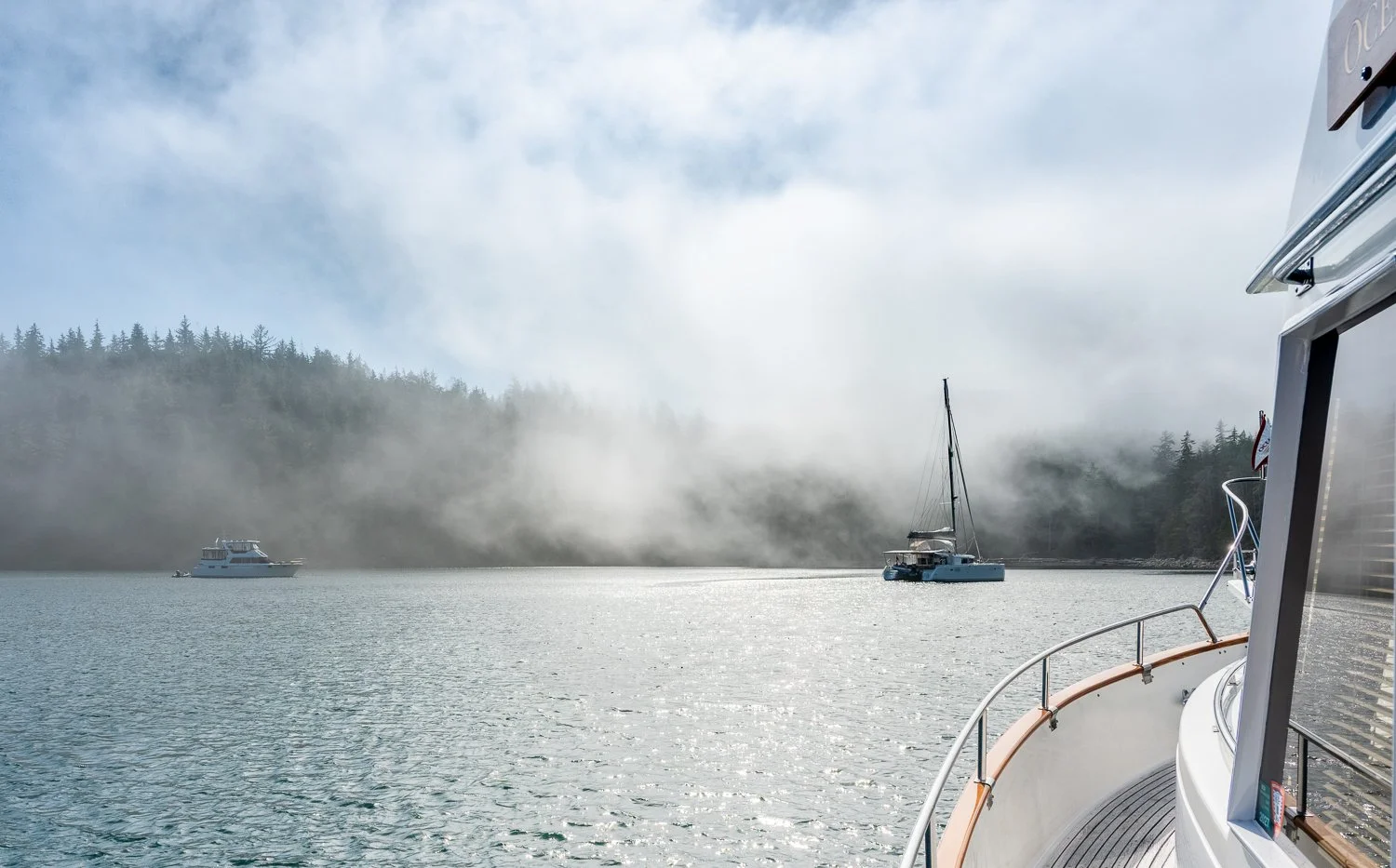
With fog draped over the islets along our route, we left Crease Island and set a course for one of our favorite stops anywhere in the Broughtons: Lagoon Cove.

my favorite kind of fog

A big part of what makes Lagoon Cove special is Dan and Kelly. They are exceptional hosts—warm, welcoming, and always ready to help with whatever a visiting cruiser might need. From the moment you arrive, there is a sense that you are more than just another boat pulling into the marina.

Then there is happy hour, a Lagoon Cove tradition and one of the highlights of any visit. Fresh-caught prawns are the centerpiece, joined by an ever-changing assortment of appetizers contributed by the boats on the docks. It is casual, communal, and a wonderful way to meet other cruisers and compare notes on where everyone has been and where they are headed next.

We also enjoy simply wandering the property. There are trails to explore, blackberries to pick when they are in season, and the walk over to the Honeymoon Dock is always worth making.

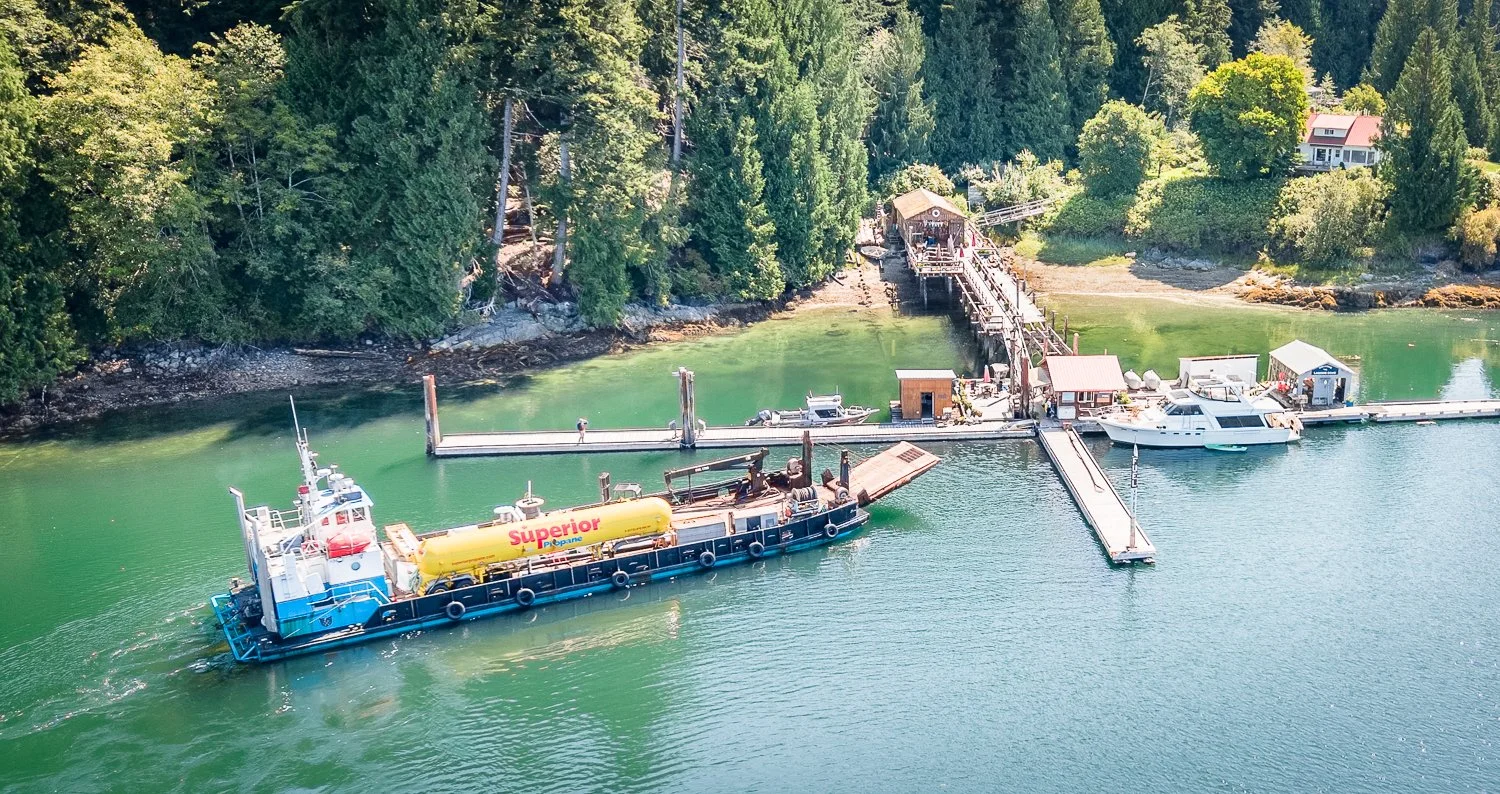
happy days at lagoon cove as the fuel barge arrives deliversing diesel, gasoline and propane.

There is one Lagoon Cove activity we have largely given up on: prawning.

For reasons I have never quite figured out, the bottom here seems determined to keep my prawn pots. I can set them almost anywhere else with confidence, but at Lagoon Cove there is a remarkably good chance I will spend far too much time trying to free one from whatever lies below. After enough wrestling matches with the bottom, I have finally decided that Dan and Kelly’s happy-hour prawns are a much safer option.

This afternoon we picked blackberries and settled back into the familiar rhythm of Lagoon Cove.

As Karen put it while enjoying the berries we had just gathered, “Lagoon Cove feels like home.”

That pretty well sums it up.

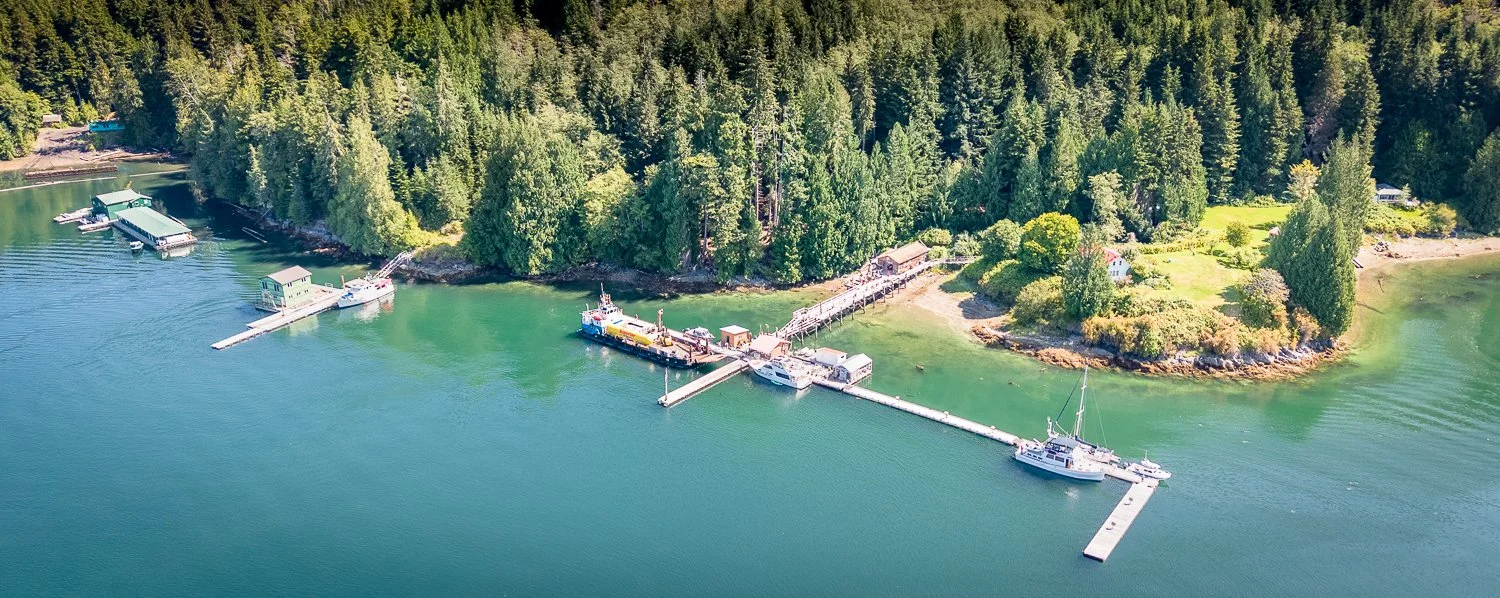
LAgoon Cove, our favorite marina “home”

Eden’s Pool to Crease Island

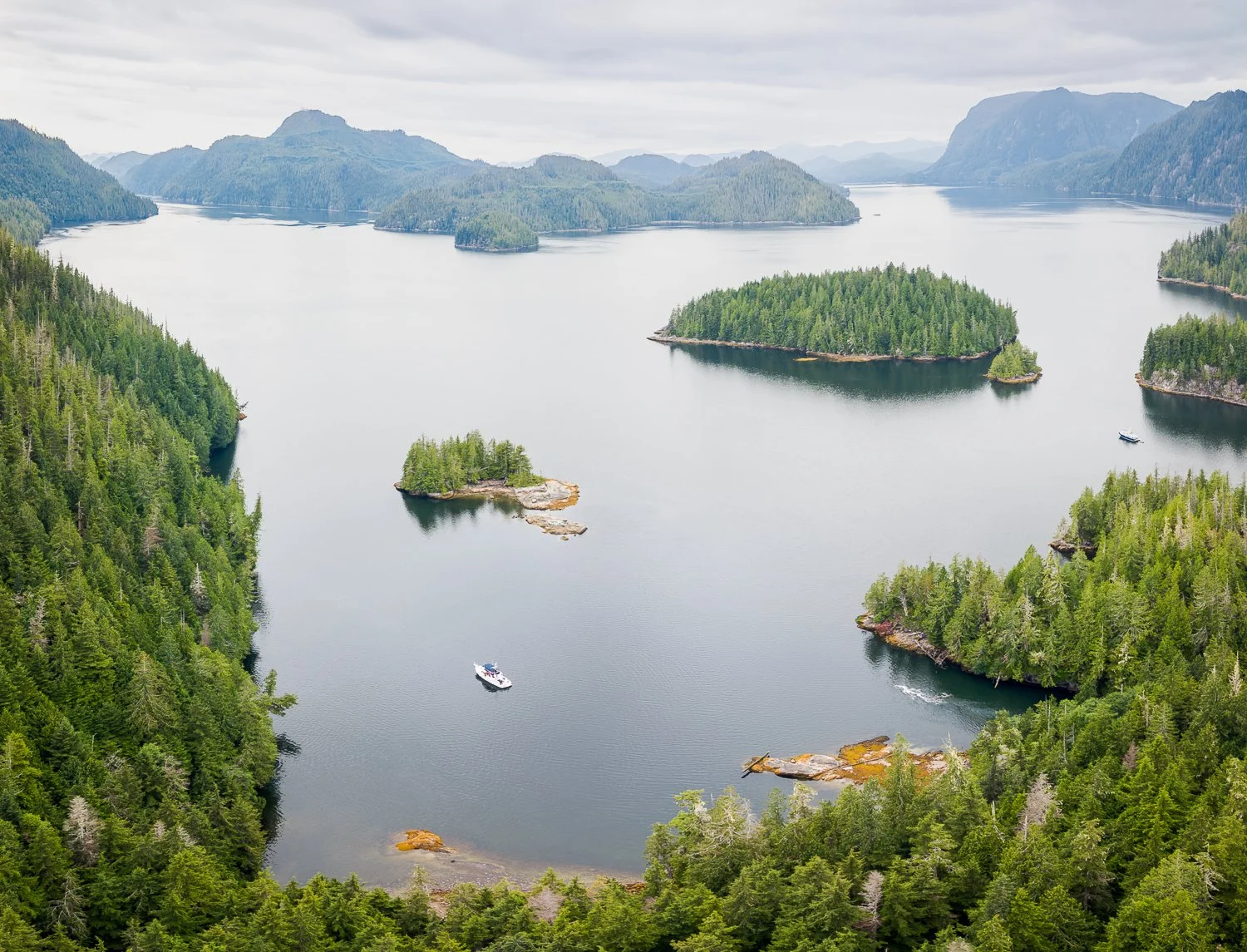
It is not a long run from Eden’s Pool to the anchorage behind Crease Island, but this is one of those passages where the journey is every bit as interesting as the destination.

The route threads through a maze of small passages and between islands of every shape and size. Rather than following one broad channel, we wound our way from one opening to the next, with each turn revealing a new view. Rocky shorelines, forested islets, narrow gaps and hidden waterways continually appeared ahead of us, giving the trip a real sense of exploration.

Adding to the atmosphere today was fog.

Fortunately, it was what I like to call “interesting fog.” Not the thick, all-enveloping variety that reduces the world to the radar screen, but just enough to add drama to the scenery. Wisps of fog drifted among the islets, alternately hiding and revealing the shoreline, while visibility remained good enough to comfortably see the rocks, kelp and other obstructions around us.

It transformed an already engaging route into something even more memorable. At times an island would seem to appear out of the mist just as another disappeared behind us.

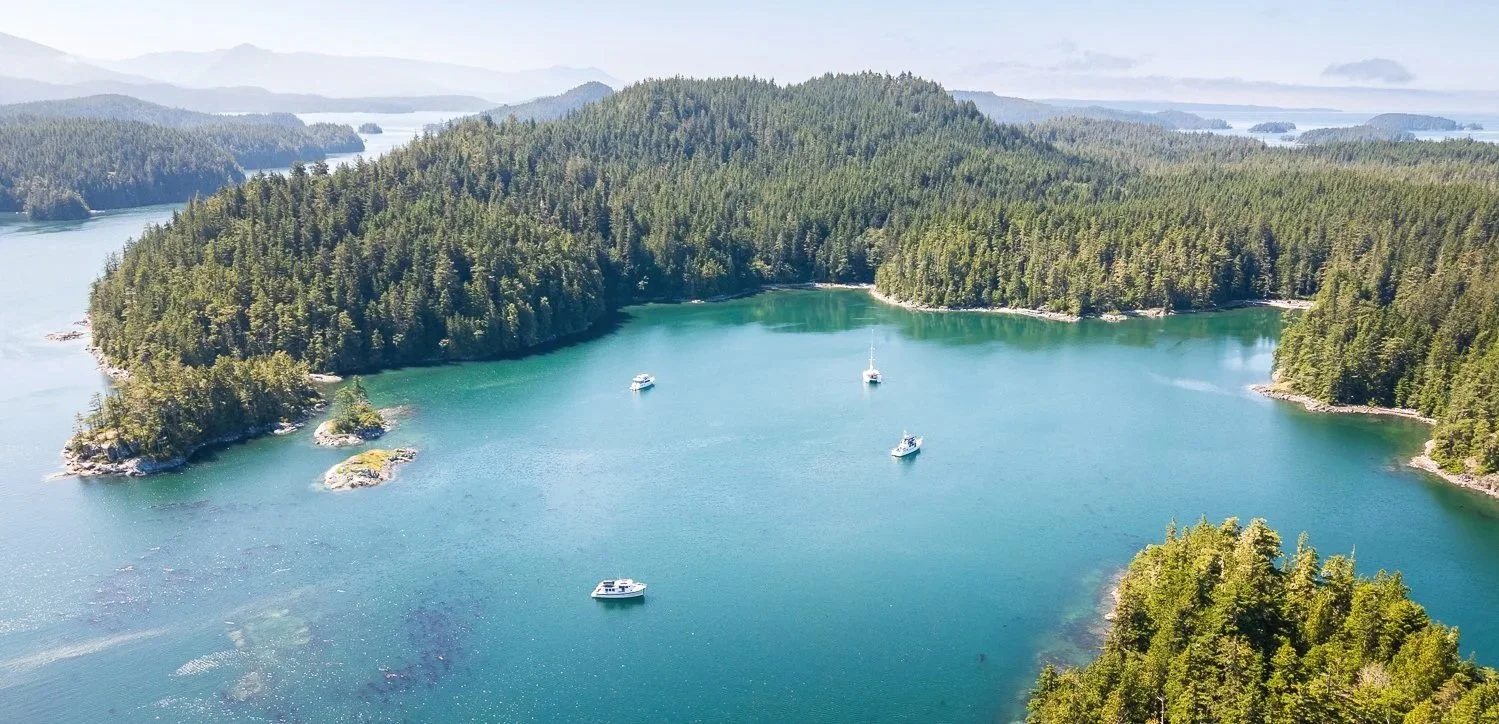
Crease Island itself is a popular anchorage, and it is easy to understand why. It is conveniently located, spacious, well protected and offers comfortable anchoring depths of generally less than 30 feet.

Its one defining challenge is kelp.

There is plenty of it.

No matter where you choose to drop the anchor, you seem to end up sitting in a floating forest. The kelp reaches the surface at all stages of the tide and surrounds the boat, making careful anchor placement—and a little patience when retrieving it—part of the Crease Island experience.

There was one other boat anchored when we arrived. Over the course of the afternoon, three more cruisers worked their way in and found their own spots among the kelp.

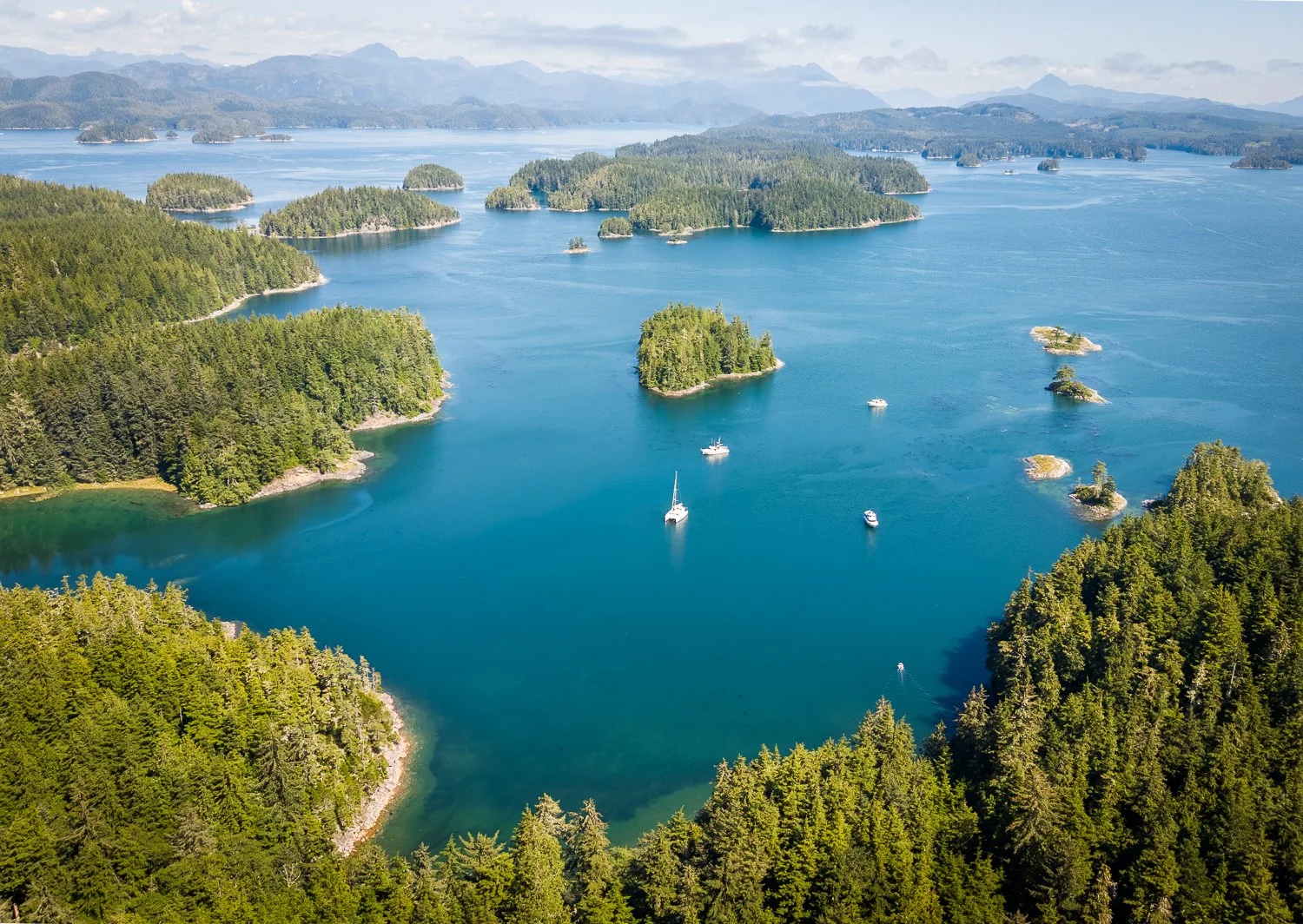
crease island is a popular anchorage

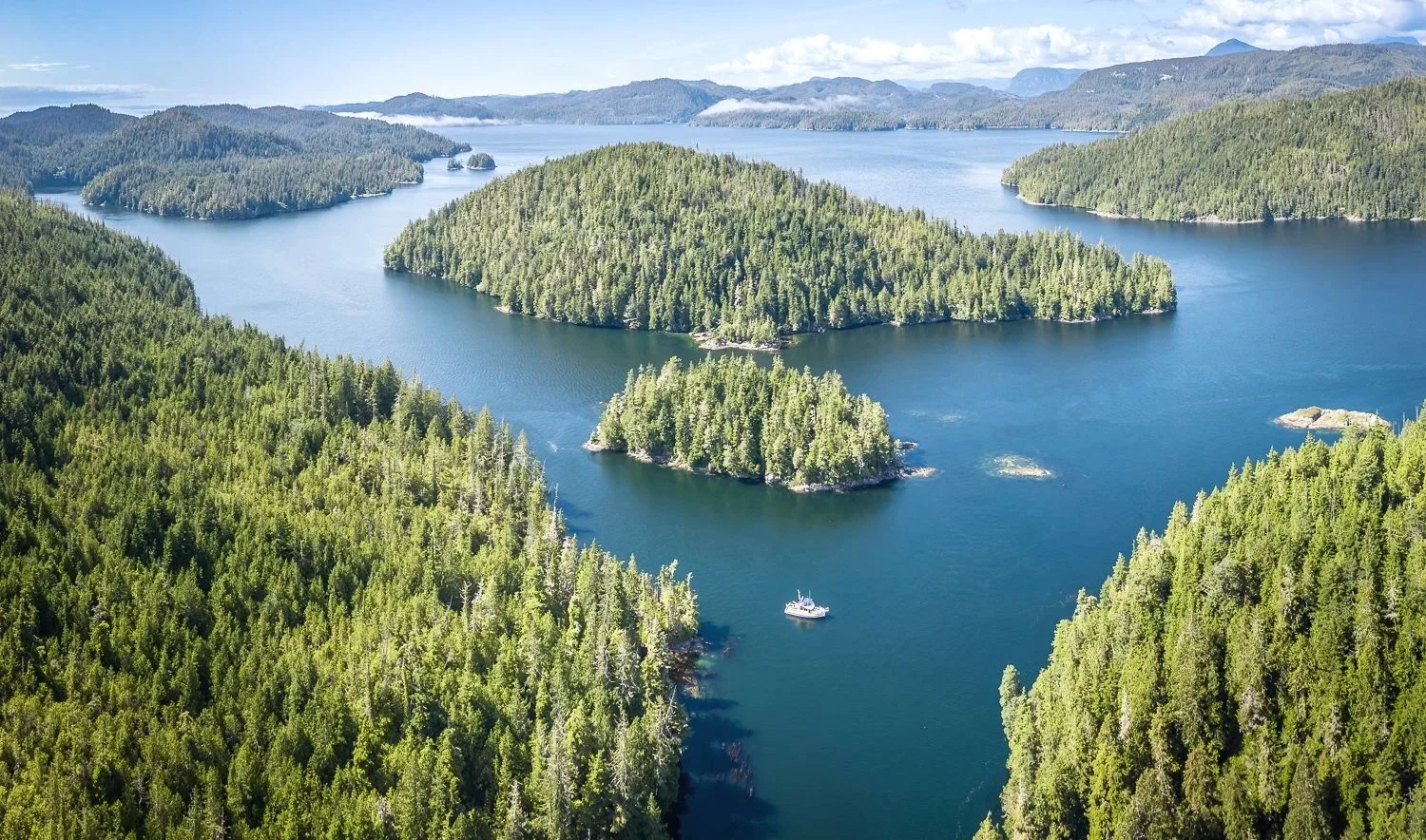
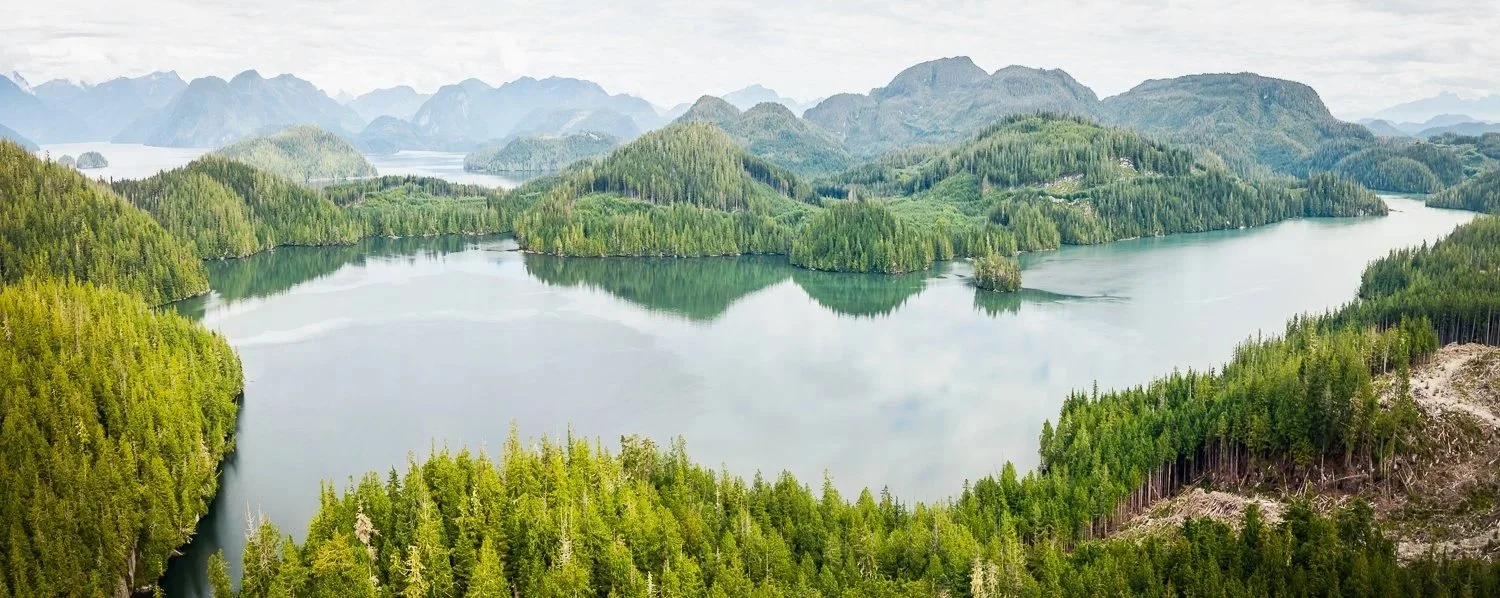
looking east from crease island anchorage

After spending the morning weaving through mist-shrouded islands and narrow passages, settling into Crease Island felt like an appropriate ending to a day that was much more about exploring the route than simply getting from one anchorage to the next.

the afternoon fog tries to reclaim crease island anchorage

And judging by the growing collection of boats around us, we were not the only ones who thought Crease Island was a good place to stop.

Cecil Island to Eden’s Pool

Some anchorages are obvious on the chart. Others require a little imagination.

Eden’s Pool falls squarely into the second category.

Tucked between Insect Island, Eden Island and Fly Island, Eden’s Pool is a small patch of water sitting at the crossroads of five different waterways. It is not the sort of place we would normally look at on the chart and immediately think, anchorage. But Karen had noticed AIS targets tucked in there from time to time, which was enough to earn it a spot on our “new places to try” list.

Today was the day to give it a try.

On the way, we made a brief detour into Stopford Bay. Friends of ours have a favorite spot all the way at the southern end, and we wanted to see it for ourselves.

The farther you go, the more the outside world disappears. By the time you reach the end, you are tucked away with no one else in sight. It is one of those wonderfully secluded little corners that feels completely removed from everything around it—a true sanctuary.

Then it was on to Eden’s Pool, which offered almost the opposite experience.

Rather than tucking OceanFlyer close to one shoreline, I chose a spot near the middle, roughly equidistant from the surrounding land. That turned out to be a good decision.

With five waterways converging around us, the current finds its way through the anchorage from several directions. Over the course of our stay, OceanFlyer swung around and managed to tug on the anchor from just about every point of the compass. Fortunately, we had plenty of room in every direction, so it was more interesting to watch than concerning.

eden’s pool is an unexpected anchorage

Our other question was boat traffic. Several of the waterways intersecting here are used by passing boats, and on the chart Eden’s Pool looks as though it could become something of a wake collection basin.

In practice, it was remarkably quiet. Only one sailboat and one small go-fast boat passed during our stay and wakes never became an issue.

Eden’s Pool turned out to be a worthwhile addition to our list. It is cozy without feeling enclosed, with views opening in several directions and an ever-changing combination of wind and current that keeps the boat moving.

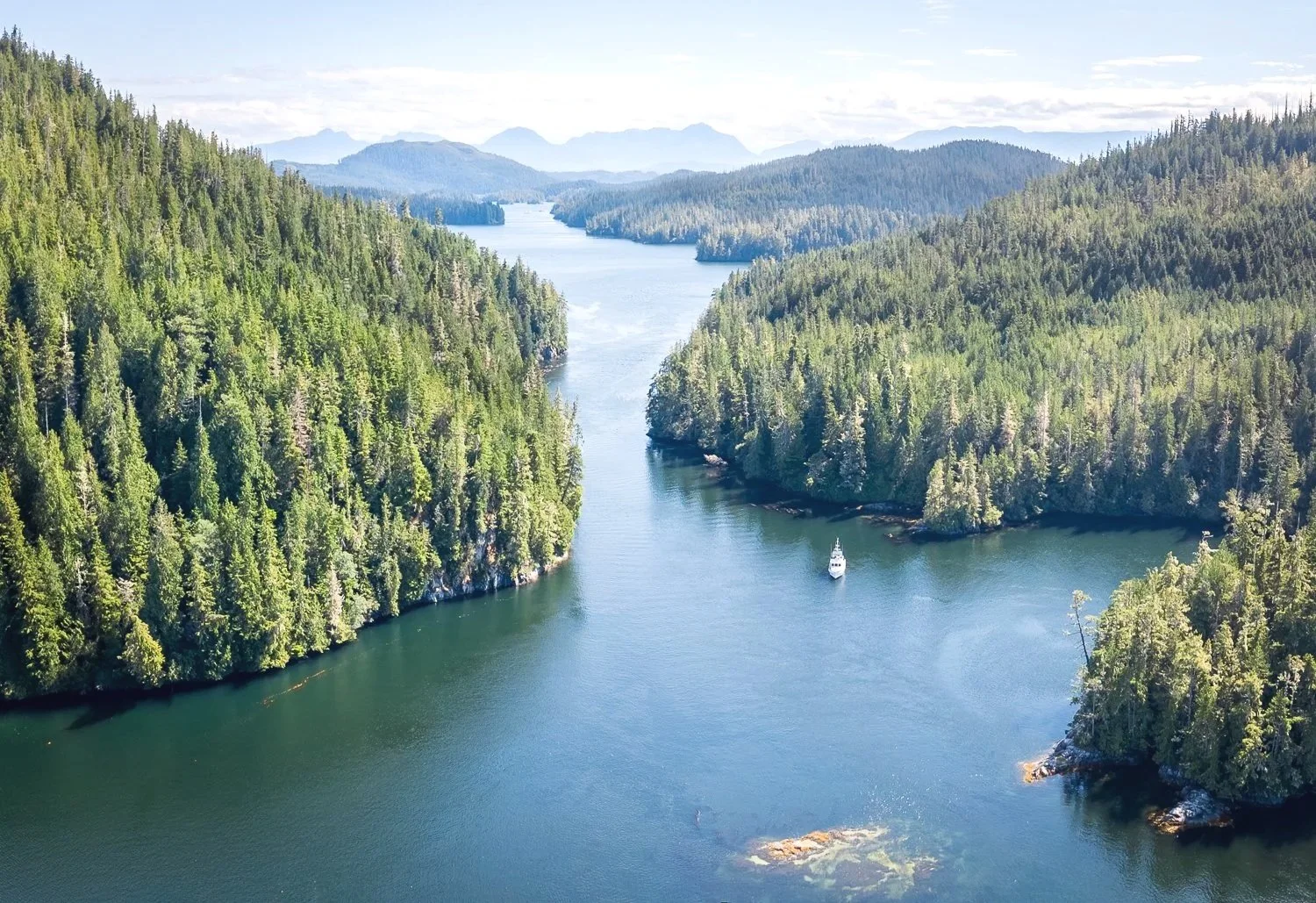
looking south down blunden passage from eden’s pool

Not every good anchorage needs to be hidden at the end of an inlet. Sometimes a surprisingly pleasant place to spend the night is sitting right there at the crossroads.

Muirhead Islands to Cecil Island

Today is just a short hop over to the anchorage behind Cecil Island. We visited once, a long time ago, but this time there is a new attraction drawing us back.

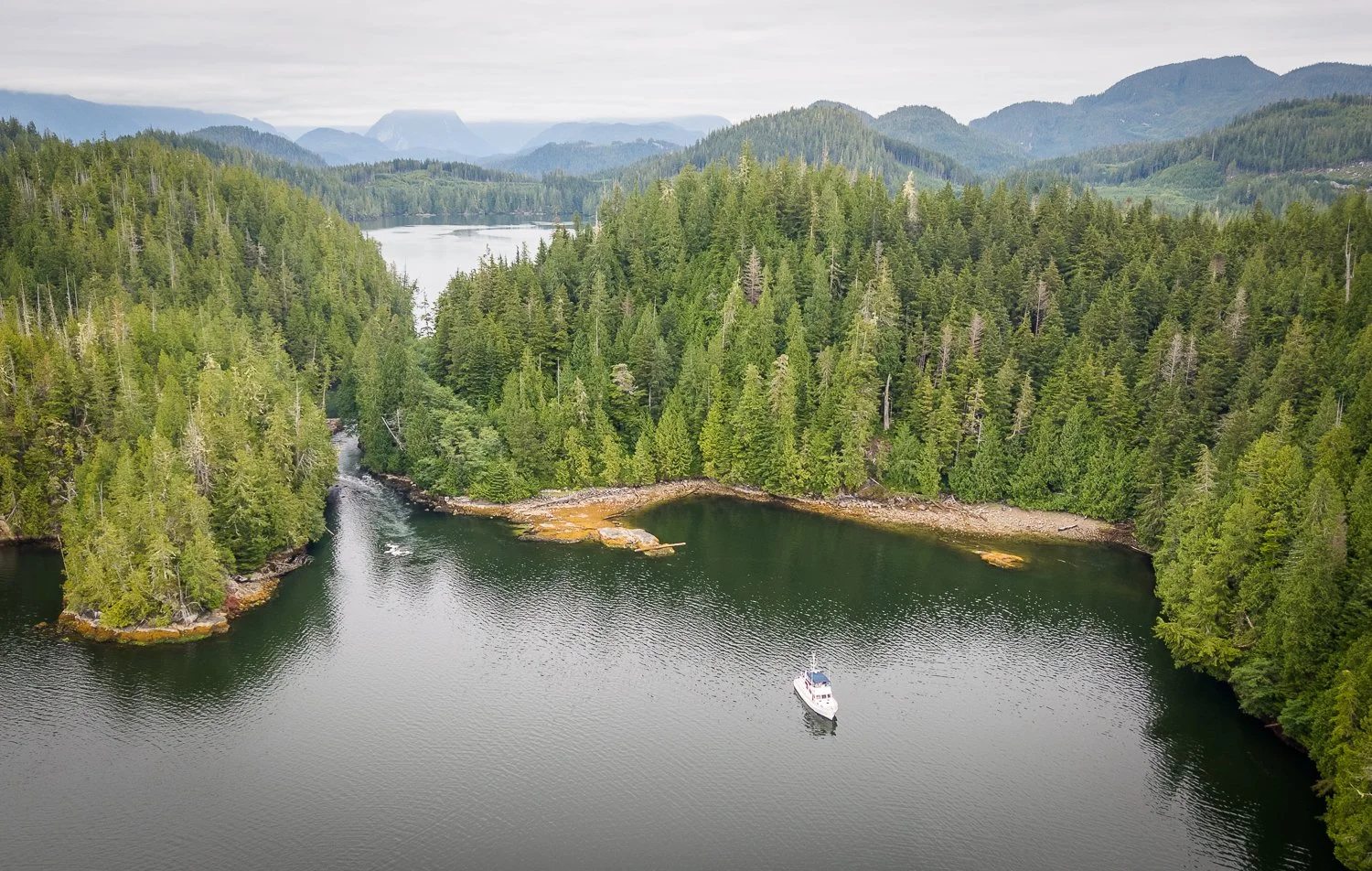
oceanflyer anchored behind cecil island

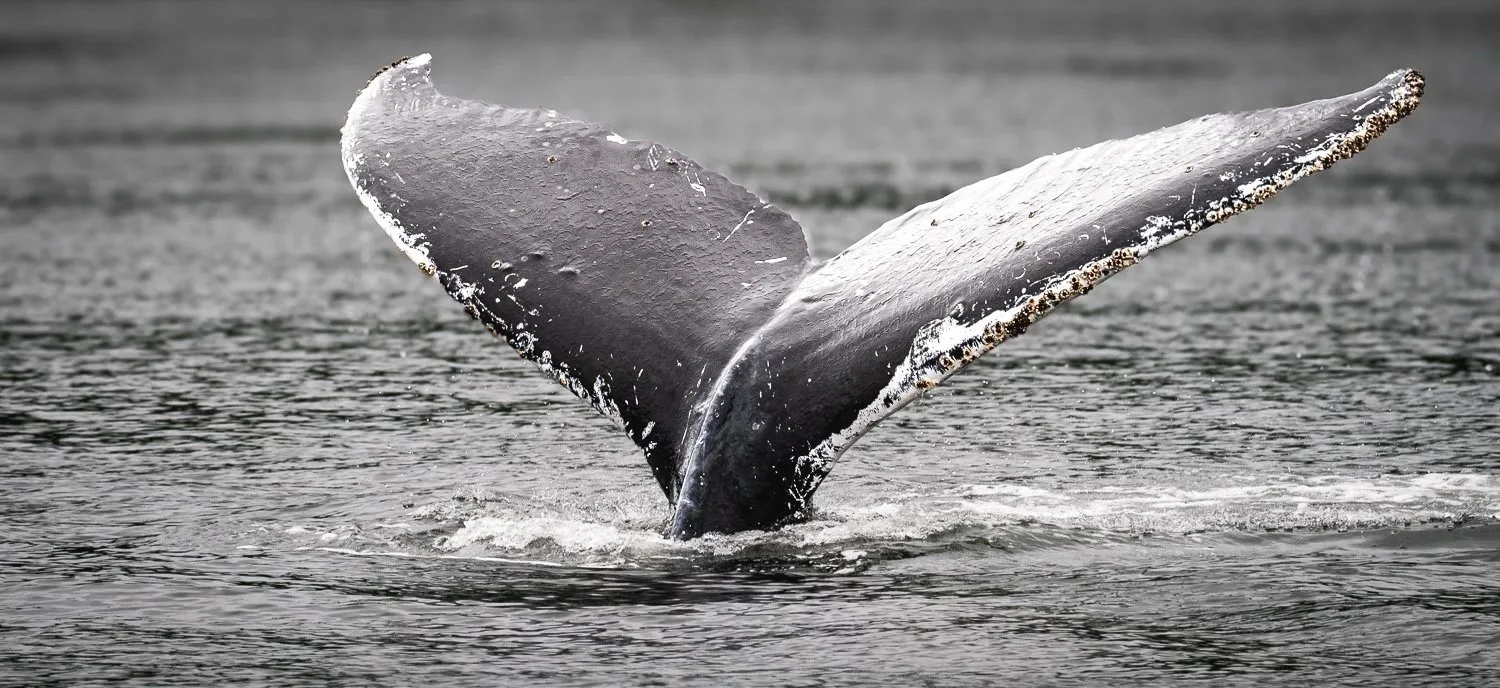
one humback on the way to cecil island

Word throughout the cruising community is that Pacific Whireside dolphins have been spending time in Broughton Lagoon—and that they have developed a particular fondness for playing with dinghies.

Our new friends aboard M/V Voyager provided some convincing evidence. They sent us a photo of dolphins seemingly jumping endlessly around their dinghy and called the experience the highlight of their trip so far this year.

That was all the encouragement we needed.

Of course, the downside of cruising blogs and the internet is that everyone else gets the same good ideas. When we arrived behind Cecil Island, four other boats were already anchored there.

Mother Nature, however, was cooperating. We were able to time our passage through Stuart Narrows with some current on our stern and still reach Cecil Island in time for a high-water transit into Broughton Lagoon.

The entrance to the lagoon is through a narrow, twisting passage capable of carrying a considerable amount of current. Once through the narrows, however, Broughton Lagoon opens into an enormous and wonderfully protected body of water.

And there they were.

We spotted the dolphins, and more importantly, they spotted us.

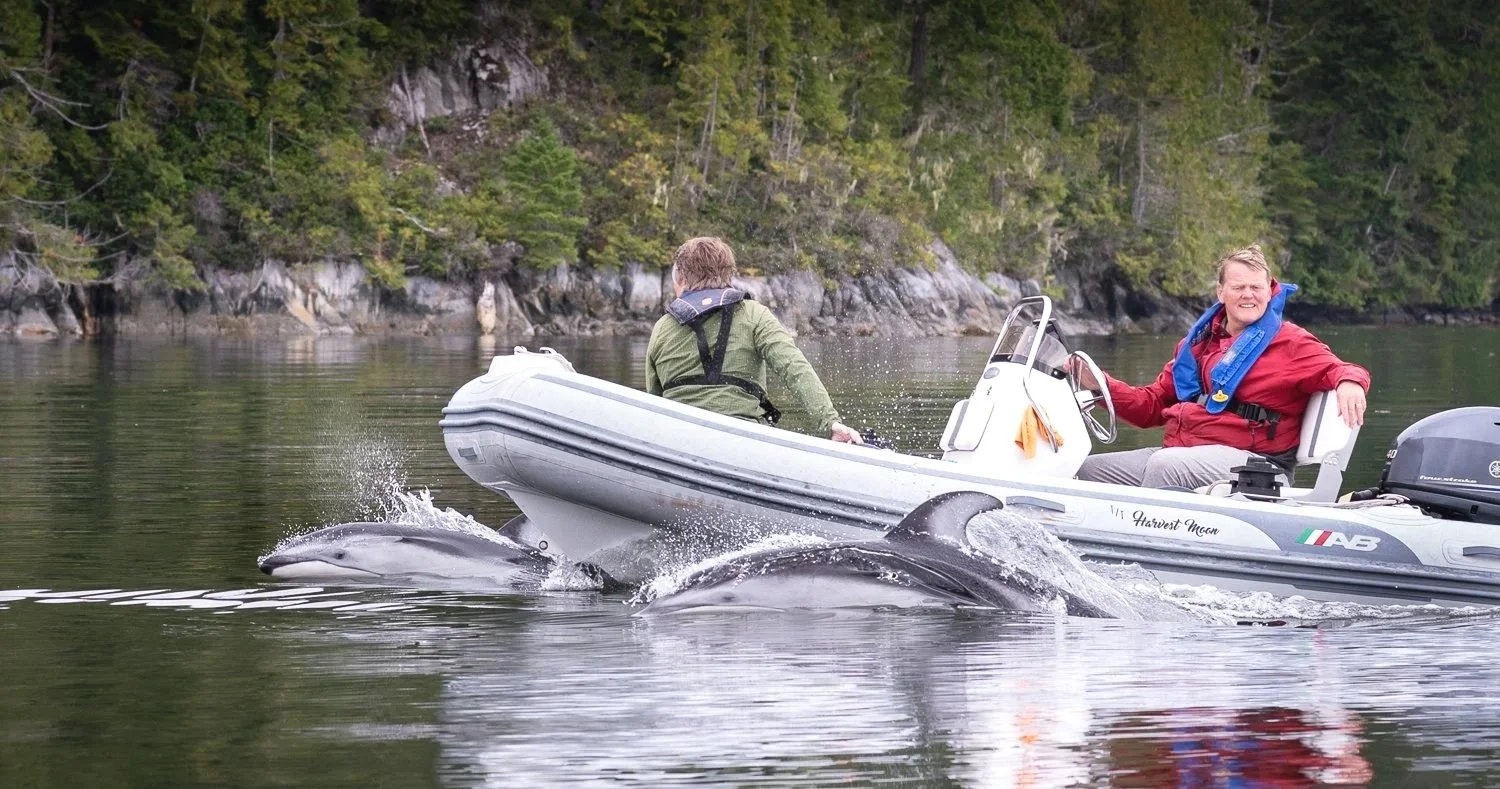
They quickly came over to investigate the dinghy and began playing in our wake. Unfortunately, just a few minutes behind us came two more dinghies. The dolphins promptly abandoned us for the newcomers.

Karen was not amused.

pacific whiteside dolphins play in broughton lagoon

Rather than compete for their attention, I put the dinghy in idle and we waited. Eventually the dolphins appeared to become more interested in chasing prey toward the shallows, so we slowly followed at a respectful distance.

Our patience paid off.

Before long they turned their attention back to us. Soon they were racing alongside, crossing through our wake and swimming beneath the dinghy. One passed so close that it actually bumped the side of the boat.

Of all the wildlife we encounter in Pacific Northwest waters, I find dolphins among the most difficult to photograph. They appear without warning, disappear just as quickly and invariably leap somewhere other than where the camera is pointed.

This time was no different.

The photographs simply can't capture the fun and excitement of having these ambassadors of fun and frolic racing around the dinghy.

the north “entrance” to broughton lagoon. Do not use this entrance!

broughton lagoon is large

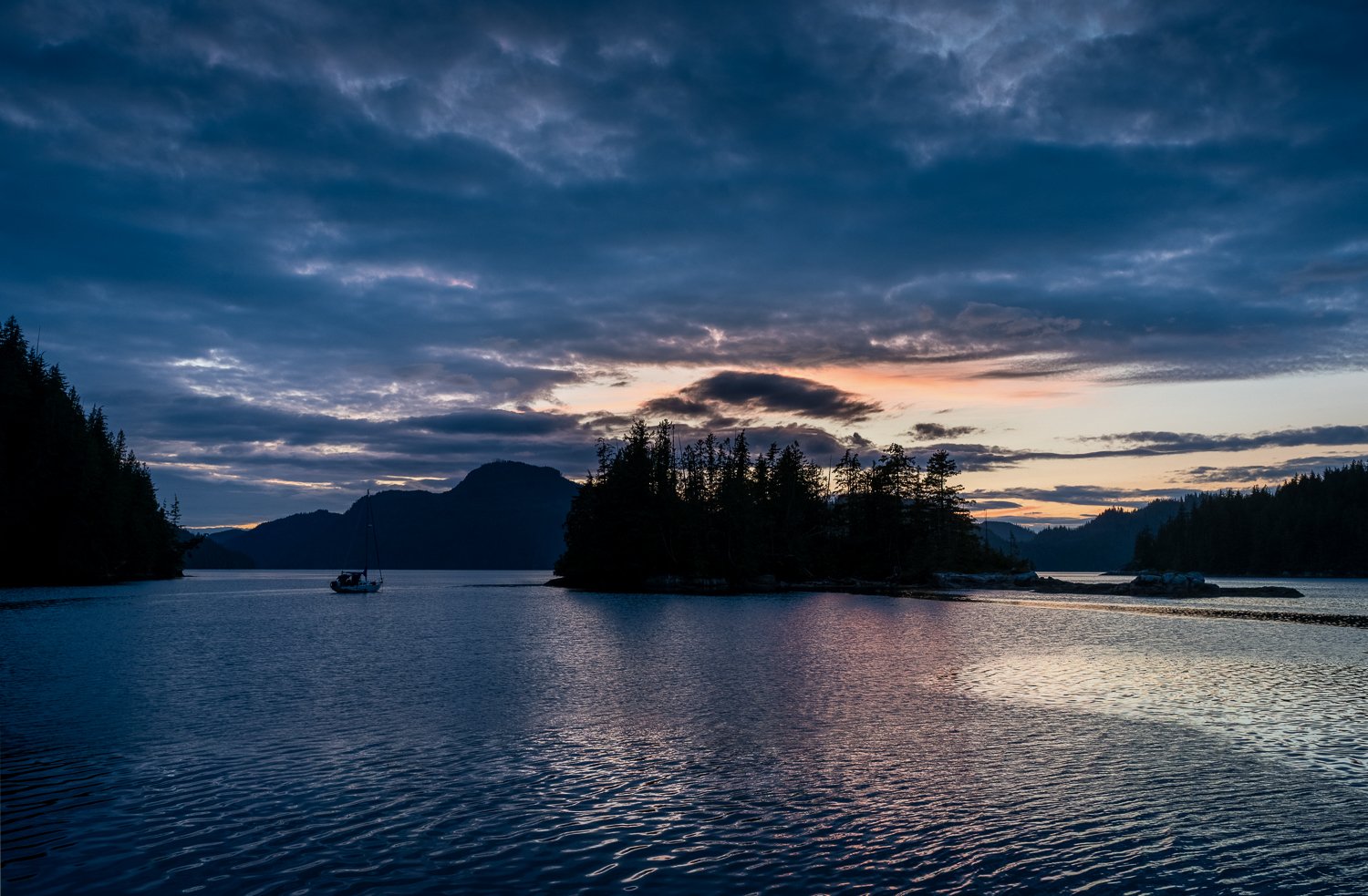
day one at cecil island sunset

Day Two: A Little Navigation Experiment

The following day we headed back into Broughton Lagoon with two objectives.

First, with no other cruising boats anchored nearby, we hoped we might have the dolphins to ourselves.

Second, we wanted to better understand the timing of slack water at the entrance.

Published information about Broughton Lagoon is surprisingly inconsistent. One commonly repeated recommendation puts slack at a fixed interval after high water at a nearby reference station, but we had already found reason to question that advice.

So we decided to do a little research of our own.

As part of the exercise, I worked with ChatGPT and asked it to dig deeply into the available information and develop its own prediction. After considering the tidal range and the hydraulic nature of the lagoon, it predicted slack at approximately 1 hour 50 minutes after high water at Sullivan Bay.

Remember that number.

This was a substantial tide. High water at Sullivan Bay was 13.99 feet, following a low of 2.29 feet—an 11.7-foot exchange.

We didn't wait for predicted slack.

We entered the lagoon 1 hour 10 minutes after high water at Sullivan Bay. The current was still running into the lagoon at perhaps two knots. There were a few swirls, but nothing particularly turbulent, and the passage was quite comfortable in our 13-foot dinghy with its 30-hp Yamaha.

We did find a few shallow bumps on the bottom along the way. At one point we saw only 6.4 feet of water with the tide at approximately 12.99 feet. The bottom image on the sonar was highly articulated, making it impossible to determine whether we were looking at hard bottom, kelp or some combination of the two.

Once through the narrows, the search began.

Broughton Lagoon is enormous, and finding a pod of dolphins somewhere within it could easily become an exercise in futility. We had given ourselves about 30 minutes before beginning our return toward the entrance.

Fortunately, I soon spotted splashing along the shoreline near where the northern narrows enters the lagoon. With water still flowing inward, I suspected the dolphins might be taking advantage of the current following in from the northern narrows to feed.

We turned toward the activity.

The pod was indeed busy fishing and initially showed little interest in us. Eventually curiosity won out. One by one they began coming over to inspect the dinghy—swimming alongside, circling underneath us, giving us a look and then returning to their feeding.

After sitting quietly for a while, we began moving slowly to see if that might encourage the same behavior we had experienced the previous day.

It worked.

Soon they were following our wake and then moving forward to ride alongside the bow. For the next half hour, dolphins and crew entertained one another.

Eventually, both parties had other things to do.

And Now for the Test

We headed back toward the narrows.

As we approached the entrance, water was still moving through the passage, but the surface was flat and the current was clearly weakening as slack approached.

Rather than simply head through, we held position outside the entrance and watched.

The flow continued to diminish.

Slower.

Slower still.

And then it stopped.

Our observed slack occurred 1 hour 51 minutes after high water at Sullivan Bay.

ChatGPT's prediction had been 1 hour 50 minutes.

Off by one minute.

The crew of OceanFlyer was impressed.

More importantly, we now have an actual observed slack-water time for Broughton Lagoon associated with a known tidal exchange—information we can use as a reference the next time we visit.

The two days also reinforced something we have learned repeatedly while cruising this coast.

Spending at least two days in an anchorage changes the experience. The first day you arrive and explore. The second day you begin to understand the place—the tides and currents, where the wildlife gathers, how the water moves and all the little details you missed the first time.

And every once in a while, you even get the dolphins to yourself.

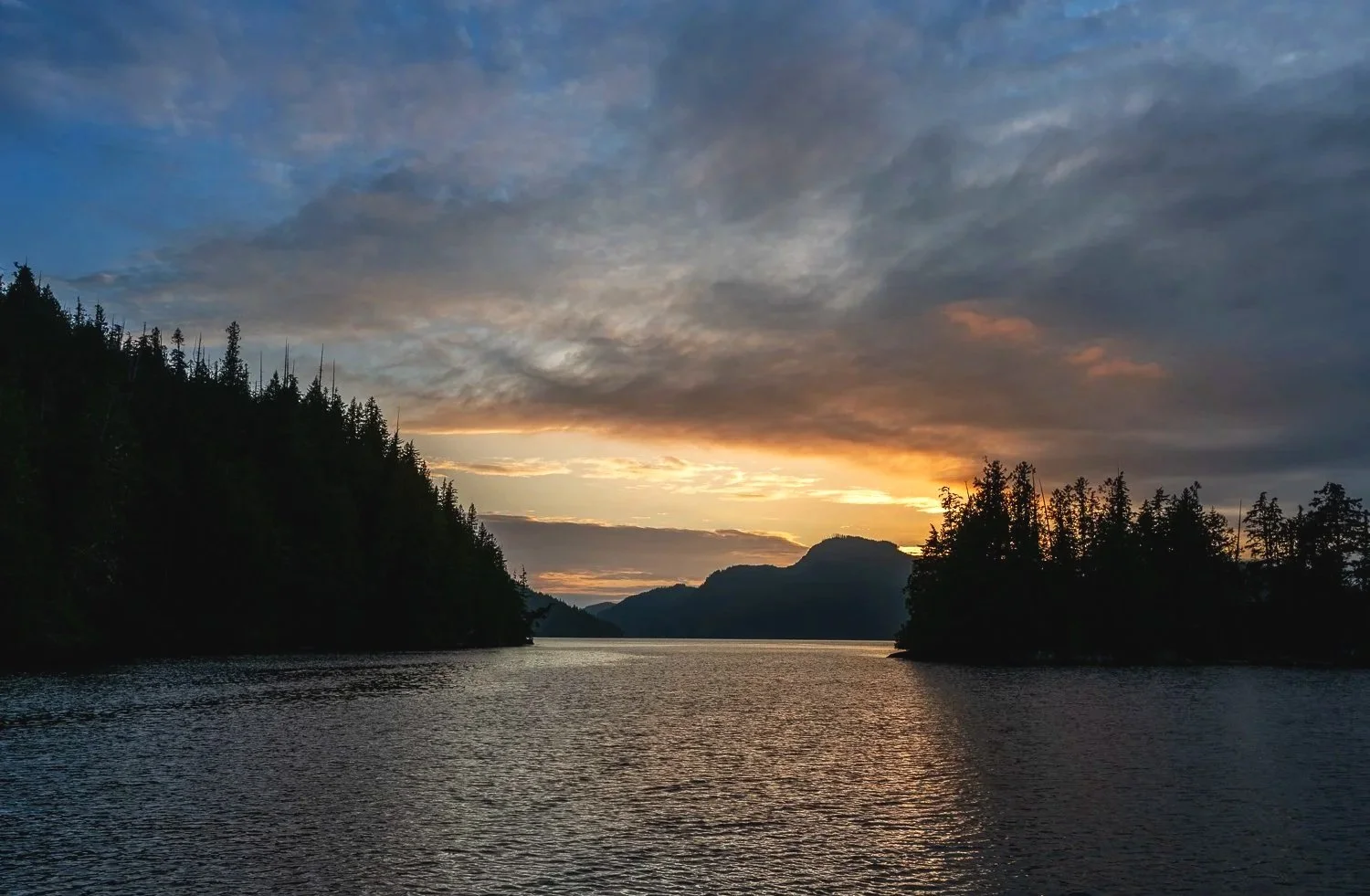
cecil island sunset


Sointula to Port McNeill

The run from Sointula to Port McNeill is hardly a passage at all—just 23 minutes across the water. Our travel day, however, stretched to nearly two hours.

The marina was exceptionally busy when we arrived, and the slip assigned to us was still occupied by a boat dealing with mechanical issues. We spent the next hour or so hovering outside the harbour while everything was sorted out. Delays like that happen, especially during the height of the cruising season.

North Island MArina

What we did miss was the proactive customer service that Port McNeill Marina was once known for. There were several empty slips available, and a temporary tie-up while we waited would have made the experience much more relaxed. We would have been perfectly happy to move if the assigned boat arrived.

That same theme continued with fueling. When we checked in around noon, we arranged for a 2:00 p.m. fuel stop. By 2:30 we hadn't heard anything, so a quick phone call prompted an apologetic response, and we finally took on fuel around 3:30.

Over the years we've watched Port McNeill transition from the exceptionally well-run operation it was under the Jackman family to one that feels a little less organized today. The marina remains an important stop for cruisers, and the staff are friendly, but we couldn't help feeling a bit nostalgic for the polished, service-first approach that built its excellent reputation. Hopefully that attention to detail finds its way back, because it's a facility with tremendous potential.

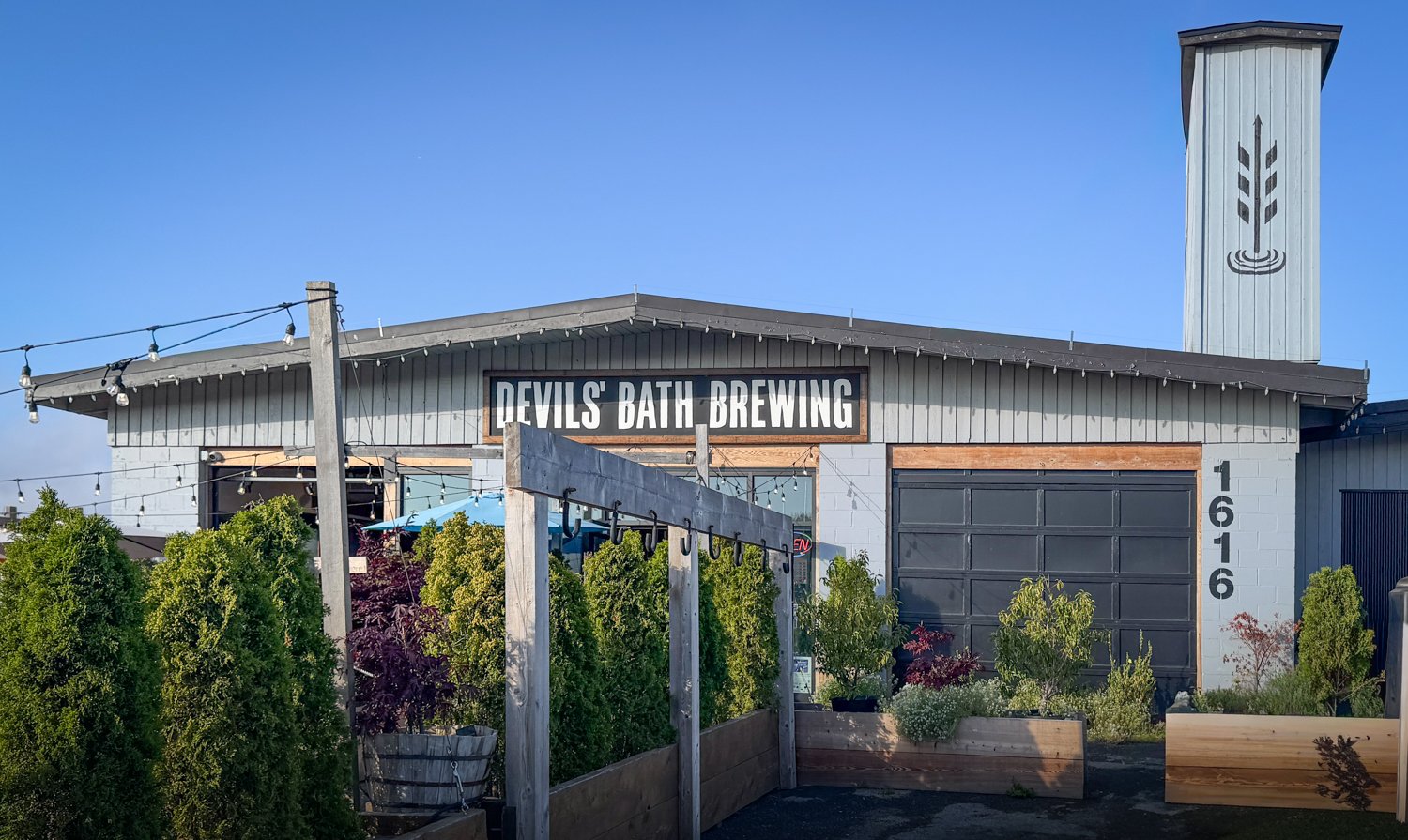
With the practical matters behind us, we turned our attention to the more enjoyable parts of being in town. A little provisioning, a stop at ShopRite to browse for a few nonessential treasures, and dinner at Devil's Bath Brewing rounded out the afternoon. The beer was very good, while the pizza was respectable, though the kitchen operated at the relaxed pace we've encountered elsewhere on northern Vancouver Island.

The highlight of our stay was Mugz 2.0 Coffee & Bakery. We stopped in the afternoon to ask when their cinnamon buns would be coming out of the oven the following morning. Rather than simply telling us a time, they took our phone number and called when the fresh batch was ready. That's customer service. Better yet, the cinnamon buns were outstanding—easily among the best we've found anywhere along the coast.

The next two days disappeared into the usual marina routine: laundry, provisioning, fueling, boat projects, and planning the next leg of the journey south. They're not the most exciting days of a cruise, but they're essential ones, and leaving Port McNeill with a well-stocked boat and a shorter to-do list always feels like a good way to begin the next chapter of the voyage.

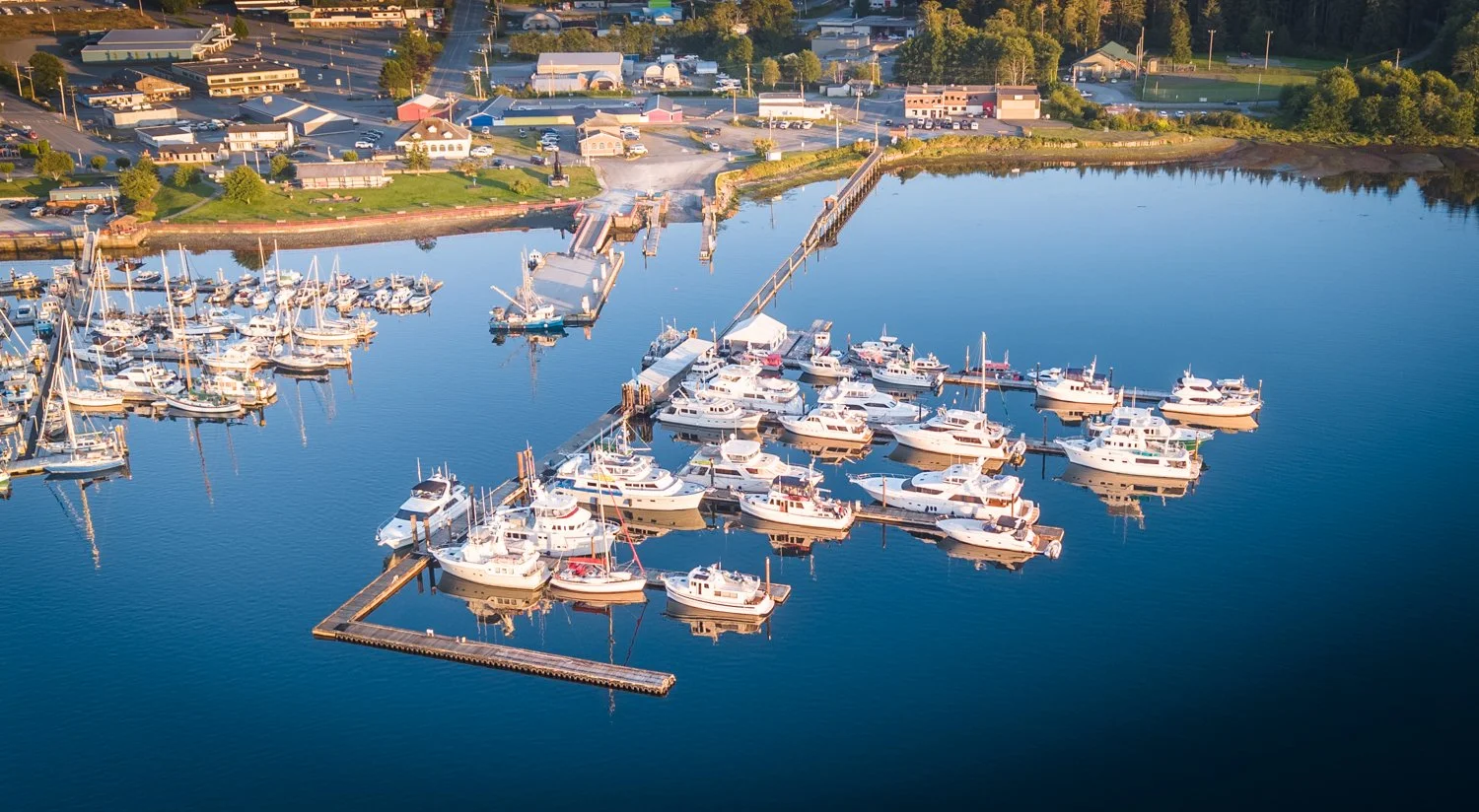
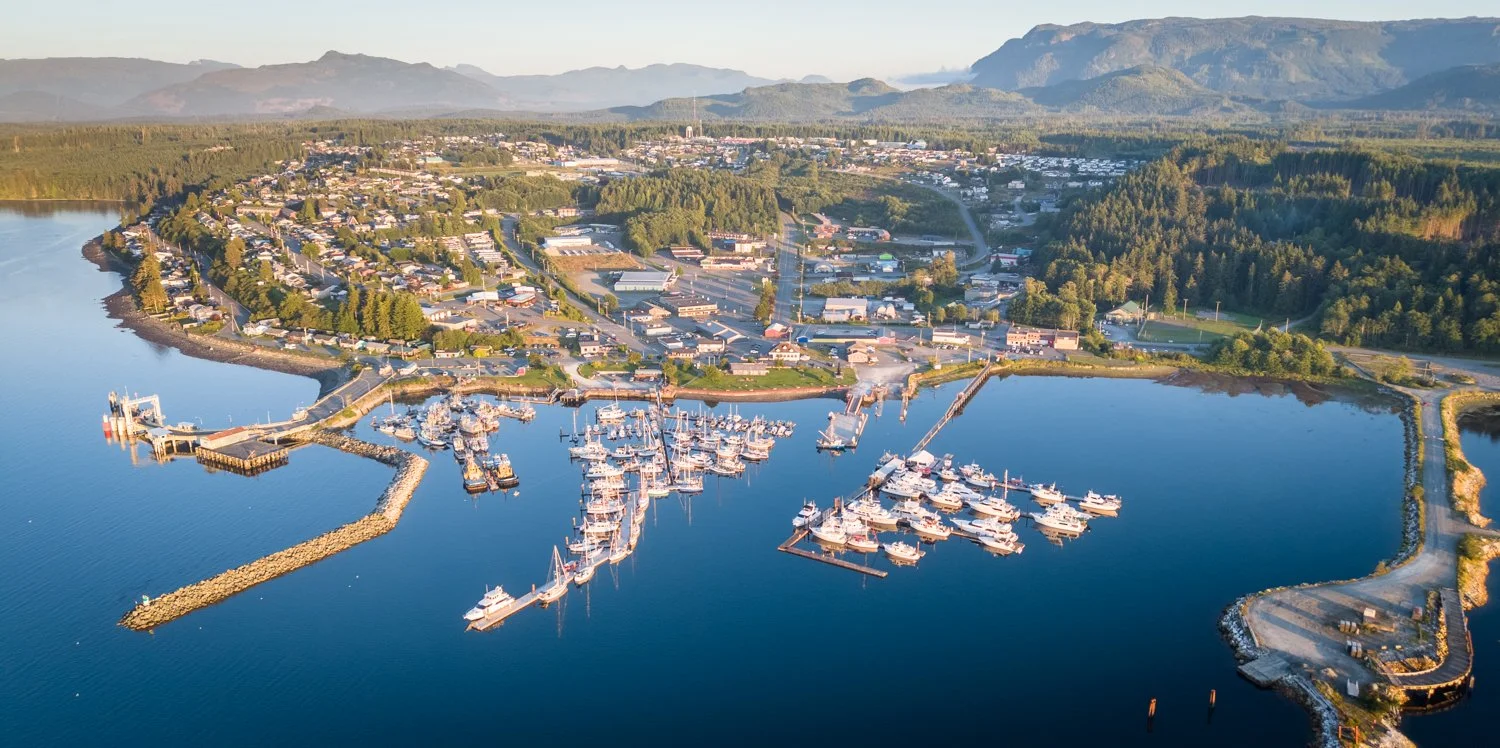
all of Port McNeill in one image