

Muirhead Islands to Cecil Island
/Today is just a short hop over to the anchorage behind Cecil Island. We visited once, a long time ago, but this time there is a new attraction drawing us back.
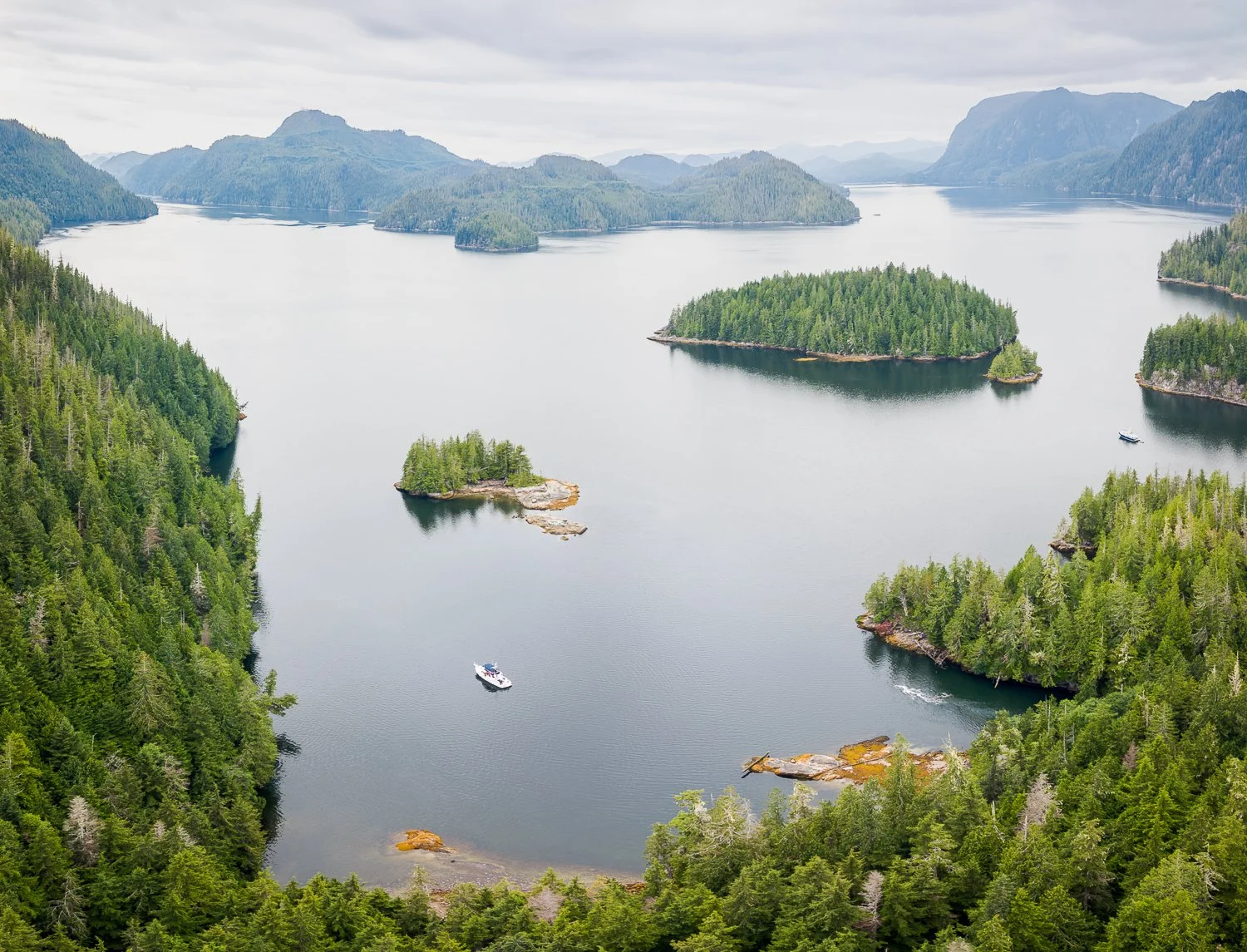
oceanflyer anchored behind cecil island
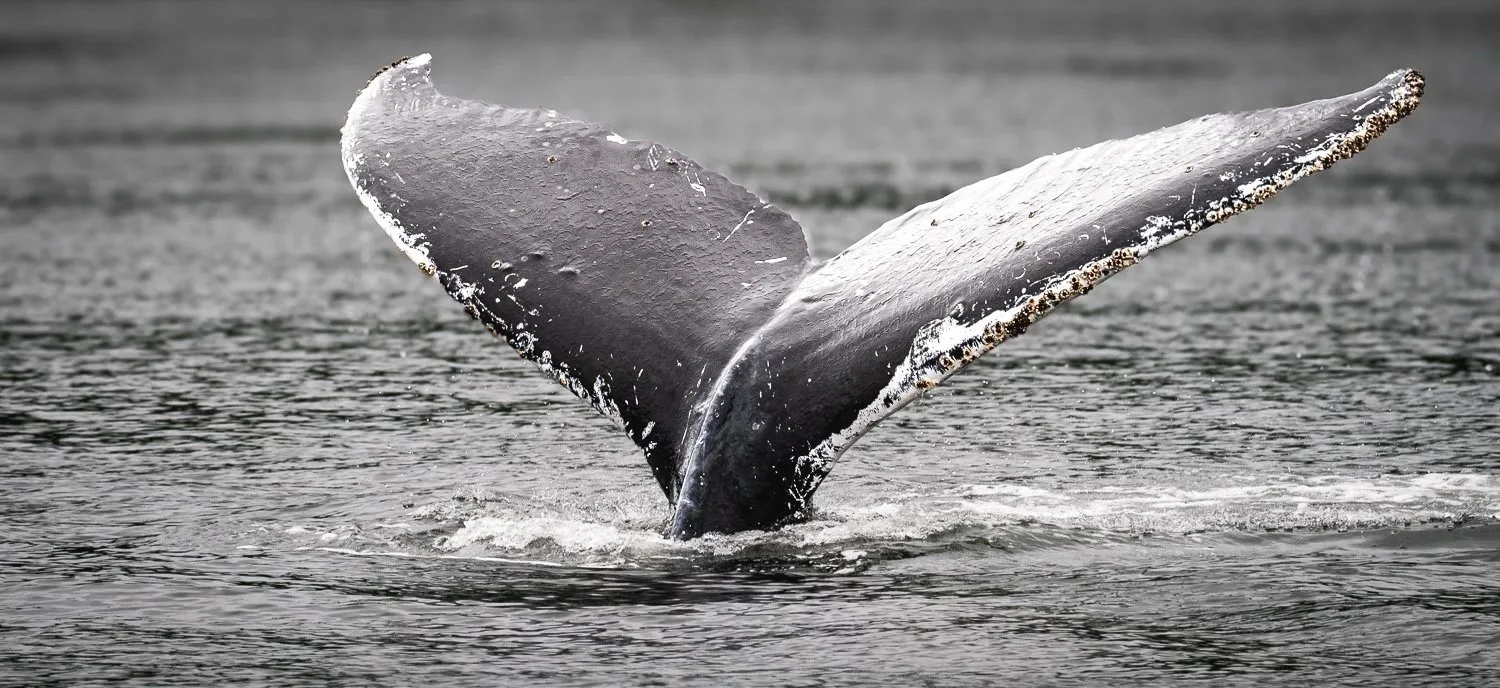
one humpback on the way to cecil island
Word throughout the cruising community is that Pacific Whireside dolphins have been spending time in Broughton Lagoon—and that they have developed a particular fondness for playing with dinghies.
Our new friends aboard M/V Voyager provided some convincing evidence. They sent us a photo of dolphins seemingly jumping endlessly around their dinghy and called the experience the highlight of their trip so far this year.
That was all the encouragement we needed.
Of course, the downside of cruising blogs and the internet is that everyone else gets the same good ideas. When we arrived behind Cecil Island, four other boats were already anchored there.
Mother Nature, however, was cooperating. We were able to time our passage through Stuart Narrows with some current on our stern and still reach Cecil Island in time for a high-water transit into Broughton Lagoon.
The entrance to the lagoon is through a narrow, twisting passage capable of carrying a considerable amount of current. Once through the narrows, however, Broughton Lagoon opens into an enormous and wonderfully protected body of water.
And there they were.
We spotted the dolphins, and more importantly, they spotted us.
They quickly came over to investigate the dinghy and began playing in our wake. Unfortunately, just a few minutes behind us came two more dinghies. The dolphins promptly abandoned us for the newcomers.
Karen was not amused.
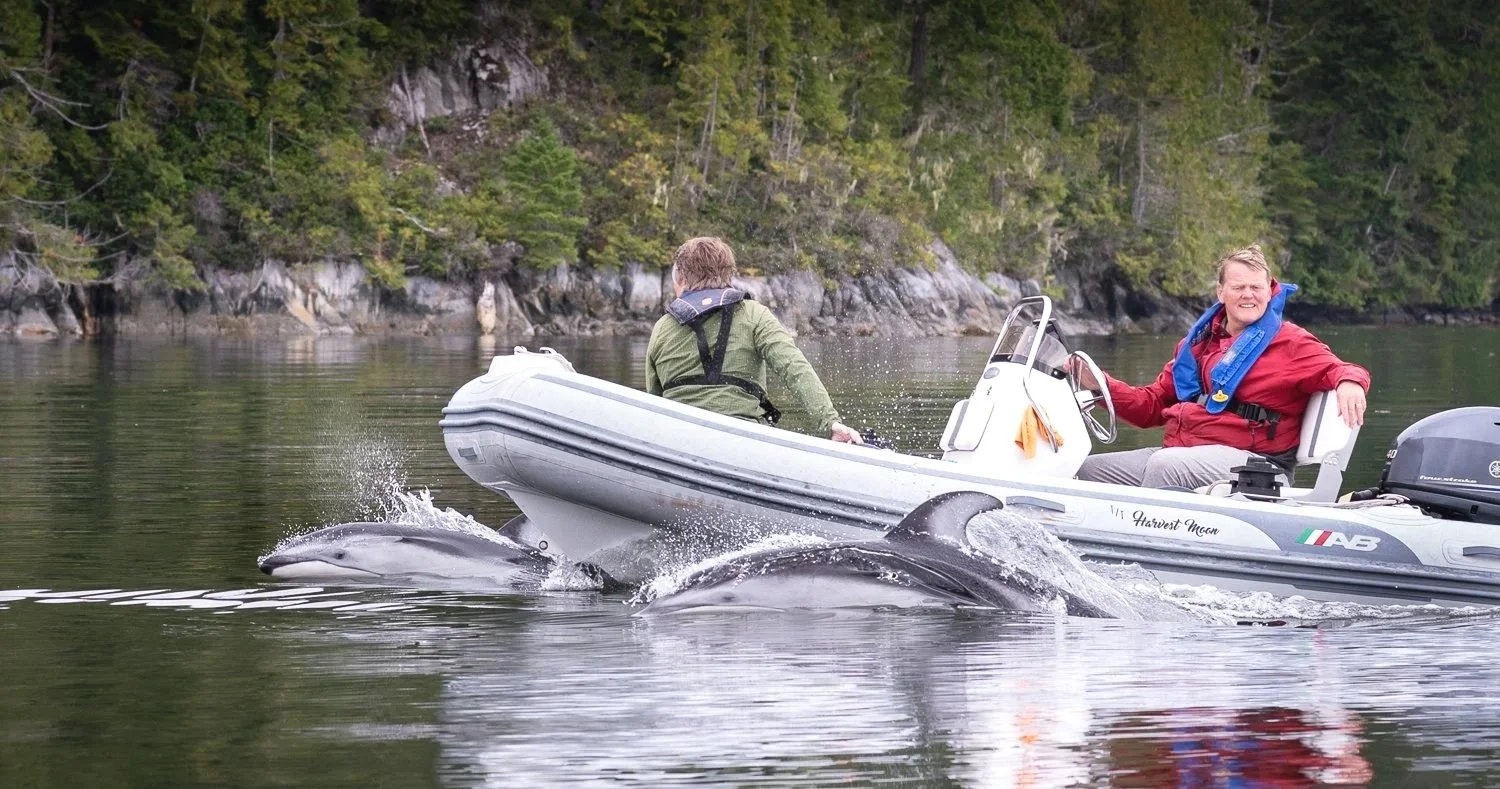
pacific whiteside dolphins play in broughton lagoon
Rather than compete for their attention, I put the dinghy in idle and we waited. Eventually the dolphins appeared to become more interested in chasing prey toward the shallows, so we slowly followed at a respectful distance.
Our patience paid off.
Before long they turned their attention back to us. Soon they were racing alongside, crossing through our wake and swimming beneath the dinghy. One passed so close that it actually bumped the side of the boat.
Of all the wildlife we encounter in Pacific Northwest waters, I find dolphins among the most difficult to photograph. They appear without warning, disappear just as quickly and invariably leap somewhere other than where the camera is pointed.
This time was no different.
The photographs simply can't capture the fun and excitement of having these ambassadors of fun and frolic racing around the dinghy.
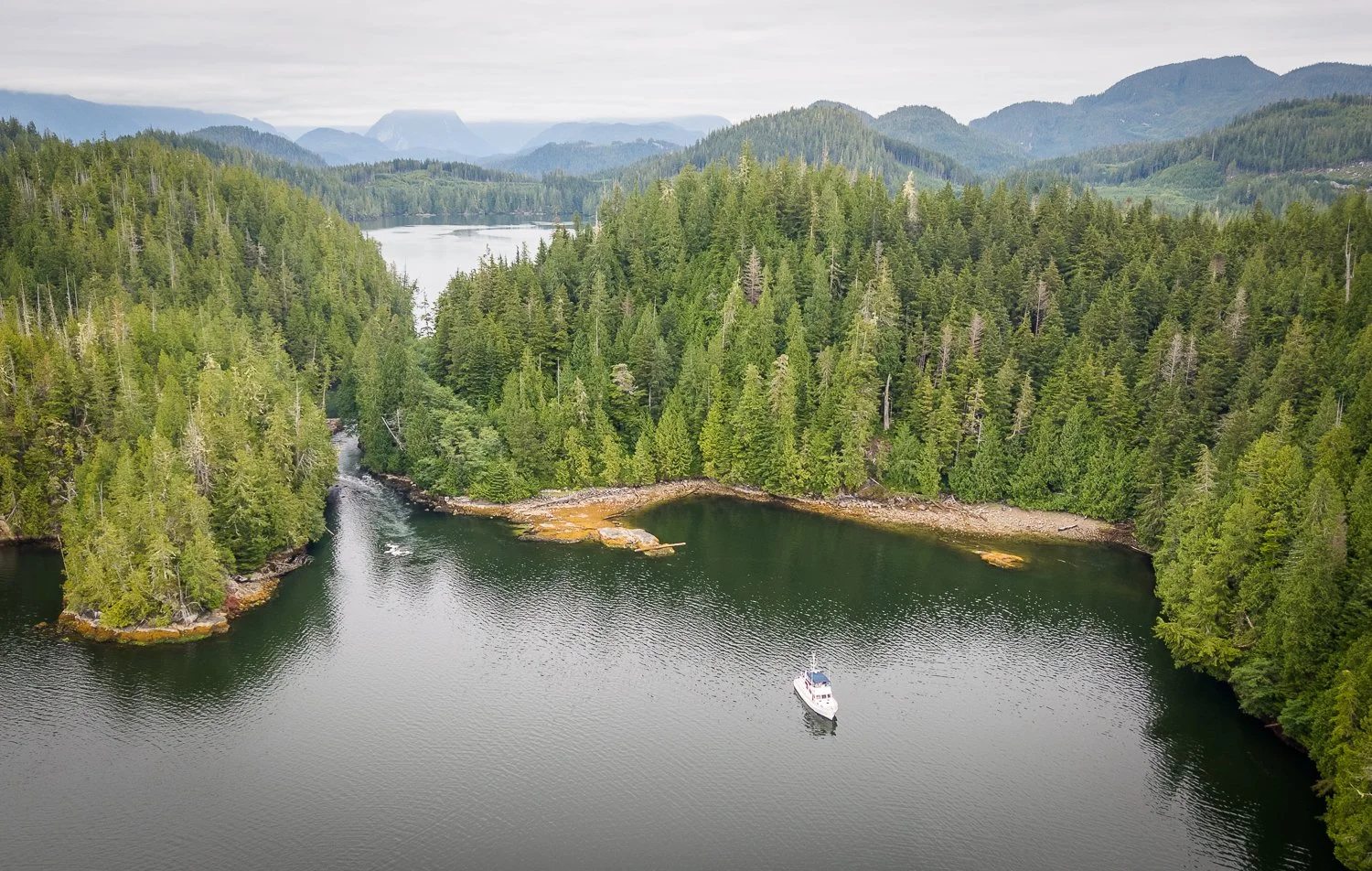
the north “entrance” to broughton lagoon. Do not use this entrance!
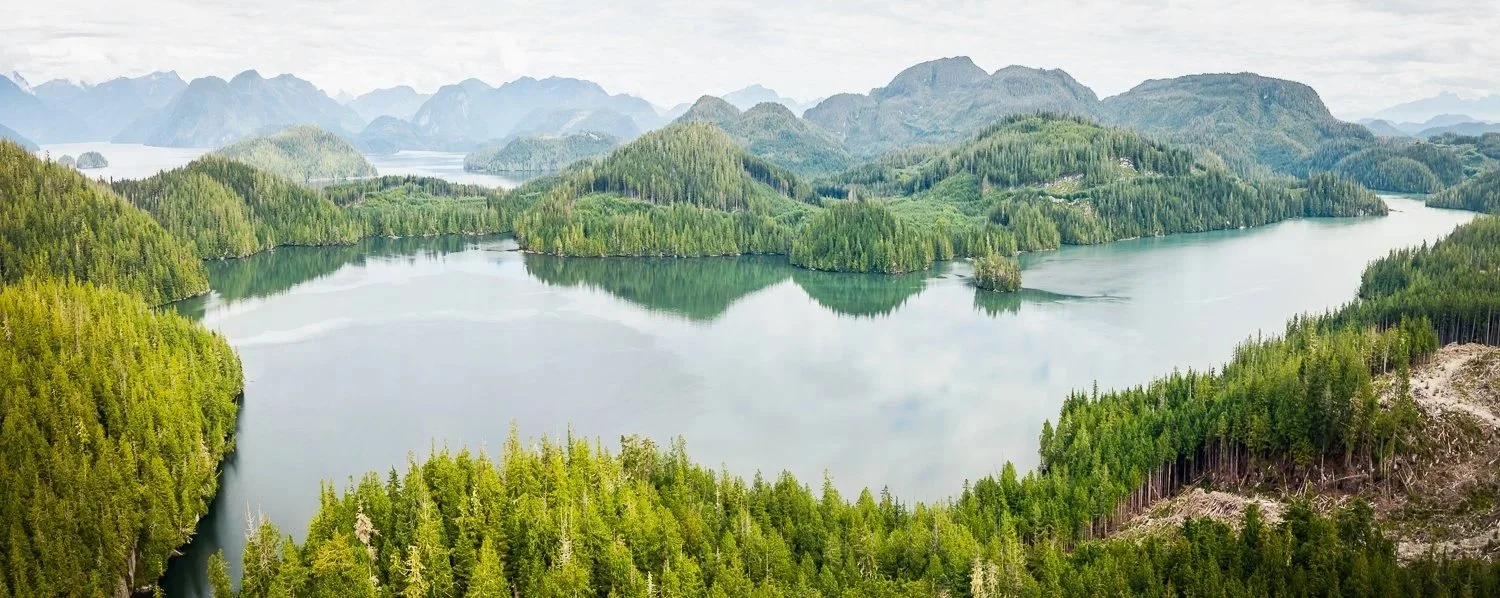
broughton lagoon is large
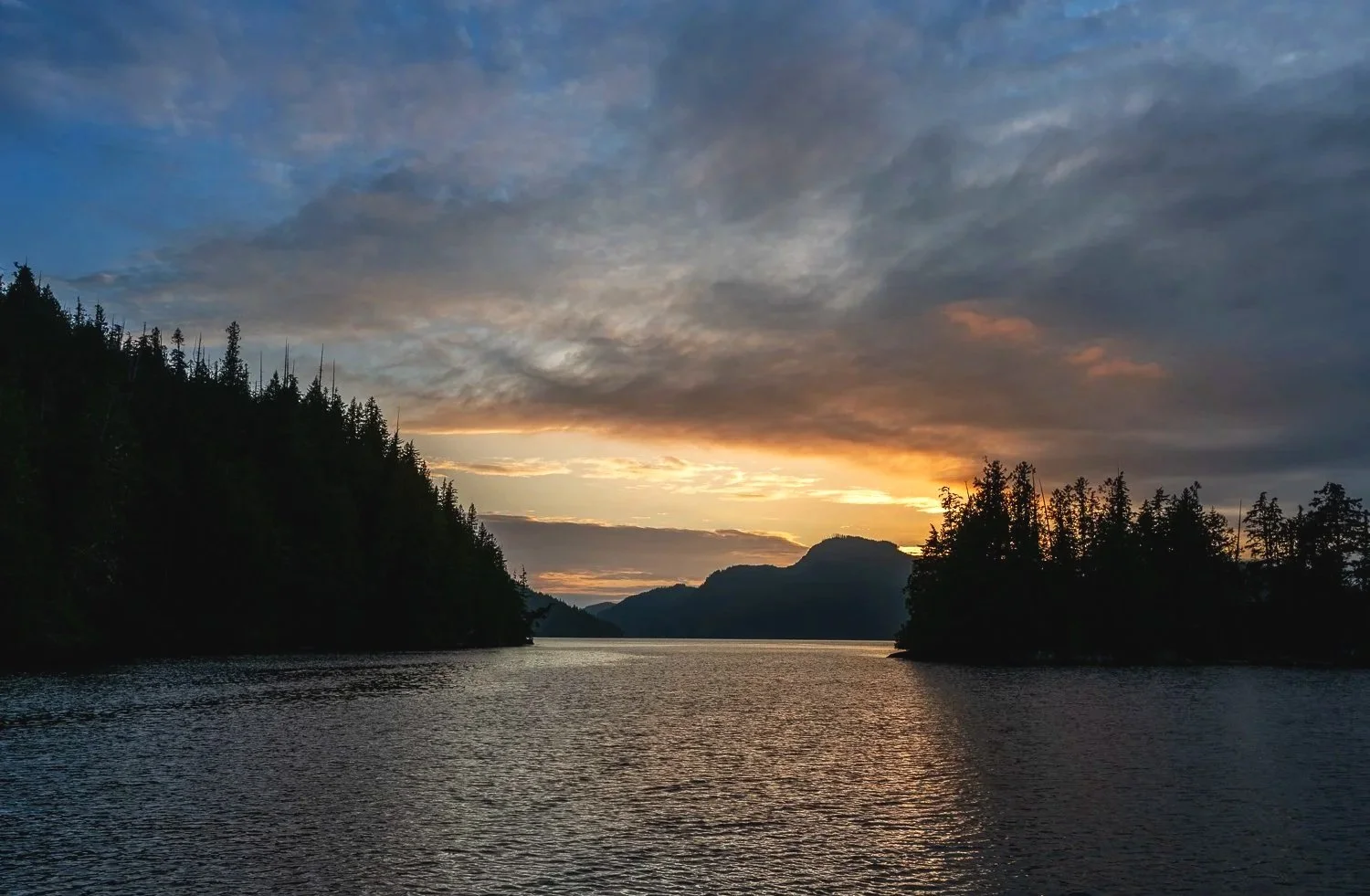
day one at cecil island sunset
Day Two: A Little Navigation Experiment
The following day we headed back into Broughton Lagoon with two objectives.
First, with no other cruising boats anchored nearby, we hoped we might have the dolphins to ourselves.
Second, we wanted to better understand the timing of slack water at the entrance.
Published information about Broughton Lagoon is surprisingly inconsistent. One commonly repeated recommendation puts slack at a fixed interval after high water at a nearby reference station, but we had already found reason to question that advice.
So we decided to do a little research of our own.
As part of the exercise, I worked with ChatGPT and asked it to dig deeply into the available information and develop its own prediction. After considering the tidal range and the hydraulic nature of the lagoon, it predicted slack at approximately 1 hour 50 minutes after high water at Sullivan Bay.
Remember that number.
This was a substantial tide. High water at Sullivan Bay was 13.99 feet, following a low of 2.29 feet—an 11.7-foot exchange.
We didn't wait for predicted slack.
We entered the lagoon 1 hour 10 minutes after high water at Sullivan Bay. The current was still running into the lagoon at perhaps two knots. There were a few swirls, but nothing particularly turbulent, and the passage was quite comfortable in our 13-foot dinghy with its 30-hp Yamaha.
We did find a few shallow bumps on the bottom along the way. At one point we saw only 6.4 feet of water with the tide at approximately 12.99 feet. The bottom image on the sonar was highly articulated, making it impossible to determine whether we were looking at hard bottom, kelp or some combination of the two.
Once through the narrows, the search began.
Broughton Lagoon is enormous, and finding a pod of dolphins somewhere within it could easily become an exercise in futility. We had given ourselves about 30 minutes before beginning our return toward the entrance.
Fortunately, I soon spotted splashing along the shoreline near where the northern narrows enters the lagoon. With water still flowing inward, I suspected the dolphins might be taking advantage of the current following in from the northern narrows to feed.
We turned toward the activity.
The pod was indeed busy fishing and initially showed little interest in us. Eventually curiosity won out. One by one they began coming over to inspect the dinghy—swimming alongside, circling underneath us, giving us a look and then returning to their feeding.
After sitting quietly for a while, we began moving slowly to see if that might encourage the same behavior we had experienced the previous day.
It worked.
Soon they were following our wake and then moving forward to ride alongside the bow. For the next half hour, dolphins and crew entertained one another.
Eventually, both parties had other things to do.
And Now for the Test
We headed back toward the narrows.
As we approached the entrance, water was still moving through the passage, but the surface was flat and the current was clearly weakening as slack approached.
Rather than simply head through, we held position outside the entrance and watched.
The flow continued to diminish.
Slower.
Slower still.
And then it stopped.
Our observed slack occurred 1 hour 51 minutes after high water at Sullivan Bay.
ChatGPT's prediction had been 1 hour 50 minutes.
Off by one minute.
The crew of OceanFlyer was impressed.
More importantly, we now have an actual observed slack-water time for Broughton Lagoon associated with a known tidal exchange—information we can use as a reference the next time we visit.
The two days also reinforced something we have learned repeatedly while cruising this coast.
Spending at least two days in an anchorage changes the experience. The first day you arrive and explore. The second day you begin to understand the place—the tides and currents, where the wildlife gathers, how the water moves and all the little details you missed the first time.
And every once in a while, you even get the dolphins to yourself.
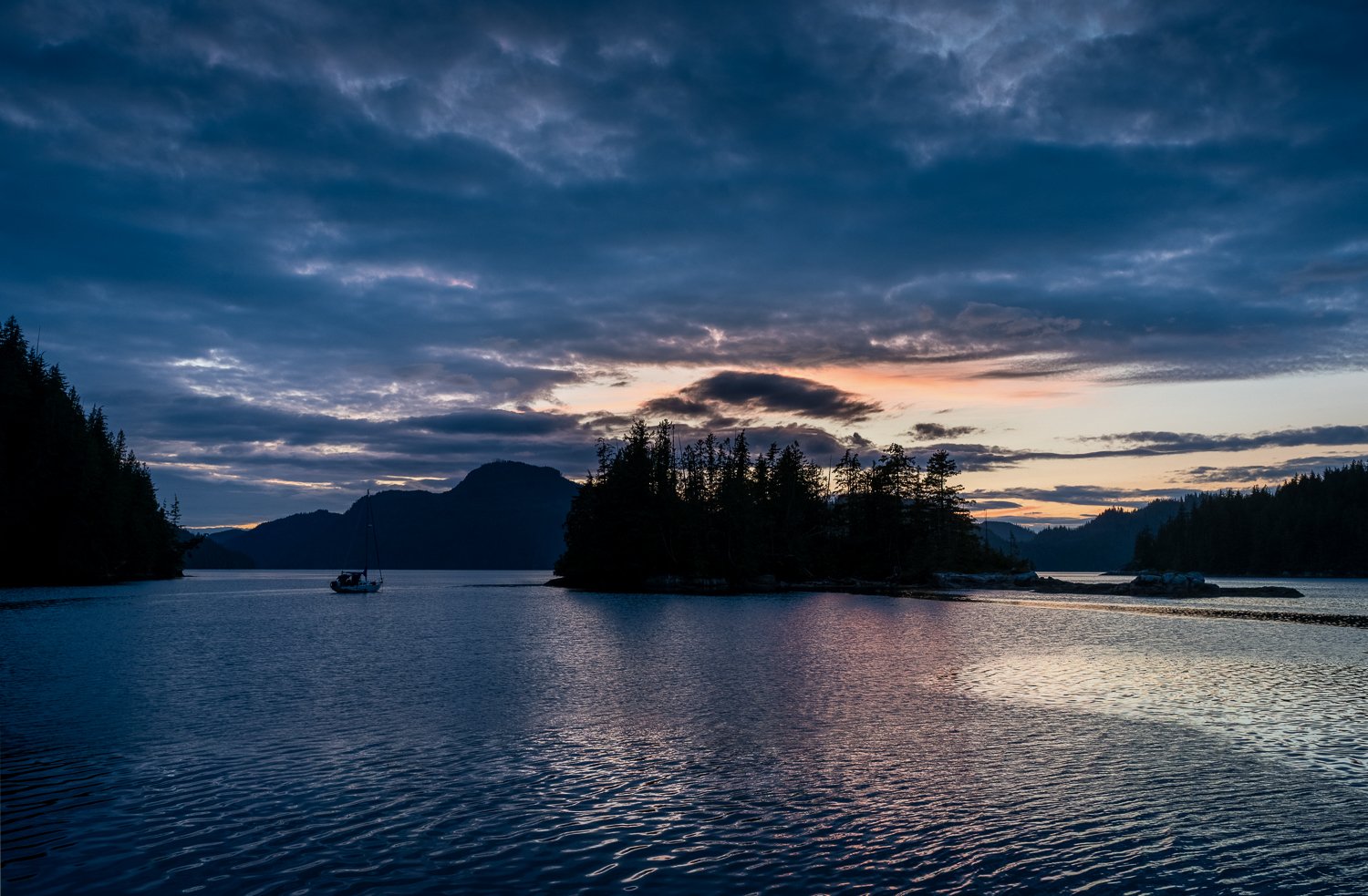
cecil island sunset