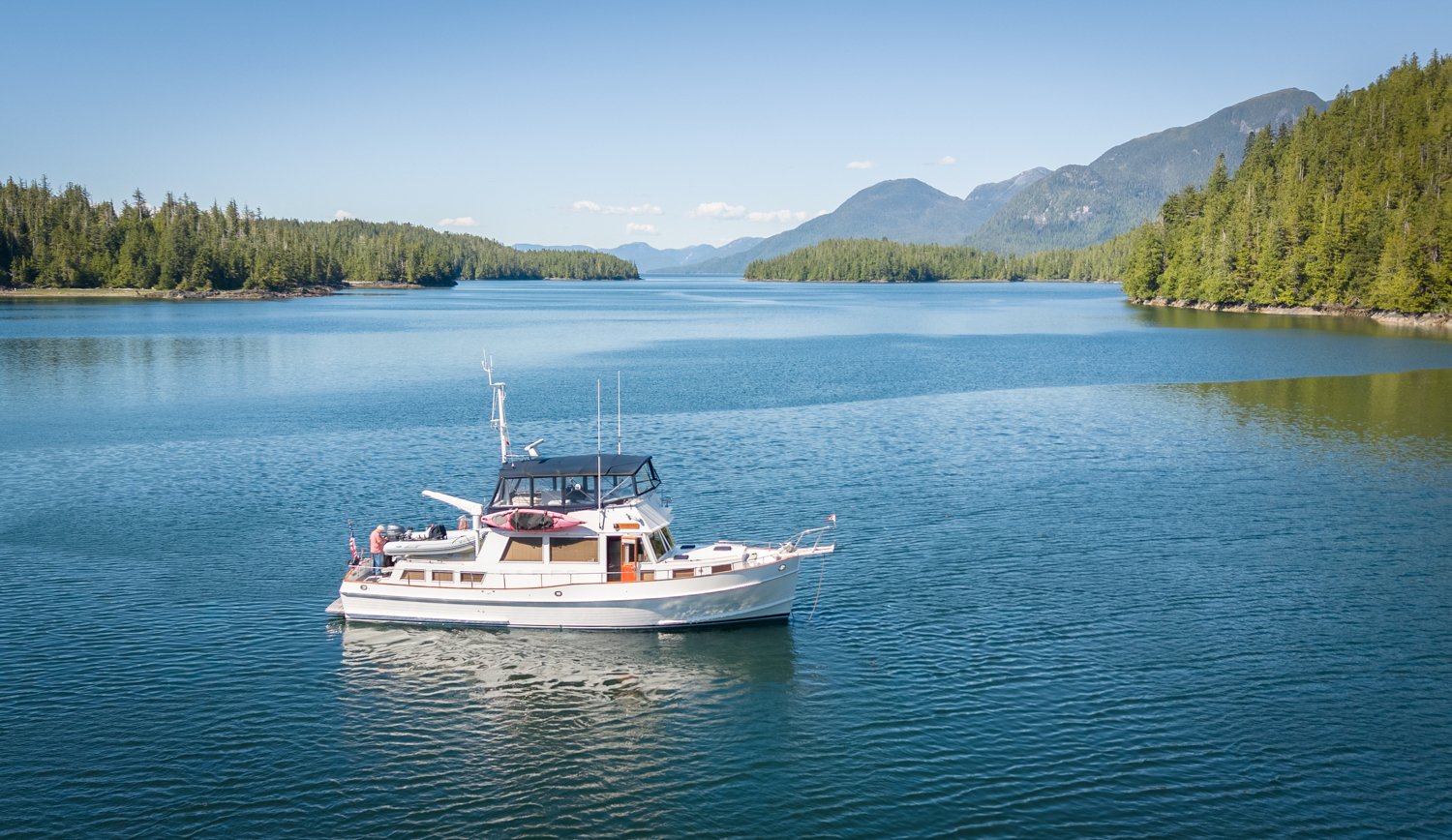
Tuwartz Inlet to Klewnuggit Inlet

Most cruising days revolve around the next anchorage. Today, however, our destination was secondary. The real objective was finding fresh water.

With our watermaker still out of service and our Prince Rupert marina reservation nearly a week away, our freshwater reserves were becoming the limiting factor in our plans. We could tighten our water rationing even further, but that's not why we're out here. Cruising is meant to be enjoyed, not endured.

Hartley Bay, a small Indigenous community about two hours away, offered our best chance. It would add only about an hour to the day's run to Klewnuggit Inlet, and everything we had read suggested water was available at the fuel dock. Even so, we spent the previous three days calling and emailing every published contact we could find—the marina, the fuel dock, and the Band office—but never received a reply.

Sometimes you simply have to go and see.

As we rounded into Hartley Bay, it was immediately clear the community was busy. Fishing boats lined the fuel dock, crews moved supplies, and passengers with luggage gathered on the dock waiting for the high-speed ferry to Prince Rupert.

When one of the fishing boats departed, we eased alongside the fuel dock and connected to the water hose. Because OceanFlyer occupied nearly the entire dock, we were conscious of not disrupting the day's activity. Fortunately, the fuel attendant couldn't have been more welcoming. He refused our repeated offers to make a donation for the water, and after topping off our tanks we were underway again in less than thirty minutes.

We left with full water tanks and considerable peace of mind. With careful use, we'd have enough water for the coming week, including a much-needed load of laundry and plenty available for continued troubleshooting of the watermaker.

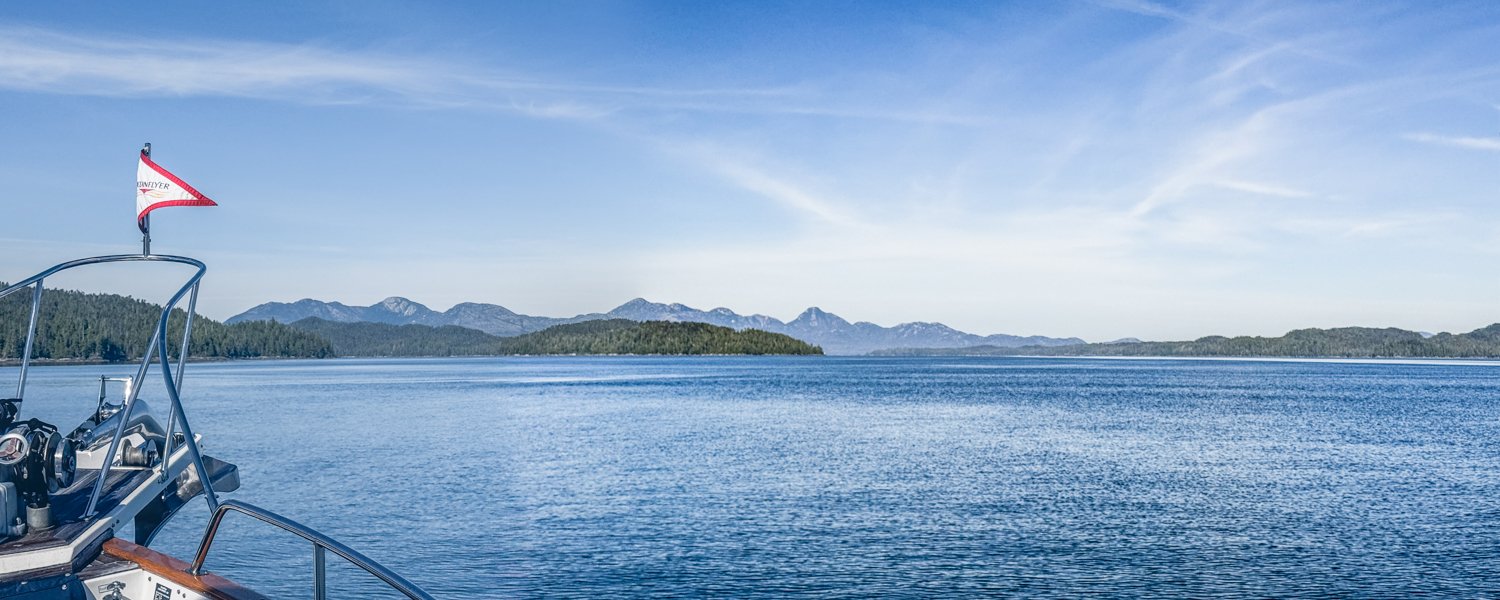
The run north through Grenville Channel reminded us why the passage has earned its reputation. Winds on the bow frequently gusted to 30 knots, kicking up a steady one- to two-foot chop. It was a wet, splashy ride, but well within OceanFlyer's comfort zone.

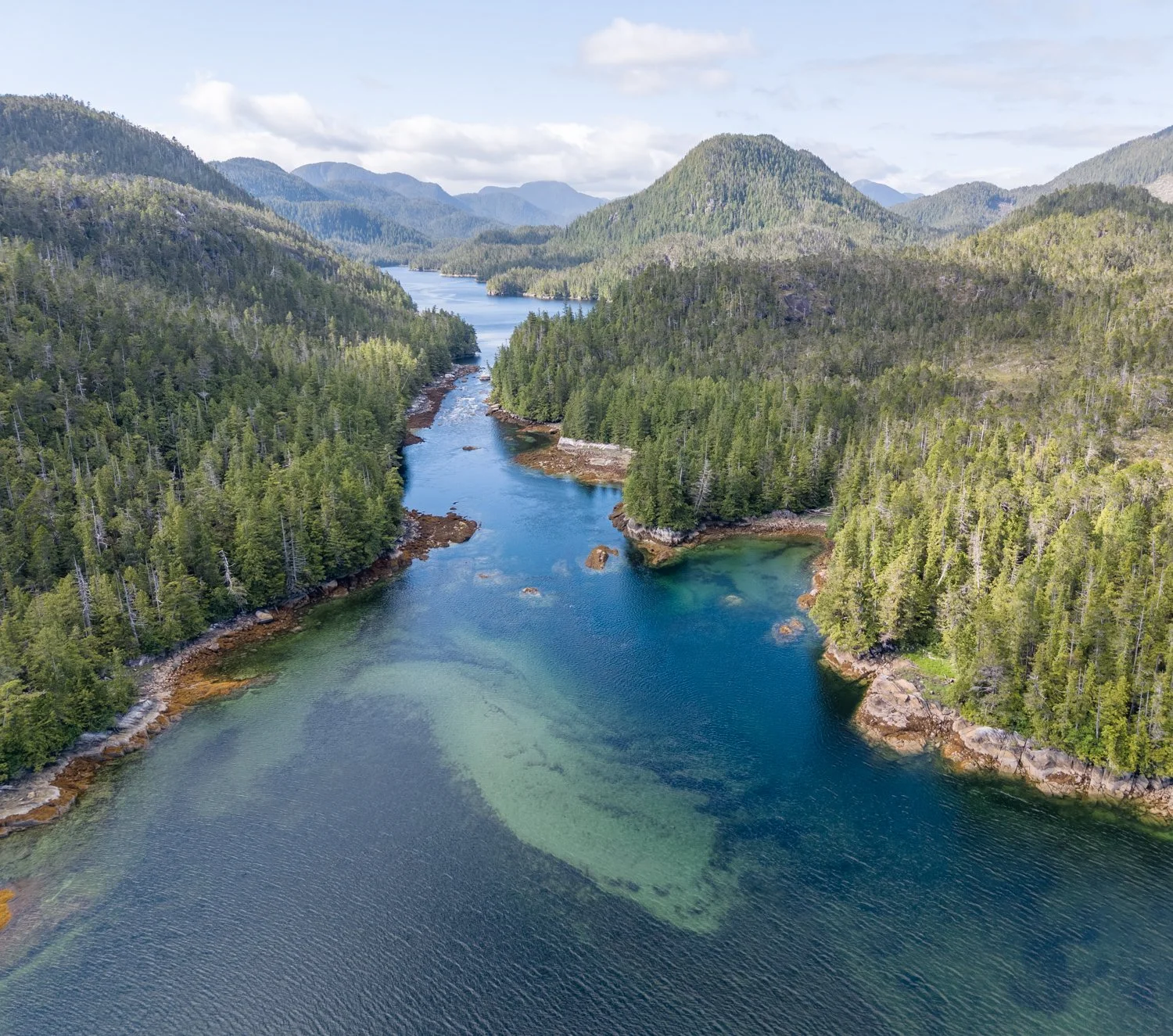
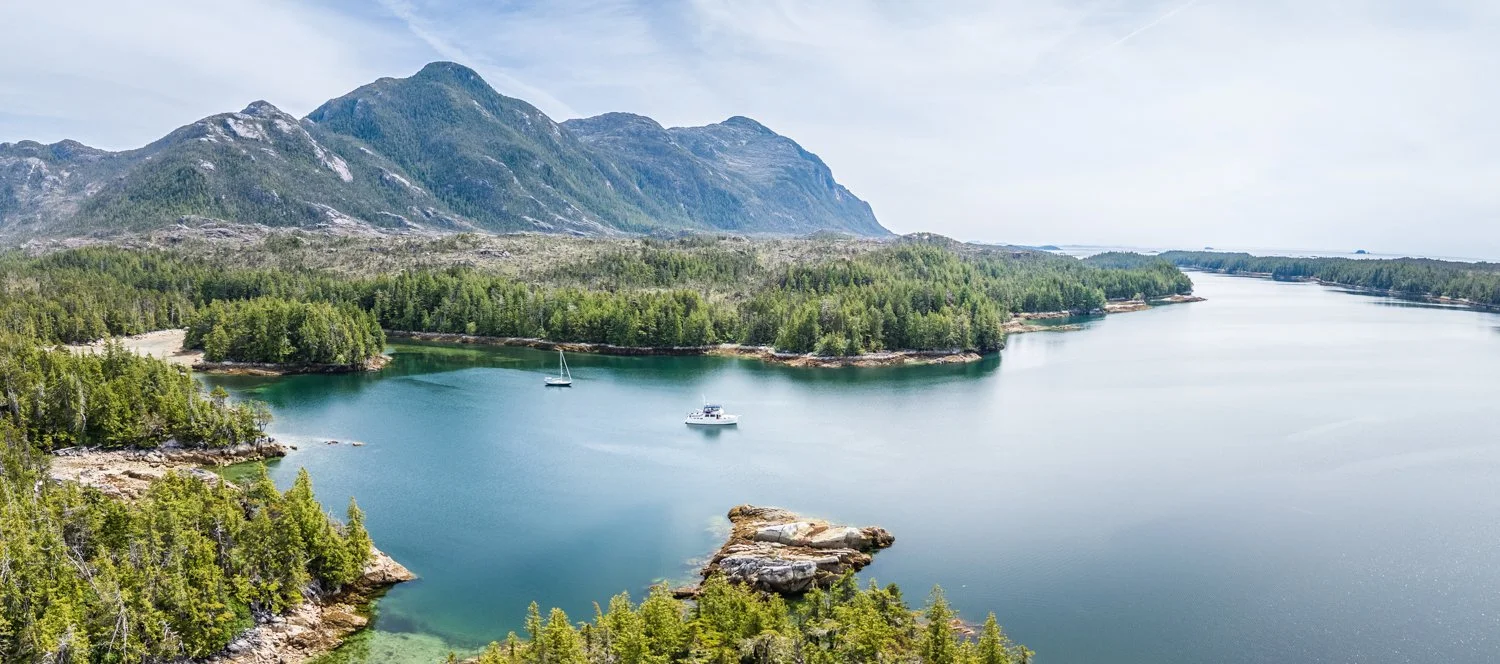
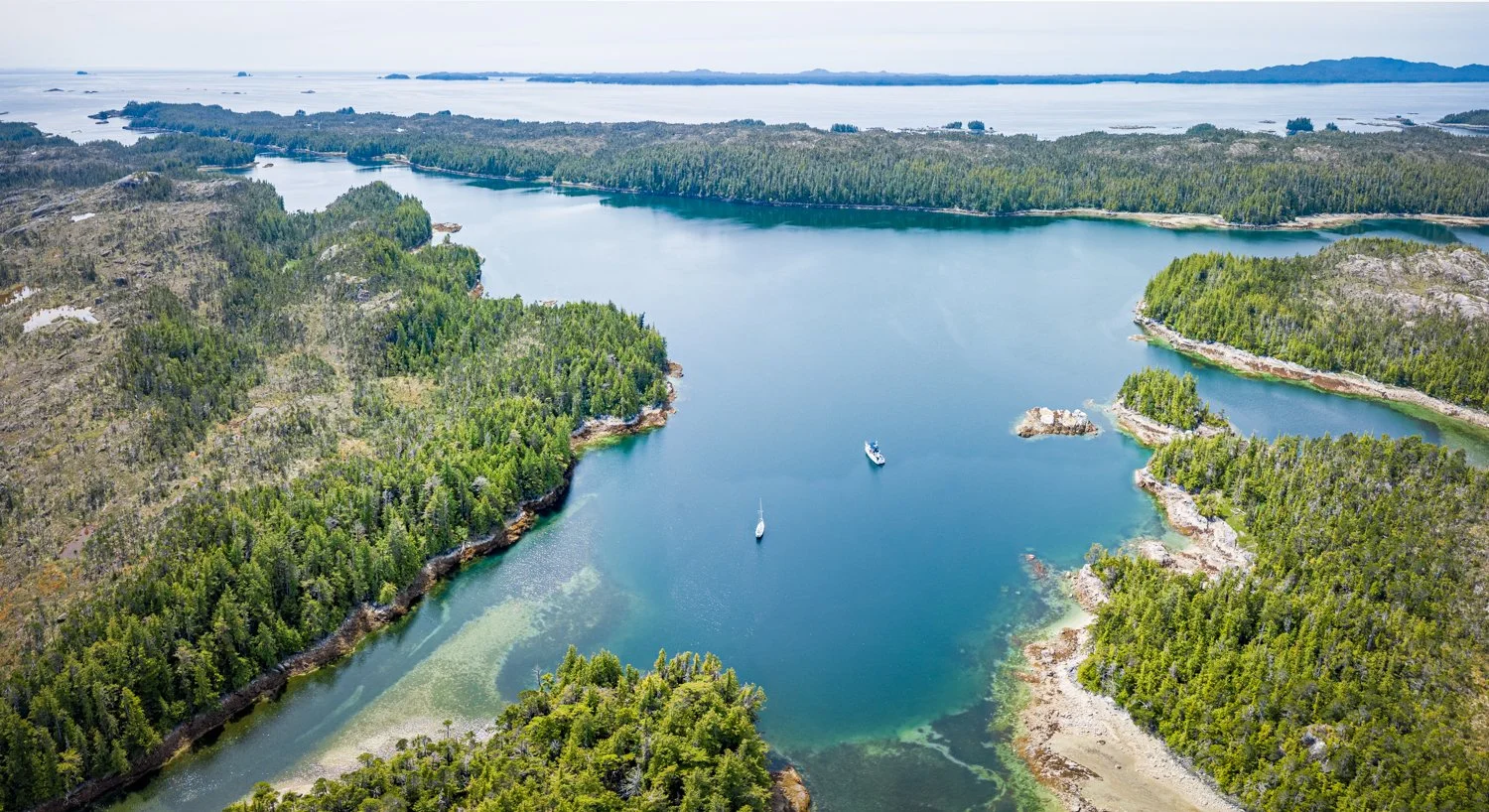
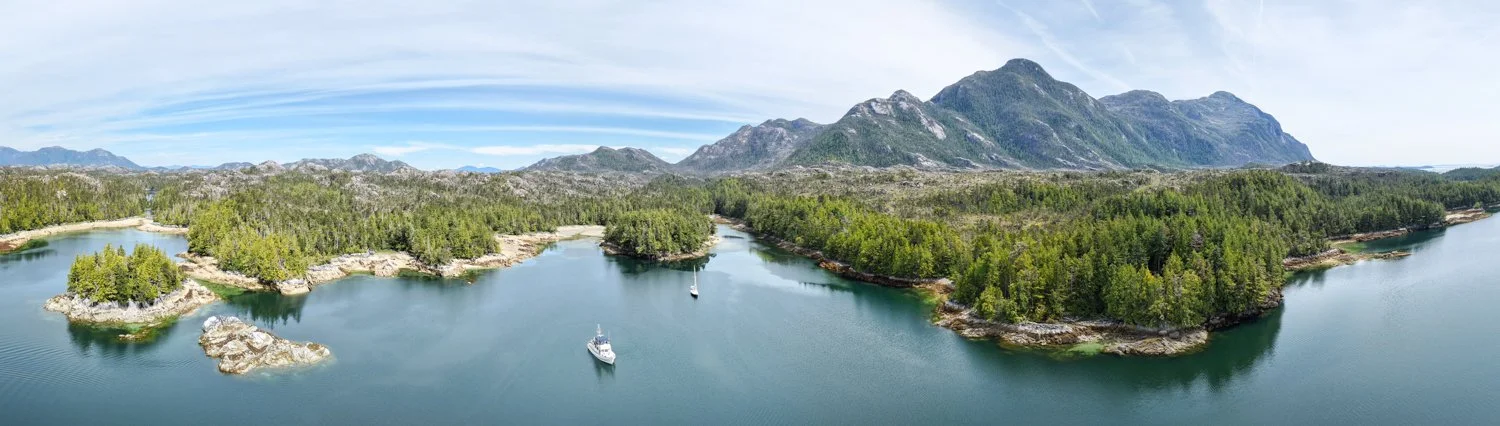
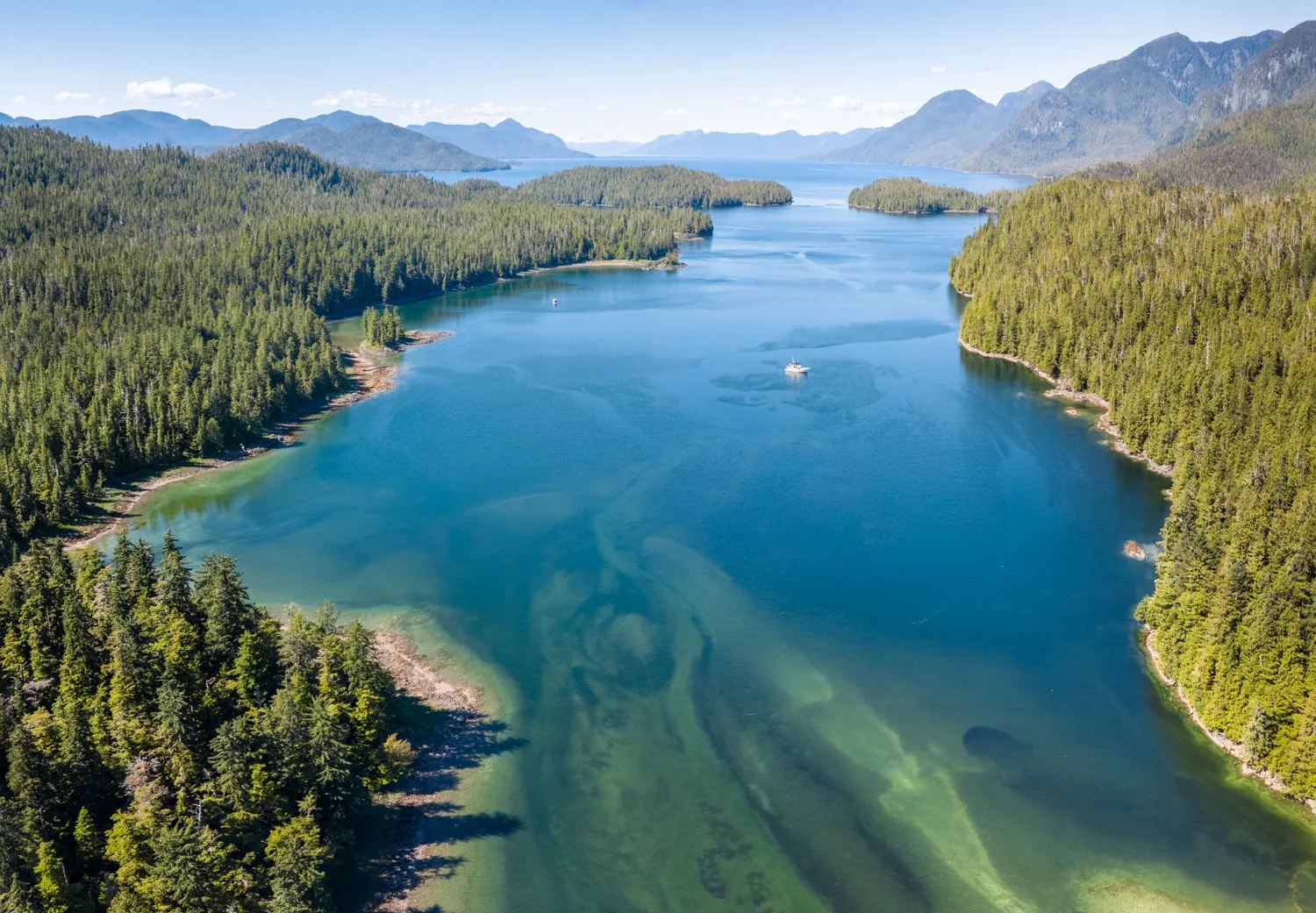
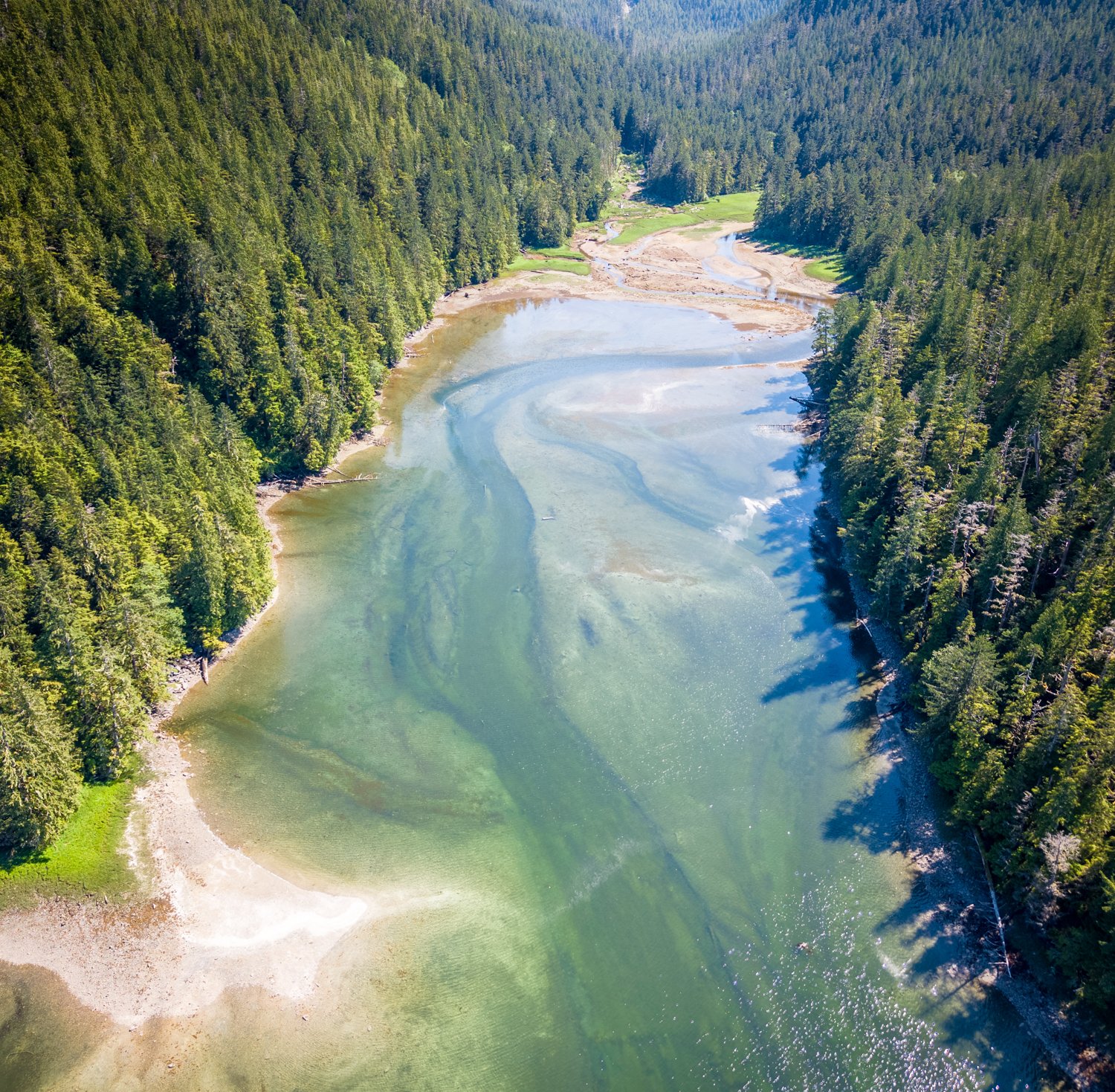
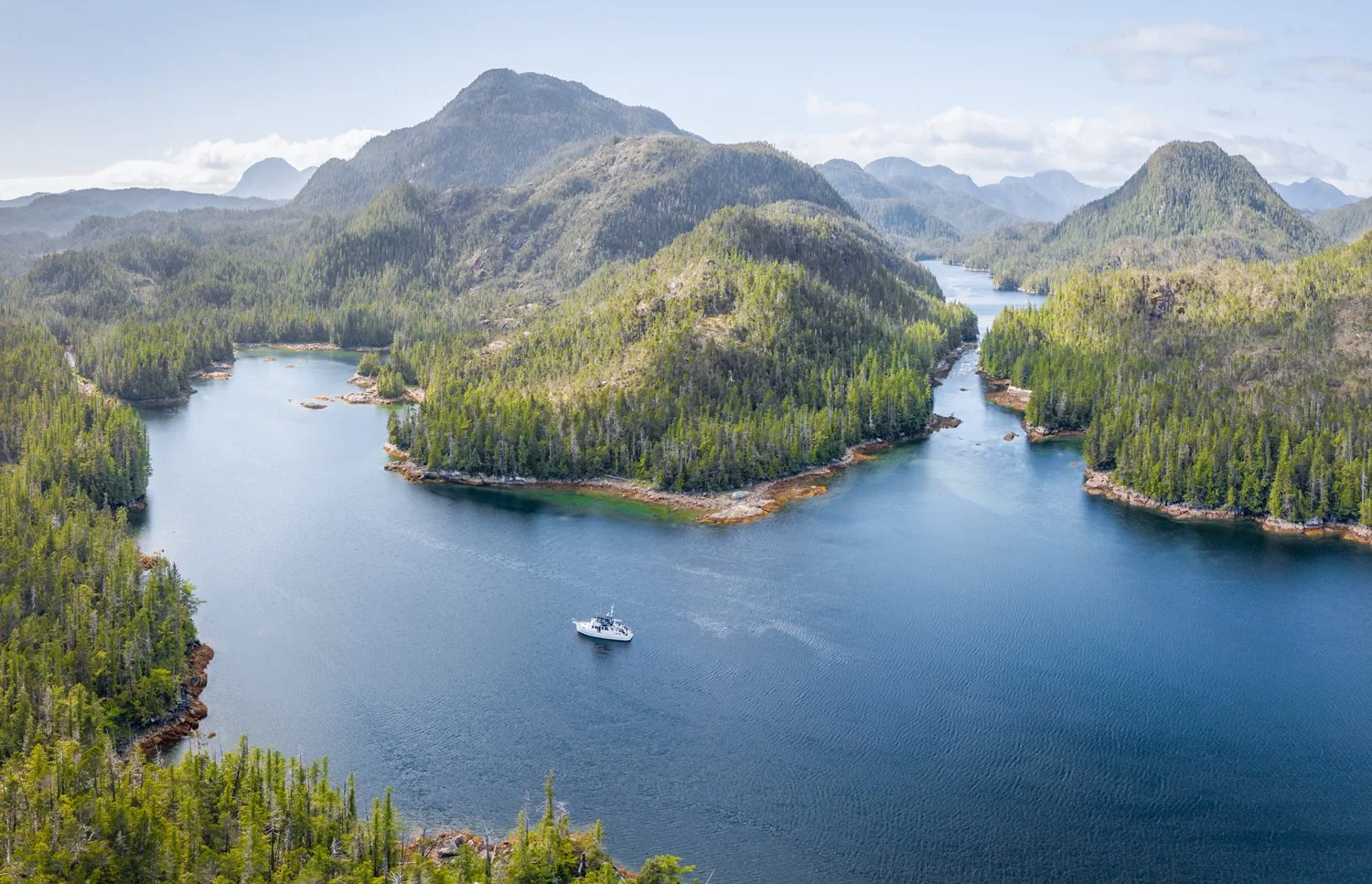
By mid-afternoon we entered the expansive Klewnuggit Inlet and continued to the head of the northwest arm. In about 60 feet of water we found excellent holding and complete protection. It was an ideal place to settle in for a couple of days while tackling a growing list of boat projects.
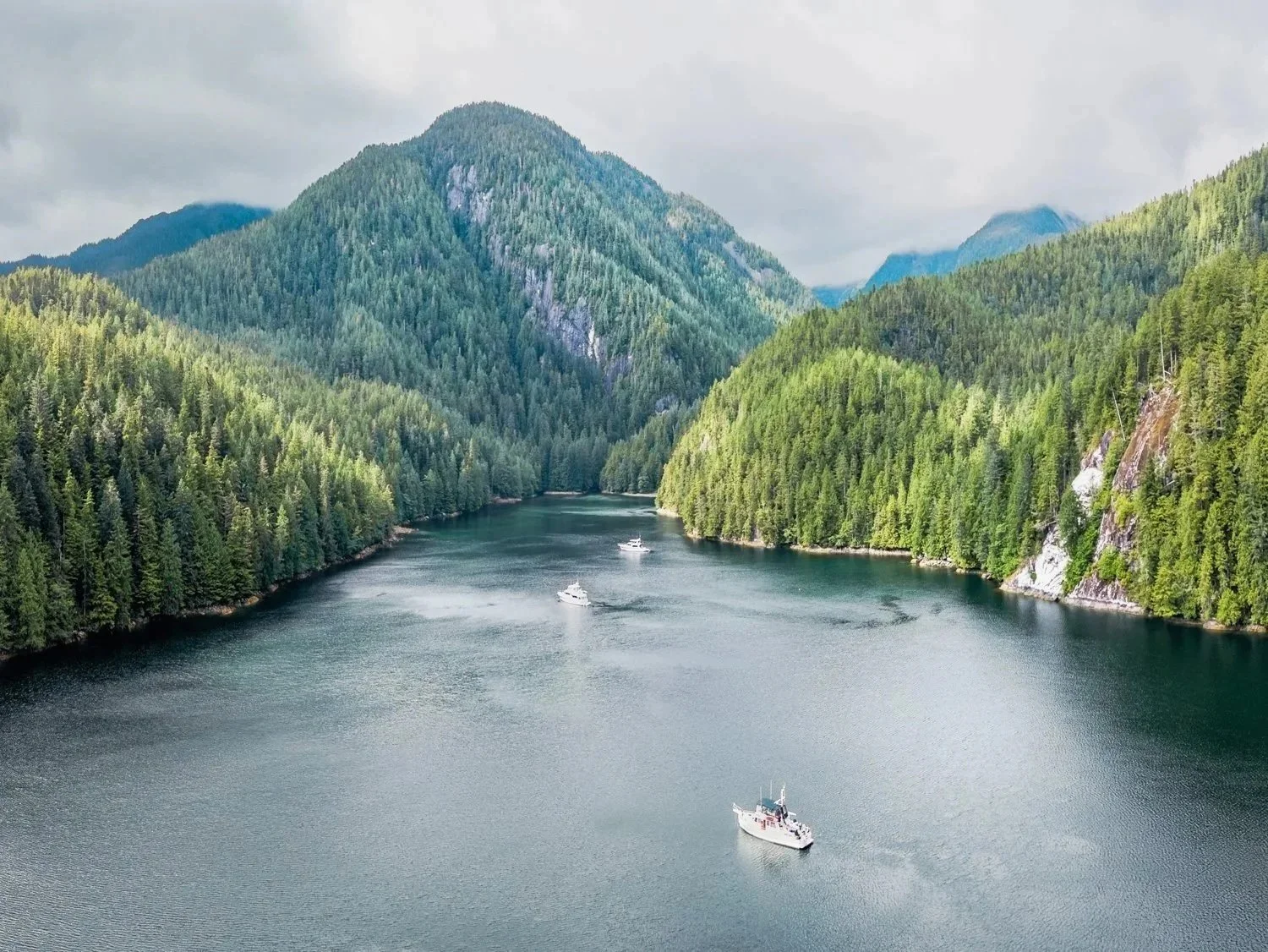
Oceanflyer joins two other boats in Klewnuggit Inlet
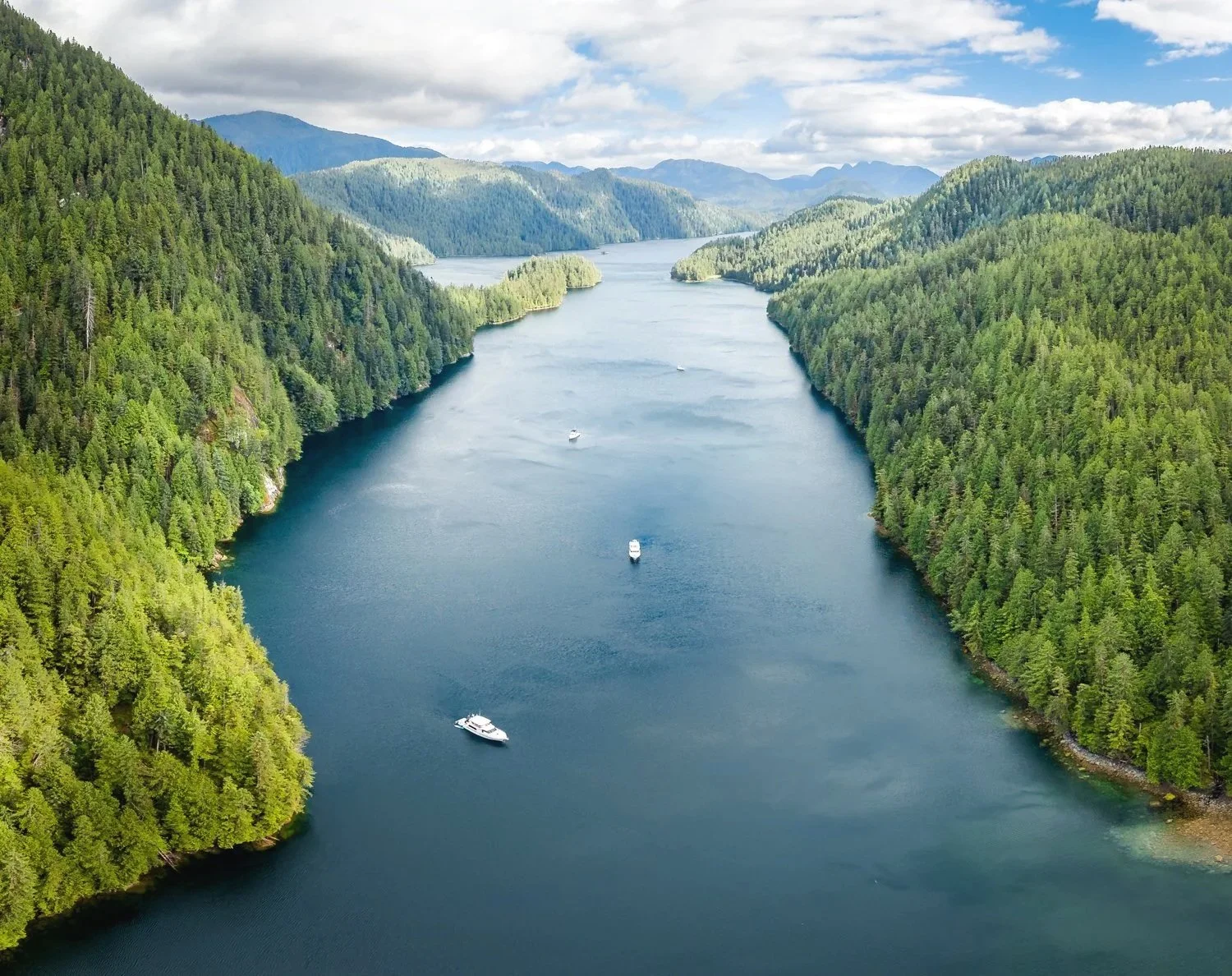
looking ack down the northeast arm of Klewnuggit Inlet

The first priority was our 9 kW generator.

It had recently begun shutting down from what appeared to be an overheating problem. The usual culprit is a worn impeller, but when I removed it, every vane was intact. I installed a new impeller anyway, but nothing changed.

Next came the heat exchanger. Accessing it requires the sort of awkward body positions that only boat owners truly appreciate, accompanied by the usual assortment of colorful language. As I often say, boat repairs would be easy if you could actually reach the part you're trying to fix. I'm still convinced there's a market for a third arm.

The heat exchanger proved completely clear, leaving me no closer to an answer.

Finally, I decided to install the spare raw-water pump that had been riding aboard for the past fourteen years.

Instant success.

The generator immediately returned to normal operation. The old pump looked perfectly serviceable from the outside, making the failure something of a mystery. It will be interesting to disassemble it once we're home and determine exactly what failed internally.

During the troubleshooting process, my mechanic also had me close the generator discharge seacock while attempting to back-flush the cooling system through the vent line. The experiment didn't uncover any blockage, but it did reveal another issue—the discharge seacock appears to be stuck in the open position. Fortunately, it's not an immediate concern and can wait until OceanFlyer's haul-out this fall.

Unfortunately, the watermaker wasn't nearly as cooperative.

Despite trying every diagnostic procedure I could think of, I wasn't able to bring it back to life. At this point we're accepting that it may remain out of service for the rest of the cruise, which means adjusting our itinerary around places where we can replenish our freshwater tanks.

Cruising has a way of reminding you that flexibility is just another piece of essential equipment. Fortunately, with full water tanks, back to two working generators, and a beautiful anchorage all to ourselves, we still felt like we were winning.
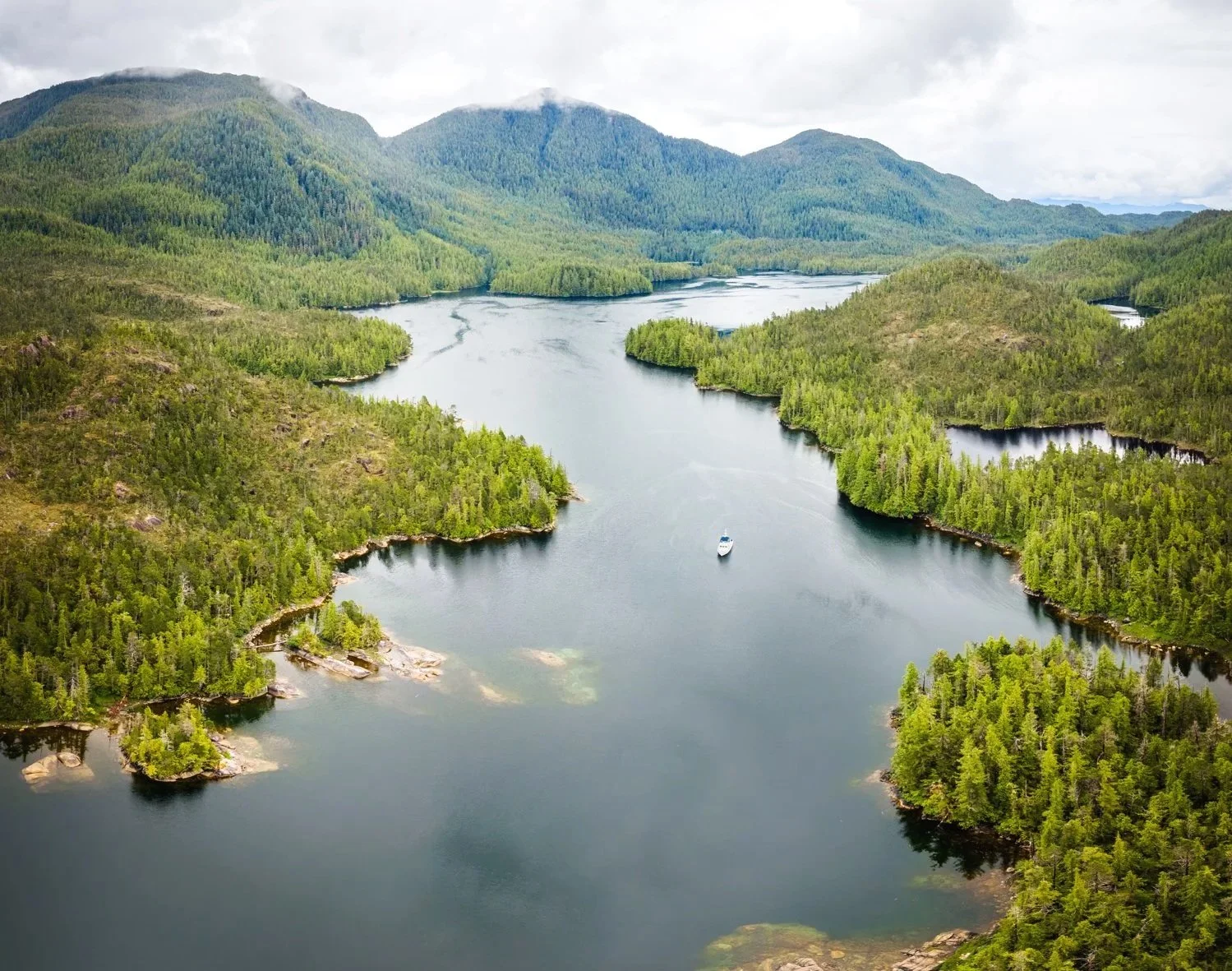
Betteridge Inlet to Tuwartz Inlet

After two rainy but wonderfully restful days tucked away in Betteridge Inlet, it was time to continue north to another secluded anchorage we always look forward to visiting—one that sees remarkably few visitors. Tuwartz Inlet isn't a destination that finds its way onto many cruising itineraries, but that's exactly part of its appeal.

There are several anchoring options here. On our first visit we stayed outside Tuwartz Narrows in the small cove tucked into the northeast corner. It's a comfortable anchorage and avoids the need to transit the narrows.

This time, however, we were after complete solitude.

Despite its intimidating appearance on the chart, Tuwartz Narrows is surprisingly straightforward if you follow the right line. The two charted drying rocks are the only real hazards. Hug the west shoreline to clear the first rock, then make a deliberate turn toward the east shore. Continue along that side past the second hazard, identified by three small, tree-covered drying islets.

The temptation is to steer directly from one narrow section to the next, but that's exactly where the shallower water lies. Trust the chart, make the turn, and the passage becomes surprisingly comfortable. While we found the transit straightforward, it's easy to understand why first-time visitors hesitate. Fortunately, the charts tell the story accurately—trust them more than your eyes.

Crossing the entrance ledge extending from the first charted drying rock, our sounder showed 15.3 feet beneath the keel during a forecast 13.1-foot high tide at Hartley Bay. That suggests we'd have only about two feet beneath the keel at low slack if we used the same track. Later we took the dinghy back out the narrows and discovered if we hugged the shore line even closer, the depths we deep enough for safe passage at a slack low.

Within moments, the narrows disappears behind you and it feels as though you've stepped into a place few people ever see.

Behind the narrows are two inviting anchorages. One lies in the eastern cove, while the other sits to the west near the entrance to Tuwartz Lagoon. After another dinghy tour this year, Karen looked around the anchorage, smiled, and simply declared, "This is my favorite." I suspect we'll be back.

Friends of ours have successfully tucked into the western anchorage with what they jokingly call a "short scope”, carefully avoiding the five-foot "bump in the bottom." With stronger winds forecast, we opted for a more conservative spot in about 60 feet of water almost directly opposite the lagoon entrance. The holding proved excellent, and the surrounding mountains made it feel like our own private fjord.

the first spot we tried, but moved after floating over the “bump”

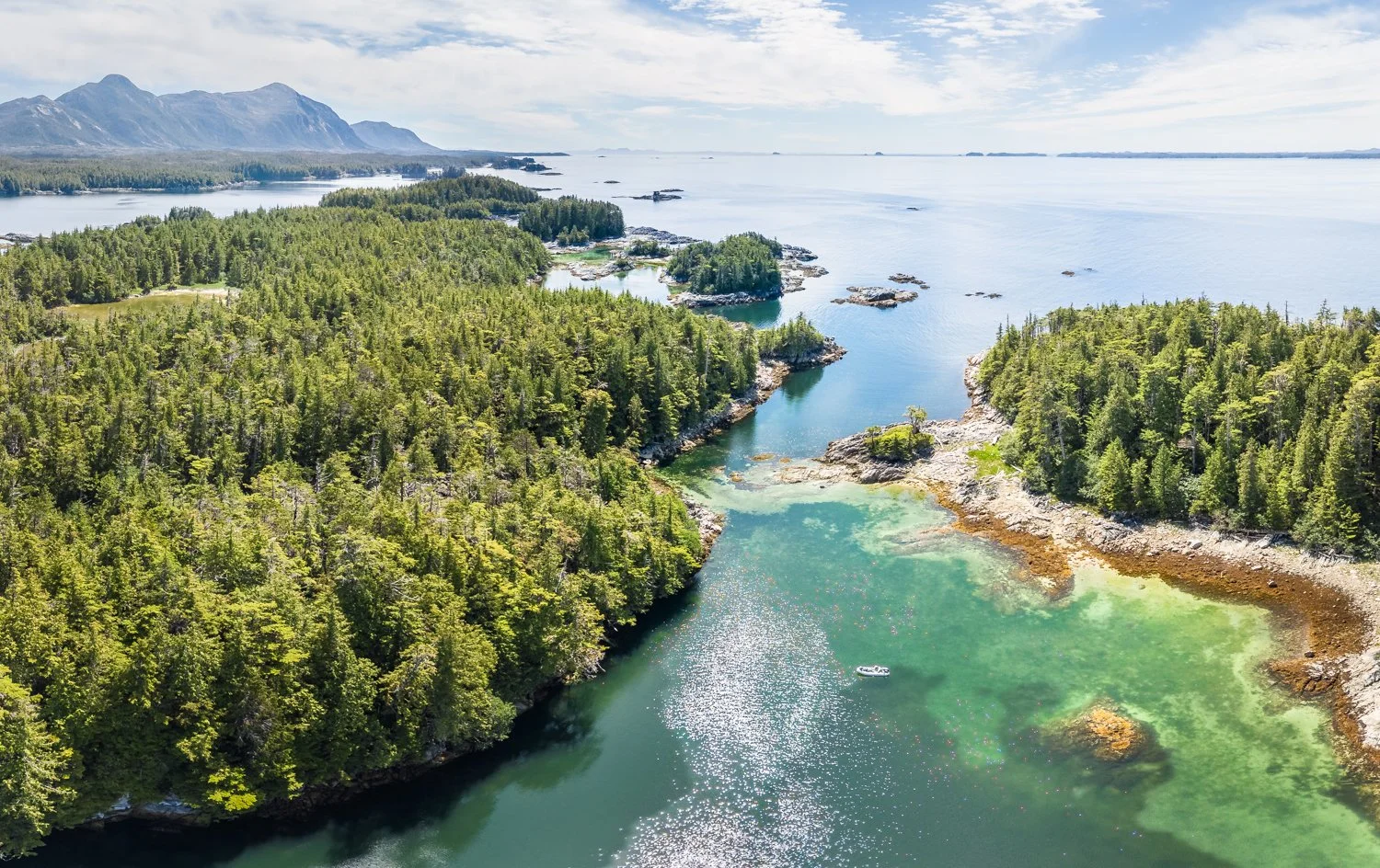
our final anchor spot, closer to the lagoon entrance

Whenever we discover a lagoon, exploring it immediately becomes the mission of the day.

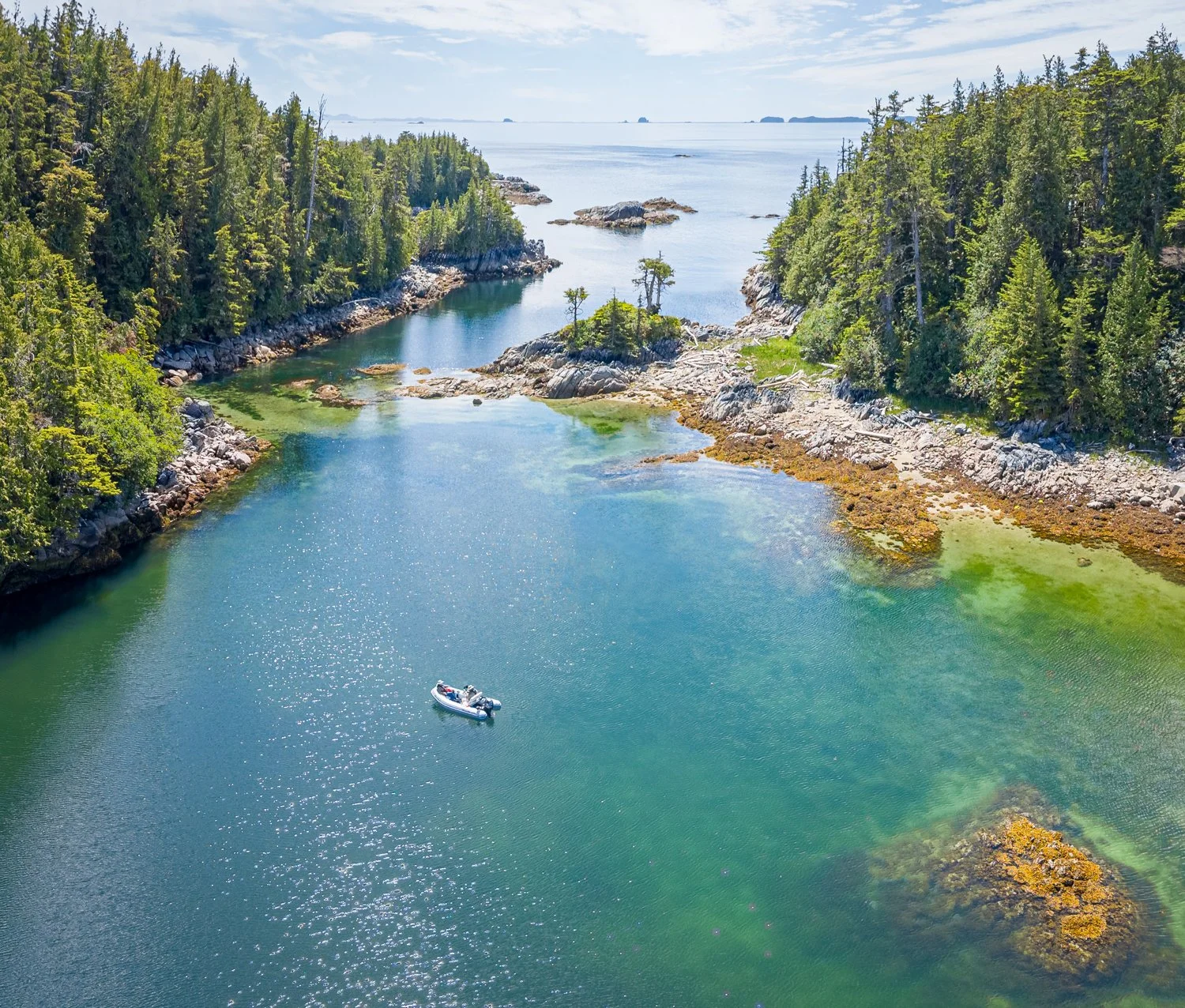
Based on several visits, along with a bit of drone reconnaissance, we've concluded that reaching Tuwartz Lagoon by dinghy is really only practical on the very highest tides. We'd recommend nothing less than about a 16-foot tide. Even then, the approach requires weaving through the usual maze of rocky islets before negotiating an especially shallow rock garden guarding the northern end of the entrance. A kayak could probably squeeze through with less water, but for a dinghy, patience is the better strategy.

the maze that is the entrance to tuwartz lagoon

Even if the lagoon itself remains out of reach, Tuwartz offers no shortage of shoreline to explore by dinghy. The quiet coves, forested slopes, and complete absence of other boats make it easy to spend an afternoon simply wandering and appreciating the remarkable isolation.

As our northbound journey draws us ever closer to the bustle of Prince Rupert and the northern turning point of this year's cruise, we're reminded how much we treasure places like this. The Pacific Northwest's greatest cruising destinations often aren't the ones everyone knows about. They're the quiet corners hidden behind a narrow pass or an unassuming point of land—places where, for one peaceful evening, it feels as though the entire coast belongs to you alone.

McMicking Inlet to Betteridge Inlet

Today's destination is only a mile away—as the crow flies. By boat, however, it's a nine-mile journey that takes the better part of an hour.

Betteridge Inlet isn't a place you simply point the bow toward. Reaching it requires weaving through a maze of rocks, islets, and narrow passages that wind their way inland. The route looks intimidating on the chart, but in practice it's surprisingly straightforward. The hazards are well charted, and the abundant kelp does a nice job of highlighting the safe water through the tighter sections.

The narrowest passage is bordered by rocks that never dry, but despite the charted obstructions we still saw a comfortable 37 feet beneath the keel on an 8.8-foot tide referenced to the Gillen Harbour station.

The reward for careful navigation is one of those anchorages that reminds us why we cruise these waters. Tucked into the southeast corner, the cove feels much larger than the chart suggests. We found excellent holding in 25 to 30 feet and complete protection from the outside world. Although Nepean Sound lies only a mile away, you'd never know it. The silence is remarkable.

Betteridge is made for exploration, so after lunch we launched the dinghy and spent a couple of hours poking into the many little coves and along the rugged shoreline. Our favorite discovery was a small cove on the west side of the entrance, protected by a drying bar and offering a beautiful view back out toward Nepean Sound. It's the kind of place you could easily spend an afternoon simply watching the tides and wildlife.

looking back out to Nepean Sound

how nice is this?

Hidden anchorages like Betteridge are always some of our favorite destinations. They're not places you stumble upon by accident, and perhaps that's why they're so seldom visited. For those willing to navigate the winding approach, the reward is solitude, exceptional scenery, and another reminder of just how much wilderness still exists along the coast of British Columbia. 

Cameron Cove to McMicking Inlet

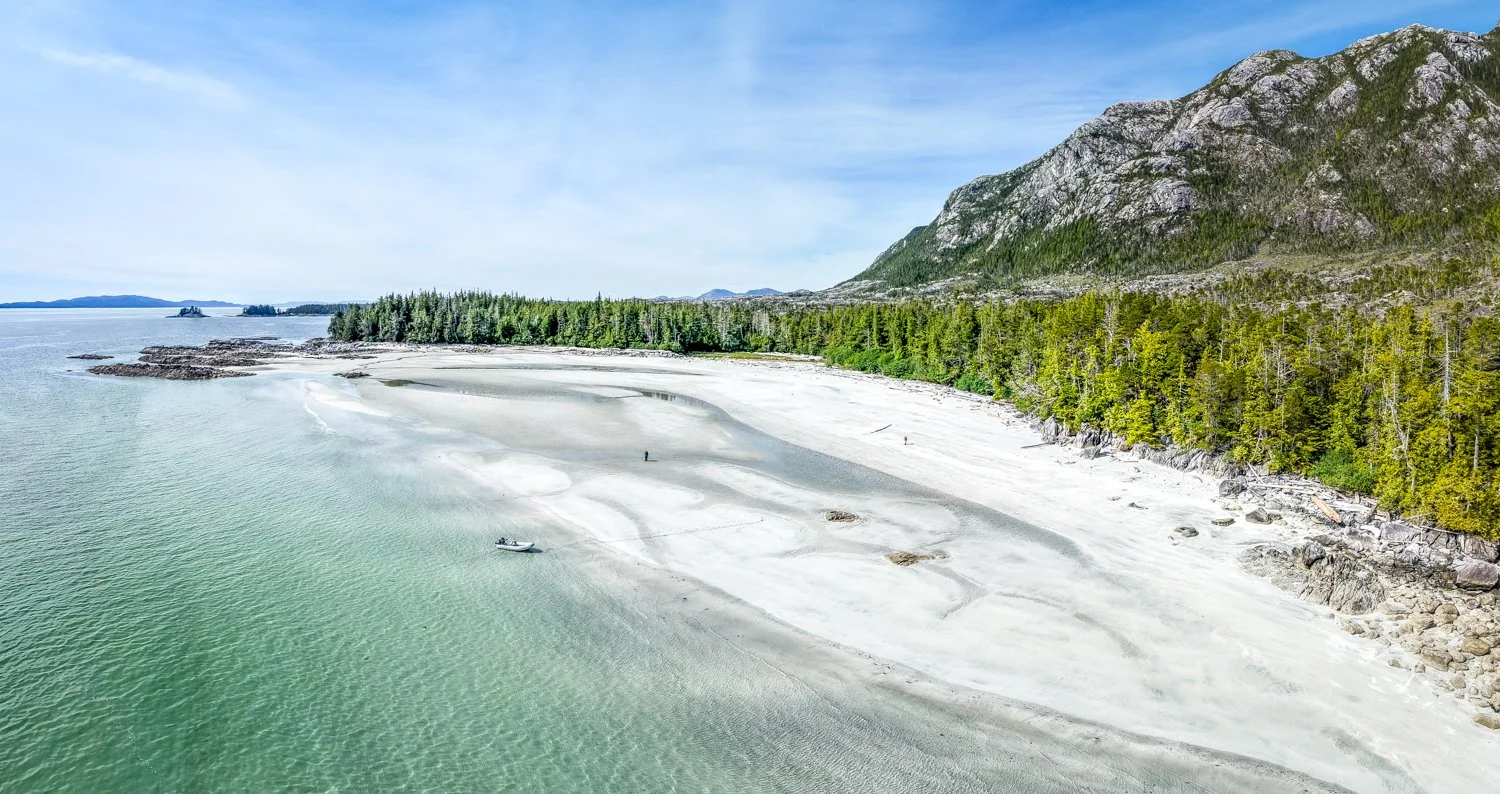
Today we're bound for one of our favorite stops on British Columbia's central coast—McMicking Inlet on Campania Island. Every time we visit, we wonder why it isn't talked about more often. The inlet offers excellent protection, miles of shoreline to explore, and one of the finest beaches we've found anywhere on the coast. It's equally enjoyable by dinghy or kayak.

The entrance is straightforward. The channel is well charted, and although it narrows in places, the west side is steep-to, leaving little concern about depth.

The stretch south from Cameron Cove continues the run of remarkably calm weather we've been enjoying. Even the brief exposure to Pacific swell as we rounded the southern tip of Campania Island was gentle. From offshore, the island is unmistakable, its rugged granite peaks rising almost bare from the sea and giving it a striking, wild appearance.

the mountains of campania ilsand are bekoning us again for afar

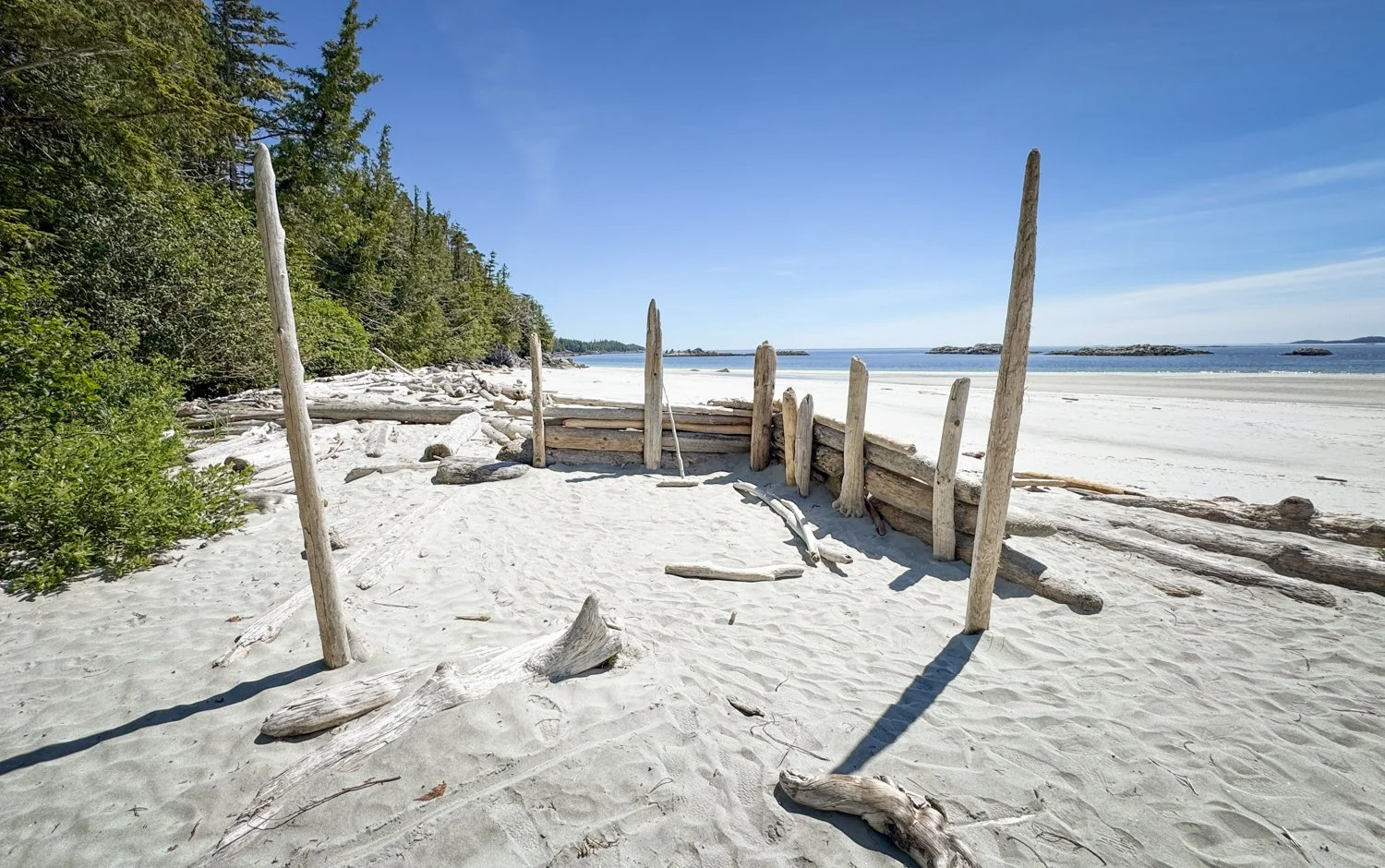
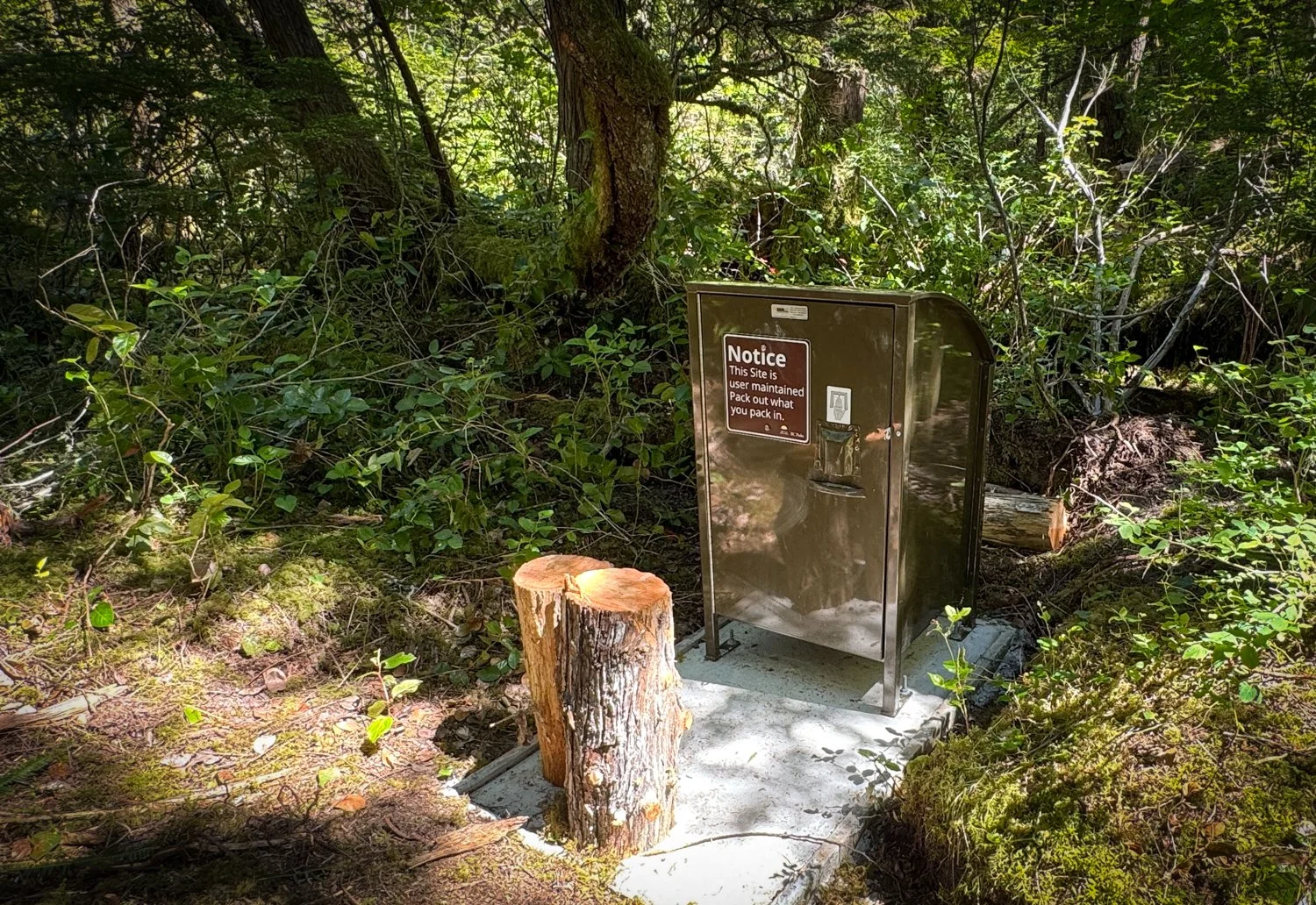
By afternoon we were walking the broad beach that draws us back to McMicking time and again. Since our last visit, someone had constructed a substantial driftwood windbreak for kayakers camping ashore. Nearby, the Lax ka'gass/Campania Conservancy has installed a bear-resistant food storage locker for campers, along with a supply of neatly stacked firewood—a thoughtful addition for those spending the night.

the largest, but one of many, beaches in mcmicking inlet

industrious kayakers built themselves a nice windbreak for camping

new bear proof food storage container on mcmicking beach

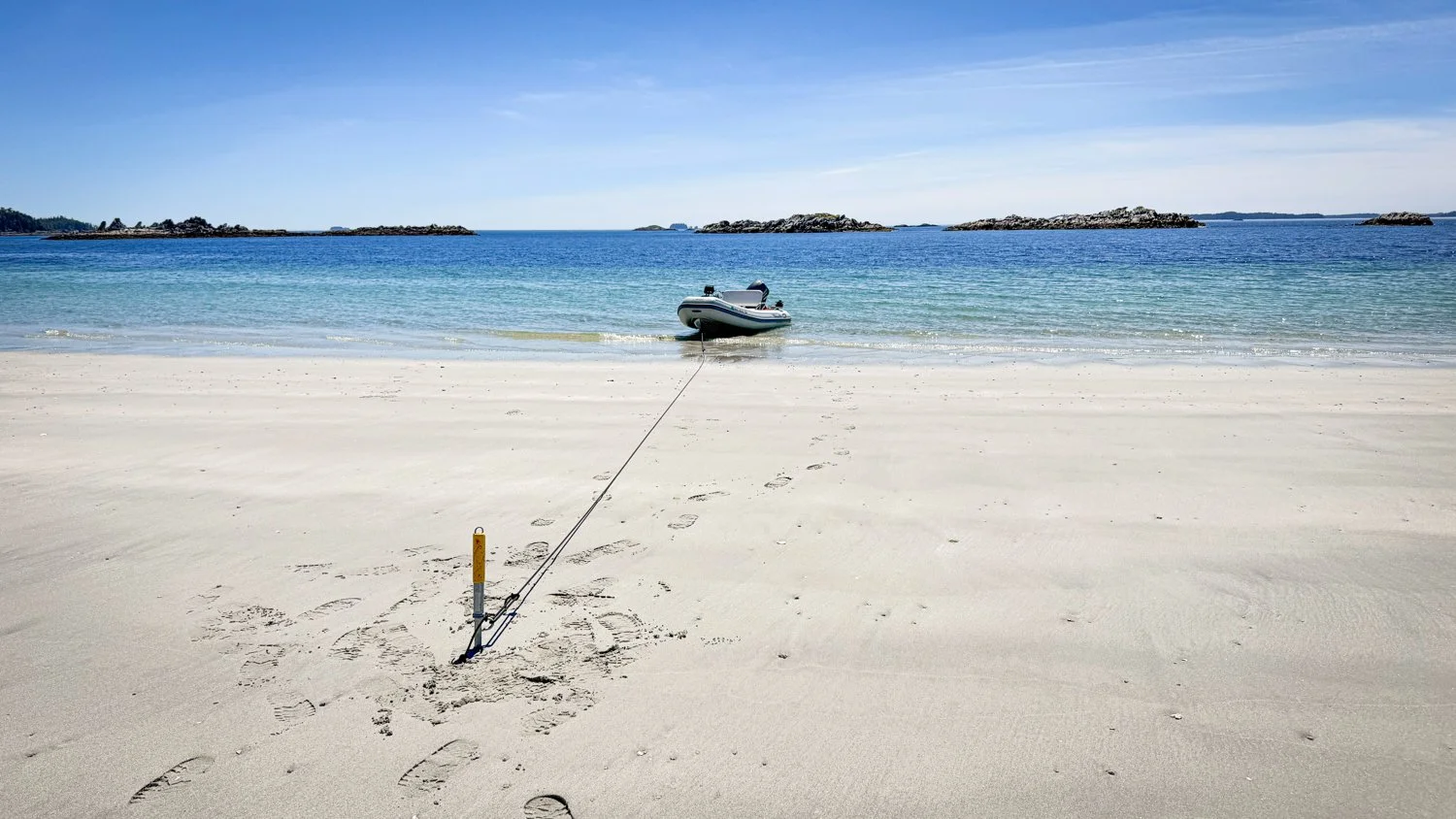
The following morning we returned with a better understanding of the tides. We landed about 40 minutes before the 6.68-foot low tide at Bloch Islands and stayed for roughly an hour, departing about 25 minutes after low water. It proved to be an ideal window. The tide bottoms out gradually, giving plenty of time to enjoy the beach without rushing. Arriving 30 minutes earlier—or leaving 30 minutes later—would still be comfortable. During longer visits, you may need to adjust both your shoreline and your Anchor Buddy once as the tide changes. Our preferred landing spot was about 50 yards south of the pair of small rocks near the middle of the beach.

holding the dinghy in place using a shore lne and an achor buddy anchor

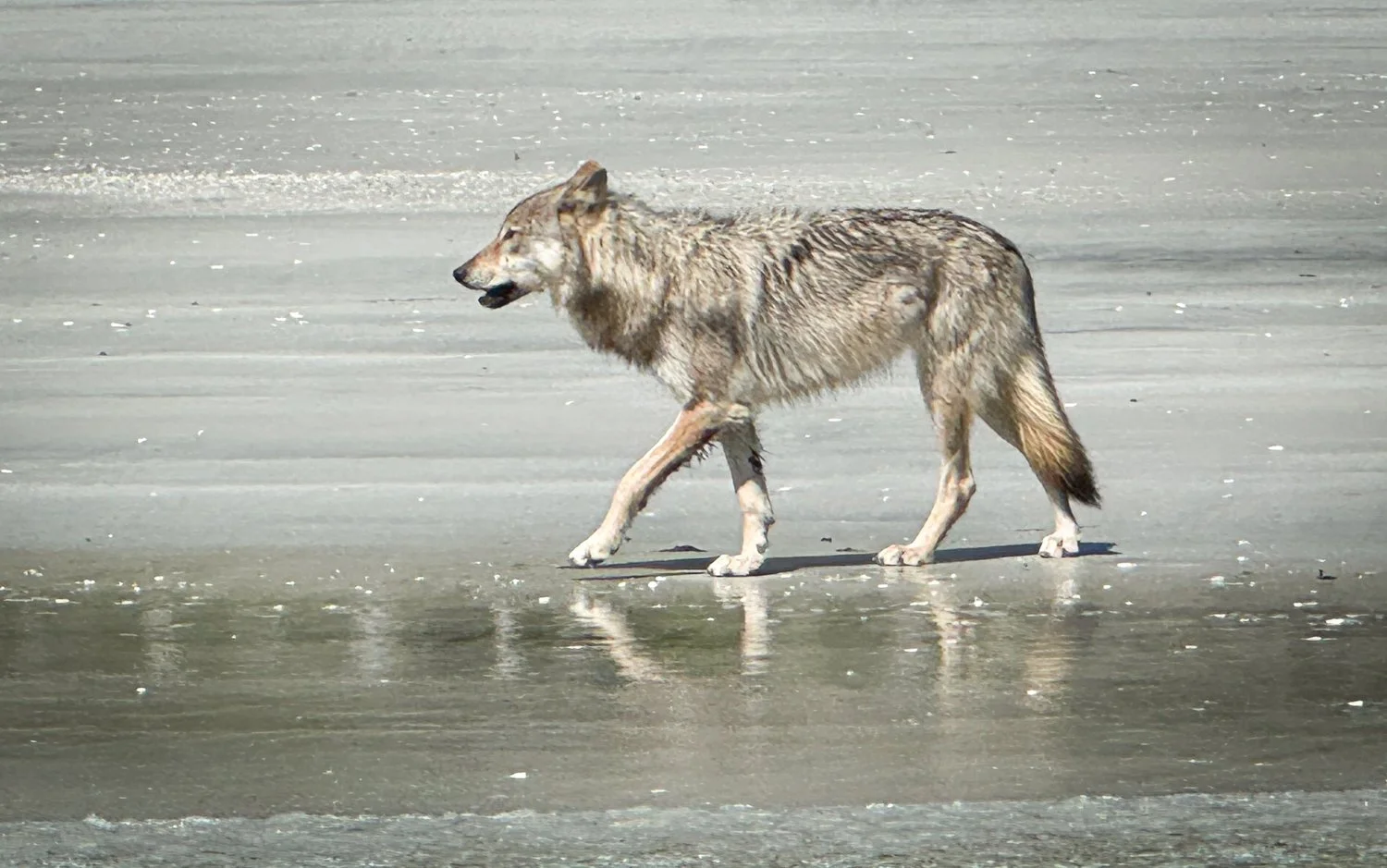
As we headed back toward OceanFlyer, Karen spotted movement along the tree line.

A wolf.

I eased the dinghy toward shore and stopped in just two or three feet of water, about 50 feet offshore. We expected nothing more than a fleeting glimpse before it disappeared into the forest.

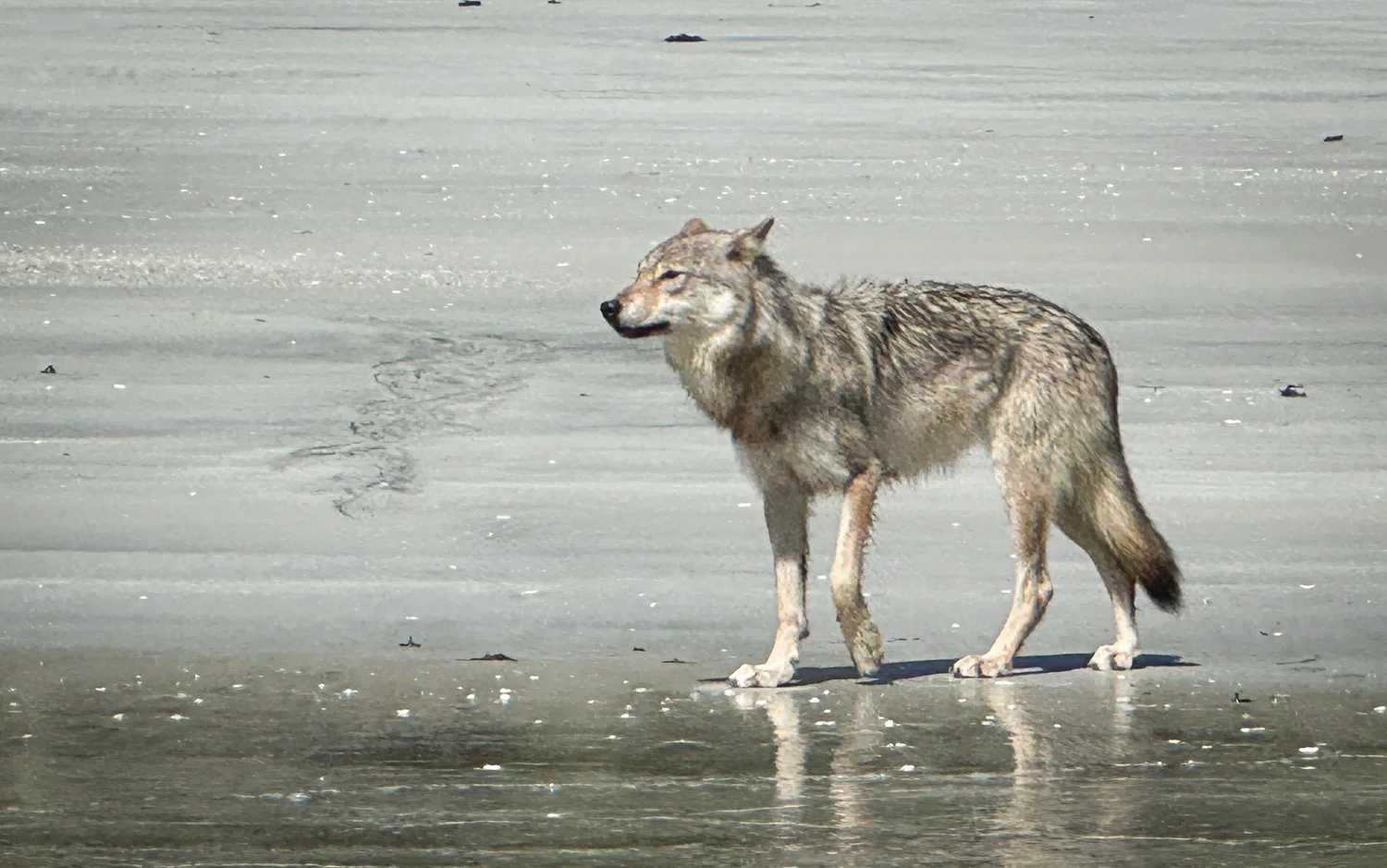
Instead, the wolf slowly worked its way toward us.

sea wolf on the beach st mcmicking inlet

Karen admitted she was becoming a little uneasy, but it quickly became clear that we were not the focus of its attention. It was hunting. Methodically working the shoreline, it dug among the rocks and sand in search of whatever the falling tide had left behind. Occasionally it would pause and glance in our direction, but we were little more than curious observers as it continued its search for food.

no question who is the king of this beach

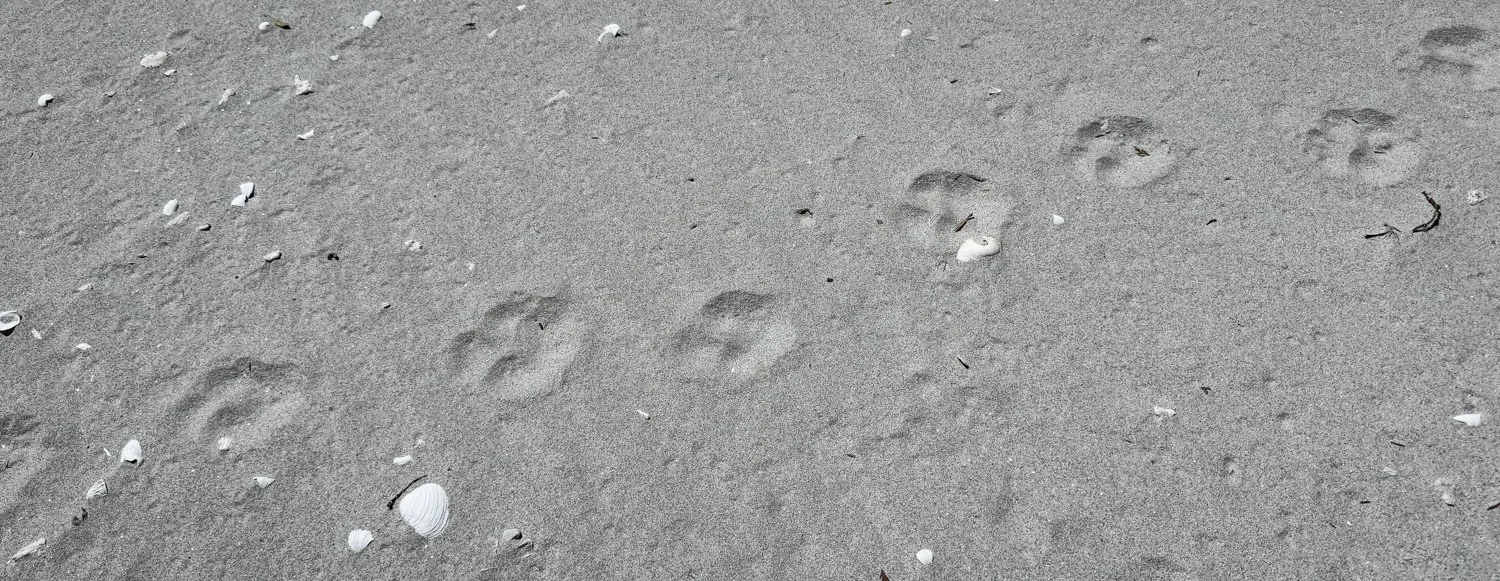
Over our previous two visits we'd found fresh wolf tracks on these beaches, but never imagined we'd encounter one of British Columbia's elusive coastal sea wolves.

wolf tracks in the sand

It was one of those unforgettable wildlife moments that makes every mile of the journey worthwhile.

Still riding the excitement of the encounter, we continued to the head of McMicking Inlet to explore its smaller coves and beaches. As we idled through the maze of little inlets, something unusual caught my eye just beneath the surface.

At first I thought it was a small snake.

Then perhaps an eel.

Back aboard, Karen did a little research and identified it as a juvenile pelagic wolf eel—a remarkably uncommon sighting. To witness both a coastal sea wolf and a juvenile wolf eel on the same afternoon felt almost impossible.

our favoriate cove in mcmicking inlet

looking west toward estevan sound

Some days on the water are memorable because of where you go.

Others become unforgettable because of what nature decides to share.

there is noplace like mcmicking on campaia island


Khutze Inlet to Cameron Cove

After several memorable days in Khutze Inlet, we weighed anchor and made the short run over to Cameron Cove. Unlike many places along this coast, it was new territory for us, which is reason enough to visit.

Cameron Cove is not what most cruisers would consider a destination anchorage, but it has plenty going for it. The bay is large, well-protected, and offers numerous areas with suitable depths and good holding. It makes an excellent staging or layover stop while exploring this part of British Columbia.

cameron cove, our home for a day

Naturally, we were curious about the river delta at the head of the inlet. While it lacks the dramatic scale and wildlife appeal of nearby Khutze, it was still worth investigating. On a 15-foot tide we carefully worked our way toward the head, never seeing less than five feet beneath the dinghy until the end.

a look at the river during low tide

With time to explore, we took a leisurely tour around the entire bay. One point of interest was the old wreck charted in the northwest corner of Barnard Harbour. Time and tide have not been kind to it, but it remains an interesting reminder of the area's maritime history.

Later in the afternoon, the charter expedition vessel Swell arrived and settled into the anchorage. We seem to be following remarkably similar itineraries. In fact, Swell has become a familiar sight at several of our recent stops.

What continues to surprise us, however, is how few cruising boats we encounter. Even in the middle of summer, these remote inlets and anchorages often feel wonderfully empty. For those willing to venture beyond the more popular cruising routes, the rewards are solitude, spectacular scenery, and the feeling that there is still plenty of coastline left to discover.

pretty views in cameron cove