

Betteridge Inlet to Tuwartz Inlet
/After two rainy but wonderfully restful days tucked away in Betteridge Inlet, it was time to continue north to another secluded anchorage we always look forward to visiting—one that sees remarkably few visitors. Tuwartz Inlet isn't a destination that finds its way onto many cruising itineraries, but that's exactly part of its appeal.
There are several anchoring options here. On our first visit we stayed outside Tuwartz Narrows in the small cove tucked into the northeast corner. It's a comfortable anchorage and avoids the need to transit the narrows.
This time, however, we were after complete solitude.
Despite its intimidating appearance on the chart, Tuwartz Narrows is surprisingly straightforward if you follow the right line. The two charted drying rocks are the only real hazards. Hug the west shoreline to clear the first rock, then make a deliberate turn toward the east shore. Continue along that side past the second hazard, identified by three small, tree-covered drying islets.
The temptation is to steer directly from one narrow section to the next, but that's exactly where the shallower water lies. Trust the chart, make the turn, and the passage becomes surprisingly comfortable. While we found the transit straightforward, it's easy to understand why first-time visitors hesitate. Fortunately, the charts tell the story accurately—trust them more than your eyes.
Crossing the entrance ledge extending from the first charted drying rock, our sounder showed 15.3 feet beneath the keel during a forecast 13.1-foot high tide at Hartley Bay. That suggests we'd have only about two feet beneath the keel at low slack if we used the same track. Later we took the dinghy back out the narrows and discovered if we hugged the shore line even closer, the depths we deep enough for safe passage at a slack low.
Within moments, the narrows disappears behind you and it feels as though you've stepped into a place few people ever see.
Behind the narrows are two inviting anchorages. One lies in the eastern cove, while the other sits to the west near the entrance to Tuwartz Lagoon. After another dinghy tour this year, Karen looked around the anchorage, smiled, and simply declared, "This is my favorite." I suspect we'll be back.
Friends of ours have successfully tucked into the western anchorage with what they jokingly call a "short scope”, carefully avoiding the five-foot "bump in the bottom." With stronger winds forecast, we opted for a more conservative spot in about 60 feet of water almost directly opposite the lagoon entrance. The holding proved excellent, and the surrounding mountains made it feel like our own private fjord.
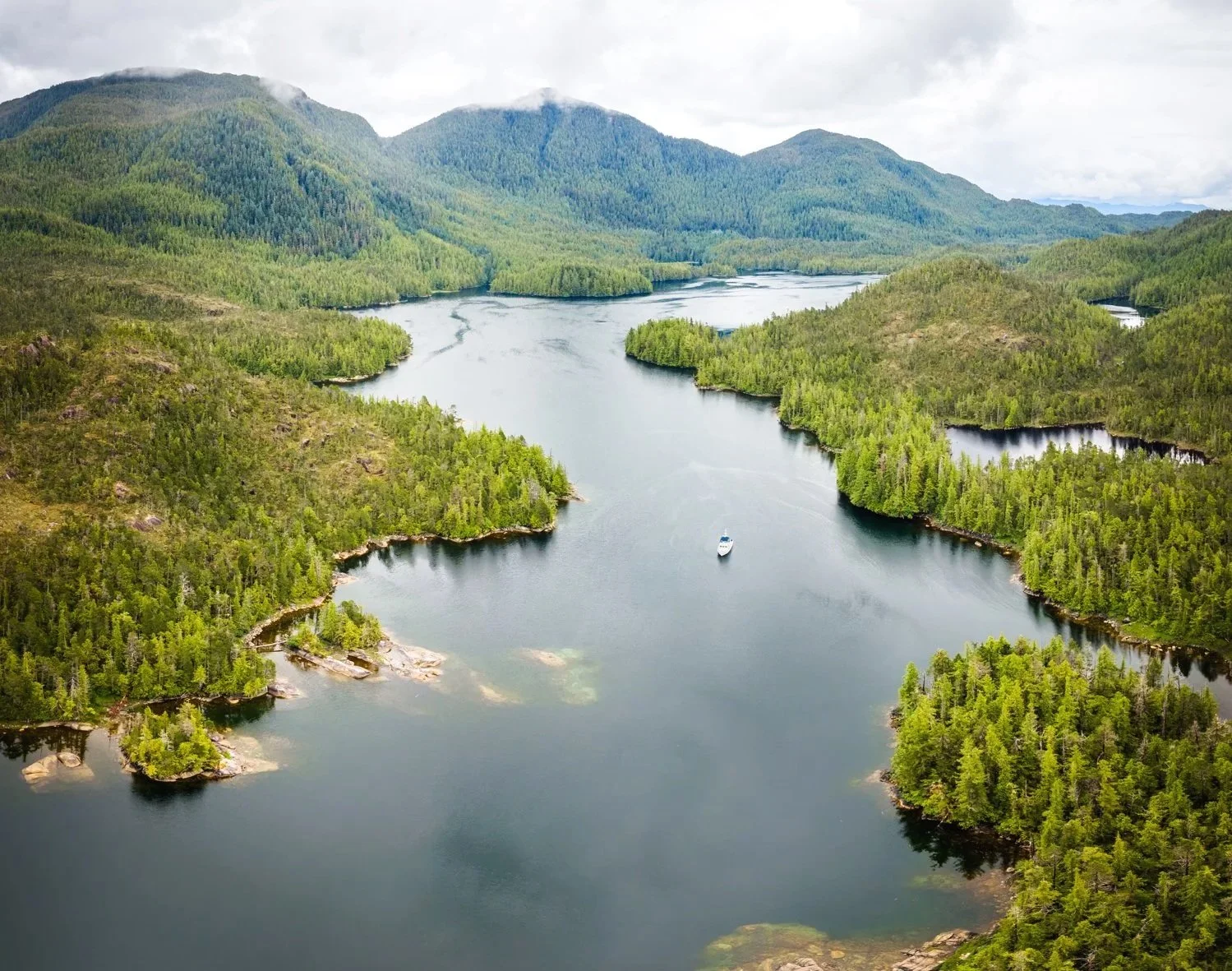
the first spot we tried, but moved after floating over the “bump”
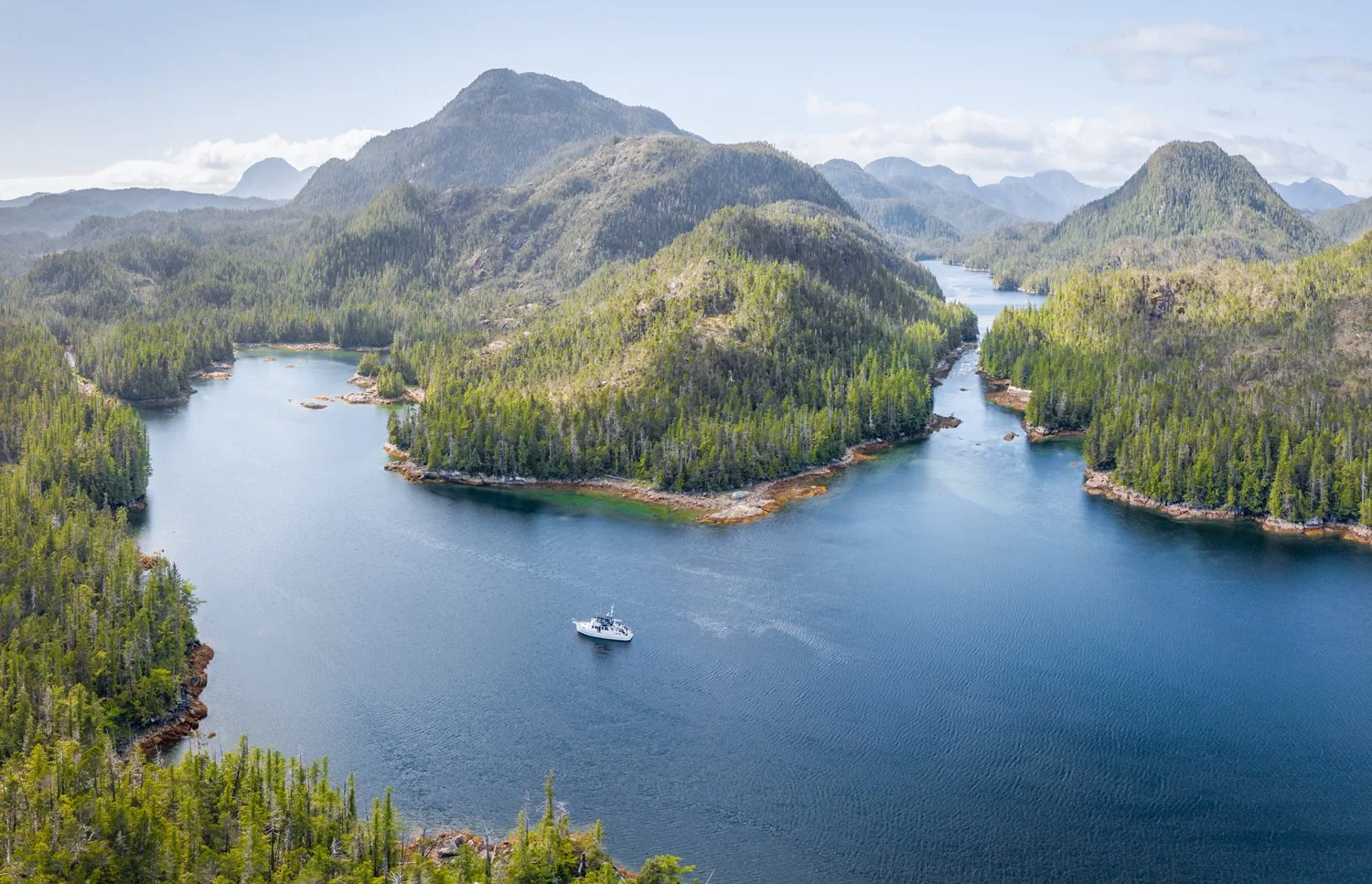
our final anchor spot, closer to the lagoon entrance
Whenever we discover a lagoon, exploring it immediately becomes the mission of the day.
Based on several visits, along with a bit of drone reconnaissance, we've concluded that reaching Tuwartz Lagoon by dinghy is really only practical on the very highest tides. We'd recommend nothing less than about a 16-foot tide. Even then, the approach requires weaving through the usual maze of rocky islets before negotiating an especially shallow rock garden guarding the northern end of the entrance. A kayak could probably squeeze through with less water, but for a dinghy, patience is the better strategy.
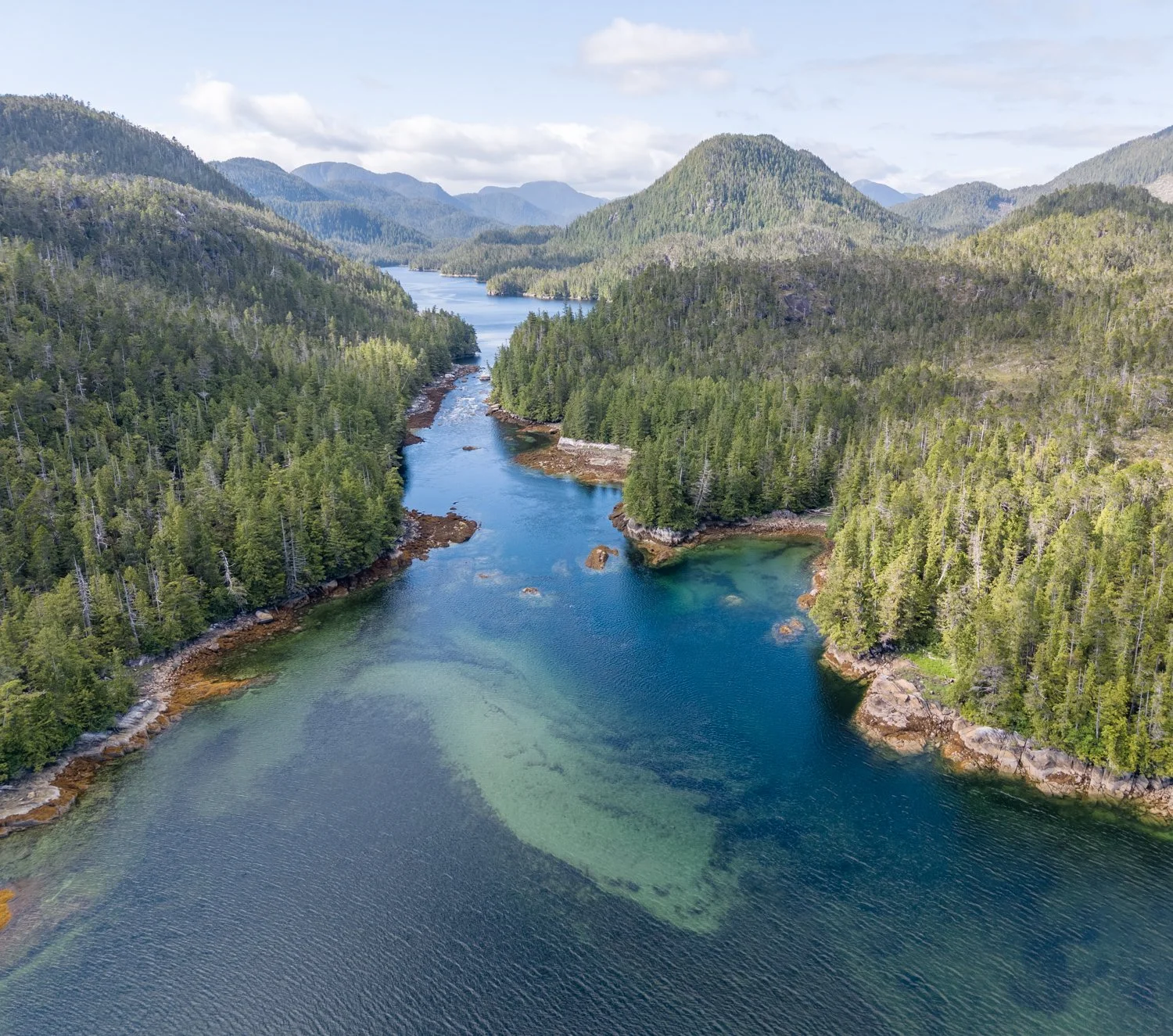
the maze that is the entrance to tuwartz lagoon
Even if the lagoon itself remains out of reach, Tuwartz offers no shortage of shoreline to explore by dinghy. The quiet coves, forested slopes, and complete absence of other boats make it easy to spend an afternoon simply wandering and appreciating the remarkable isolation.
As our northbound journey draws us ever closer to the bustle of Prince Rupert and the northern turning point of this year's cruise, we're reminded how much we treasure places like this. The Pacific Northwest's greatest cruising destinations often aren't the ones everyone knows about. They're the quiet corners hidden behind a narrow pass or an unassuming point of land—places where, for one peaceful evening, it feels as though the entire coast belongs to you alone.