

Tuwartz Inlet to Klewnuggit Inlet
/Most cruising days revolve around the next anchorage. Today, however, our destination was secondary. The real objective was finding fresh water.
With our watermaker still out of service and our Prince Rupert marina reservation nearly a week away, our freshwater reserves were becoming the limiting factor in our plans. We could tighten our water rationing even further, but that's not why we're out here. Cruising is meant to be enjoyed, not endured.
Hartley Bay, a small Indigenous community about two hours away, offered our best chance. It would add only about an hour to the day's run to Klewnuggit Inlet, and everything we had read suggested water was available at the fuel dock. Even so, we spent the previous three days calling and emailing every published contact we could find—the marina, the fuel dock, and the Band office—but never received a reply.
Sometimes you simply have to go and see.
As we rounded into Hartley Bay, it was immediately clear the community was busy. Fishing boats lined the fuel dock, crews moved supplies, and passengers with luggage gathered on the dock waiting for the high-speed ferry to Prince Rupert.
When one of the fishing boats departed, we eased alongside the fuel dock and connected to the water hose. Because OceanFlyer occupied nearly the entire dock, we were conscious of not disrupting the day's activity. Fortunately, the fuel attendant couldn't have been more welcoming. He refused our repeated offers to make a donation for the water, and after topping off our tanks we were underway again in less than thirty minutes.
We left with full water tanks and considerable peace of mind. With careful use, we'd have enough water for the coming week, including a much-needed load of laundry and plenty available for continued troubleshooting of the watermaker.
The run north through Grenville Channel reminded us why the passage has earned its reputation. Winds on the bow frequently gusted to 30 knots, kicking up a steady one- to two-foot chop. It was a wet, splashy ride, but well within OceanFlyer's comfort zone.
By mid-afternoon we entered the expansive Klewnuggit Inlet and continued to the head of the northwest arm. In about 60 feet of water we found excellent holding and complete protection. It was an ideal place to settle in for a couple of days while tackling a growing list of boat projects.
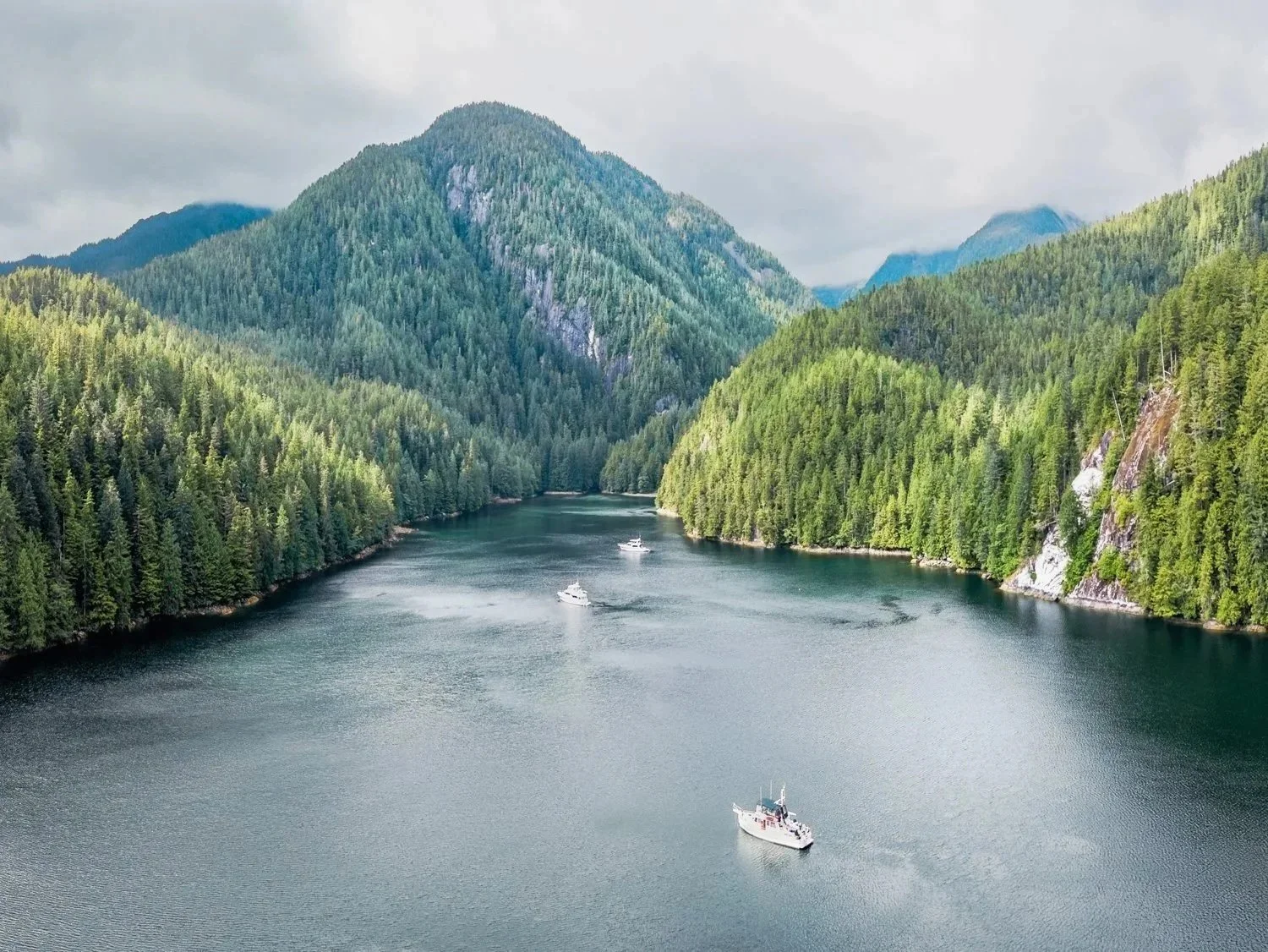
Oceanflyer joins two other boats in Klewnuggit Inlet
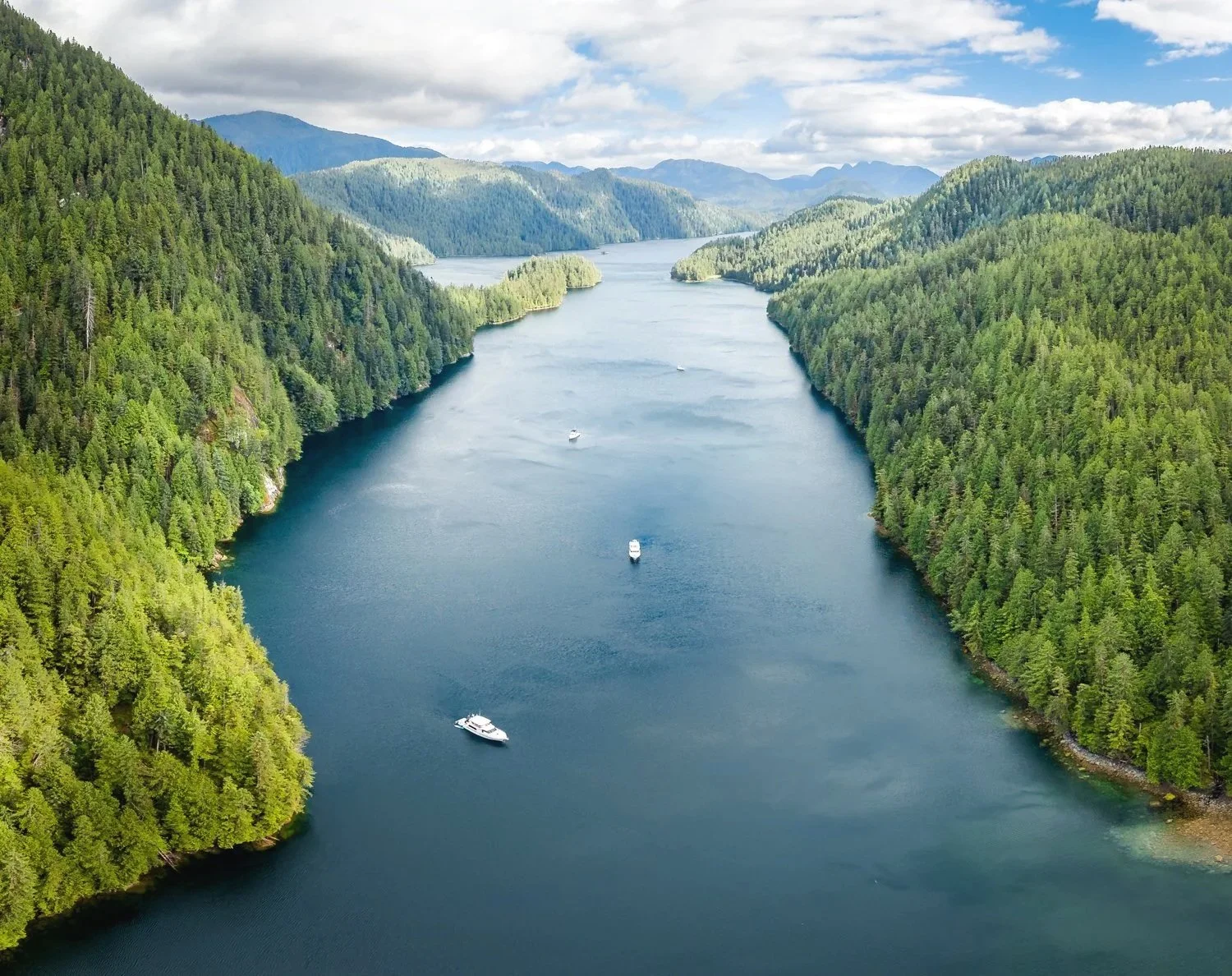
looking ack down the northeast arm of Klewnuggit Inlet
The first priority was our 9 kW generator.
It had recently begun shutting down from what appeared to be an overheating problem. The usual culprit is a worn impeller, but when I removed it, every vane was intact. I installed a new impeller anyway, but nothing changed.
Next came the heat exchanger. Accessing it requires the sort of awkward body positions that only boat owners truly appreciate, accompanied by the usual assortment of colorful language. As I often say, boat repairs would be easy if you could actually reach the part you're trying to fix. I'm still convinced there's a market for a third arm.
The heat exchanger proved completely clear, leaving me no closer to an answer.
Finally, I decided to install the spare raw-water pump that had been riding aboard for the past fourteen years.
Instant success.
The generator immediately returned to normal operation. The old pump looked perfectly serviceable from the outside, making the failure something of a mystery. It will be interesting to disassemble it once we're home and determine exactly what failed internally.
During the troubleshooting process, my mechanic also had me close the generator discharge seacock while attempting to back-flush the cooling system through the vent line. The experiment didn't uncover any blockage, but it did reveal another issue—the discharge seacock appears to be stuck in the open position. Fortunately, it's not an immediate concern and can wait until OceanFlyer's haul-out this fall.
Unfortunately, the watermaker wasn't nearly as cooperative.
Despite trying every diagnostic procedure I could think of, I wasn't able to bring it back to life. At this point we're accepting that it may remain out of service for the rest of the cruise, which means adjusting our itinerary around places where we can replenish our freshwater tanks.
Cruising has a way of reminding you that flexibility is just another piece of essential equipment. Fortunately, with full water tanks, back to two working generators, and a beautiful anchorage all to ourselves, we still felt like we were winning.