Ocean Falls to Shearwater

Our destination today is Shearwater, but this year's visit would unfold very differently than we had planned.
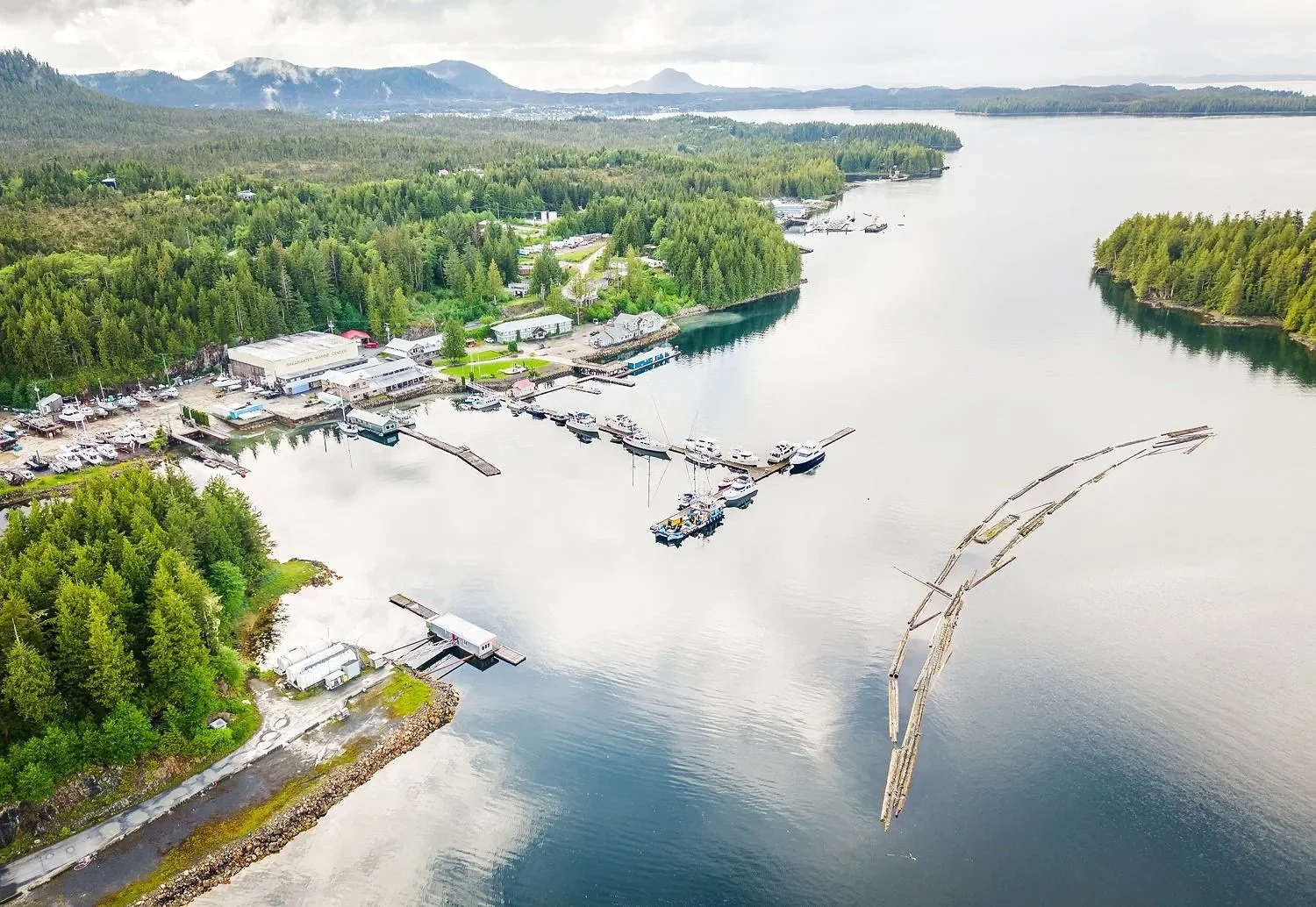
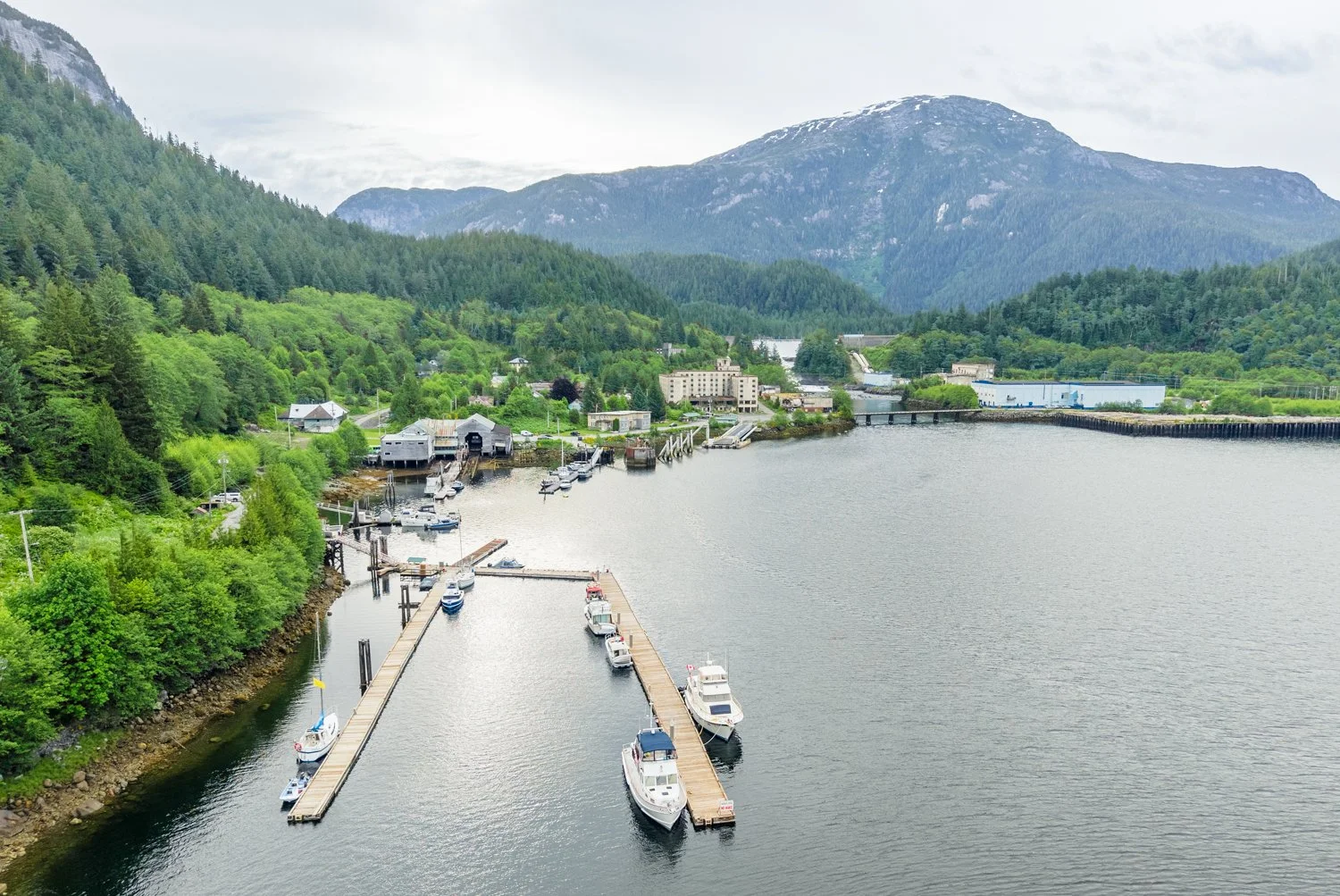
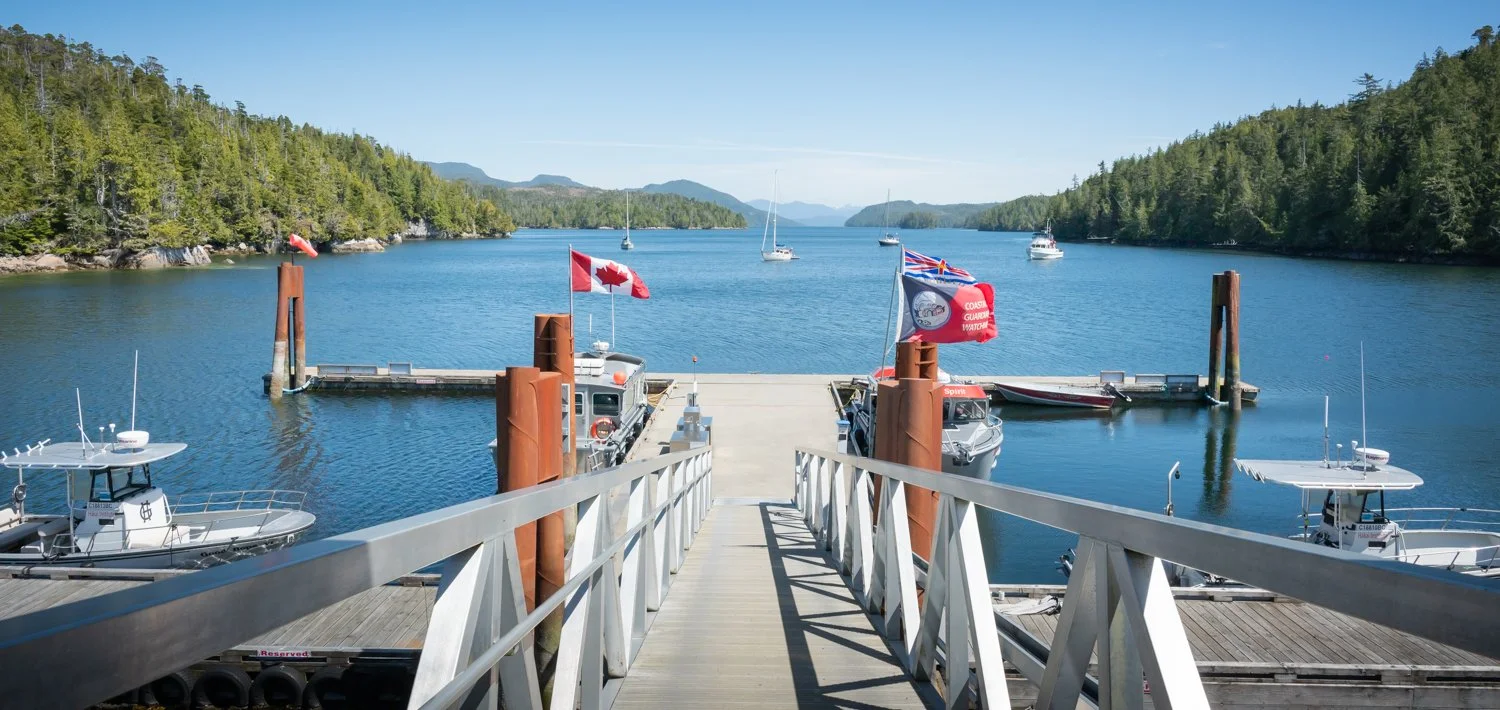
shearwater in all her glory. Bella Bella in the far distant shore
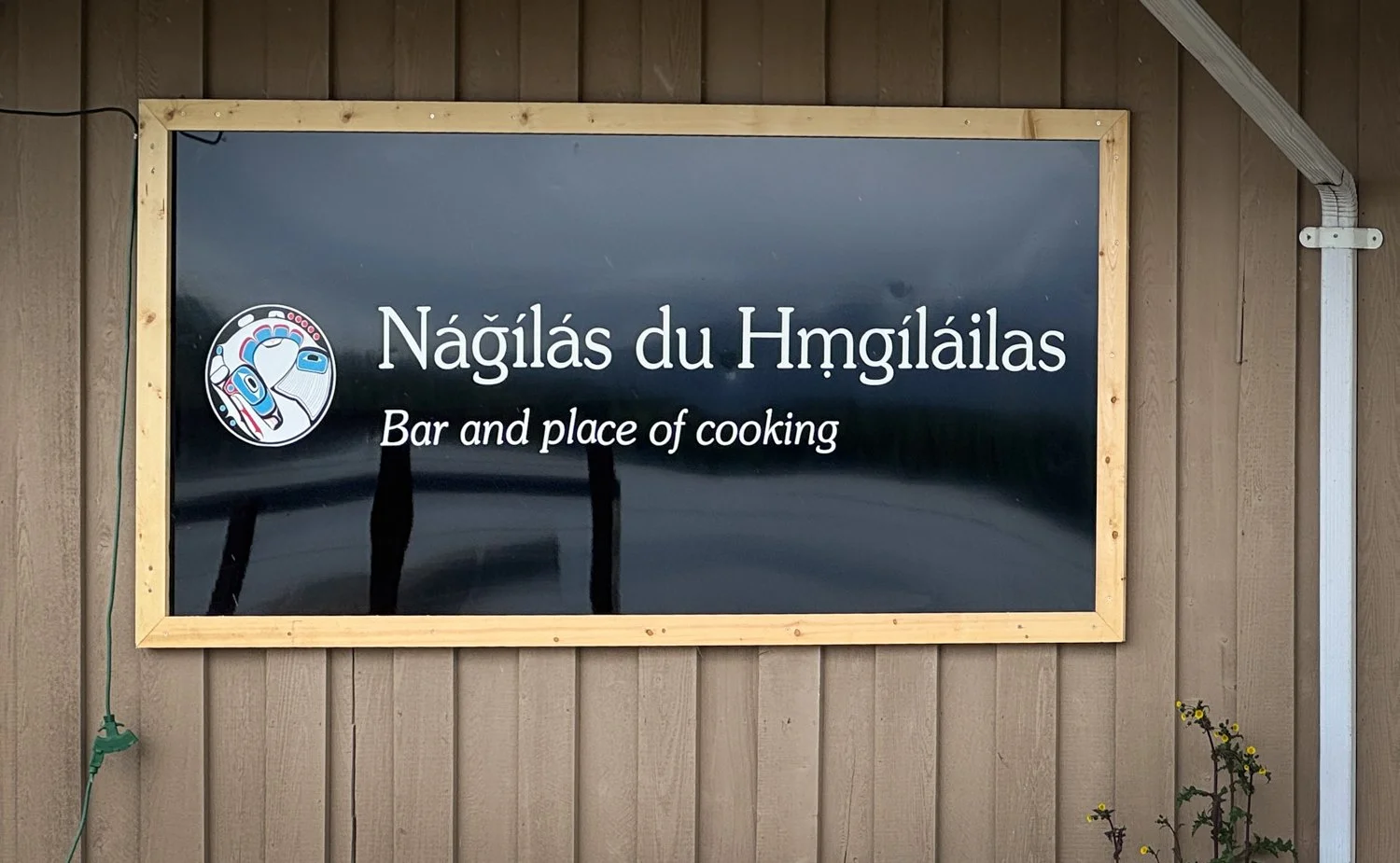
new signage is everywhere in shearwater.

For several days Karen had been battling what appeared to be an abscess around one of her back molars. A course of antibiotics had done little to improve the situation, and after speaking with her dentist back home, we agreed there was really only one option—she needed to be seen in person.

The question wasn't whether to go.

It was how.

Fortunately, Bella Bella, just across the channel from Shearwater, has scheduled air service to Vancouver. Better yet, wonderful friends in Bellingham immediately volunteered to make the ninety-minute drive north, pick Karen up at the airport, open their home for as long as she needed, and help in any way they could.
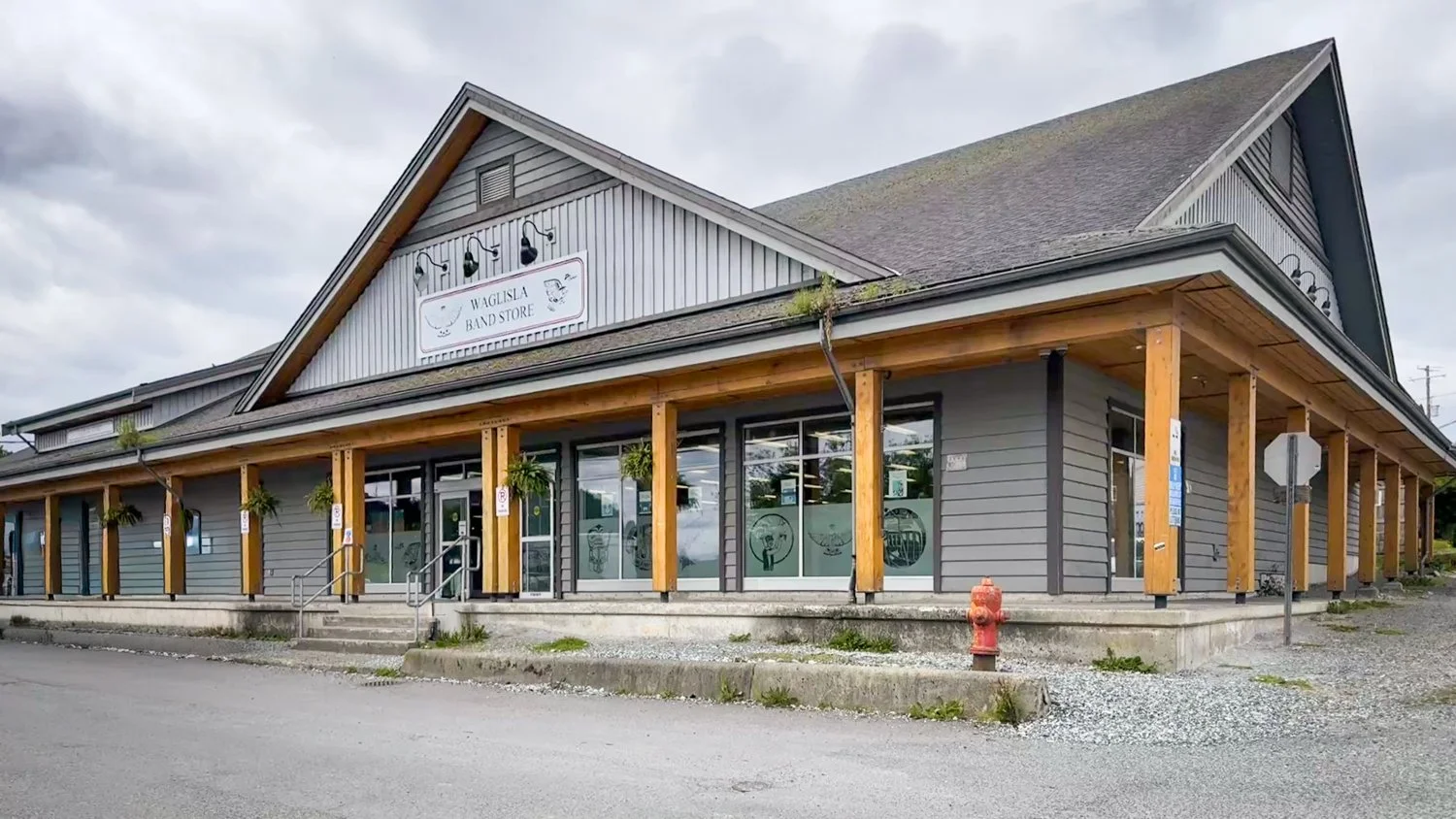
a little grocery shopping while we wait for karen’s ride to the bella bella airport
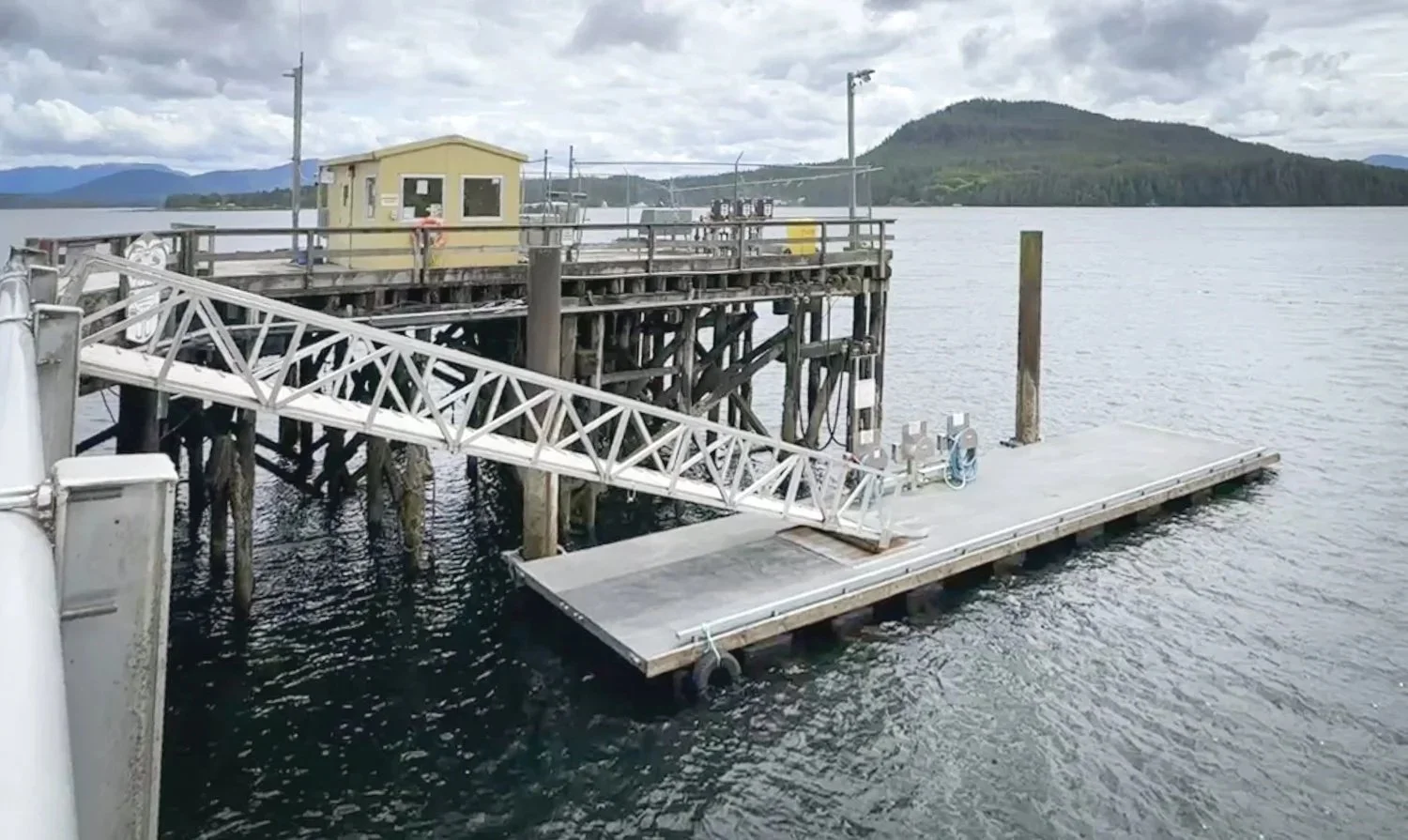
the furel dock at bella bella is now a floating dock
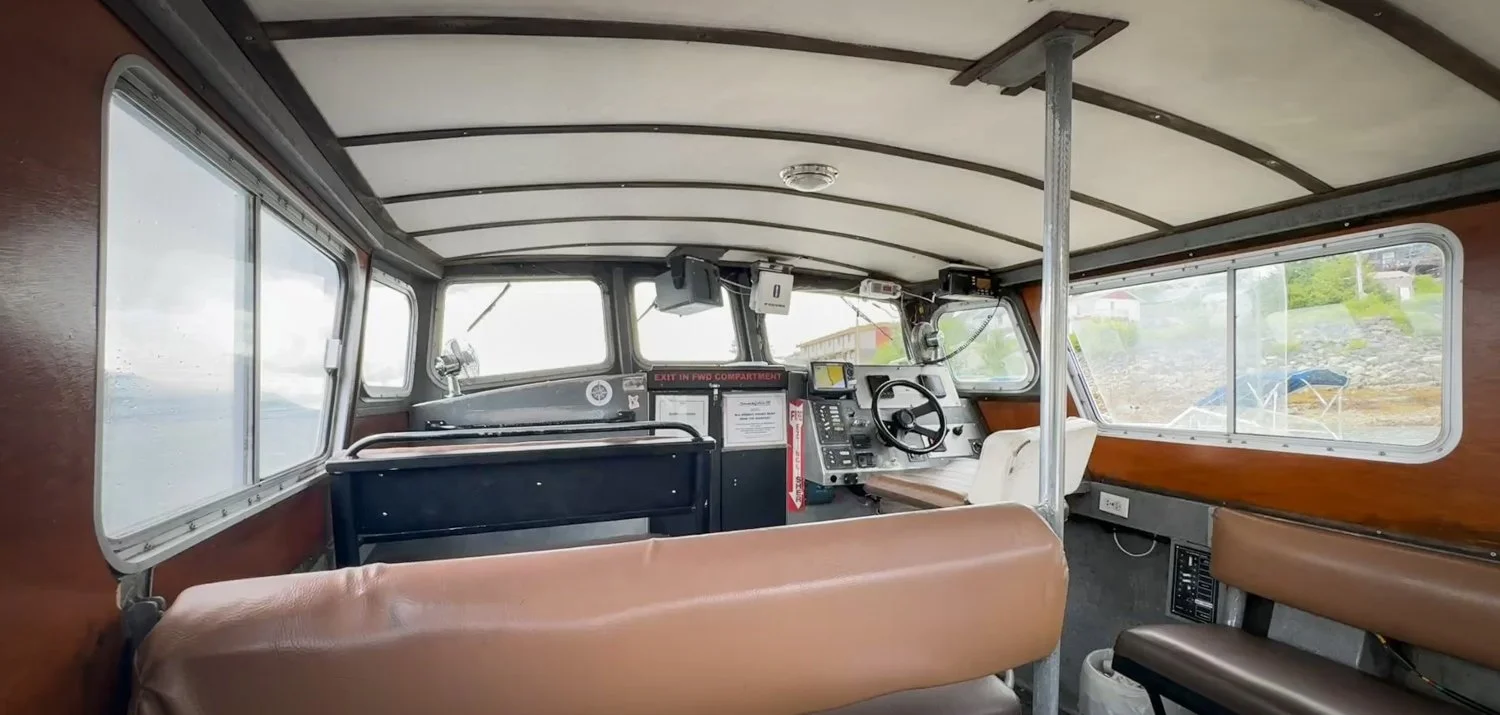
inside the sea bus, waiting to return to shearwater after dropping karen off to at bella bella

Then the cruising community did what it always seems to do.

One conversation led to another until Karen was connected with a fellow cruiser who also happened to be a dentist. Before long she had been introduced to what they jokingly refer to as the "Bellingham Dental Mafia." Within a day she had been examined, referred to an oral surgeon, and scheduled for treatment.

The plan seemed straightforward.

Karen would spend about a week in Bellingham recovering before flying back to Bella Bella.

Of course, this is coastal British Columbia, where airline schedules sometimes feel more like hopeful suggestions than firm commitments.

Back at the docks in Shearwater, stories of cancelled flights and stranded travelers seemed to be circulating daily. Then the call came.

Karen's return flight had been cancelled and rebooked three days later.

Our carefully planned week apart had suddenly become considerably longer.

The timing couldn't have been more frustrating. The weather had finally settled into one of those rare stretches of clear skies and light winds that every cruiser hopes for, yet the explanation from the airline amounted to little more than, "Your flight has been cancelled."

Then, just when we had resigned ourselves to the delay, the story took another turn.

On Sunday morning—the very day Karen had originally been scheduled to return—her phone rang just after stepping out of the shower. A Pacific Coastal representative explained that a seat had unexpectedly become available on her original flight. If she could reach Vancouver Airport within three hours, it was hers.

Without hesitation, our friends sprang into action.

Karen barely had time to finish packing before they were in the car, making the ninety-minute drive to Vancouver and delivering her to the terminal with time to spare.

Sometimes good fortune arrives disguised as good friends.

While Karen was away, I found myself with something most cruisers rarely experience—a full week with nowhere to be and no schedule beyond my own.

Boat projects quickly filled the void.
The biggest was repainting the eyebrow trim above the forward cabin windows, an area that flexes just enough to make paint adhesion a perpetual challenge. Thanks to the unusually cooperative weather, I was able to apply three coats, allowing each one to fully cure before sanding and recoating. Add laundry, a thorough cleaning of OceanFlyer, and the inevitable collection of smaller maintenance jobs, and the week disappeared surprisingly quickly.
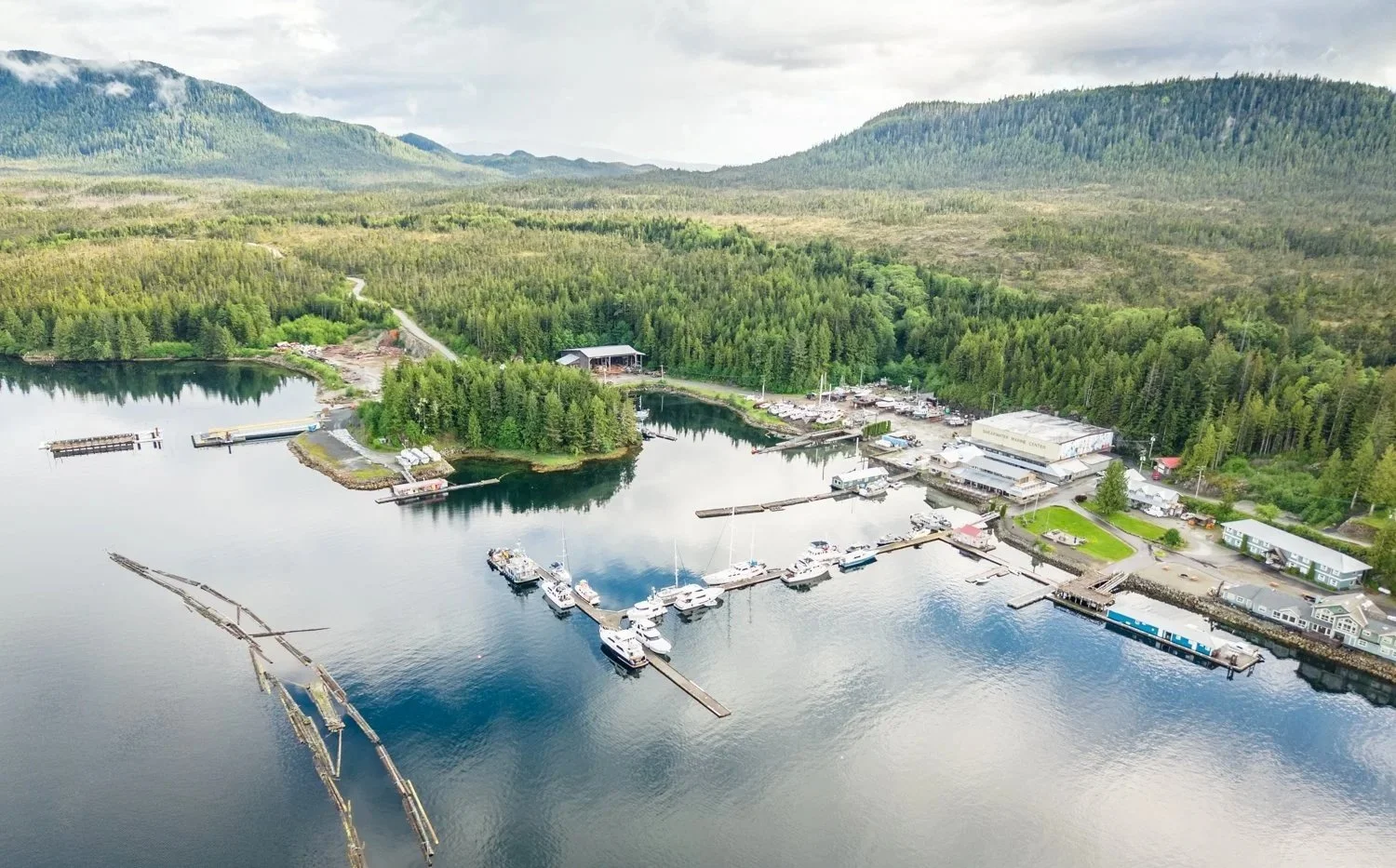
you can see the road to the old airport in the distance

Then another unexpected gift arrived.

One afternoon, Mystic Voyager tied up just astern of OceanFlyer. At the helm was author, mariner, and storyteller Clyde Ford.

We first met Clyde years ago in Bellingham through mutual friends in the charter boat community and immediately discovered we enjoyed each other's company. As chance would have it, he too was waiting in Shearwater—his delay caused by a friend flying in from Australia to begin an Inside Passage adventure.

Two bachelors with no schedule and nowhere they had to be proved to be an excellent recipe for conversation.

Evenings were spent over dinner exchanging stories about boats, books, favorite anchorages, old friends, and the remarkable places this cruising life has introduced us to. By the time we solved most of the world's problems each night, it was time to call it a day and do it all again tomorrow.

The week passed much faster than either of us expected.
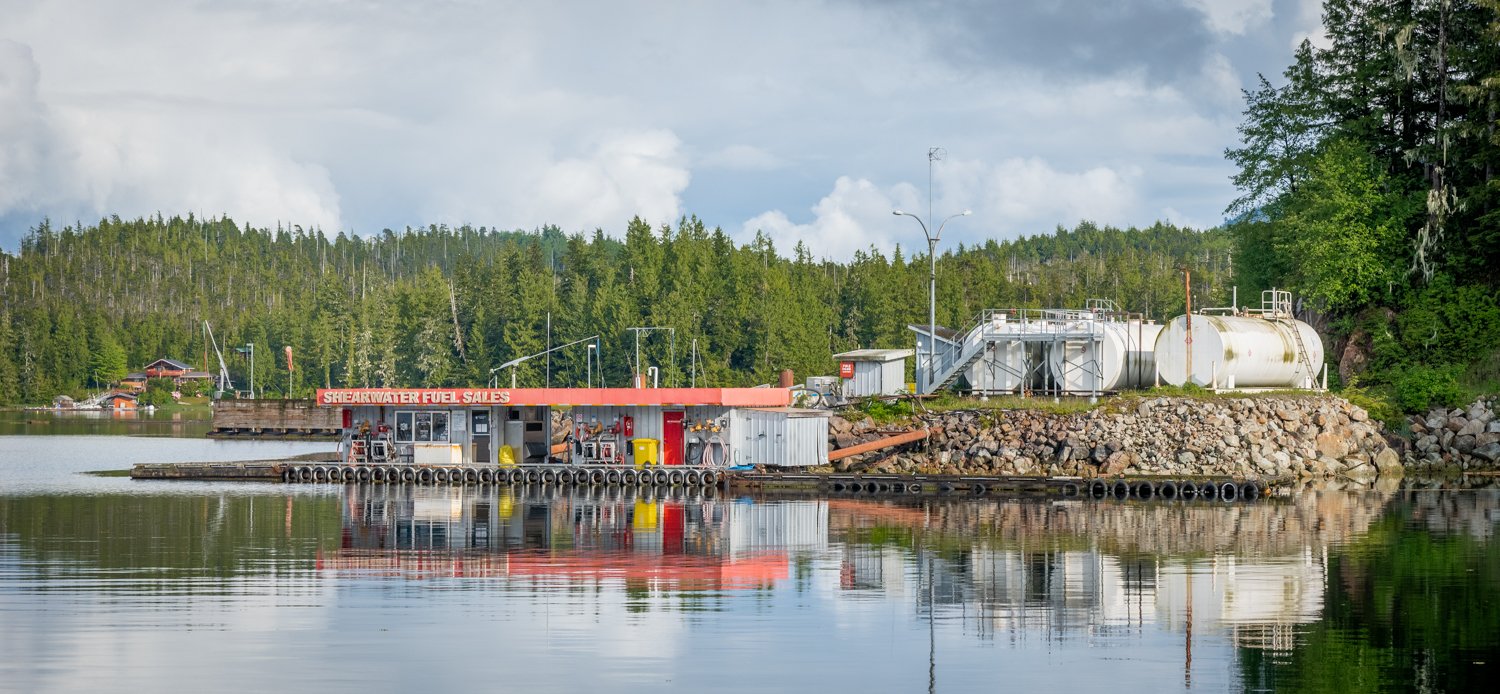
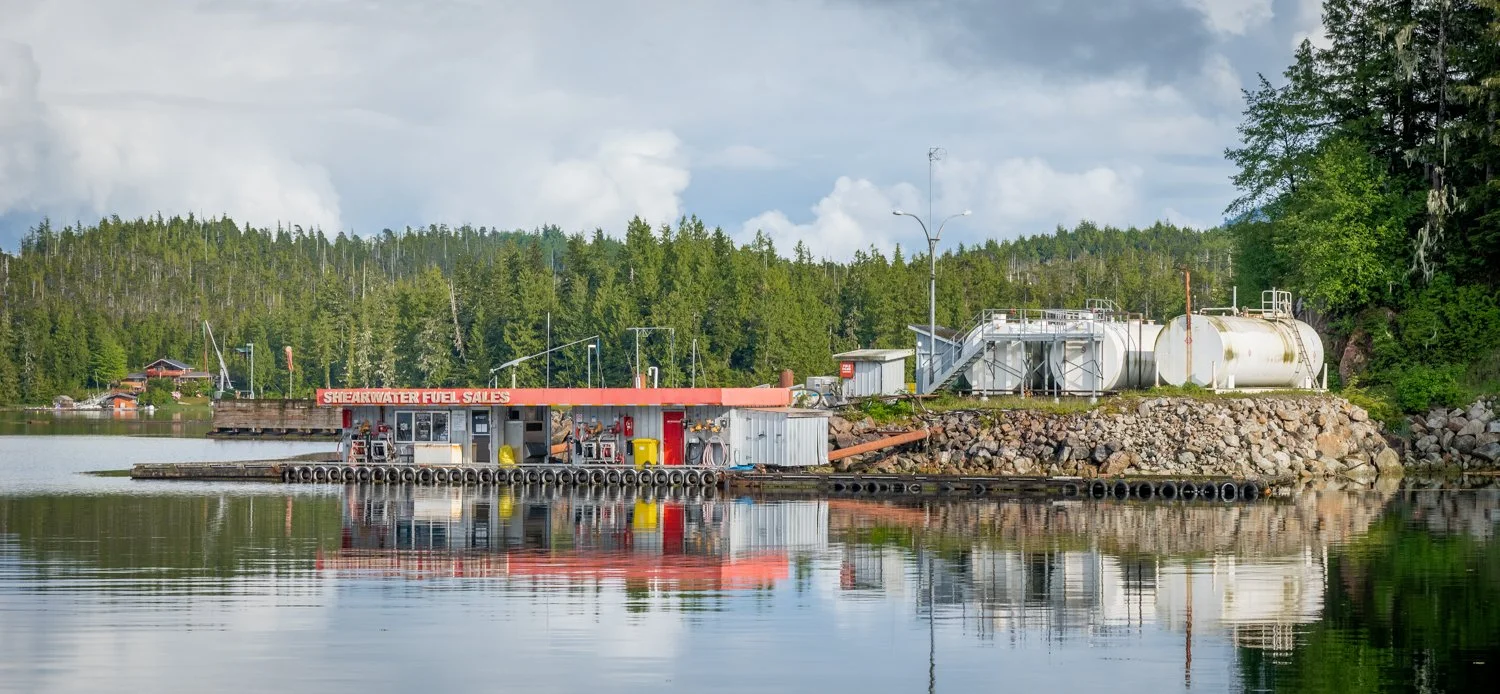
the economic foundation of shearwater, the fuel dock. you can also fill up your helicopter just behind.
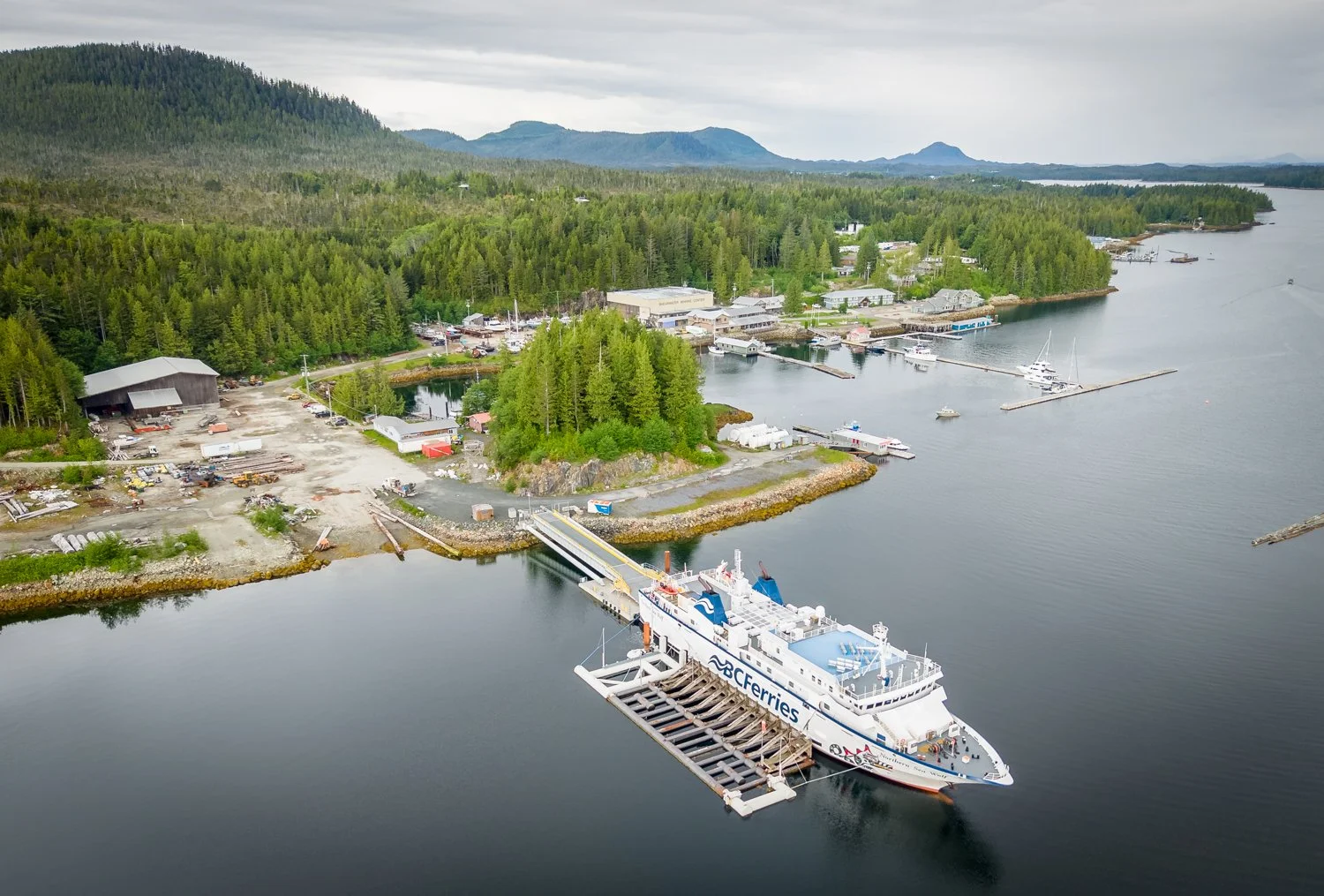
the sea wolf ferry makes a call at shearwater


Cruising has taught us that the most memorable moments are rarely the ones carefully planned on a chart. More often, they grow out of unexpected detours, weather delays, mechanical challenges, or chance encounters with remarkable people.

Karen returned healthy. OceanFlyer was a little better maintained than when she left. And once again, we were reminded that while the scenery may draw us north each year, it's the people we meet along the way who make the journey truly unforgettable.
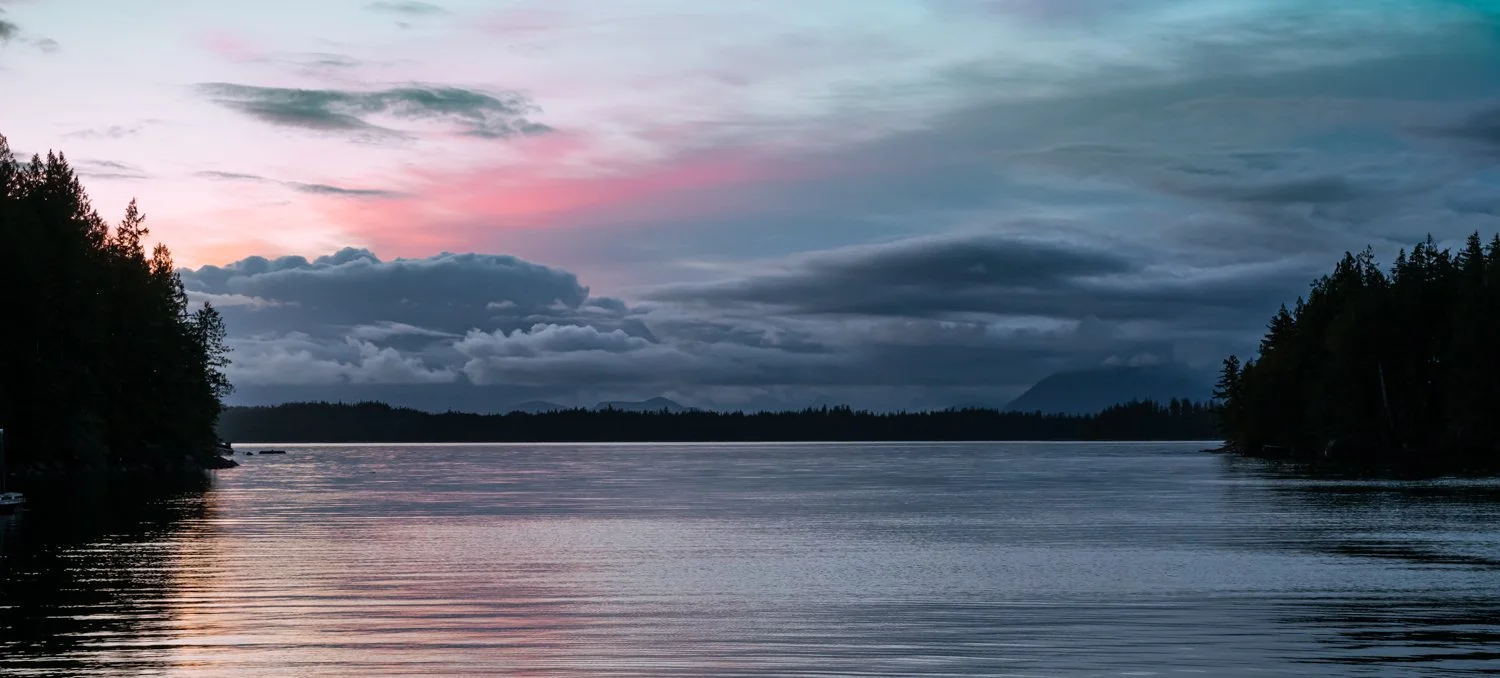
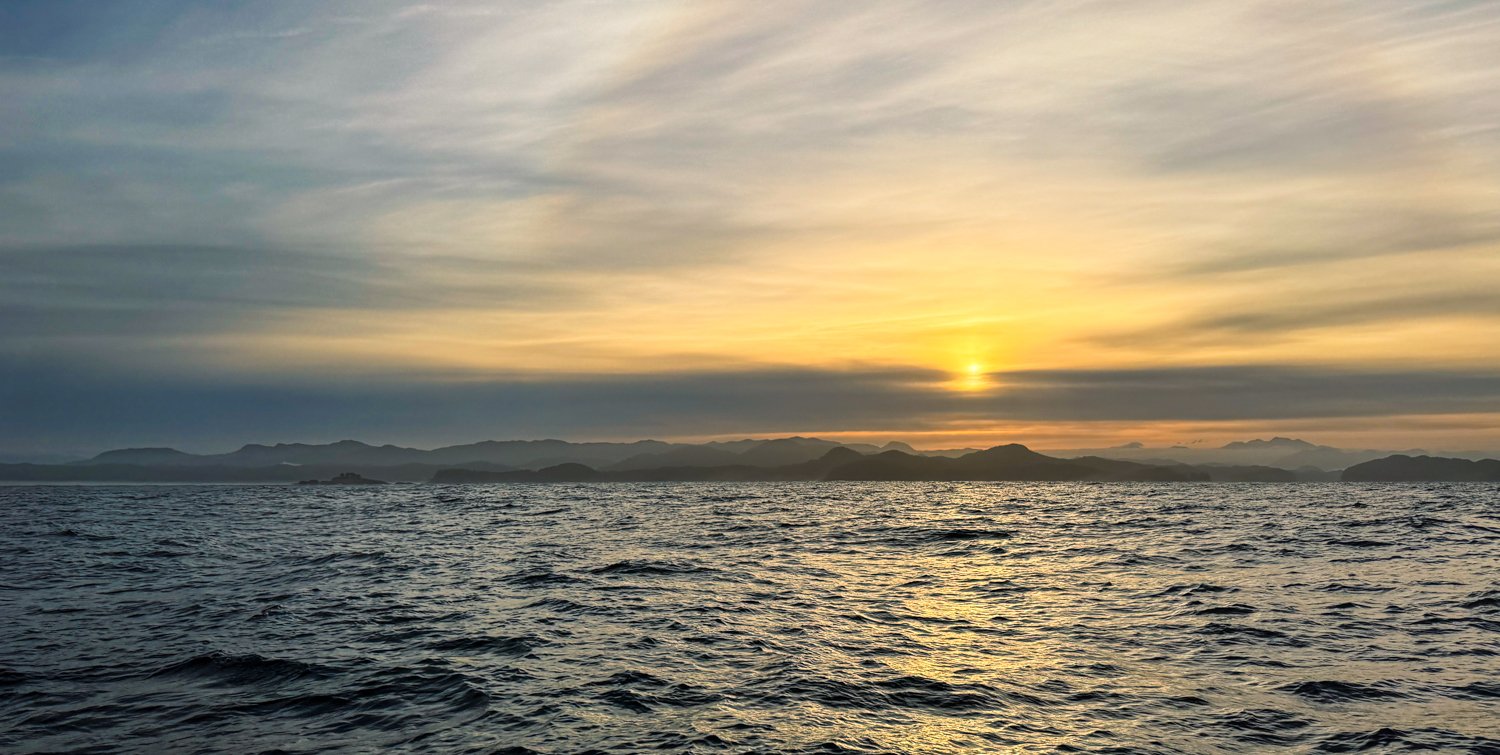
beautiful sunset from the docks at shearwater
Eucott Bay to Ocean Falls

Some places become traditions.

Ocean Falls is one of those places for us. No matter how many times we cruise the Inside Passage, we simply can't pass by without stopping. It's a destination built as much on memories as on the town itself.

Many of those memories have names.

There's Nearly Normal Norman and the remarkable museum he lovingly assembled to preserve the history of Ocean Falls. There's our first hike up to Link Lake, standing in awe of the massive hydroelectric dam that has quietly powered this remote community for decades. And there's the leisurely walk back down the hill, pausing to pick ripe blackberries along the roadside.

Each visit brings familiar sights—and subtle reminders that time never stands still.

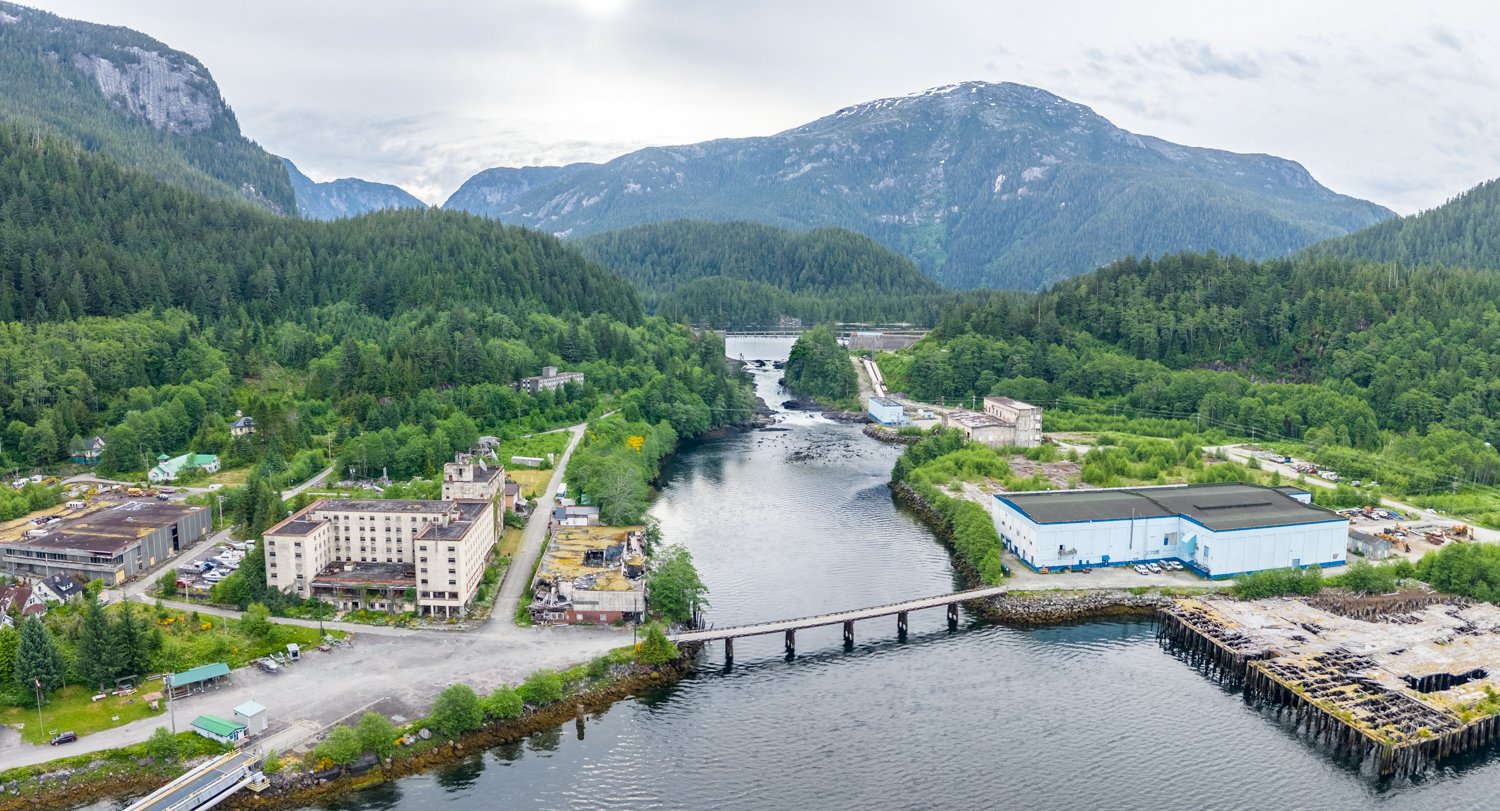
Buildings that once reflected the prosperity of one of British Columbia's largest company towns are a little more weathered with every passing year. Roofs have disappeared. Windows have given way to the rainforest. Moss and alder trees patiently reclaim what industry once carved from the wilderness.

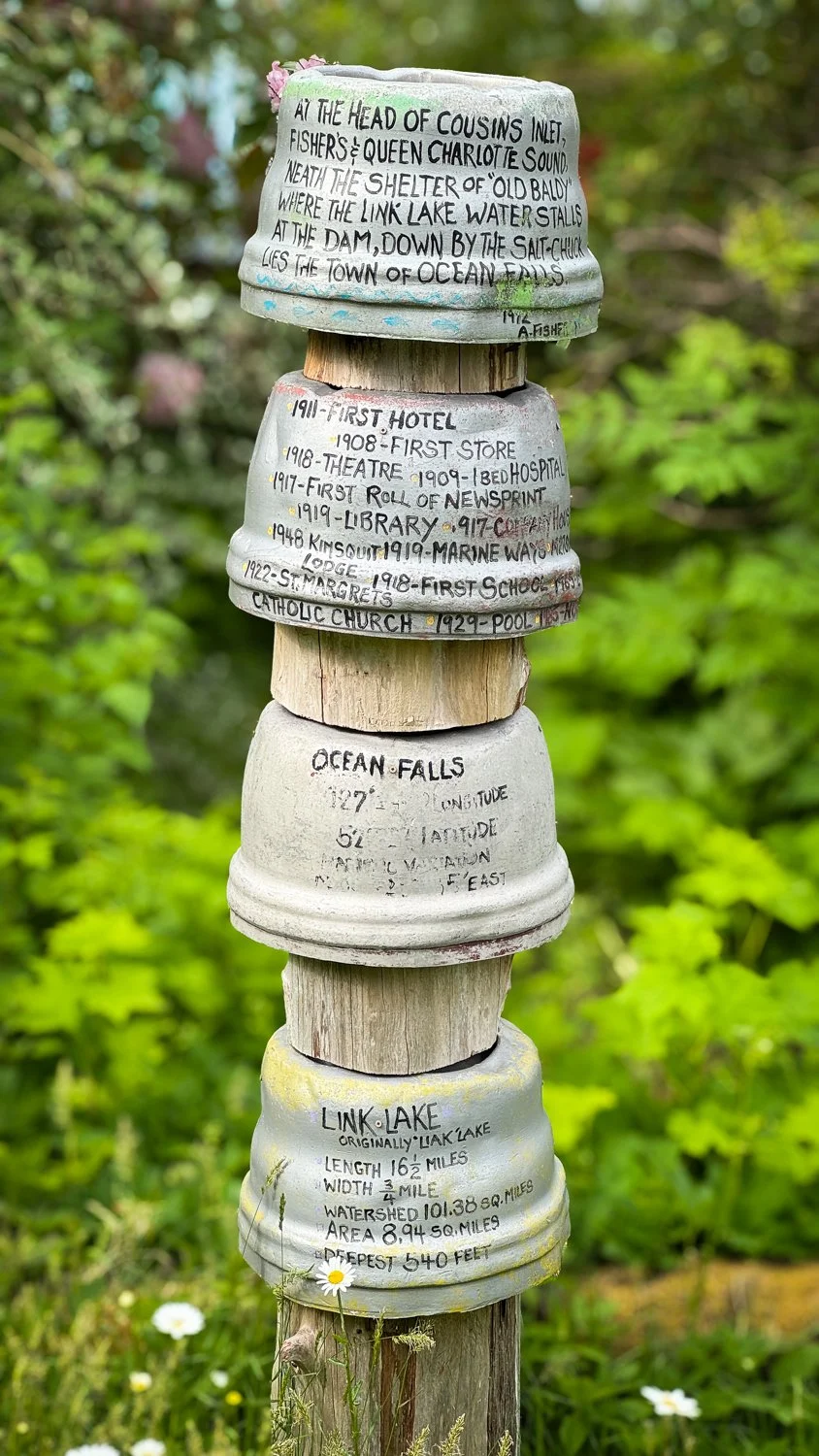
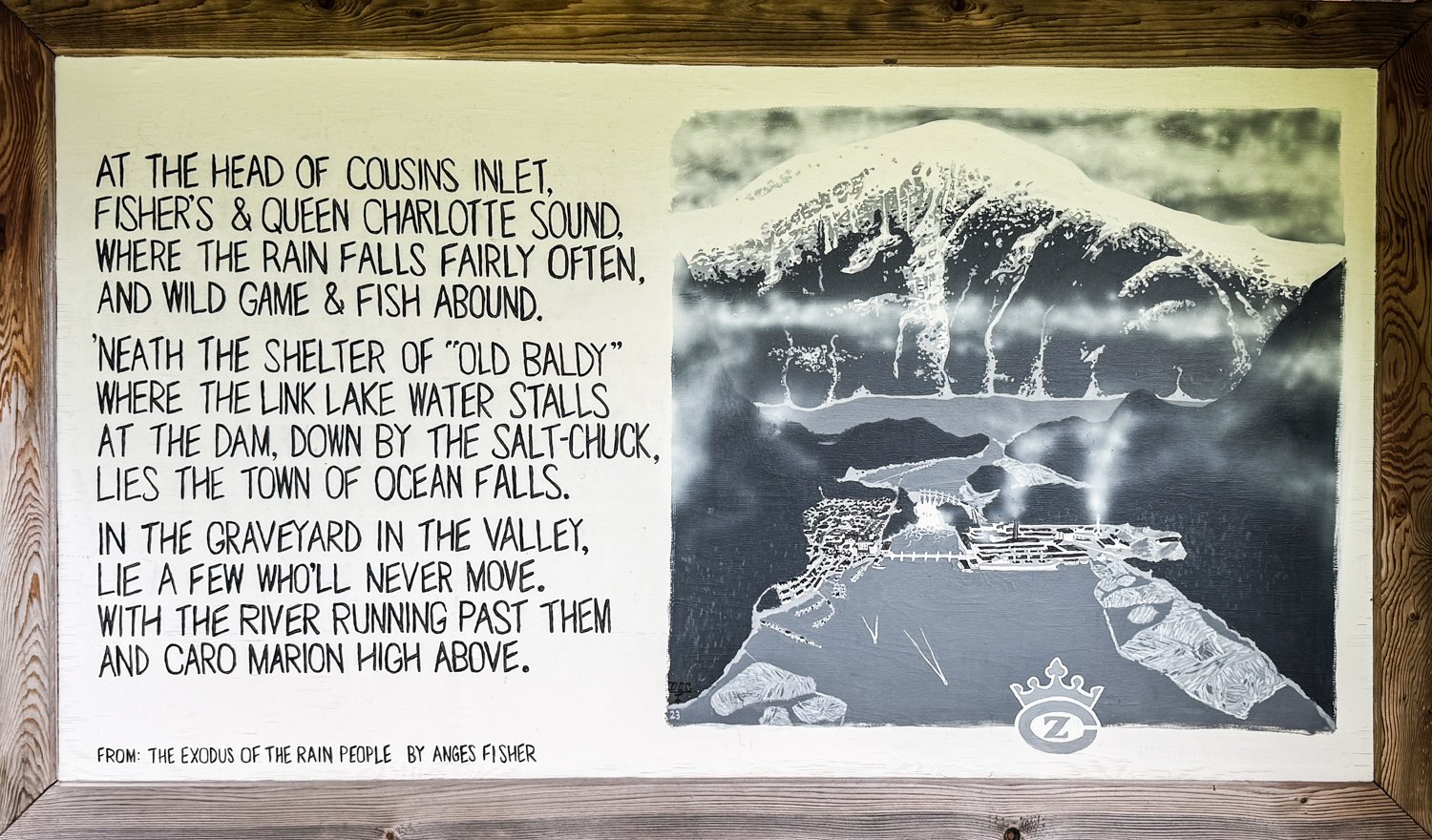
a little oceanfalls history

in so many ways, oceanfalls has not changed over the years

For a brief moment, it seemed the story might take a different direction.

During the COVID years, a small wave of newcomers discovered Ocean Falls. With Starlink making remote work practical, this quiet coastal community suddenly offered something many people were searching for—a slower pace of life surrounded by spectacular wilderness. It felt as though Ocean Falls might be writing a new chapter.

This year, however, that optimism seems more subdued.

Only a few dozen residents now call Ocean Falls home year-round. During the summer, fishermen and cruising boats provide much of the activity, while the locals proudly embrace their nickname—the Rain People. It's a fitting title for a community that averages nearly 170 inches of rainfall each year.

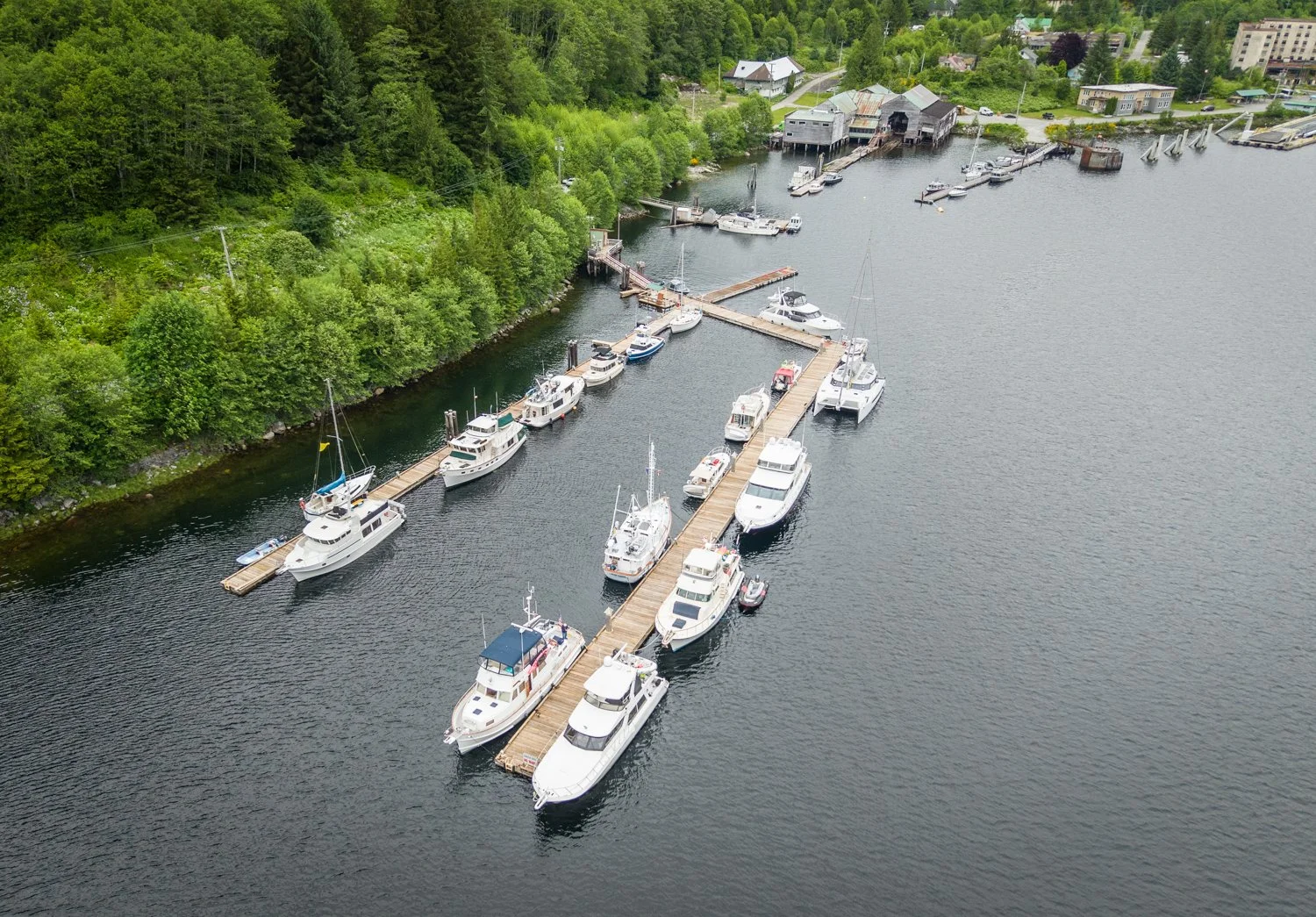
oceanflalls docks are a short walk into town

oceanfalls if a favorite with cruisers for good reason

One of our favorite traditions is stretching our boat legs with the 1.3-mile walk to Martin Valley, where many of today's residents now live. The walk has become less about exercise and more about reconnecting with memories.

We passed the old saloon and the small roadside building where a flashing orange light once announced that fresh seafood—and a handful of groceries—were available for sale.

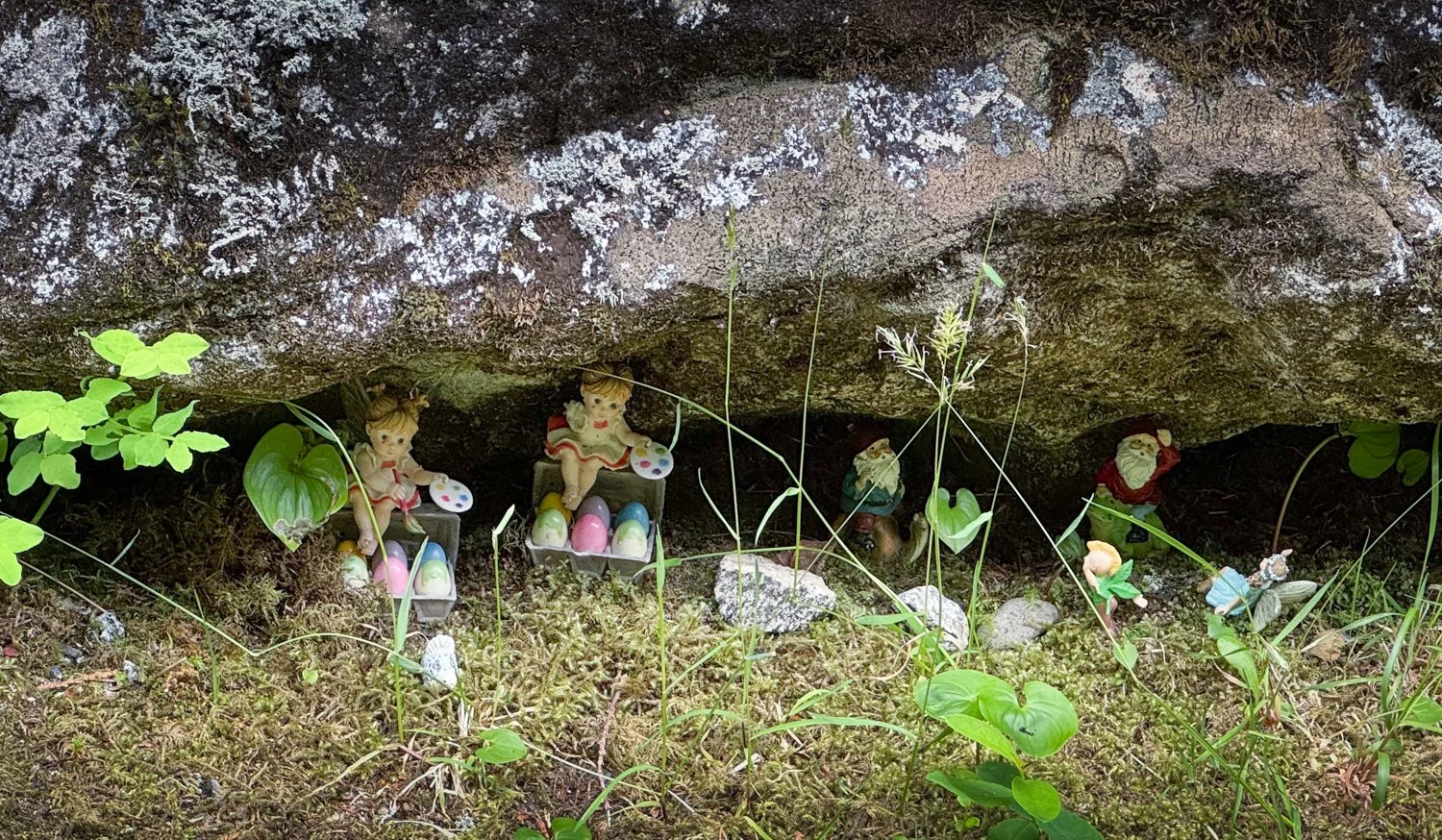
gnomes line the road to martin valley

And every time we walk that road, we can't help but remember the afternoon we rounded a corner and came face-to-face with a large black bear heading in our direction. Fortunately, both parties reached the same conclusion: continuing on seemed like the best plan. The full story is probably better shared over a cold beer.

a roadside maker tells the tale of oceanfalls

If your travels ever bring you to Ocean Falls, keep an eye out for the out-of-print book Rain People: The Story of Ocean Falls. It captures both the remarkable history of this once-thriving company town and the resilient spirit of the people who continue to call it home.

Ocean Falls remains one of our favorite stops on the British Columbia coast.

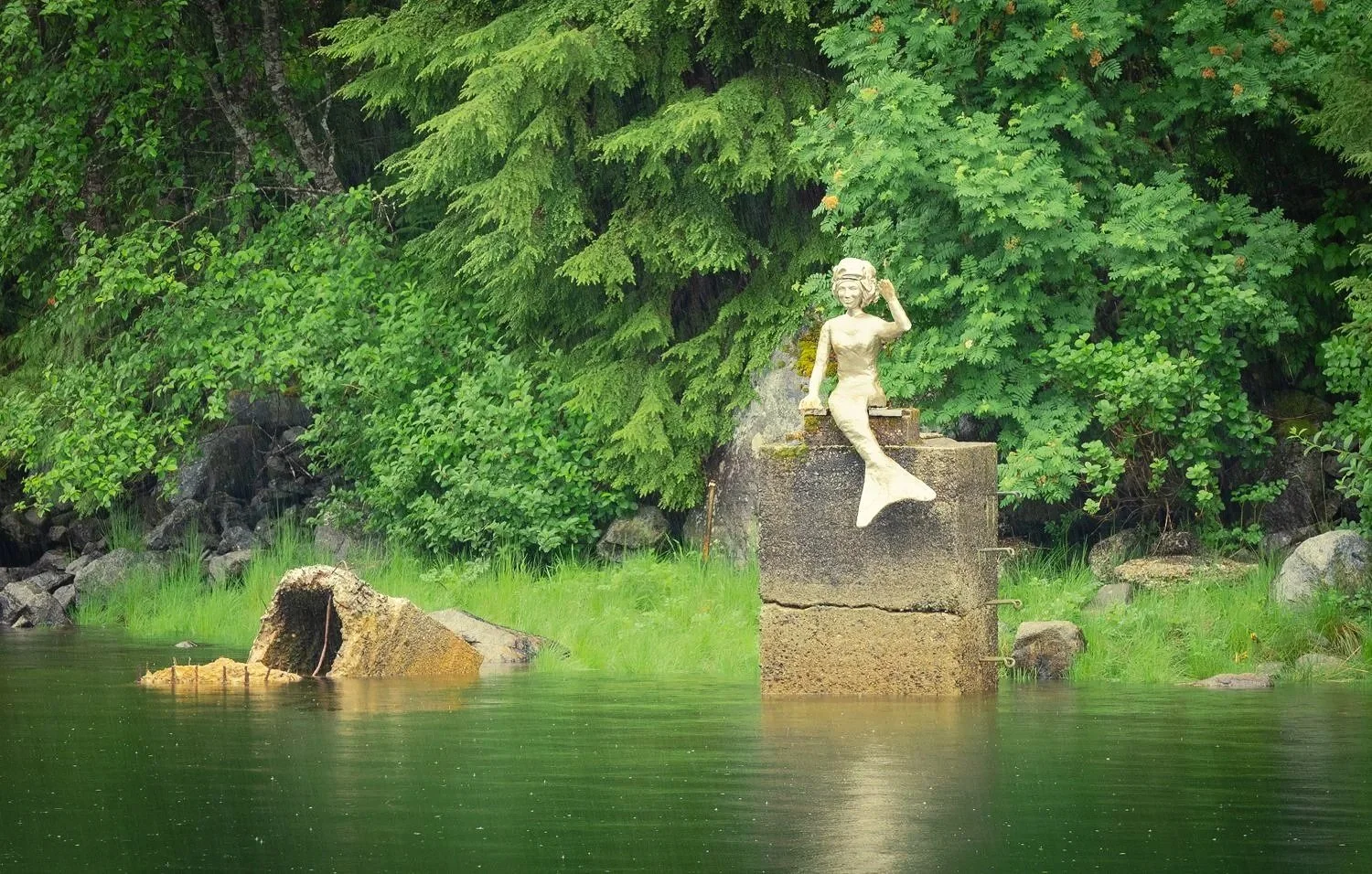
i call her the patron saint of oceanfalls. look for her at the docks.

But with every return, it feels a little less like we're discovering something new and a little more like we're revisiting old friends.

Perhaps that's part of its charm.

Each visit offers another opportunity to remember what Ocean Falls once was, appreciate what it still is, and witness Mother Nature's patient work as she quietly reclaims another small piece of this remarkable place.

Codville Lagoon to Eucott Bay

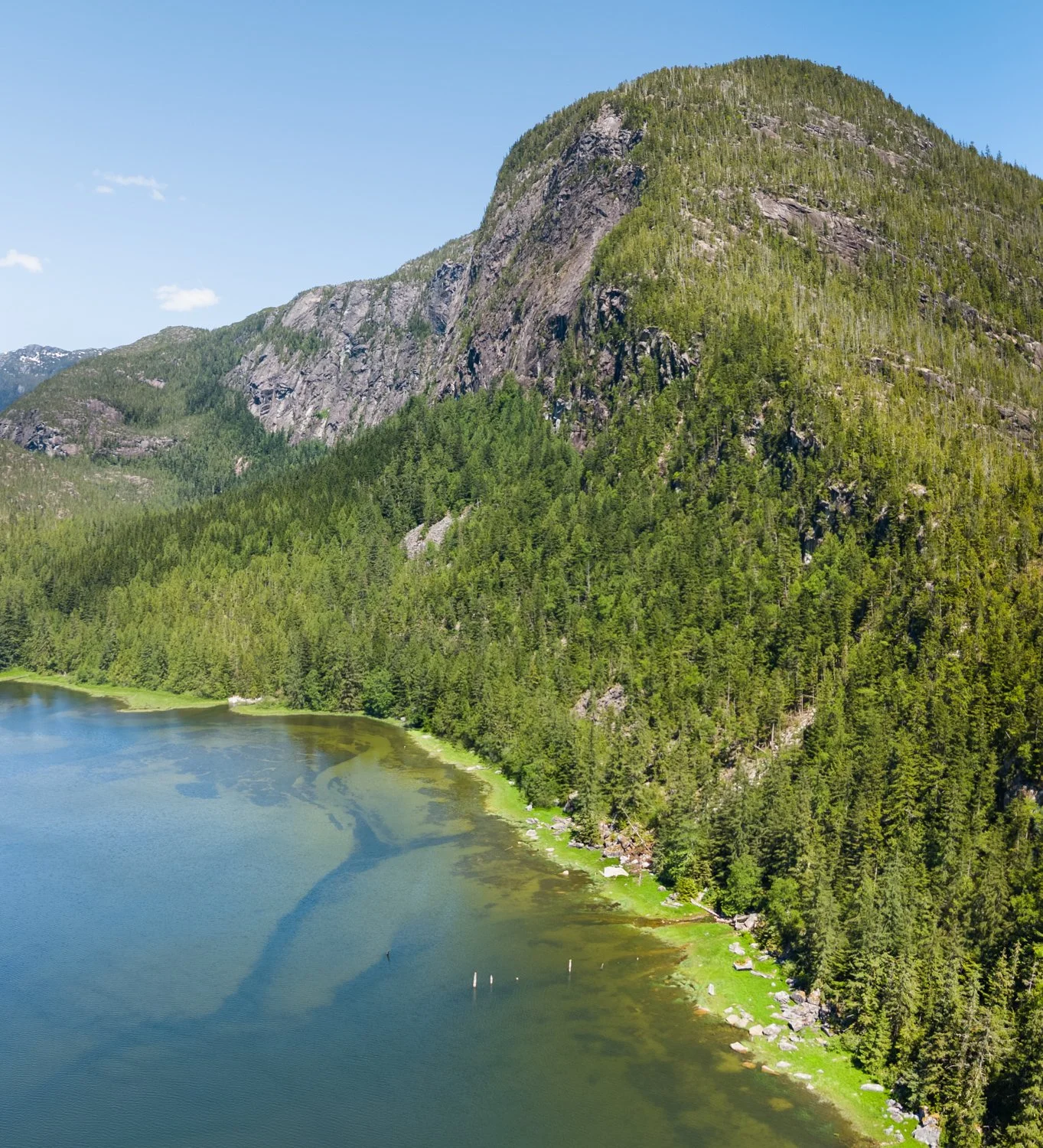
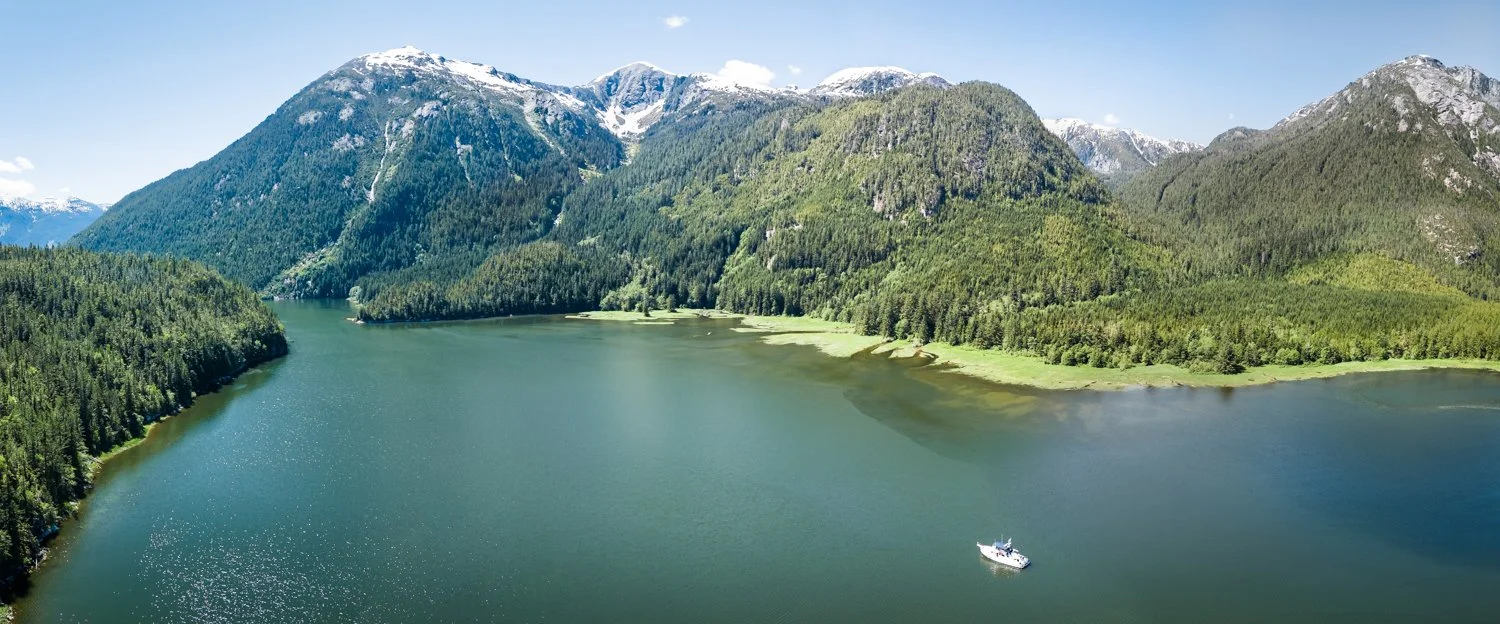
The final day of May found us continuing north up Dean Channel toward Eucott Bay, a small, protected basin tucked beneath towering granite cliffs and best known for its natural hot springs.

The hot springs themselves weren't our primary motivation. Neither of us has ever been particularly drawn to soaking in hot pools. Instead, we were looking forward to another spectacular run through British Columbia's coastal wilderness, the possibility of setting a few prawn traps near the entrance, and the chance to visit yet another destination that had somehow escaped us despite years of cruising these waters.

Dean Channel certainly didn't disappoint.

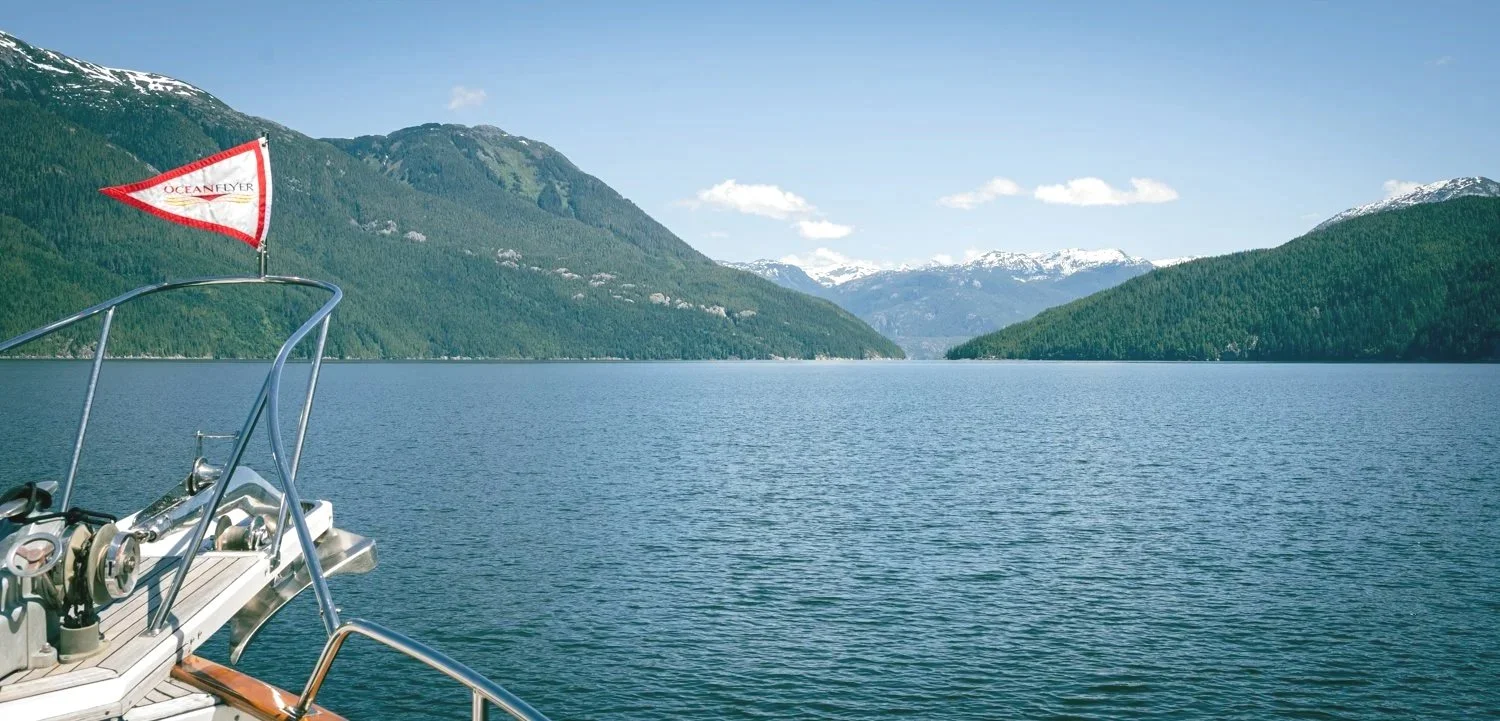
a vbeautiful run up dean channel

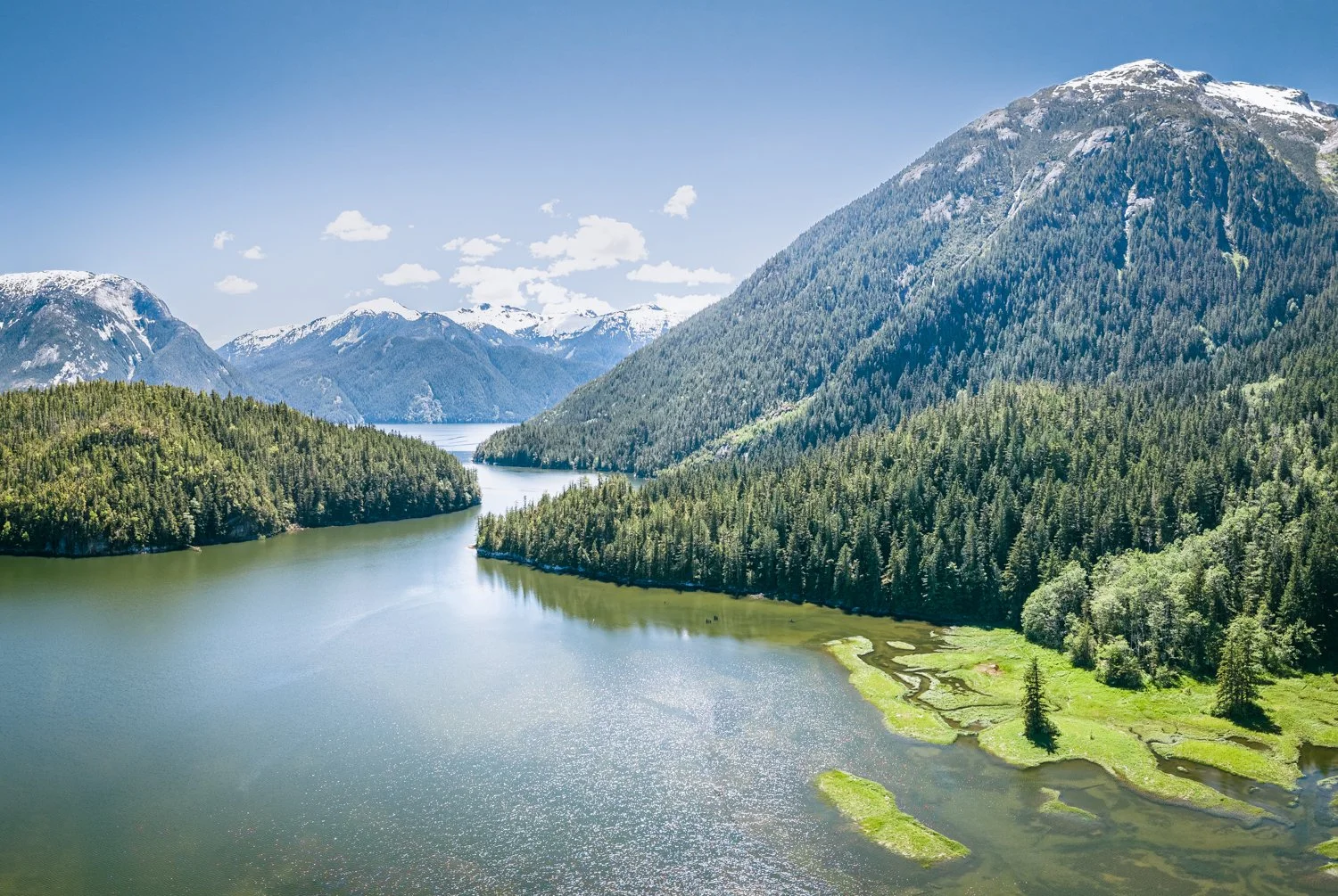
Under brilliant blue skies, snow-covered peaks surrounded us in every direction. This is the British Columbia coastline that keeps drawing us back year after year—immense granite mountains rising almost vertically from the sea, while beneath the keel the chart often showed depths exceeding 1,800 feet.

With so much snowmelt pouring into the channel, our depth sounder provided an unexpected lesson in oceanography. Rather than measuring the true depth, it repeatedly locked onto the freshwater layer floating above the heavier saltwater, reporting a depth of only about 15 feet. It's a fascinating reminder that this dramatic landscape, both above and below the waterline, was sculpted by glaciers that once filled these valleys.

As we approached the narrow entrance to Eucott Bay, wildlife welcomed us in spectacular fashion. Two grizzly bears appeared along the shoreline—the first bears of our cruise. Moments later, after easing into the anchorage while searching for the best place to set the hook, another massive bear looked up from the beach, gave us little more than a passing glance, and calmly returned to whatever occupied his morning.

looking back out the entrance to eucott bay

It turned out to be only the beginning.

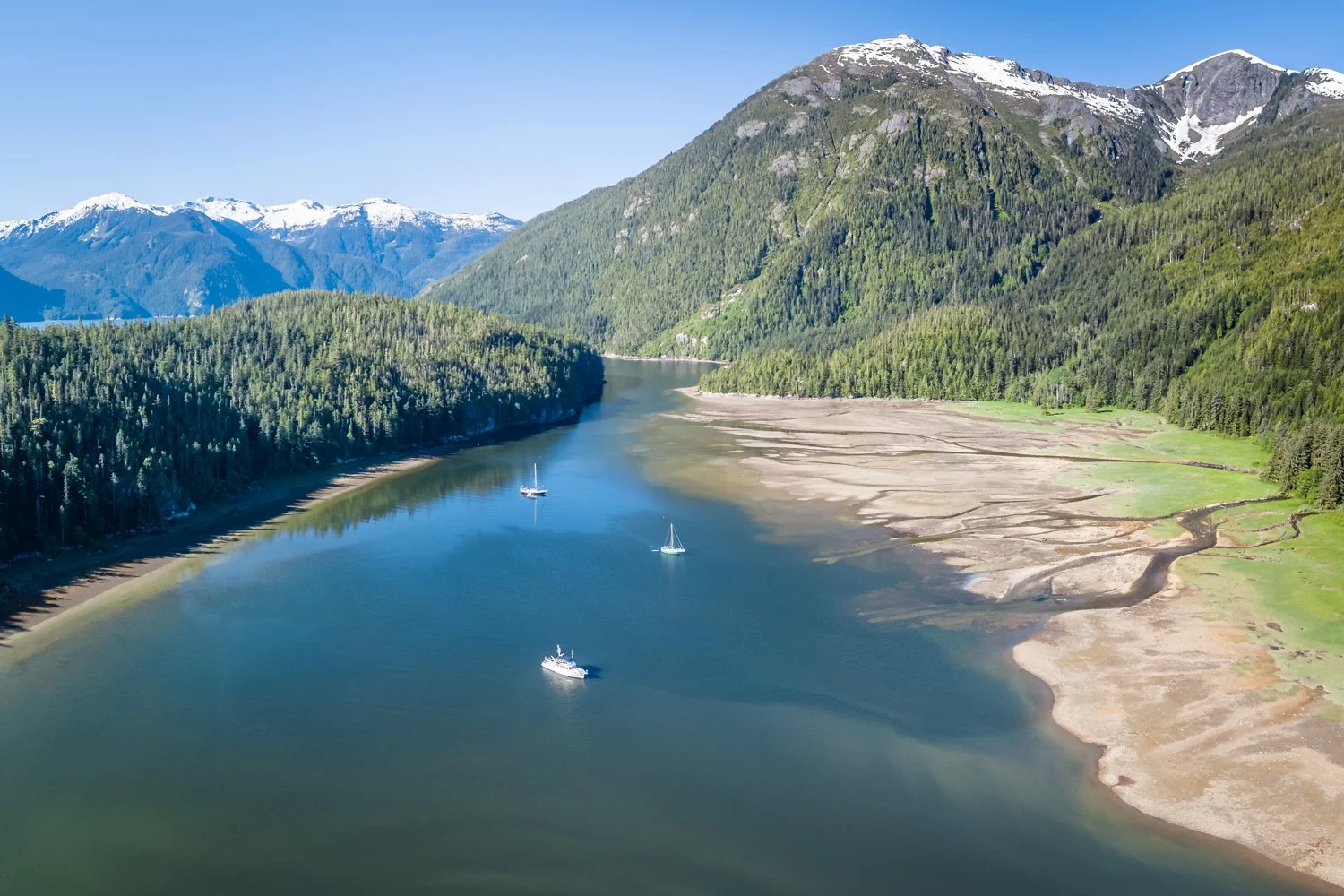
The following morning's low tide exposed another hundred yards of beach, transforming the shoreline into what seemed like a grizzly gathering place. By the time we finished our coffee, we had counted roughly fifteen bear sightings.

eucott bay has spectacular views in all directions

look close and follow the line of old pilings to find the hot tub

What fascinated us most was the remarkable range of color. One enormous boar was so dark he appeared almost black. Others wore the classic rich brown coat most people associate with grizzlies, while two much lighter bears looked almost blond as they methodically searched the exposed shoreline for breakfast.

The bears may have stolen the show, but they weren't the day's only entertainment.

Throughout the afternoon, a steady procession of cruising boats arrived, each crew making the pilgrimage to the famous hot springs. The first visiting couple apparently decided that clothing was entirely optional for the occasion. Later, the crew of a sailboat made the muddy hike to the springs before returning to the beach and enthusiastically plunging into the bay's 55-degree water.

snow stills hangs onto the the tall mountains

low tides reveals the impressive Alluvial mud flats

From the comfort of OceanFlyer's salon, coffee mugs in hand, we admired their adventurous spirit.

Some experiences are simply more enjoyable to watch than to participate in.

Pruth Bay to Codville Lagoon

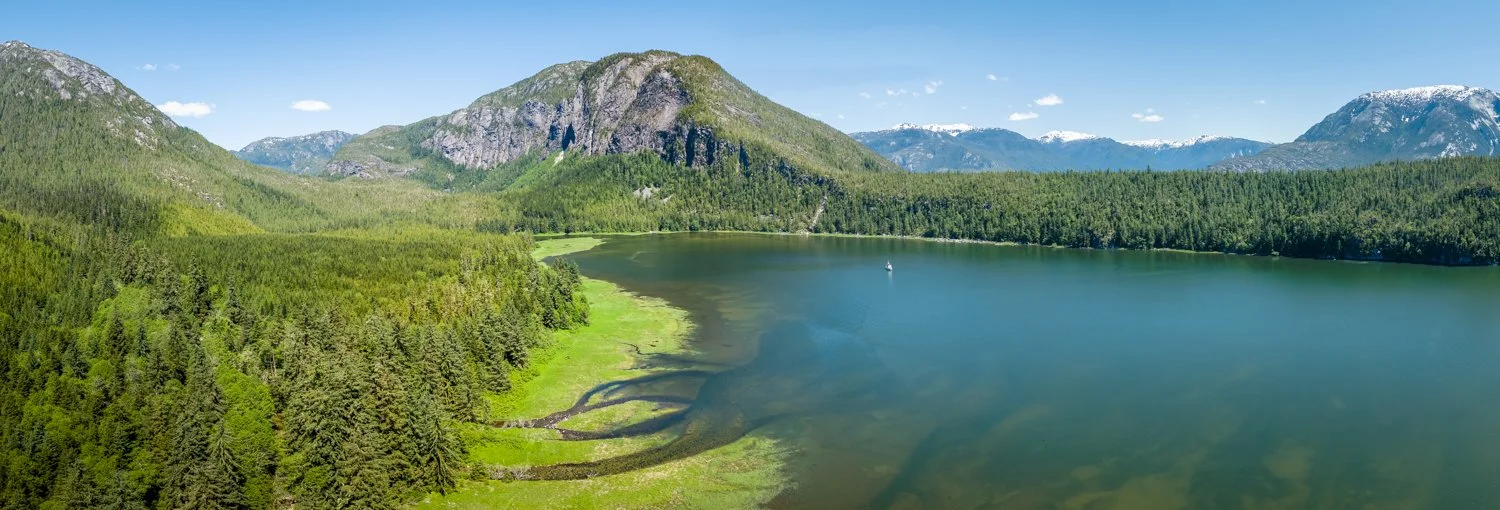
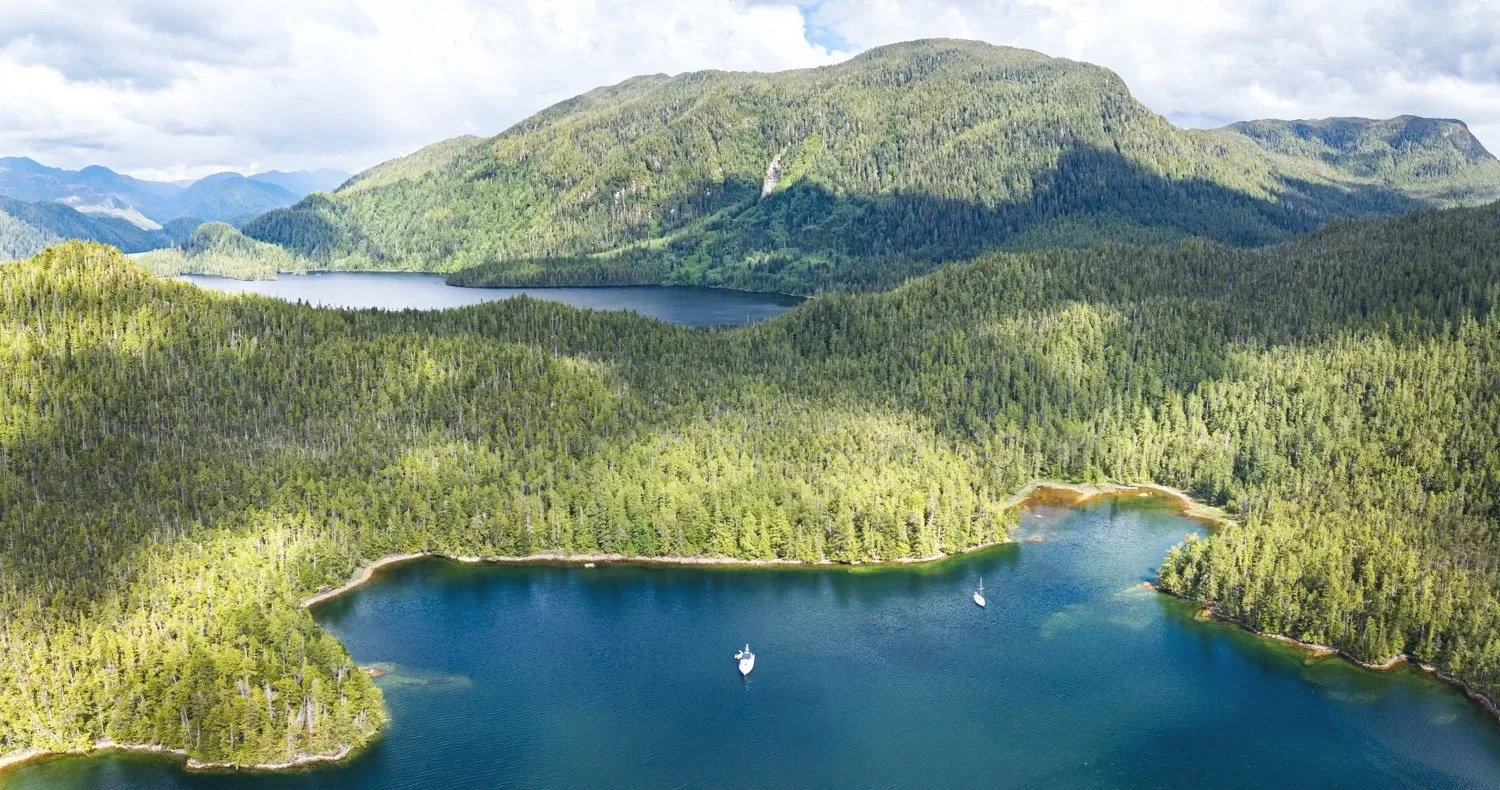
Today's destination was Codville Lagoon, one of those places that looks modest on the chart but feels much larger once you're inside. When most cruisers hear the word lagoon, they picture a small basin tucked behind a narrow entrance. Codville certainly has a narrow entrance, but the lagoon itself unfolds into a surprisingly spacious anchorage with several distinct arms to explore.

We settled into the east cove near the trailhead leading up to Sagar Lake. The lake is the featured attraction for many visitors, but the trail is known for being muddy and steep in sections. Karen made the hike on a previous visit, so this time we were content to admire the surroundings from sea level.

Beyond providing a convenient stopping point along the Inside Passage, Codville had another attraction on our agenda: prawning. Stories of excellent catches circulate regularly among cruisers, so we set our expectations accordingly. Unfortunately, the prawns had other plans. Our entire effort yielded exactly one spot prawn—and a very small one at that. It won't be remembered as a banner day for the freezer inventory.

codville lagoon with sagar lake in the backgound

The afternoon was spent exploring by dinghy, circling the entire perimeter of the lagoon and scouting future anchoring options. By the end of our tour, we had already selected where we would anchor on our next visit. The south arm, particularly the southeast corner, caught our attention. About 75 feet of water provides plenty of swinging room while keeping clear of the rapidly shoaling shoreline that dries well offshore.

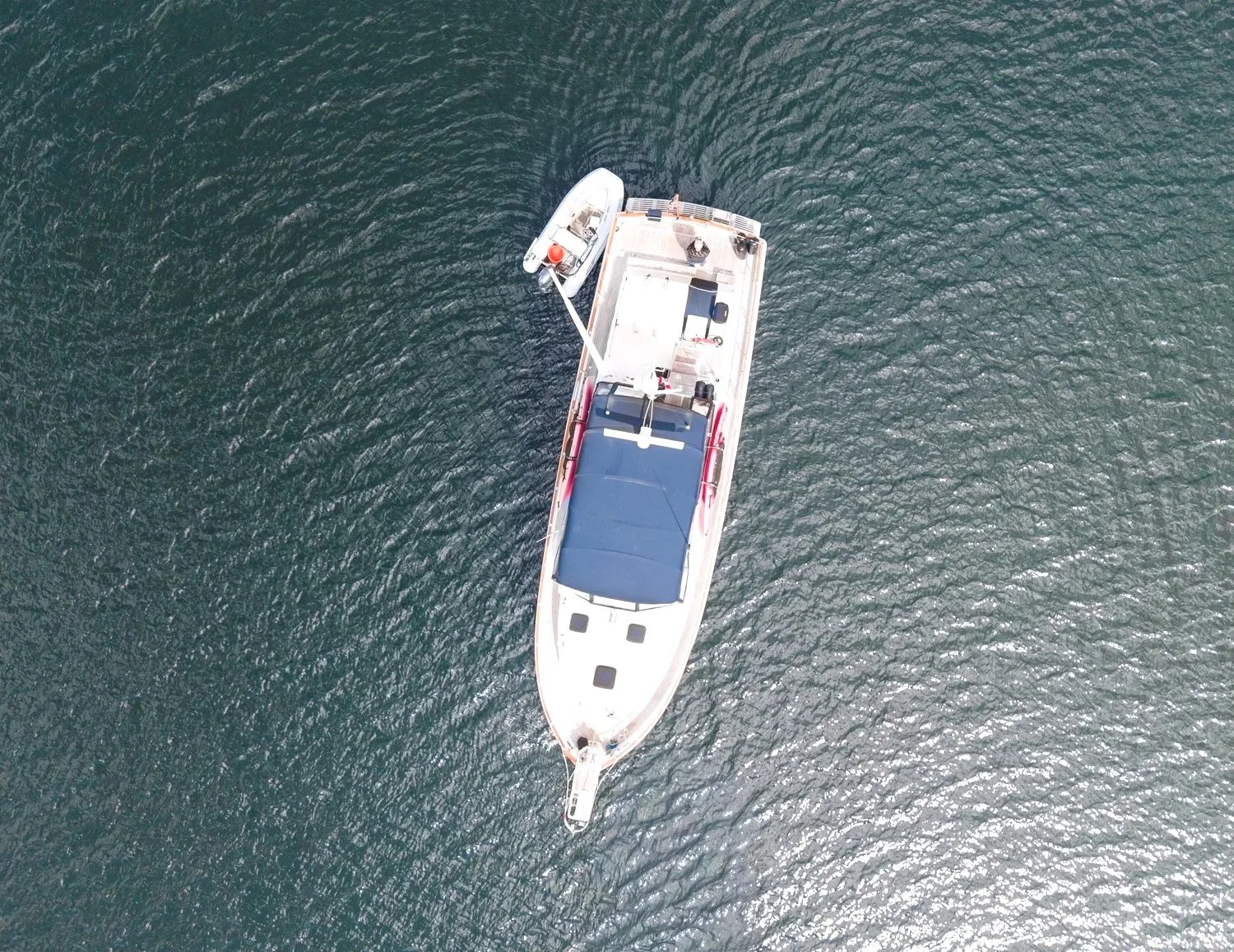
oceanflyer and her dinghy sit peacefully awaiting the next adventure

We also took note of a substantial landslide that has left a noticeable scar on the hillside. Bright green alder growth now highlights the slide path, making it easy to spot from across the lagoon. Its debris field is another reason we'll choose the southeast corner next time, comfortably removed from the slide area while still enjoying the protection and solitude that make Codville Lagoon such a popular stop.

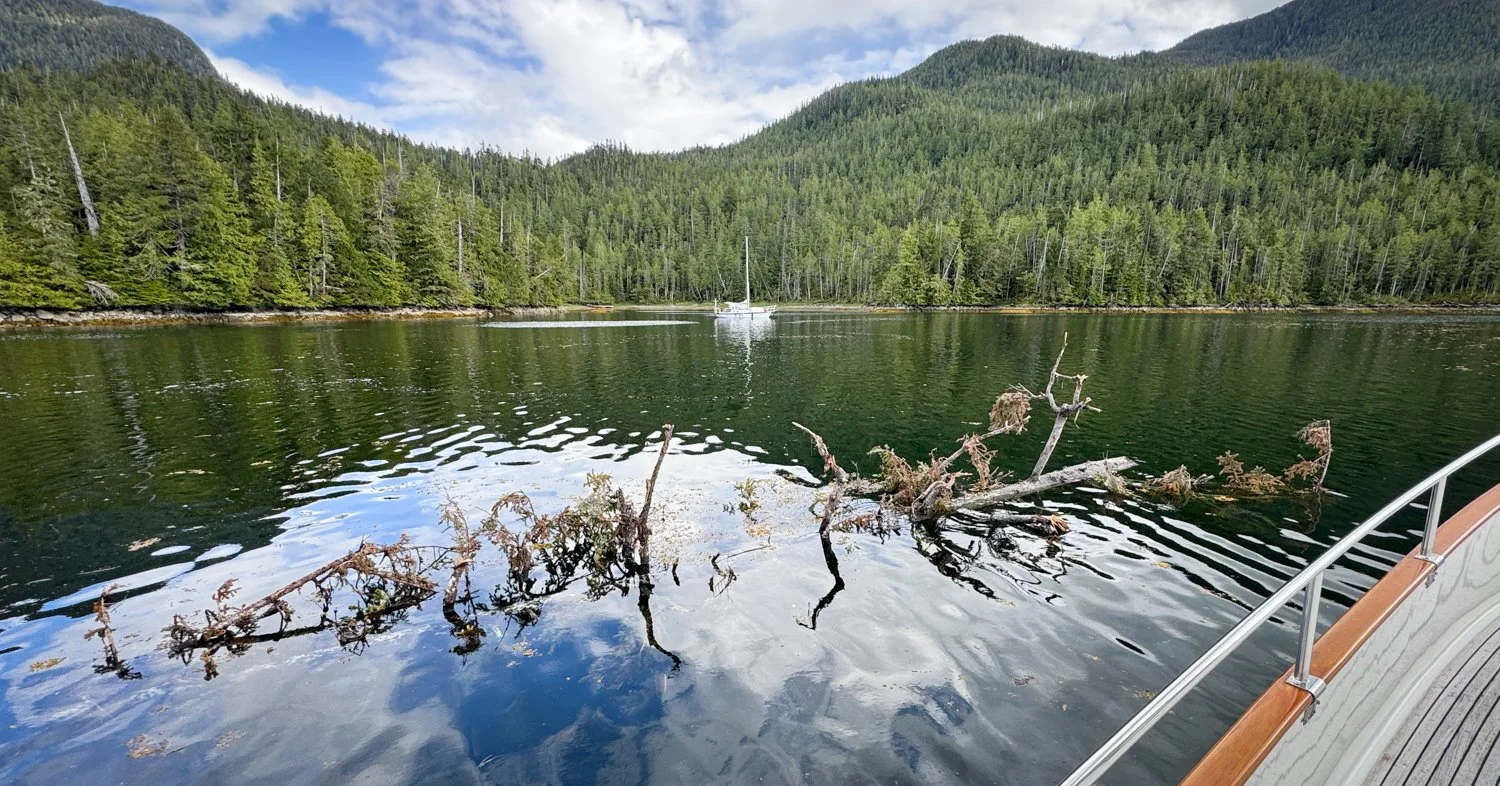
why does the latest floating debris always find your boat, even in a massively large anchorage

Some anchorages impress immediately. Others reveal their appeal gradually as you explore them. Codville Lagoon falls firmly into the second category, a place that rewards curiosity and leaves you planning your next visit before you've even weighed anchor.

Miles Inlet to Pruth Bay

Today began early.

The forecast offered a weather window around Cape Caution—not an ideal one, but the best opportunity likely to present itself for several days. In this part of the coast, you learn not to wait for perfection. You wait for conditions that fit your boat, your crew, and your comfort level.

We were underway at first light and found exactly what the forecast had promised. Offshore swells ran six to eight feet, but winds remained below 10 knots and the wave period was long enough to keep the motion comfortable. As every coastal cruiser knows, wave height tells only part of the story. The spacing between the swells is often what determines whether the ride is pleasant or punishing.

An early moring start

To avoid the worst of the ebb conditions, we gave Slingsby Channel a wide two-mile berth. Cape Caution received similar respect. Neither location is known for rewarding overconfidence.

As we rounded the Cape and altered course to the north, the seas shifted from abeam to our forward quarter. The motion immediately softened, and OceanFlyer settled into an easy rhythm. Before long we found ourselves in the lee of Calvert Island where the transformation was complete—winds dropped below five knots and the sea flattened to near glass.

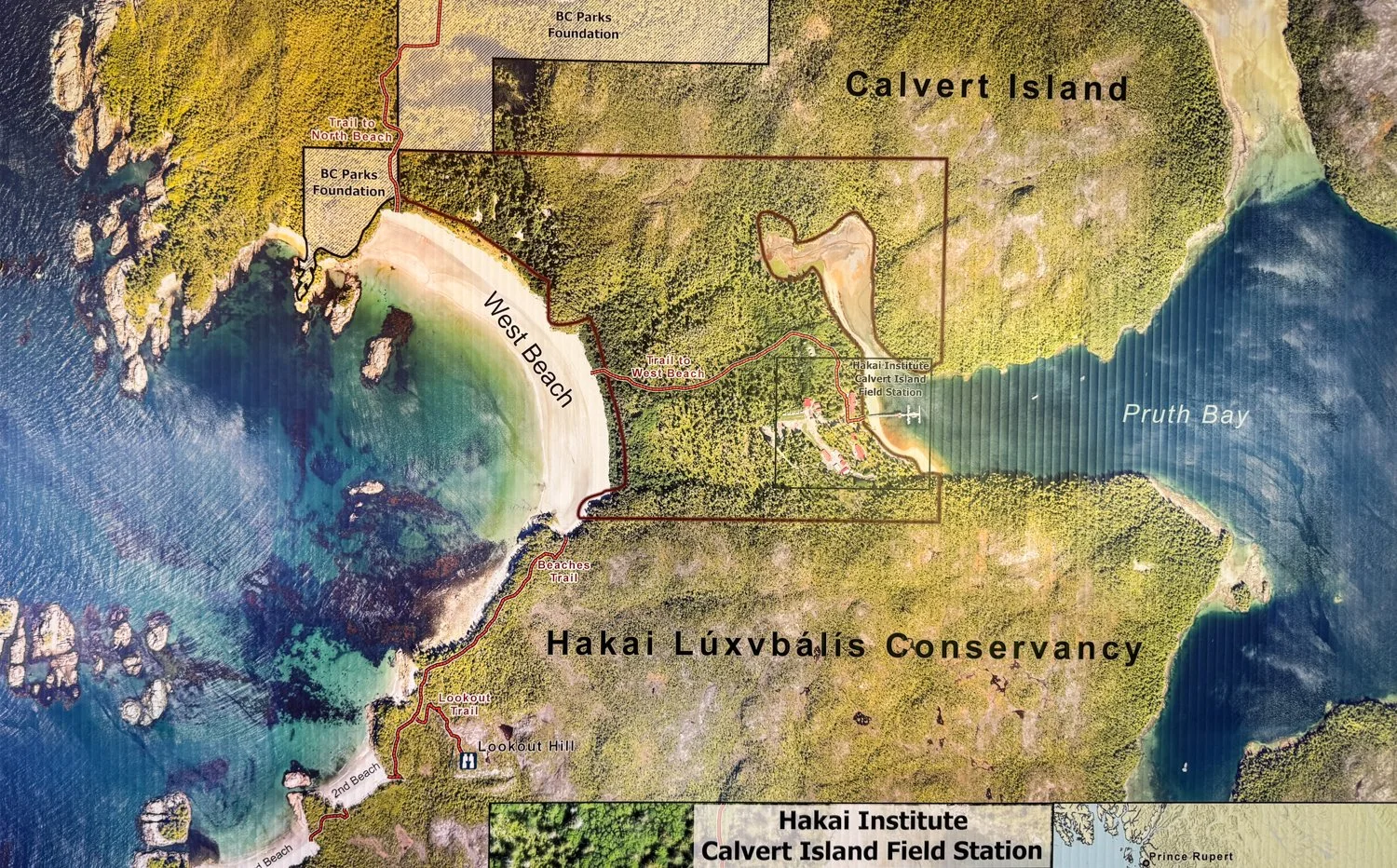
Pruth Bay is one of those places we rarely pass without stopping. The anchorage is comfortable, the beaches are exceptional, and the facilities maintained by the Hakai Institute make exploring ashore easy and inviting.

pruth bay from the haki institute docks

good signage from the haki institute to west beach

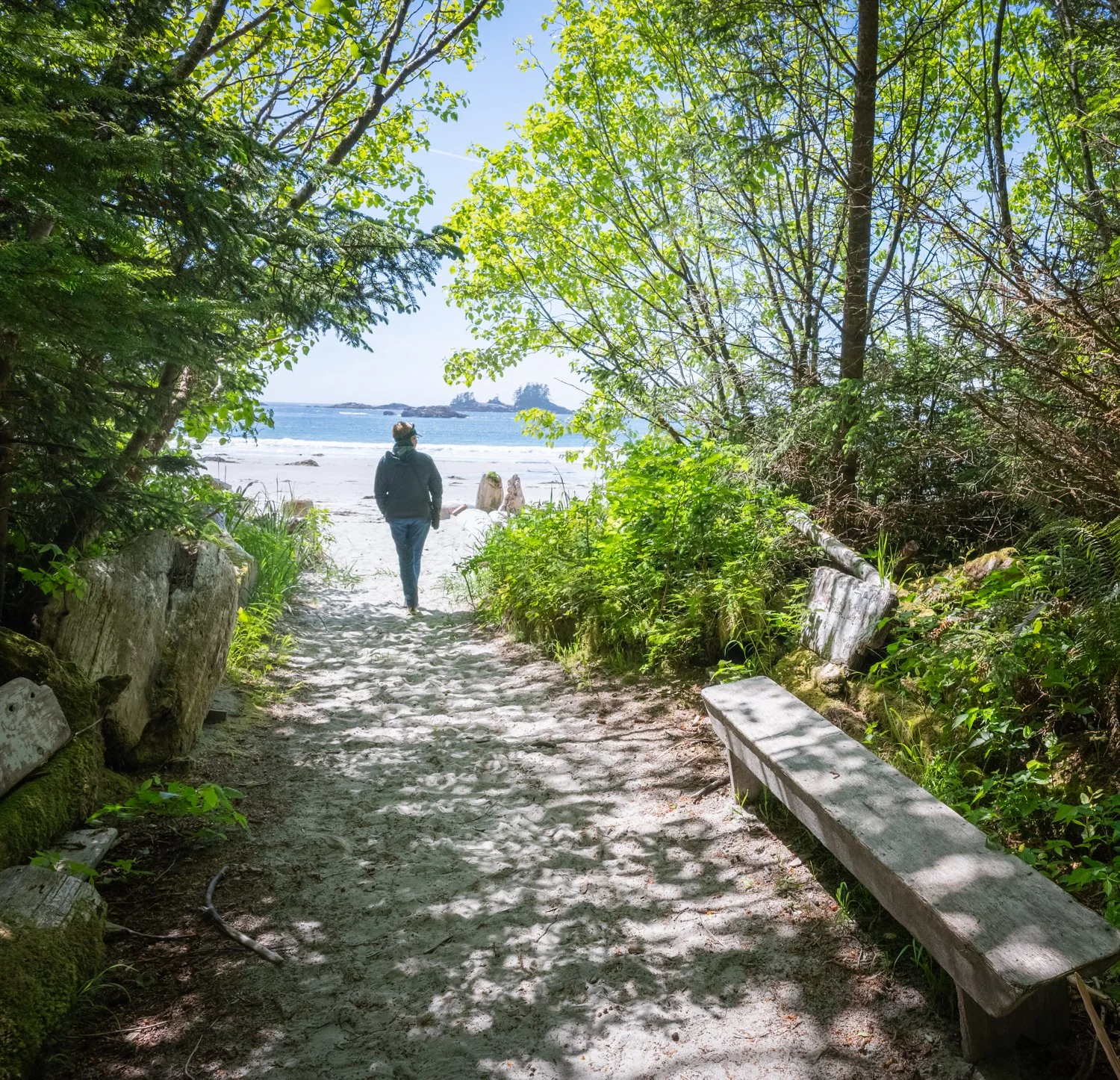
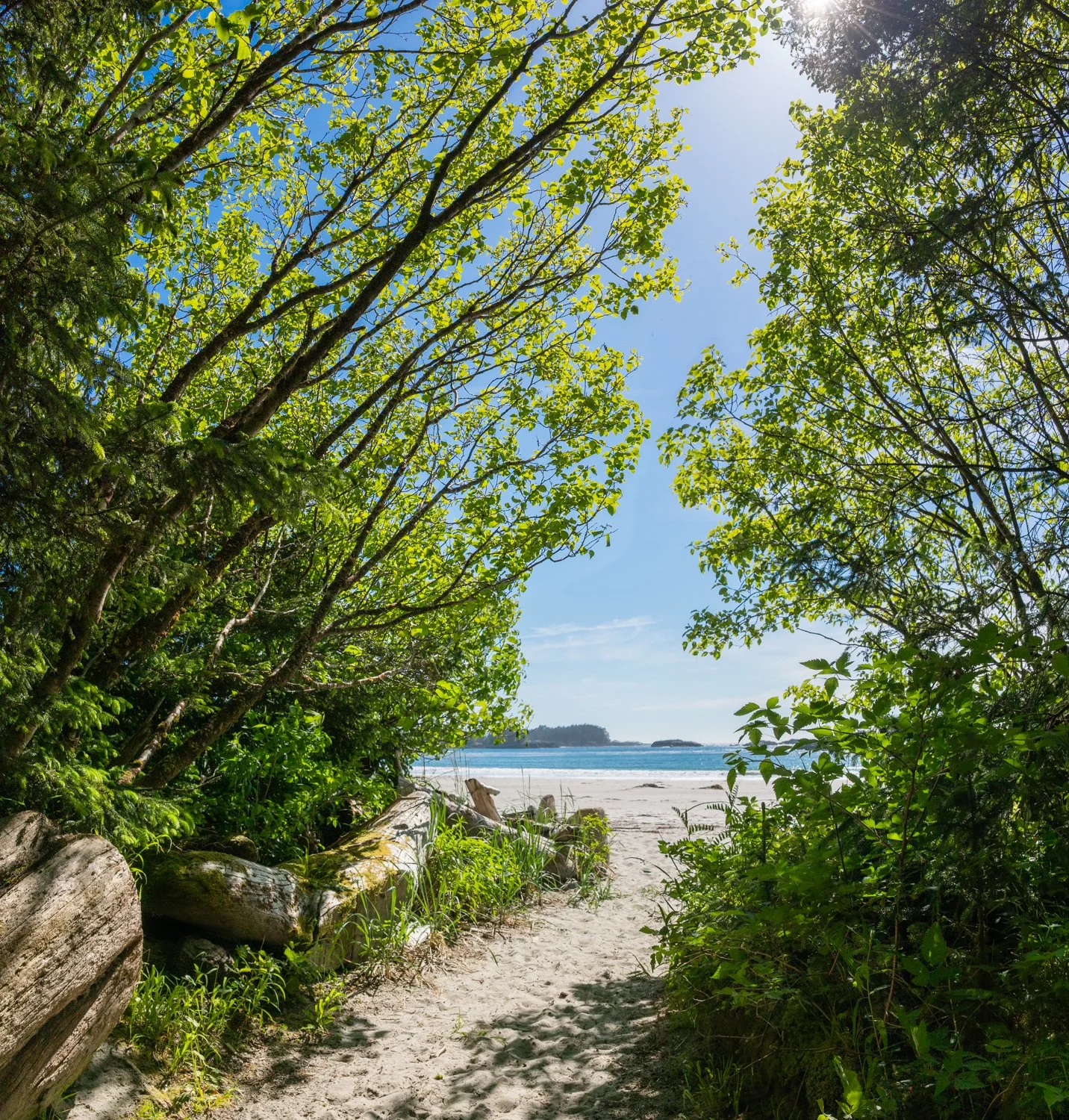
out of the forest path an onto the west beach

The added attraction this year is the hike to the summit overlooking the bay. We’ve only done this once before and the weather conditions are perfect.

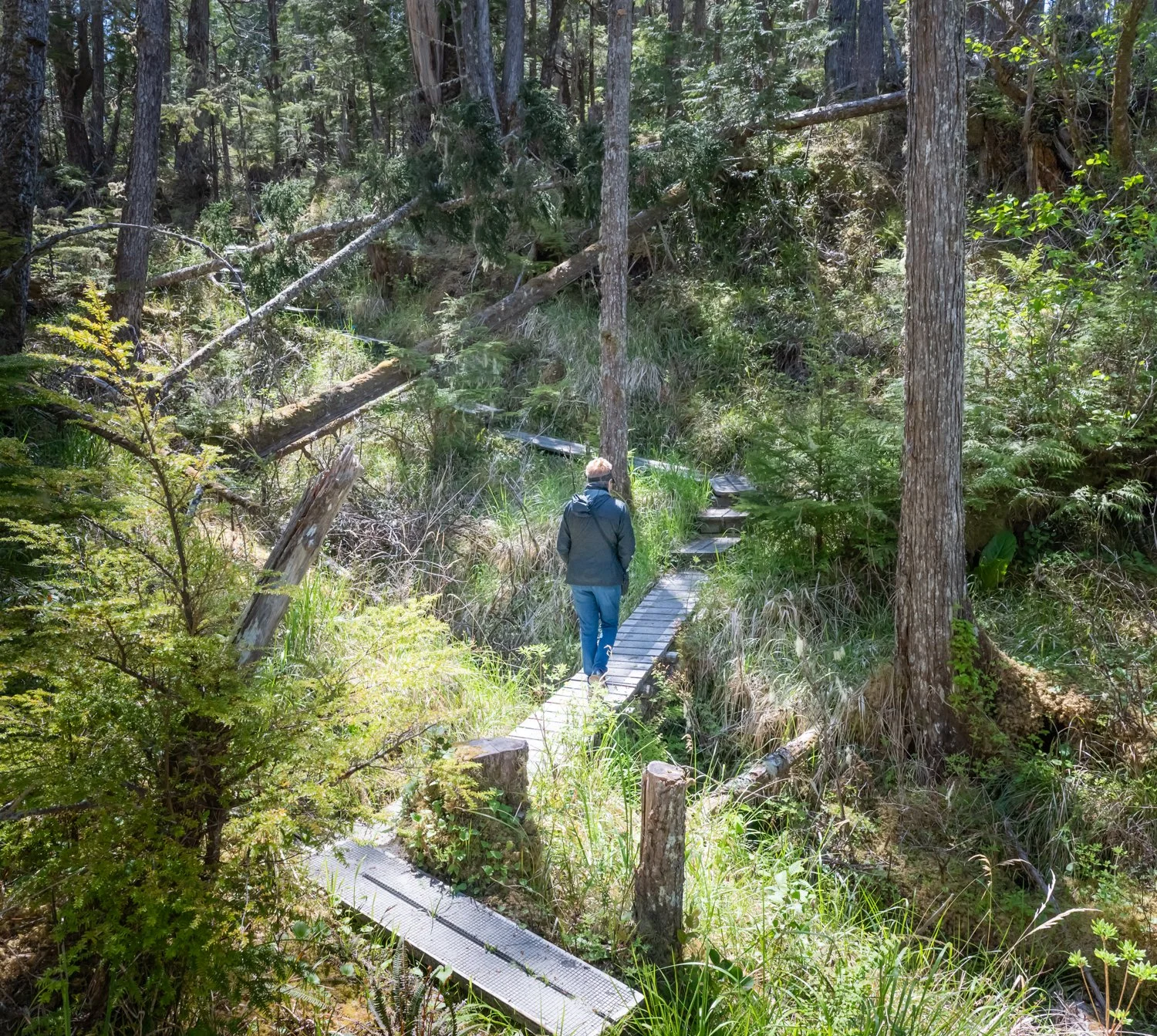
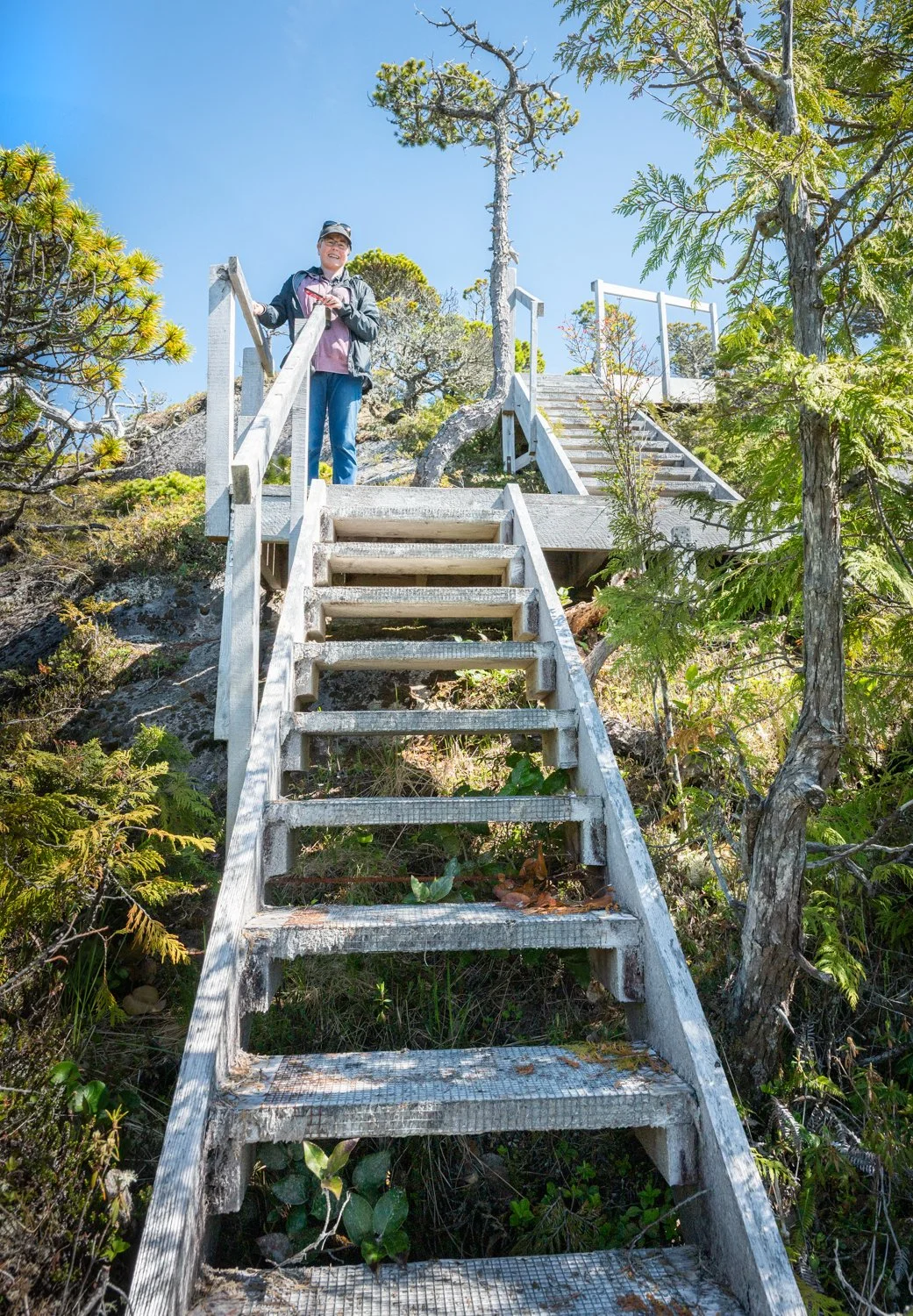
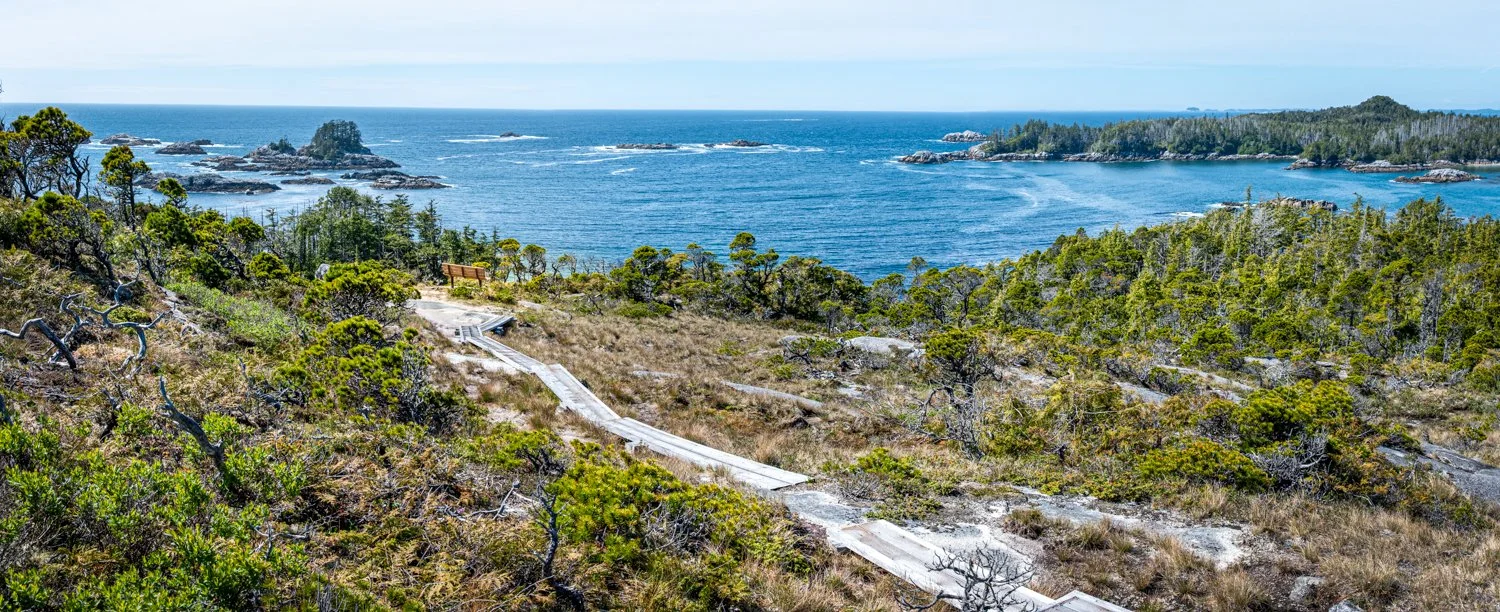
The trail begins near the south end of West Beach and quickly enters the forest. Much of the route follows boardwalk, and where the terrain steepens, sturdy stairways have been built to ease the climb. It is an exceptionally well-maintained trail by Central Coast standards.

most of the walk to the summoit in on a boardwalk

stairs when you need them

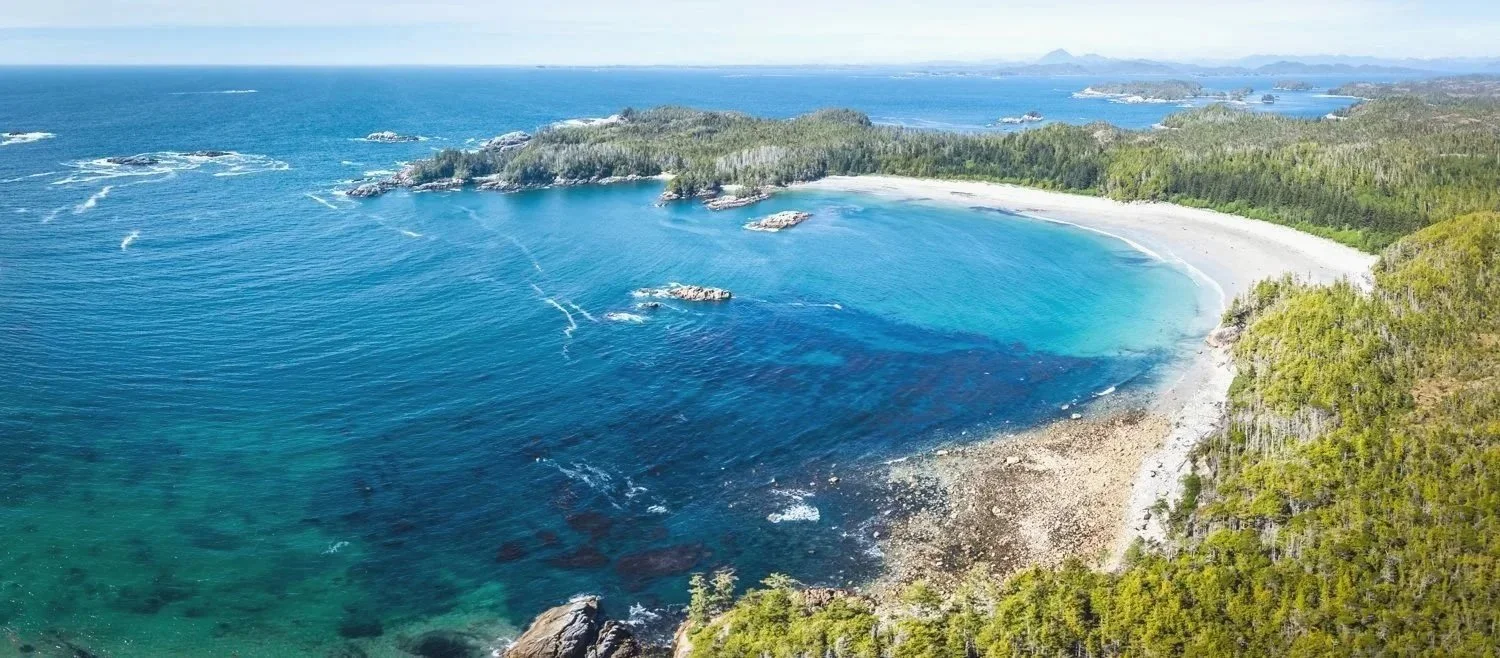
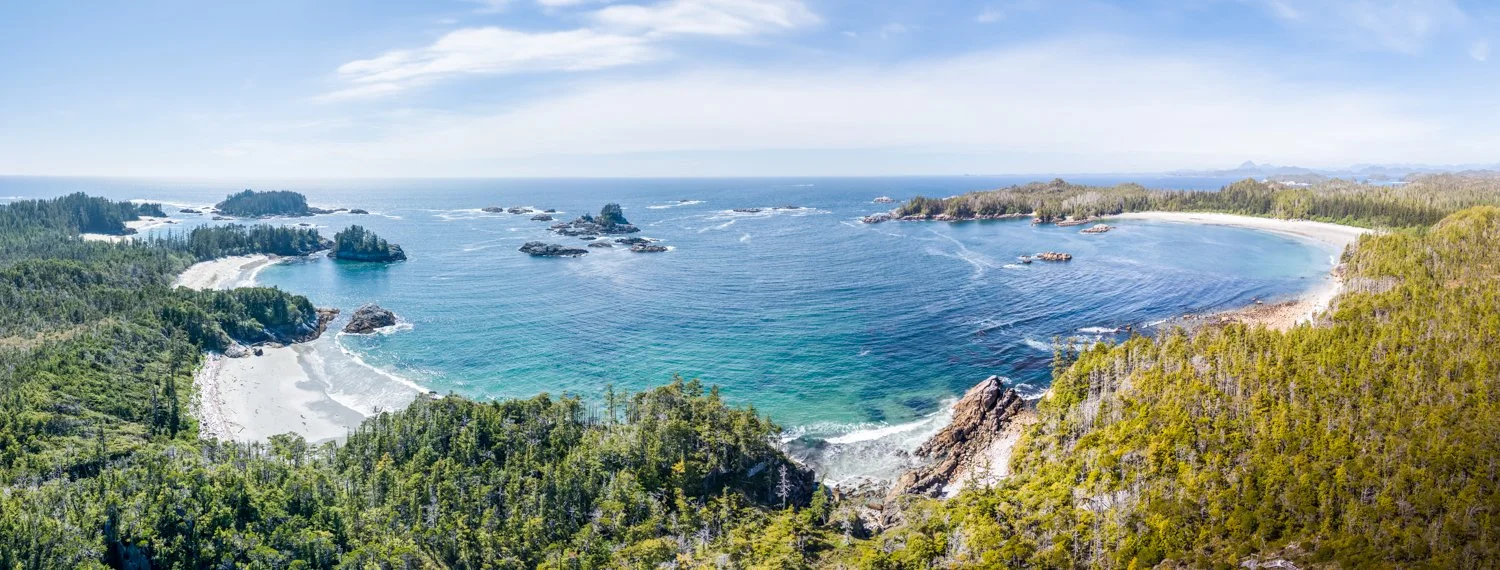
west beach opens her arms to the pacific ocean

west beach on the right is the main attraction but there is a total of seven beachs on pruth

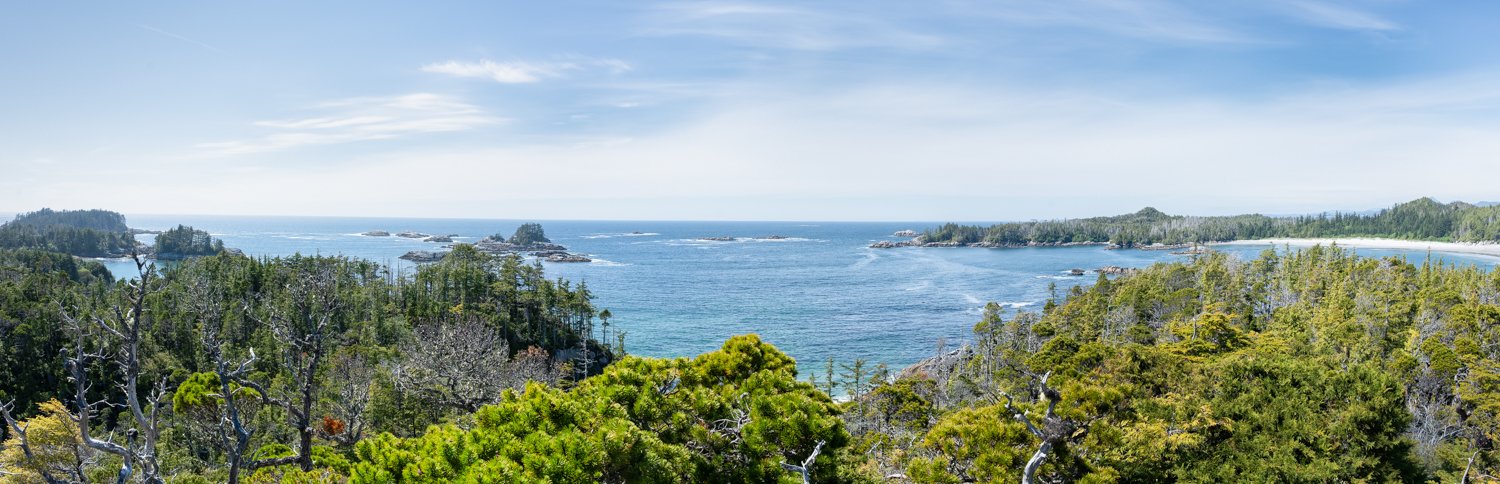
At what Karen generously describes as my "trudge speed," the ascent took about an hour. Frequent stops at the various viewpoints may have contributed to that pace. Each overlook revealed another perspective of Calvert Island, the outer coast, and the countless islands stretching toward the horizon.

beautiful views on the overlooks as you ascend the trail

just before the summit is a comfy benfy with a one-of-a-kind view

The reward at the top is a panoramic view. Forest, mountains, beaches and the open Pacific, all compete for attention. It is the kind of vista that reminds us why we cruise this coast.

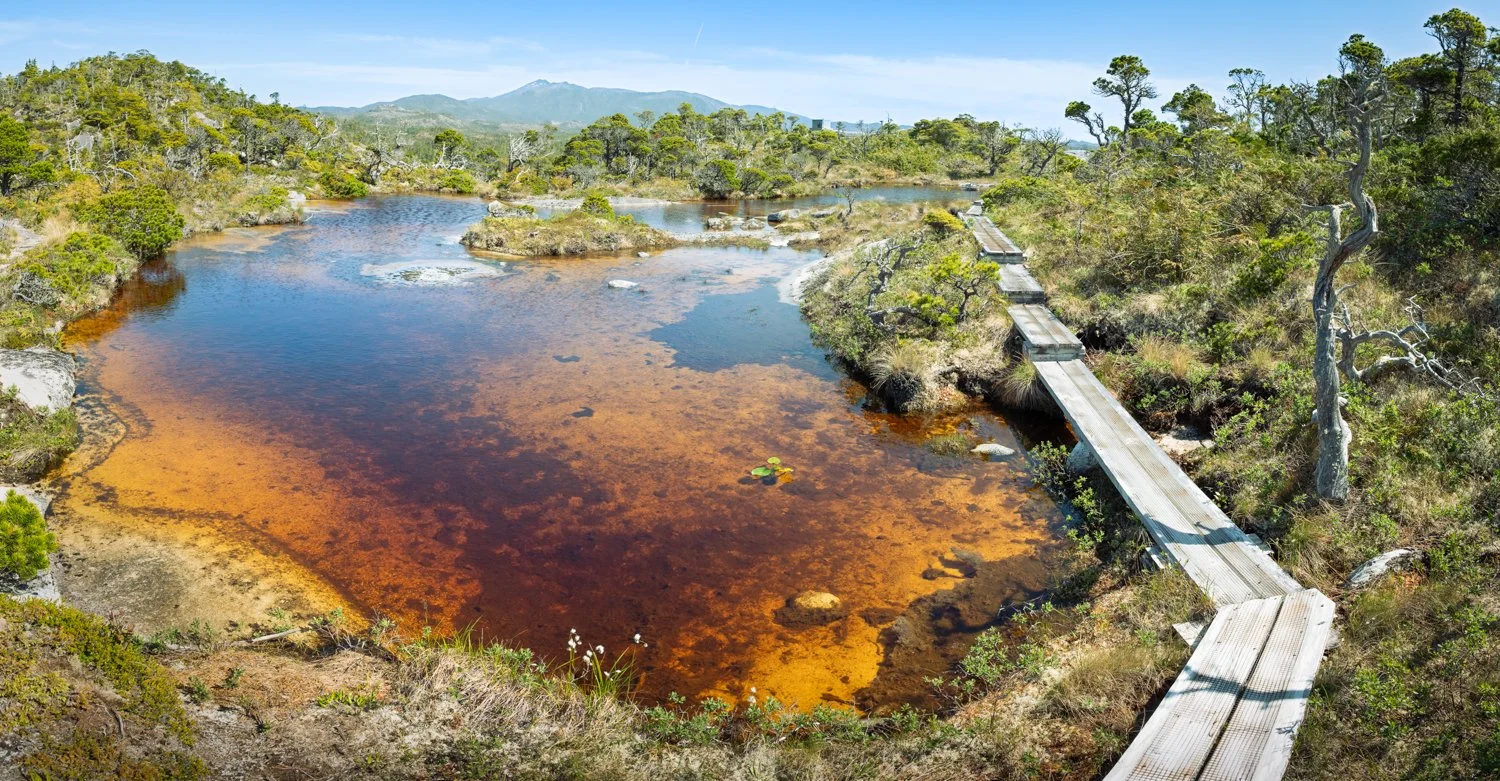
just before you reach the summit is a colorful pond

say goodbye to west beach at pruth bay

The descent required only about thirty minutes, though we found plenty of reasons to pause and enjoy the scenery one more time before returning to OceanFlyer and another peaceful evening at anchor in Pruth Bay.