
Cordero Islands to Blind Channel
/This morning, the Cordero Islands delivered one last surprise.
When Karen stepped into the saloon and looked forward, a great blue heron filled the port windshield. It was perched comfortably on OceanFlyer’s forward rail, watching the water for its next meal. Our unexpected visitor stayed long enough for a photograph before flying off to one of its more familiar hunting posts.
From our anchorage, we had been monitoring the boats at Blind Channel, waiting for the morning departures to begin. Once Karen saw several boats leave, she called the marina and learned that our slip was available. With the go-ahead, we brought the anchor aboard and pointed OceanFlyer toward our next destination—all of two miles away.
The short distance can be misleading. Blind Channel sits where several waterways and strong tidal currents come together, and its approach deserves respect. The current in Mayne Passage can change both speed and direction as you move behind the point northwest of the marina and then enter the docks. Slack water is always our preference, but arriving at slack is not always practical.
When approaching outside slack, it is wise to pause well clear of the docks and watch how the current is setting the boat. Your first approach may simply be reconnaissance, and there is no shame in backing away and trying again. Each pass provides a better understanding of what the water is doing.
We arrived about an hour and a half before the predicted maximum current of 5.4 knots, flowing from the northwest. After receiving our slip assignment, we stopped to put out fenders and make our final preparations. In the few minutes that took, the current carried us almost beyond the marina. We had to turn around and claw our way back upstream—a vivid reminder that Mayne Passage does not pause simply because a boat needs a moment to prepare.
Once we moved behind the point, the current diminished considerably. Inside the marina it changed again, now pushing OceanFlyer away from the dock toward the northwest. With a little extra attention at the helm and help from a friendly dock attendant, we were securely alongside on our first attempt. Uneventful in the end, but certainly not routine.
That combination—a challenging, current-swept approach followed by a warm and welcoming refuge—is part of what makes Blind Channel so memorable.
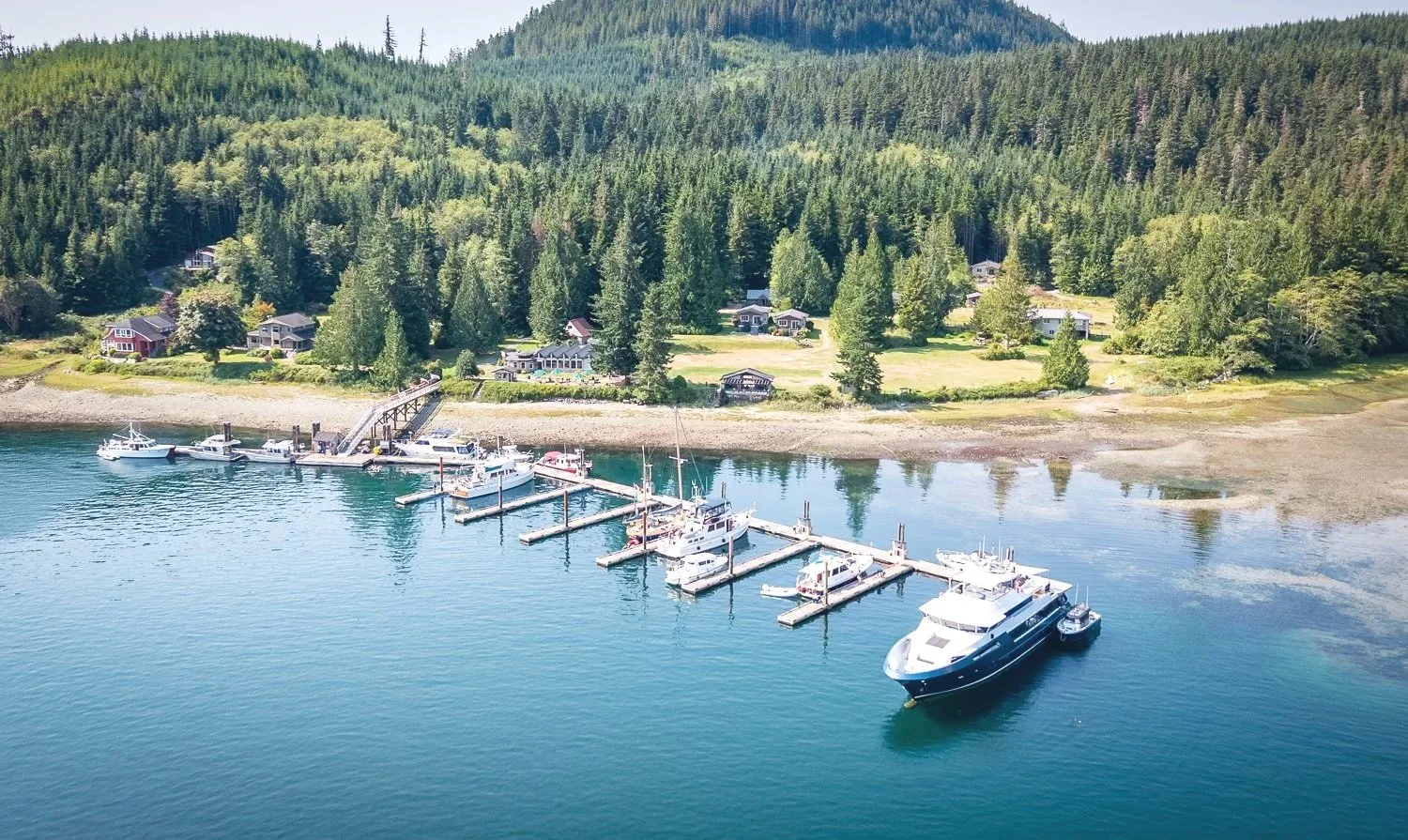
the docks at blind channel
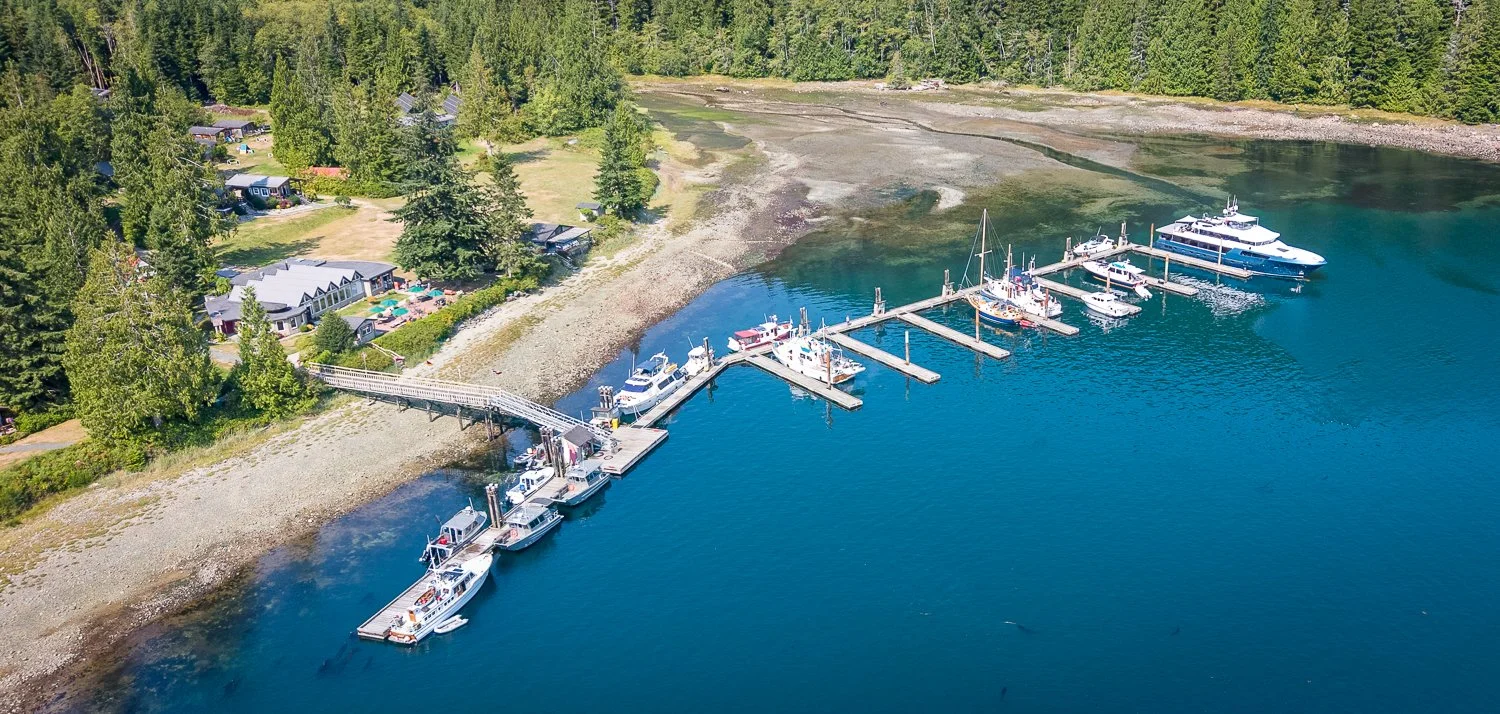
there is a lot more to the blind channel resort that you see from the docks
The resort is a multigenerational Richter family operation that has served Pacific Northwest cruisers for decades. For boats traveling through the Discovery Islands, it is both a natural waypoint and a destination in its own right. Northbound and southbound crews meet here, exchange information and stories, replenish supplies, and prepare for the next stage of their journeys.
For us, Blind Channel was also a rendezvous with our friends aboard Spellbound. They had been working their way north, with Blind Channel as their turnaround point, and we had been looking forward to meeting them and beginning the journey home together.
Blind Channel offers that rare cruising combination of practicality and pleasure. There is fresh water, laundry, groceries, shore access and dock space where boat projects are considerably easier to accomplish. While Karen tackled the laundry, I turned my attention to OceanFlyer—cleaning stainless steel and removing stains and marks from the hull. With abundant water and easy access to one side of the boat, jobs that are awkward at anchor became pleasantly straightforward.
Once the chores were finished, we headed ashore in search of a blackberry patch that another cruiser had assured Karen was “only small.” Armed with directions based more on landmarks than measurable distances, we set out with considerably more optimism than certainty.
Eventually, we found “the patch.” The thorns guarded the fruit enthusiastically, but we persevered and collected enough berries to cover dessert for both crews.
Dinner was a joint production. OceanFlyer supplied the prawns, Spellbound marinated and grilled them, and both galleys contributed side dishes. We gathered beneath the shoreside pavilion for a wonderful meal, finished with freshly picked blackberries over ice cream. This is another part of Blind Channel’s appeal: it provides the setting, and visiting crews supply the camaraderie.
The next morning brought more laundry and boat projects, followed by a return expedition to the blackberry patch. This time we were better equipped. Armed with a PikStik and my heavy rubber gloves, we reached the berries that had escaped us the day before and doubled our harvest. Our success created only one problem: we would now need more ice cream.
Blind Channel also offers something increasingly rare along this part of the coast—a proper restaurant in a truly remote setting. In the places we cruise, fine dining usually requires a stop in a larger community. Here, the Richter family has consistently paired excellent food and attentive service with a view of the channel and the surrounding forest. It transforms a necessary provisioning stop into an occasion.
That is the unique quality of Blind Channel. It is remote without feeling isolated and useful without feeling merely utilitarian. Cruisers can fill their water tanks, wash clothes, buy groceries and complete boat projects, then step ashore for forest walks, beachcombing, berry picking, dinner at a fine restaurant and an evening shared with friends.
Blind Channel meets both sides of the cruising life: the work required to keep a boat moving and the pleasures that make the journey worthwhile. The Richter family has brought those elements together in a place that feels less like a marina stop and more like a long-established crossroads for the cruising community.
That is why Blind Channel is not simply somewhere boats call on their way north or south. For generations of Pacific Northwest cruisers, it has become part of the journey itself.