Foggy Bay to Prince Rupert

Feisty Lady lifted anchor just ahead of us, but we weren’t far behind. Both of us had Prince Rupert in our sights and wanted an early start—just in case Dixon Entrance decided to misbehave.

PredictWind called it perfectly: calm seas, light winds, and an easy ride. The only interruptions were a couple of course changes to dodge gill netters strung out along the way.
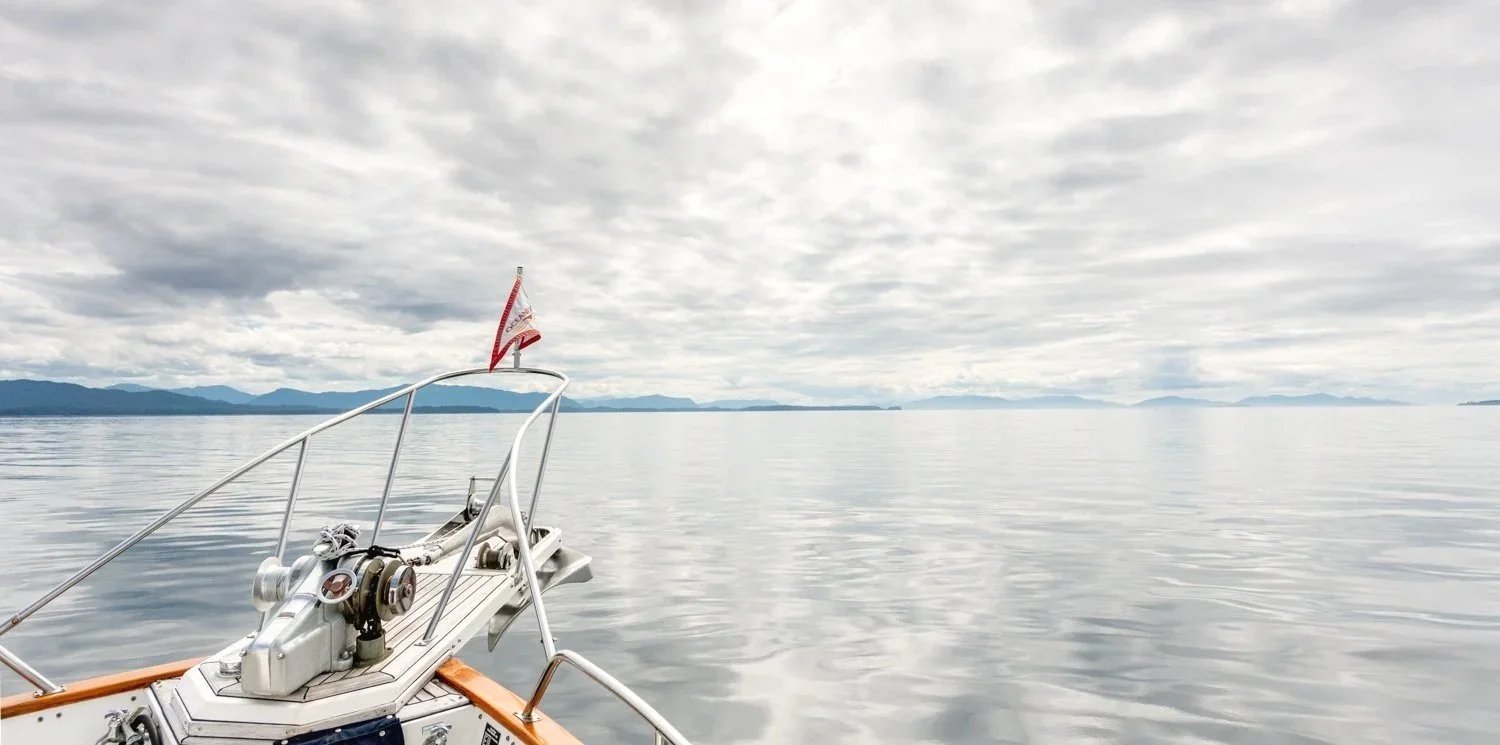
silver seas make for a smooth ride

green island lighthouse is an important weather station in this area

Venn Passage was exactly as we remembered—straightforward, but mildly exasperating thanks to the fish boats blasting past at warp speed. Managing their wakes while staying in the channel takes patience.

you know you’re arriving at prince ruppert when the cargo docks come into view

Cow Bay Marina is new since our last visit, and we scored slip 24 on B Dock. At 60 feet, it’s roomy with a good view of the harbor. Swell management is decent, though the parade of fish boats and harbor patrol launches still keeps things rocking. But this is Prince Rupert—no marina is ever truly calm—so we’ll call it a win. The 24/7 gated dock is another big plus.

We stretched our legs with a mile walk up to OV Burger, a new spot in a renovated building overlooking the harbor. Burgers, chicken sandwiches, pub food, and cold beer—served mostly to local families. Solid stop; we’d recommend it.

On the way back, we made a reconnaissance run through Safeway for staples and a look at fresh provisions before Saturday’s departure.

One striking difference this time around: the personalities of Prince Rupert’s two marinas. Cow Bay is laid-back—staff help if you ask, but the office may close early if things are quiet. The Prince Rupert Rowing and Yacht Club is the opposite: structured, precise, almost like dealing with an airport ground controller. Boaters request “clearance” to leave or enter the harbor, and transient arrivals are carefully briefed—engine type, thrusters, docking plan, the works. Dockhands are dispatched to ensure you fit exactly. It all makes sense in their tight fairways, and while the contrast is stark, it’s oddly reassuring.

Punchbowl Cove to Foggy Bay

We slipped the lines from the USFS mooring ball at Punchbowl Cove, and secured our rafted sailboat neighbor lines to the ball so they could linger over breakfast. With fair weather and light winds, the run to Foggy Bay was an easy five hours. The sea was mostly flat, just gentle ripples—though close to shore the ocean swell stacked into a few playful two-foot troughs.

Our arrival coincided with a low tide entry into Foggy Bay. The approach felt tight but was well-charted, and soon the hook was down in 35 feet. OceanFlyer had the place to herself—at least until the familiar Nordhavn Feisty Lady slipped in as the tide rose.

foggy bay anchorage

the “big Water” is almost invisable when anchored behind the islets in foggy bay

Exploring Very Inlet

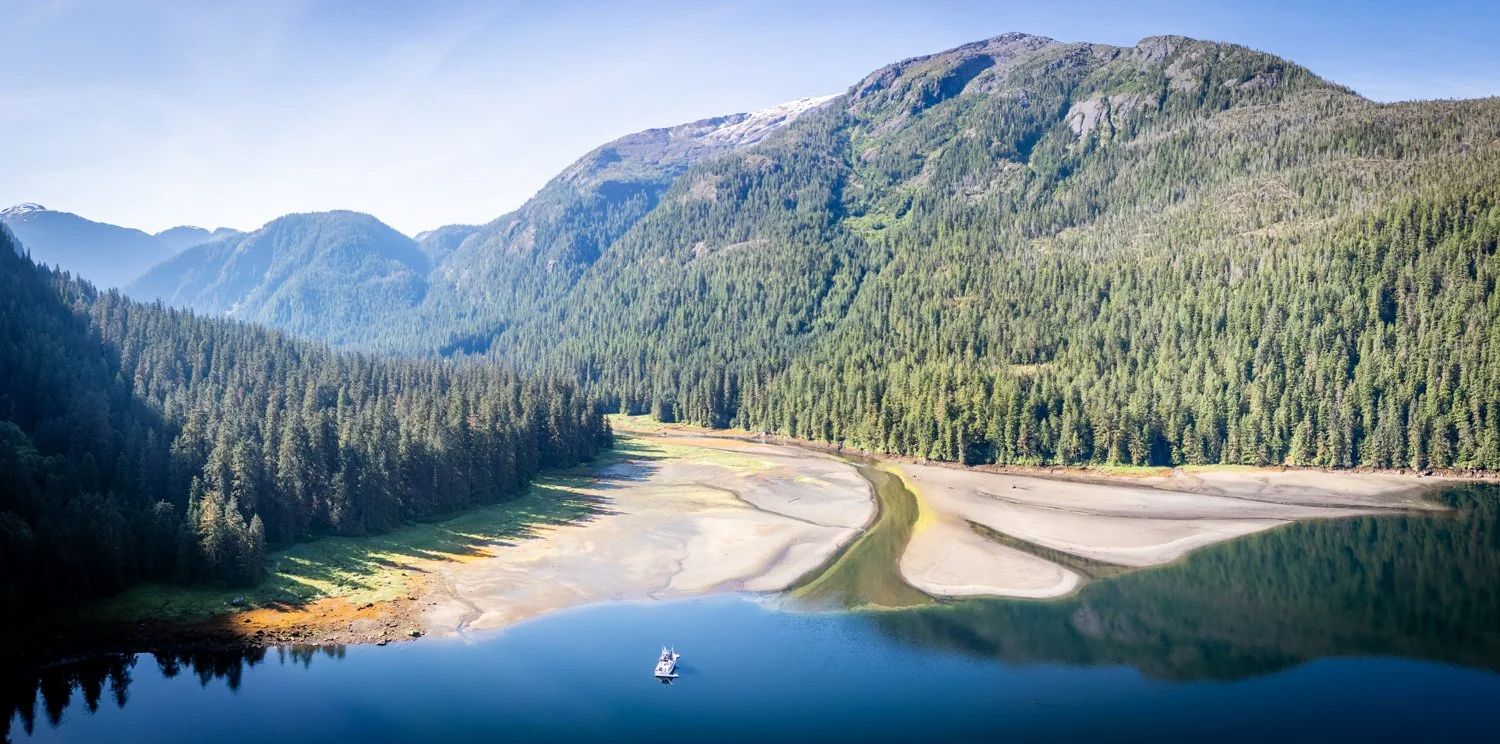
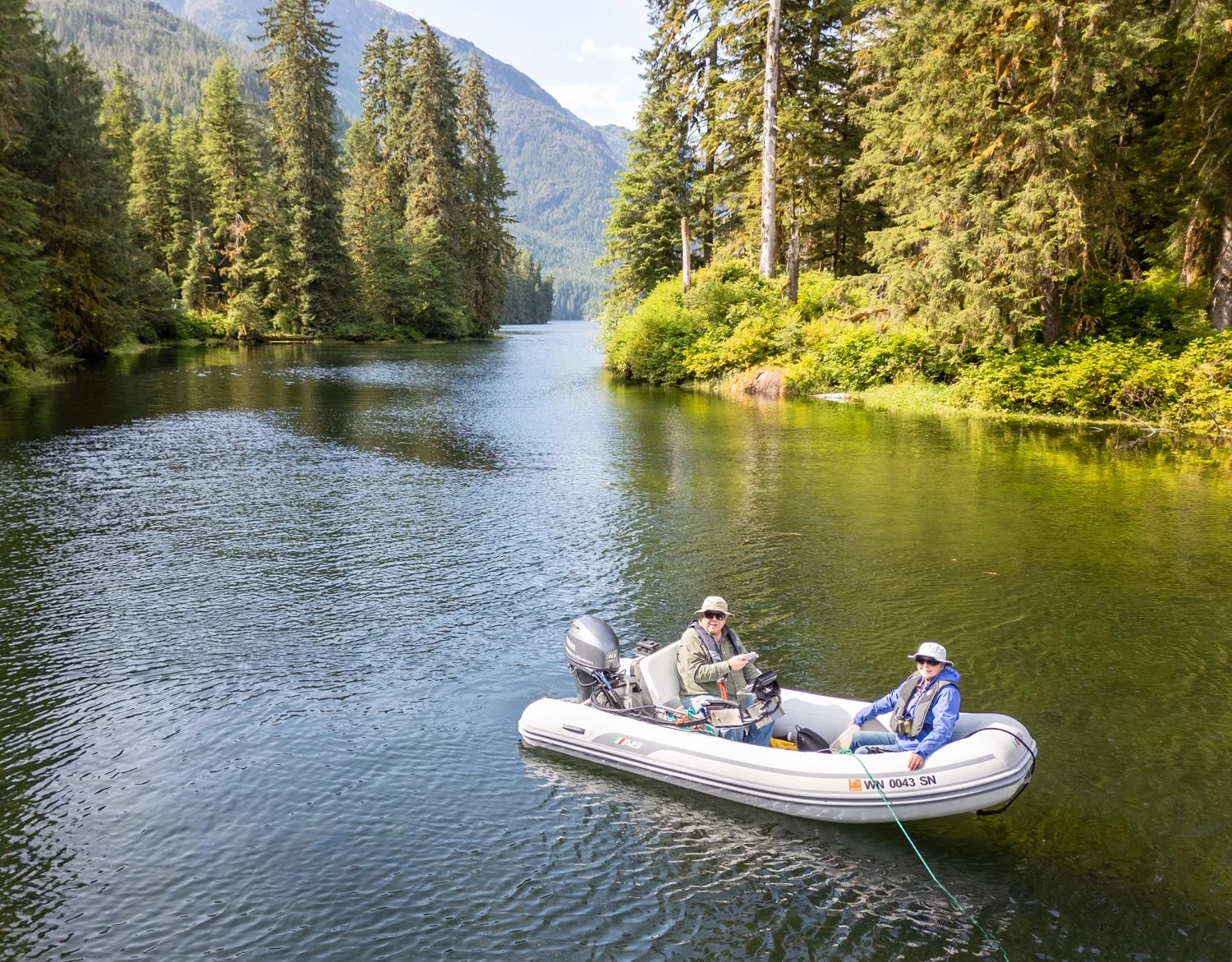
With high water on the way, we launched the dinghy into Very Inlet, a three-mile-long fjord filled with rocky islets and pinched narrows. The tide poured through in swirling rapids while the 30hp Yamaha kept us on track; the passage was very doable. Behind the rapids we found a hidden basin, rimmed with drying islets of green grass—something we only appreciated fully after a drone flight overhead.

unusual drying pattern at the head of very inlet

the shoals extend far from the “shore”

great dinghy exploring in very inlet

karen checks out the wildlife in very inlet

On the way out, we logged some useful numbers: 13.2 feet under the dinghy at the rapids on a 14-foot tide at Kah Shakes Cove and we made two knots of headway at half throttle. In the narrows, there was 38 feet under us and we saw 3.3 knots at the same throttle. Good data for the next trip.

An Evening Surprise

Back at anchor, we idled by Feisty Lady to say hello. Though she shares our Bellingham dock, we’d never met her crew. After introductions, they delivered unexpected news: an 8.8 magnitude quake in far eastern Russia—the sixth strongest ever recorded—had triggered a tsunami advisory for Southeast Alaska and Northern BC.

fiesty lady securly anchored in foggy bay

The mood shifted quickly. We discussed contingency plans, including running to deep water if the advisory escalated. Feisty Lady’s crew was in touch with both the Coast Guard and the Tsunami Warning Center. Meanwhile, Karen tracked multiple sites, each giving slightly different reports. Finally, word came: the advisory was lifted for SE Alaska, though still in place for Northern BC. We could stand down.

With that, tension eased. Two trawlers, a quiet cove, and the comfort of knowing the hook was holding. The evening finished just as we’d hoped—peaceful, with only the faint slap of swell against the hull.

Walker Cove to Punchbowl Cove

We slipped away from S/V Kaulana with quick goodbyes—petting Colby and waving to Keith and Carl. No long parting though; they’re also bound for Punchbowl Cove in Rudyerd Bay, likely to raft alongside us again if the mooring ball is open.

Punchbowl is the star of Misty Fjords tourism. Unlike Walker Cove, with its glacial moraine blocking large vessels, Punchbowl is accessible to just about everything—floatplanes, fast cats, and even cruise ships. Being the closest fjord to Ketchikan makes it an easy target for sightseeing traffic.

For scale, Rudyerd Bay stretches more than 16 nautical miles from the North Arm to the South Arm, but neither offers easy anchoring. That leaves Punchbowl carrying the load, with just one USFS mooring ball and limited anchoring room.

Luck was on our side. The cove was empty when we arrived, and fresh from practice in Walker, we made quick work of securing the ball. Arriving at low tide was a bonus—shoaling was clearly visible. As expected, Kaulana pulled in shortly after, and we repeated last night’s raft-up.

OceanFlyer and Kaulana on the ball in Punchbowl

The quiet didn’t last long. Sightseeing floatplanes buzzed overhead, while tour cats blasted past at 25+ knots, their wakes setting us rolling. By late morning, the fjord had built up its own weather. What started as calm in Behm Canal turned into 15-knot gusts funneling fetch down the bowl. We’d hoped to dinghy out, but the chop made exploring unappealing.

you can see how punchbowl got its name

We settled instead into a lazy afternoon of bear-watching (none showed), while traffic trickled in and out. A lone sailboat anchored well off to the side, and later a Nordhavn nosed in, discovered the shoals, toured the bay, and left without setting the hook.

It feels like we’re in a lull—fewer cruisers around than expected. No doubt that will change in a couple of days when the southbound migration converges again in Prince Rupert.

Walker Cove, Lay Day

Another glorious morning in Misty Fjords, perfect for a day of dinghy exploring. After breakfast, we set off for the head of Walker Cove before the winds picked up. The sheer granite walls and towering mountains made for jaw-dropping scenery, with waterfalls spilling down the cliffs as we worked our way into the two lobes at the head.

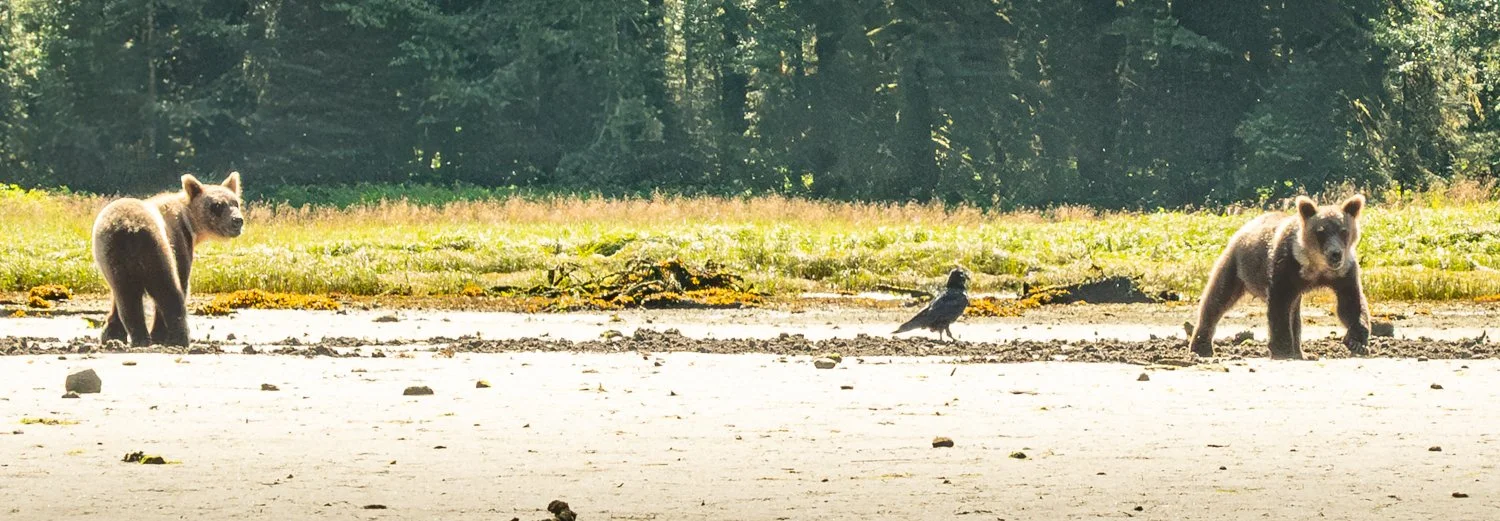
Karen’s sharp eyes spotted the day’s highlight—two young grizzlies working the shoreline, flipping rocks for snacks. They barely noticed us, so we drifted quietly and watched the show. Hard to imagine a wilder backdrop than this sweeping valley of stone and snowmelt.

Breakfast on the beach

the two cubs certainly have a beautiful home

We scouted both lobes with future anchorages in mind. One spot looked promising, though it would be wide open to fetch in the wrong conditions. Satisfied with the recon, we headed back to OceanFlyer to wait on the tide for our afternoon mission: running the river into Champagne Bight.

oceanflyer on the ball at walker cove

the river awaits our exploration

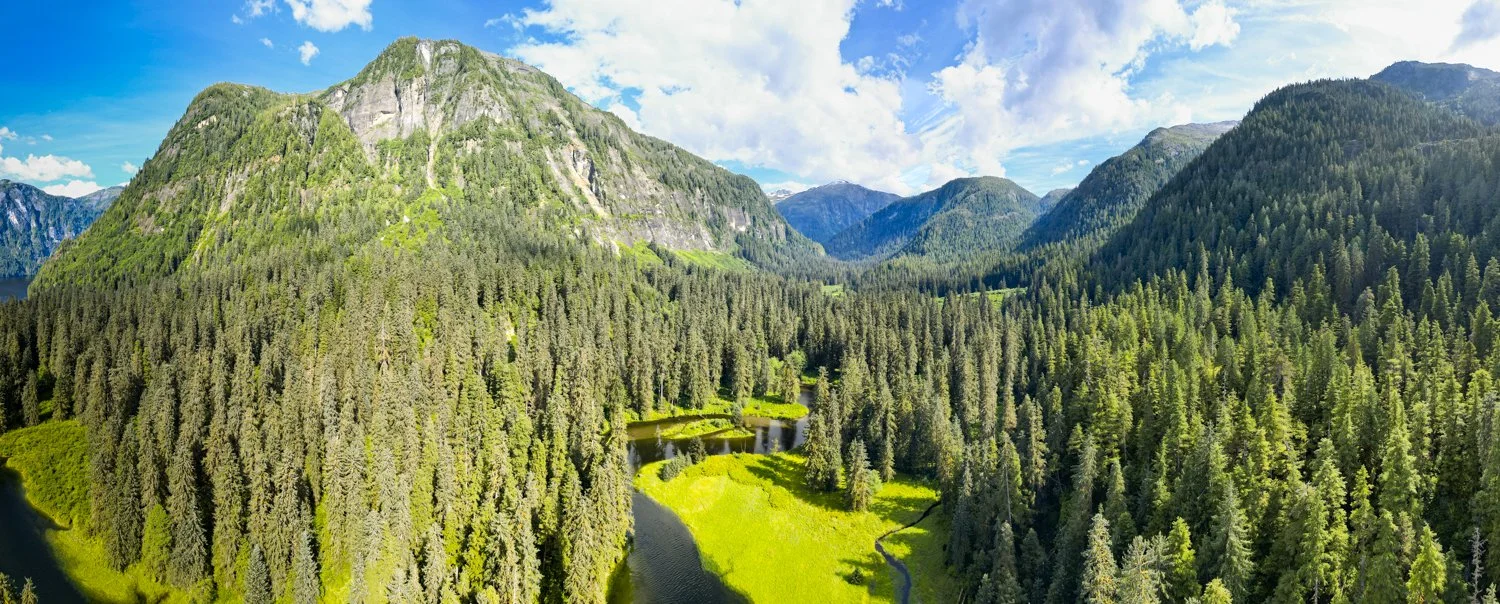
At 15.4 feet on Rudyerd Bay’s tide station, we squeezed into the river with just three feet under the dinghy. The river lived up to its name—subtle fizzing in the current really did look like champagne bubbles. When it shoaled, we dropped the dinghy anchor, launched the drone, and captured sweeping shots of this hidden valley.

the river that feeds into walker cove

sitting the flow of the river taking in all the beauty

the river weaves it way back into the valley

you can see the shoals that clealry from on high

on of our favorite things it to drop the dinghy’s anchor and just sit and enjoy

a view of one of the magnificant valleys you never see from sea level

While flying the drone and look back toward OceanFlyer I noticed a sailboat near our boat. By the time we returned, they had wandered down to the head, but not long after they reappeared and asked to raft up on our mooring. With one of their crew having dived this ball’s anchor in years past and confirming it solid, we welcomed them alongside.

The evening was peaceful: a grizzly patrolling the flats at low tide, the mountains glowing, and two boats gently swinging together in one of the most stunning places on earth. Tomorrow, we point the bow toward Punchbowl Cove.

Yes Bay to Walker Cove

Still glowing from last night’s feast at Yes Bay Lodge, we hauled anchor and set course for Misty Fjords National Monument. Skipping this stop earlier in the trip—when it was buried in rain and low clouds—now feels like one of our best decisions. Today, the fjords greeted us with sunshine.

saying goodbye to yes bay lodge

The run across the back of Behm Canal was smooth, but as soon as we turned south, up came the southeasterly wind and chop. We debated stopping at Fitzgibbon Cove but pressed on for Walker Cove—better protection and the promise of jaw-dropping scenery. Six hours later, our patience paid off.

The entrance into Walker Cove is pure theater: towering granite walls, snow-capped peaks, and reflections that look painted on the water. Best of all, the lone Forest Service buoy in Champagne Bight sat empty, waiting just for us.

Mooring practice isn’t something we get much in the San Juans or Gulf Islands—our boat is usually too big for the gear down there—but this buoy was industrial strength. We talked through the plan, and it went like clockwork: I held the helm, Karen took the swim step, slipped the line through the eye, and we walked it forward to the bow. With a second line set and a touch of slack, OceanFlyer was secure.

Oceanflyer sitting on the ball in stunning walker cove

Tomorrow’s plan is to explore the head of the cove and see how far the dinghy can nose up the river at high tide. For tonight, we’ve got Walker Cove entirely to ourselves—a private stage of granite, snow, and silence.

a peak up the river for tomorrow’s exploration