
Naha Bay to Yes Bay

We woke to a peaceful morning tied to the park dock at Naha Bay, and I whipped up my “Better-Than-Box Pancakes”—a reliable crowd-pleaser aboard OceanFlyer.

No rush today. The plan was simple: a visit to the ghost-town-turned-summer-retreat of Loring, followed by a short 2.5-hour hop up to Yes Bay.

Just after breakfast, three small runabouts pulled up and spilled out a lively crew of about 18 women (plus a few brave men). They were the “Walkie Talkies” from Ketchikan—a local hiking group whose name says it all. I was promptly recruited for a group photo before they, along with three energetic dogs, hit the trail. Roosevelt Lagoon is a favorite local getaway, and this crew came ready to make the most of it.

After they disappeared into the forest, we cast off for Loring. These days, it’s a sleepy cluster of summer homes, but back in the 1800s, it was a bustling cannery town and rival to Ketchikan. Now? The 2020 census says zero full-time residents.
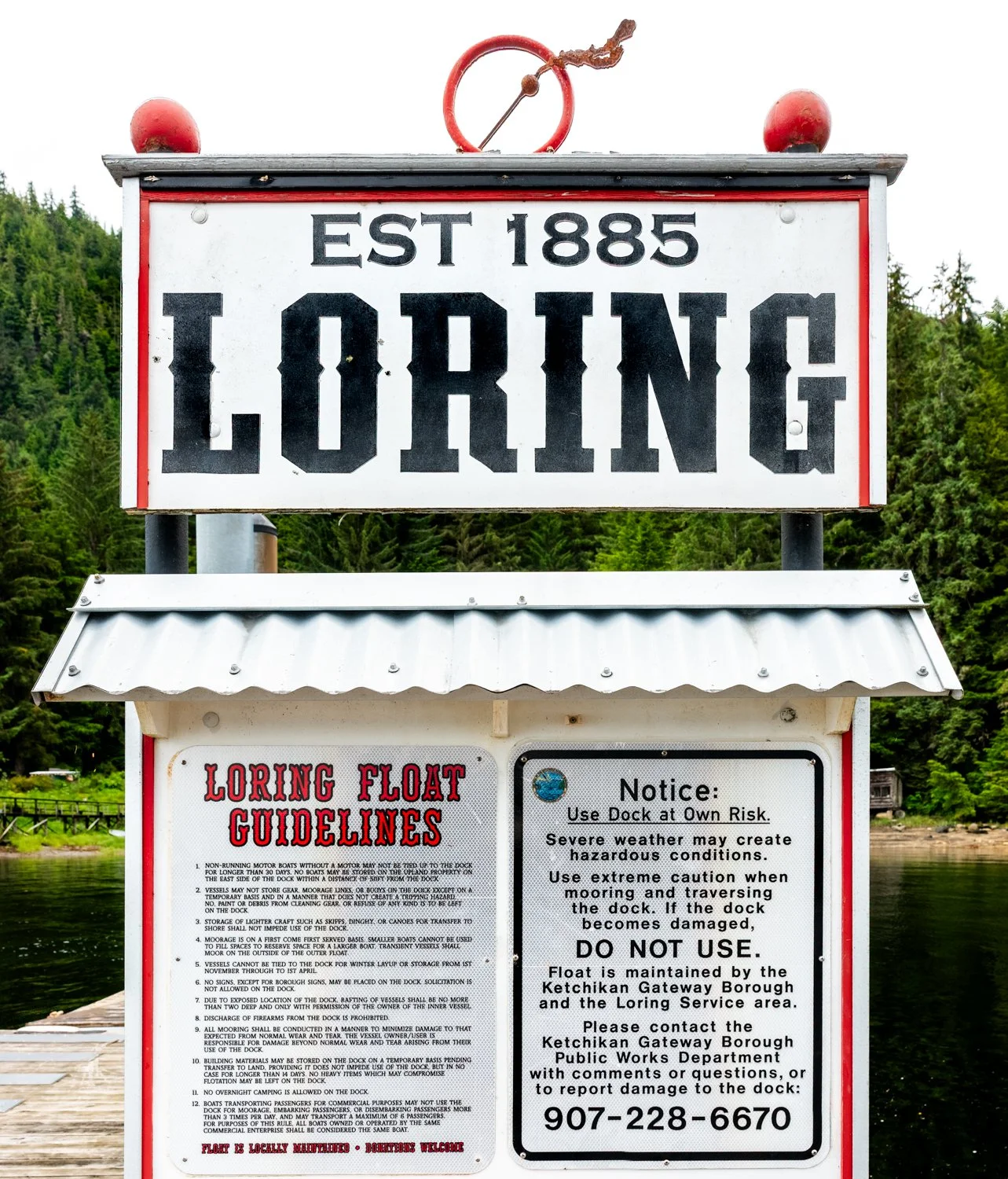
loring has a small dock with lots of guidelines

We tied up to the outside of the “T” dock—solid depth (40 feet at zero tide), and calm enough not to worry about fetch. The long ramp to shore is best left to dinghies or nimble hikers—it's one of those bouncy, sectioned docks where timing your steps matters. Pro tip: one person per section at a time avoids the trampoline effect.

oceanflyer on the dock at loring

loring and its dock in the distance with a private home and dock on the point

We wandered Loring’s overgrown boardwalks, passing a handful of weathered homes—some charming, some for sale, others in need of love. We tried to find the trail to the cemetery but came up short. Still, it was a lovely, quiet stroll. Not another person in sight.

the dock makes lanfall in the center of loring
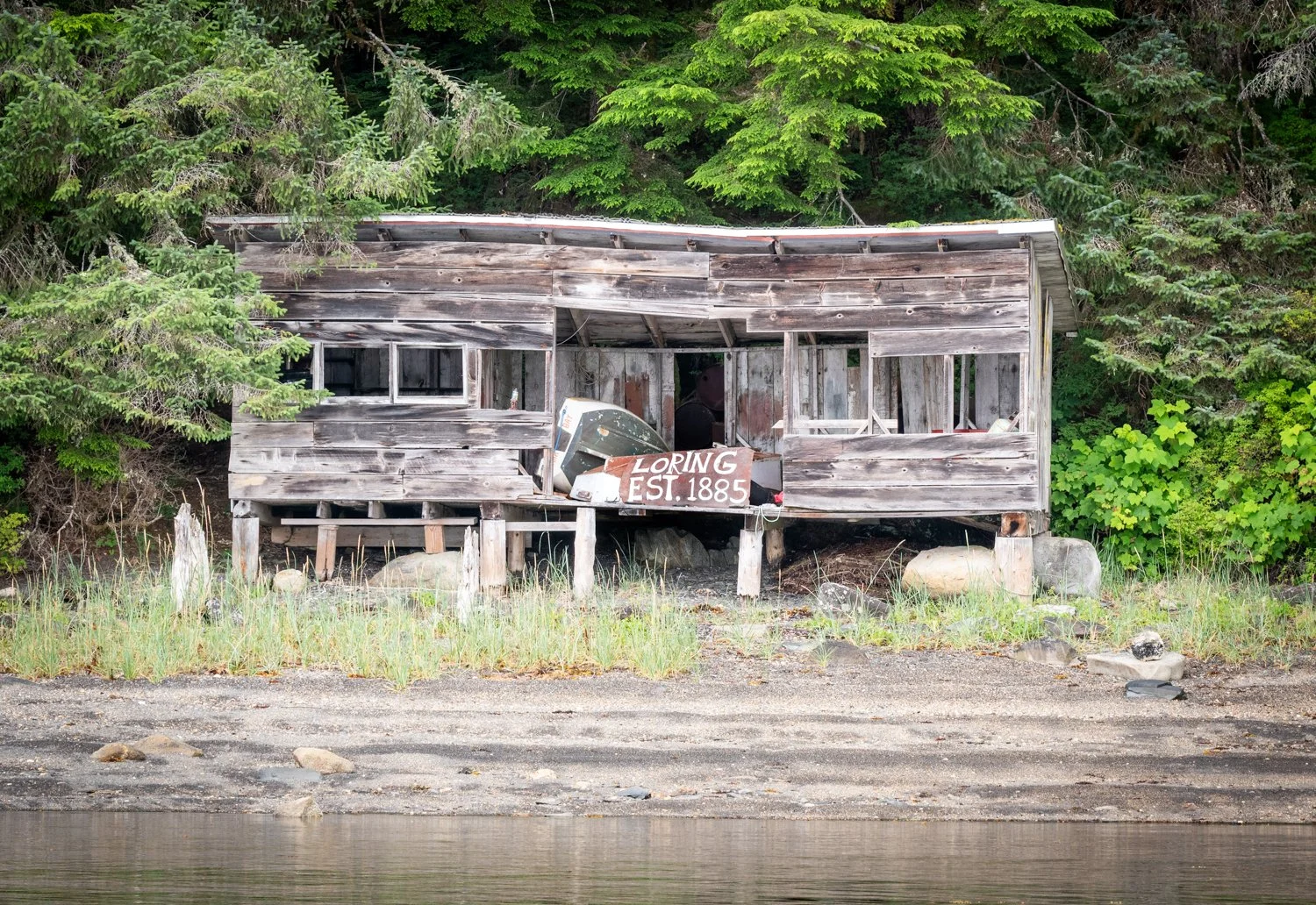
a relic from more properous times in loring

the waterfront homes of loring

From there, we continued north up Behm Canal. Showers rolled through, sometimes dropping visibility, but the ride was easy and scenic. We passed several longliners and a few pleasure boats along the way. Just before entering Yes Bay, the current gave us a nice push.

As you enter the bay, Yes Bay Lodge is immediately visible—a big presence near the site of the old cannery. We passed it and turned into the southwest basin. As promised by fellow cruisers, there was a floating dock/barge anchored at the head of the cove, sporting a mix of “Alaskan yard art.” We dropped anchor in about 60 feet with room to spare.

looking back into Yes Bay from our anchorage in sawmioll cove

the floating “dock” at the head of swmill cove

Once settled, OceanFlyer swung to face out into the bay, giving us a beautiful, cozy view down the inlet. The basin was glassy calm, the anchorage quiet, and we capped off the evening with a golden sunset. Another picture-perfect stop in Southeast Alaska.

looking out from the head of sawmill cove

Vixen Inlet to Naha Bay

All things considered, Vixen Inlet treated us better than expected. Despite being open to wind and fetch, the night was only mildly rolly and occasionally noisy when OceanFlyer’s stern swung into the chop. No bears showed up, but Karen did spot a deer browsing at the head of the inlet before we lifted anchor.

The mud flats at Vixen Inlet

THe Vixen Inlet extend as far as the eye can see

looking our of vixen inlet from the mud flats

Our destination today is Naha Bay on West Behm Canal. The ride was smooth and pleasant—mostly sunny through Clarence Strait, with clouds building later in the day. We cruised past Meyers Chuck and the tiny town of Loring before turning toward the Naha River wilderness dock.

To our delight, it was empty.

We have the docks to ourselves

The dock—recently renovated—is in excellent shape. We tied up along the longest section, with only about eight feet of bow hanging out. Not bad for a 50-footer.

Just the right size for oceanflyer

you can see the small village of loring in the distance

With cool temps and no crowds, we decided to stretch our legs on the Naha River Trail. This turned out to be one of the nicest hikes we’ve done all season. We took the righthand fork toward the rapids and picnic area first. The rapids were absolutely raging—two distinct 3-foot drops and a wall of whitewater, even on a +10’ tide. Entering Roosevelt Lagoon by dinghy was definitely off the table without another 7 feet of water and some luck.

nice trails at Naha Bay

the picnic area at naha bay and roosevelt lagoon

good signage but in need of some love soon

Continuing along the trail, we found a clever little kayak portage system, then doubled back and took the main gravel path toward the lagoon. The walk was full of character: old rowboats pulled onto the rocky shoreline, a half-sunken floating dock, charming wooden bridges, and beautifully built stairs tucked into the mossy forest. It felt remote and well-loved all at once.

a convenient portage trail around the rapids

the rapids at naha bay deserve some serious respect

the rapids at about half tide

karen stops to grab a photo of roosevely lagoon

beaches and boats grace the walk along roosvelt lagoon

no swans today

On the way back, we chatted with two fishermen from a nearby lodge trying their luck in the lagoon. Later, a small boat came ashore briefly, then departed, leaving us alone on the float for the night.

Naha Bay turned out to be a hidden gem—quiet, scenic, and full of charm. We'll definitely be back.

Wrangell to Vixen Inlet

Today we continued our slow slide south, making our way toward Behm Canal and the Misty Fjords.

After two unusually sunny days in Wrangell, we were almost relieved to see partly cloudy skies—cooler air and no greenhouse effect in the saloon. Light winds and flat seas made for an easy ride most of the way.

Zimovia Strait, which looks a bit intimidating on the charts, turned out to be classic Southeast Alaska: wide, well-marked, and scenic. We passed a few fishboats and anchored sailboats, but otherwise had the route to ourselves.

Now, it’s an ongoing joke aboard OceanFlyer that the moment Karen takes the helm, chaos follows. Today was textbook. No sooner had she settled in than the winds shifted, beam seas rolled in, and we were taking green water over the bow. Cue the drama.

Vixen Inlet—our planned overnight—was chosen more for convenience than comfort. It’s exposed to the northwest, and wouldn’t you know it, the wind came from the NW with a solid 15 knots. We dropped anchor in 55 feet, set plenty of scope, and deployed the bridle. OceanFlyer rides well in a chop, but calm it wasn’t.

The forecast calls for the wind to ease below 10 knots by morning. In the meantime, we’re expecting 15–20 knots most of the night. Safe to say we’ll have Vixen Inlet all to ourselves.

On the upside? A gorgeous sunset and the hope of a quieter dawn.

vixen inlet puts on a show at sunset

Wrangell Lay Day

This morning marked a milestone: for the first time this trip, I didn’t have to microwave the butter to make it spreadable. Sunshine, blue skies, and temps heading for the high 70s—welcome to summer, Southeast Alaska-style.

You can’t plan for everything

Of course, with Wrangell still under a boil-water advisory, the restaurants remain closed. So, we fired up the dinghy and zipped over to Reliance Harbor for easier access to town. Today’s mission: provisioning. With the dinghy tied just steps from the grocery store, it was a one-trip haul—no long trek back to Heritage Harbor required.

After checking in with the harbormaster, we noticed a cruise ship tour group gathered at Chief Shakes House. We drifted over, played tourist for a while, and listened to a fantastic presentation by a young guide who shared rich insights into Tlingit culture and totem carving.

the cruiseship roald AMUNDSEN JUST JUSR OFF WRANGELL

One fun takeaway: traditional totem colors were made with seal oil and natural ingredients—charcoal for black, crushed shells for white, berries for blues and purples, blood and salmon eggs for reds, oxidized copper for teal, and even lichen, moss, or urine for yellow. It was fascinating and made us appreciate the artistry even more.

We wandered through town and crossed paths with our friends from Time to Play, swapping cruising stories before the heat sent us retreating back to OceanFlyer.

It was over 80°F in the saloon when we returned—our lovely big windows turning the space into a floating greenhouse. We fired up the reverse-cycle AC, which thankfully brought the temps down fast.

Heritage Harbor was quiet, with plenty of space on the transient docks. A calm evening ahead after a surprisingly warm and enlightening day in Wrangell.

Petersburg to Wrangell

Following our cardinal Petersburg rule—arrive, depart, and fuel at slack—we pulled up to the fuel dock 45 minutes before slack, topped off the diesel, and pointed OceanFlyer southbound through Wrangell Narrows under clear blue skies and zero wind. A rare treat this season!

the mountains east of petersberg you never see on a cloudy day

The only real excitement came in the form of Ocean Titan, a tug hauling a massive tow—naturally, right in one of the Narrows’ tightest doglegs. We ducked into a small cove off the channel and let them pass. A grateful “thank you” came back over the radio from the tug captain.

Happy to step aside and let this big boy pass

We were looking forward to Wrangell—more restaurants than Petersburg, and a couple spots we missed back in May. On the way, Karen chatted over VHF with the crew of Time to Play, who were halibut jigging nearby. We also overheard a cringe-worthy moment: a gillnetter warning a pleasure craft about his gear—warnings that went unheeded, and the net paid the price. Ouch.

passing liesnoi island wragell is spread out along the shore of wrangell island

Heritage Harbor had plenty of room on the transient dock. As we were tying up, Joe—a local Grand Banks owner—strolled by and casually mentioned a boil water advisory issued earlier that morning. First we’d heard of it. No signage on the docks, and no mention from the harbormaster. Big thanks to Joe for the heads-up.

At 5 p.m., we launched the dinghy, craving pizza from The Hungry Beaver. What we hadn’t realized was that the water advisory had shuttered most of town’s restaurants. We arrived to a locked door, then started calling around—nobody answering, or serving only drinks. Strikeout.

Dinner turned into frozen pizza and beer back aboard OceanFlyer. Not exactly what we had in mind.

Oh, and did we mention it was 76°F when we docked? After months of fleece and flannel, the sun felt downright shocking. For us, today marked the official start of summer.