

Jackson Narrows to Khutze Inlet
/Today's run was a straightforward transit north to one of our favorite anchorages on the British Columbia coast—Khutze Inlet.
Traffic continues to be remarkably light. During the entire trip we encountered only two southbound ocean tugs, each pushing impressive barges. One carried a mixed assortment of cargo containers, vehicles, and a couple of boats. The other appeared to be loaded entirely with refuse making its way south for processing.
As we approached Khutze, we kept an eye on MarineTraffic, curious whether anyone had beaten us to the anchorage. Khutze has become a popular stop in recent years, and our preferred spot near the waterfall is prized. Luck was on our side. The inlet was completely empty when we arrived, save for a sow grizzly and two energetic cubs engaged in what could only be described as an afternoon wrestling match along the shoreline.
With the anchorage all to ourselves, we made directly for our favorite position in front of the falls. The anchor was set in 100 feet of water, and we paid out 375 feet of rode before settling comfortably in approximately 150 feet. Despite the depth, the combination of enough chain and the steady outflow from the waterfall keeps OceanFlyer remarkably stationary. We may rotate with shifts in the breeze, but our position over the ground changes very little.
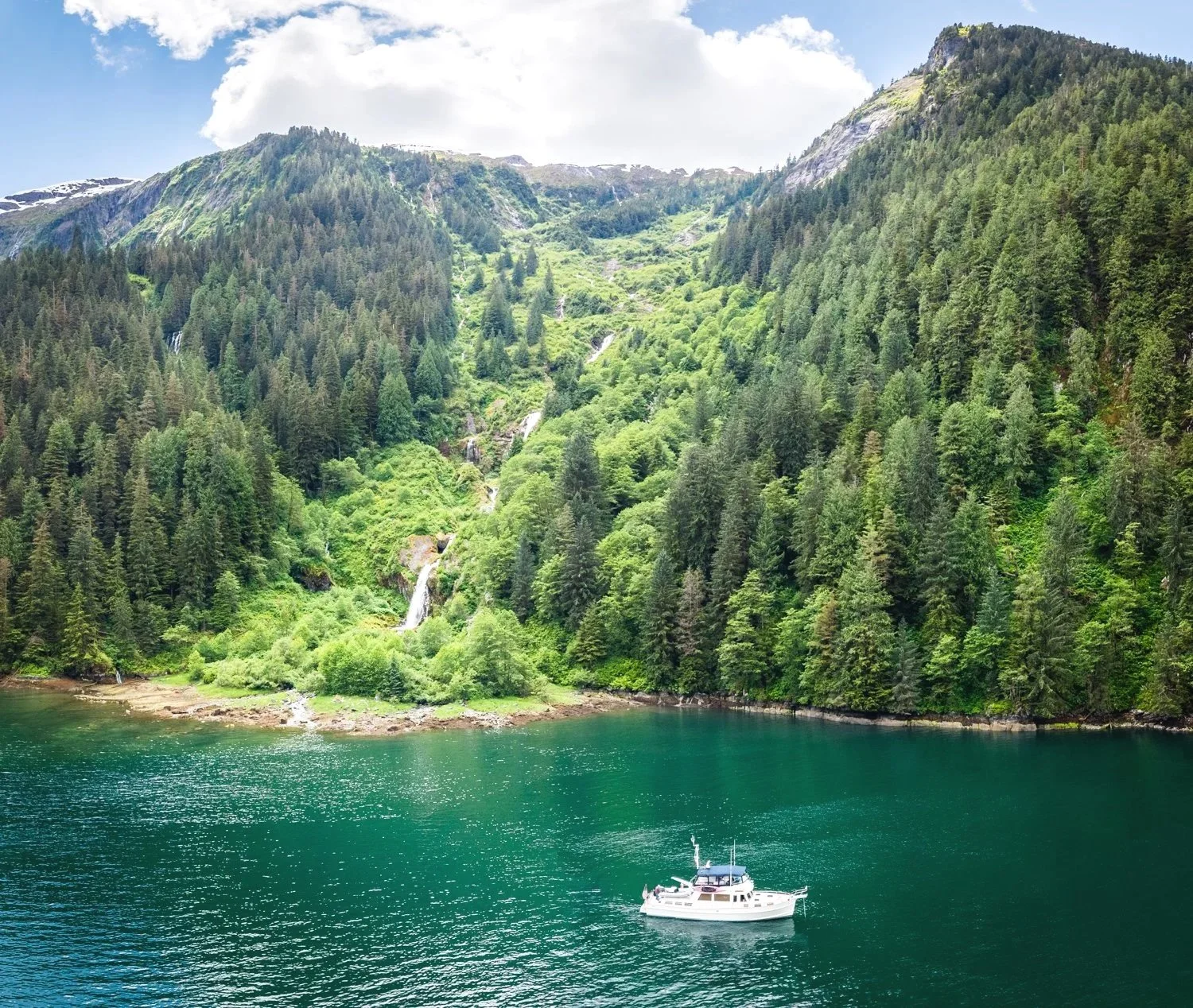
oceanflyer sits beneath the signature falls of khutze inlet
One of the highlights of any stay in Khutze is exploring the tidal rivers that feed the inlet. Timing is everything. High water here occurs roughly thirty minutes before published high tide at Butedale, and we launched the dinghy about an hour beforehand to ride the last of the flood.
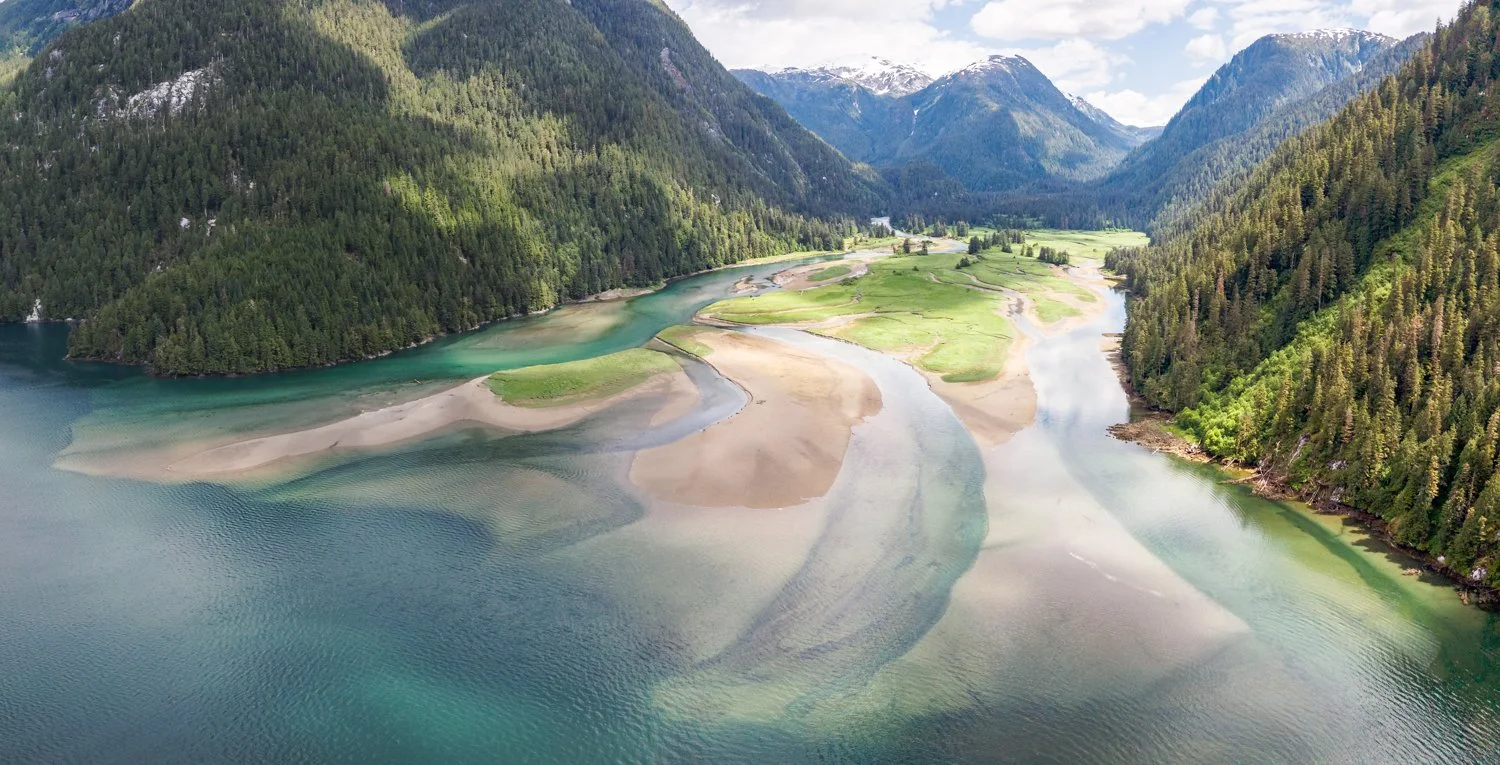
low water scouting flight shows the entrances to the rivers
We began with the northwest river. Having recorded waypoints from previous visits, navigation was straightforward. At a 15-foot tide we never saw less than four feet of water and were able to travel well upstream into the lush estuary.
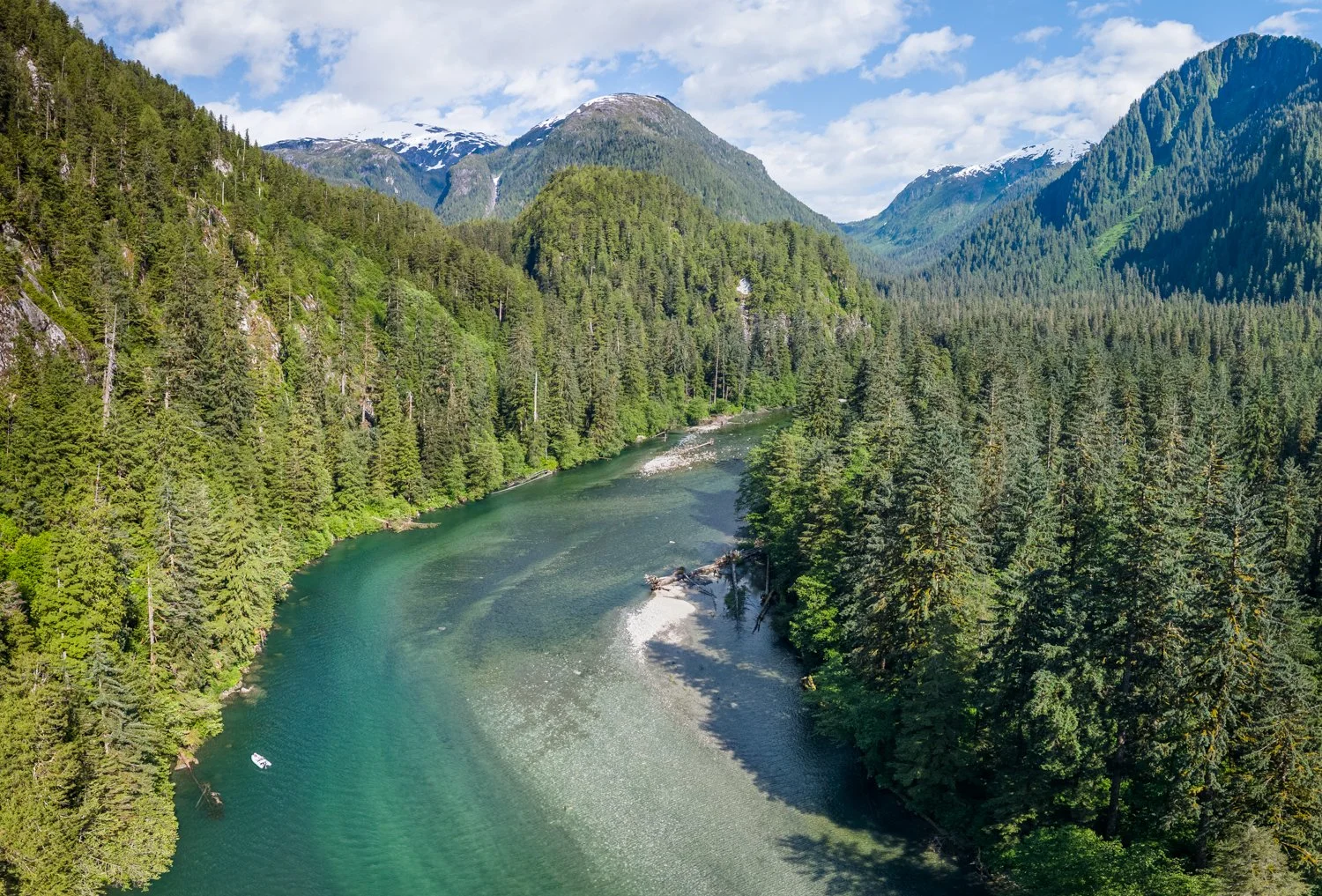
the shallow rapids ends out jouirney up the northest river
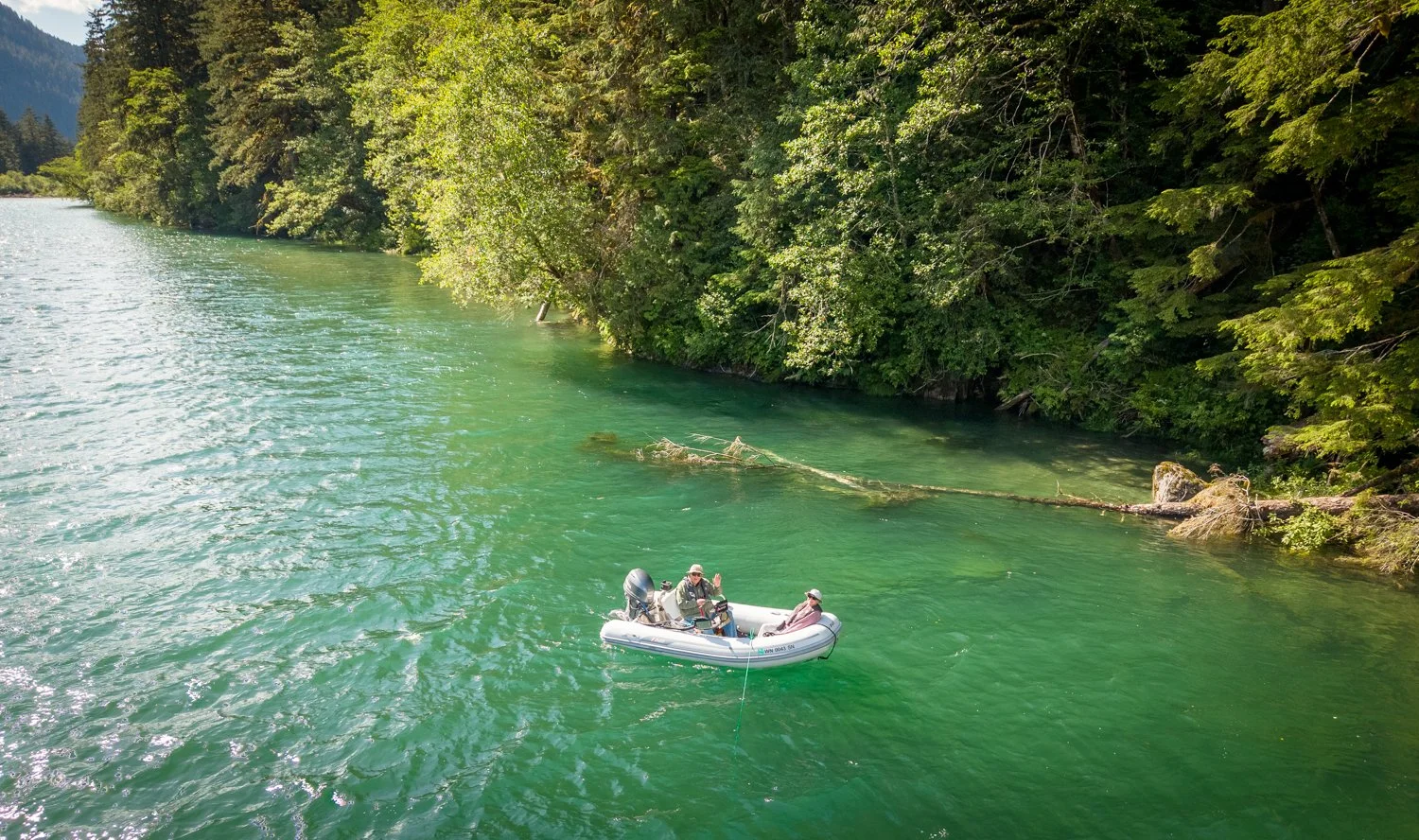
stopping to pose for the camera at the end of the northeast river
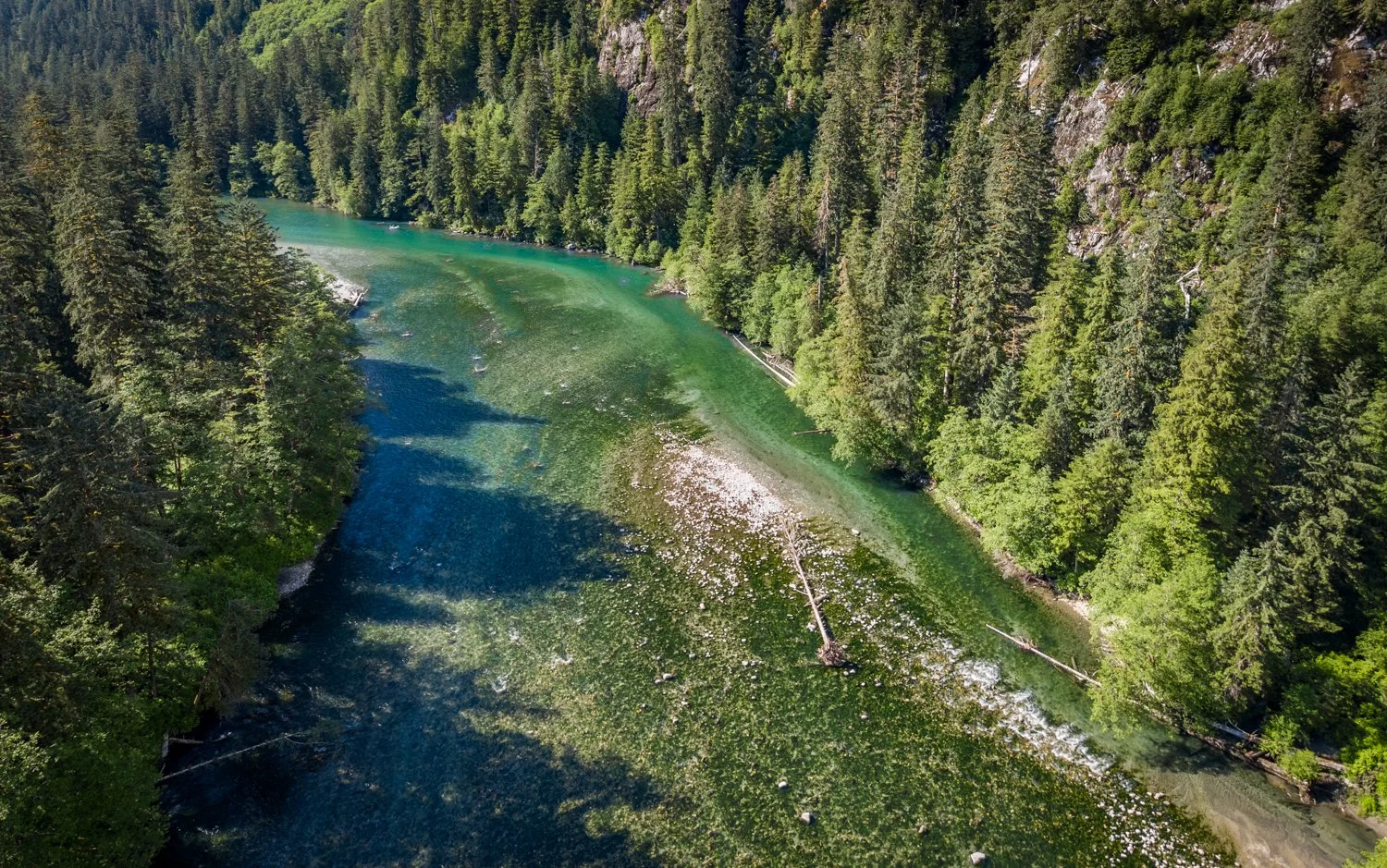
looking back down the river from the rocky narrows
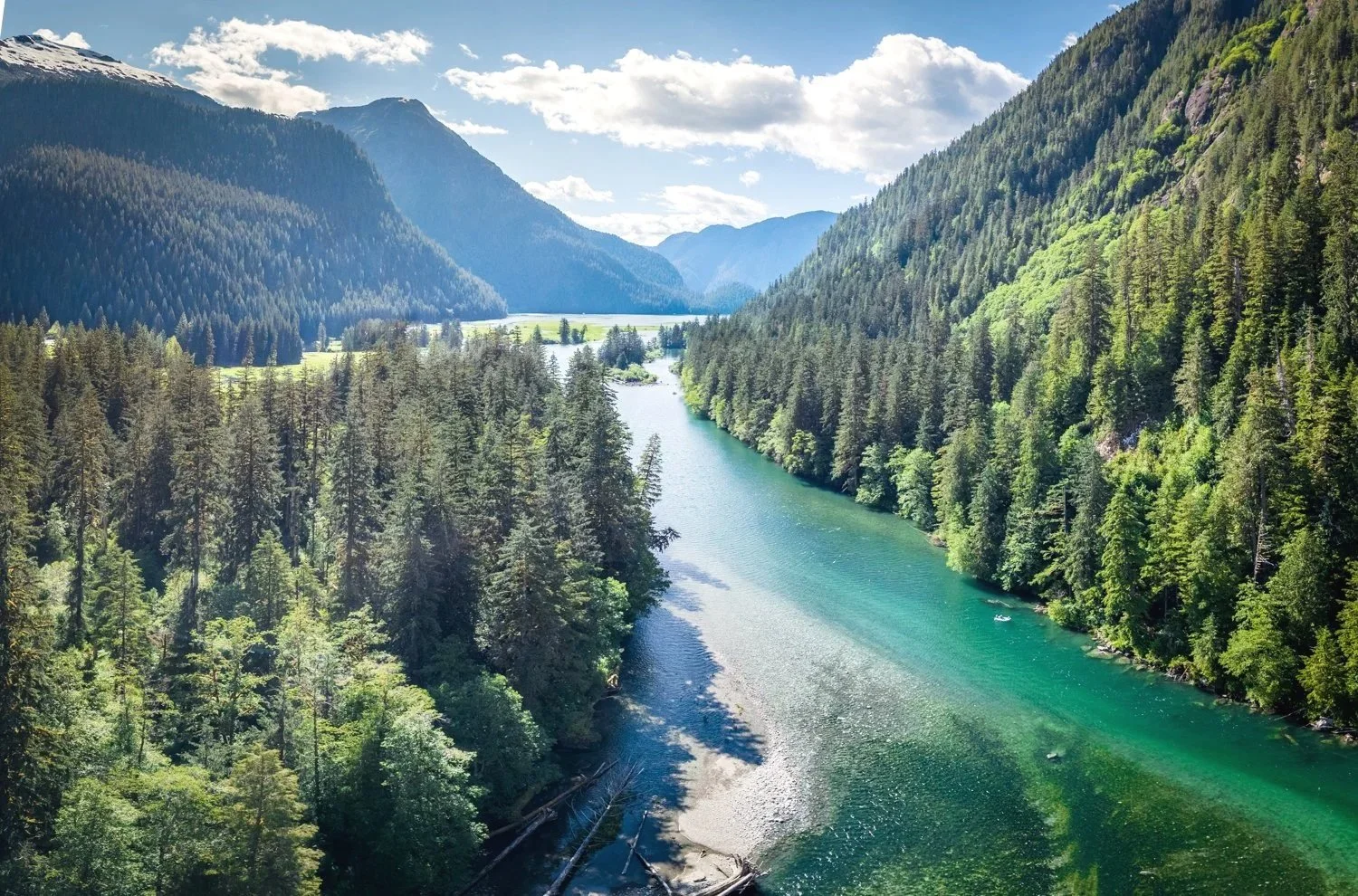
khutze inlet from the head of the northeast river
From there we retraced out steps and crossed to the southeast river. While shorter, it is arguably the more scenic of the two. The channel feels more intimate, winding through overhanging vegetation and prime bear habitat. We never found less than five feet of water before natural debris and vegetation eventually brought our exploration to an end.
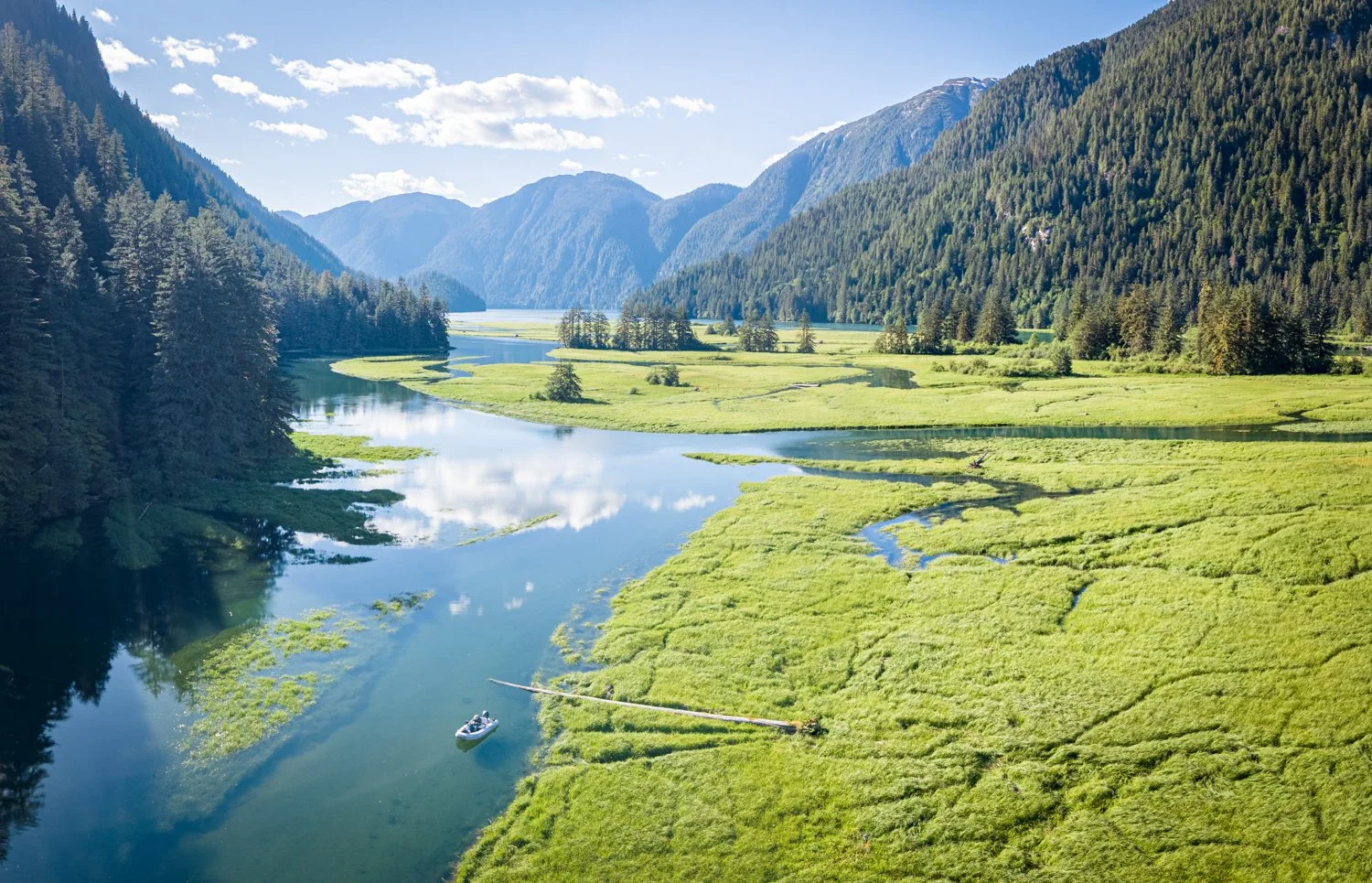
the southeast river has a very different feel. you can see the bear tracks in the tall grass.
Following our river excursion, we stopped to visit a vessel that immediately caught our attention. Tucked into a small cove about three-tenths of a mile farther up the inlet was a boat unlike any we had previously encountered in the wild. She was a Greenline hybrid cruiser, powered by either twin Volvo diesel engines or twin electric motors, captains choice.
The vessel, appropriately named Pull Chocks—a nod to the captain's airline career—had stern-tied in a cozy spot along the western shore. We spent some time exchanging cruising stories and route ideas. Their plans included continuing north in order to make a Glacier Bay reservation in early July.
After an unusually breezy afternoon, conditions settled as evening approached. The winds faded, the inlet grew calm, and once again the waterfall became the dominant sound in the anchorage. It is a familiar soundtrack for us in Khutze and one of the reasons we continue to return. As darkness settled over the inlet, OceanFlyer rested quietly beneath the granite walls while the falls continued their endless plunge into the sea.
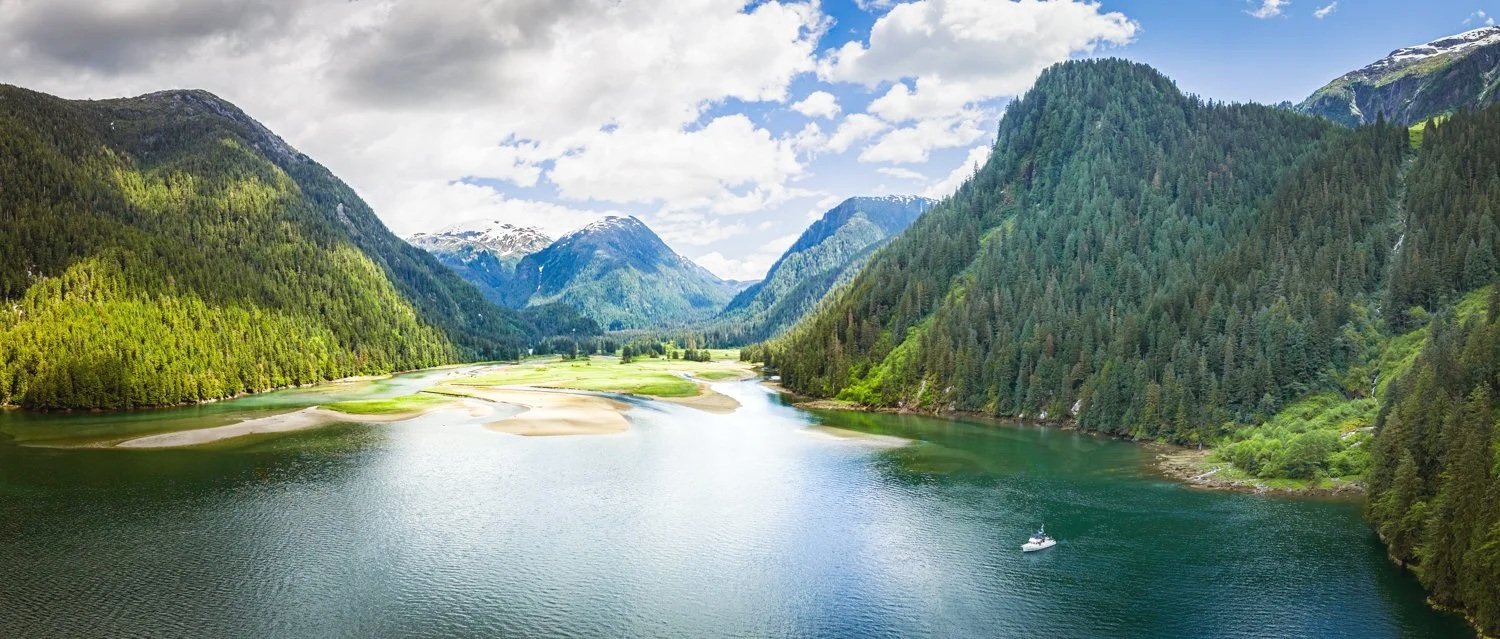
khutze inlet is nothing less than spectacular