

Farrant Island Cove to Emily Carr Inlet
/Some anchorages become favorites long before you arrive. Others earn that distinction only after you've dropped the hook.
Our journey to Emily Carr Inlet began with a two-hour detour to Hartley Bay to top off the water tanks. Unlike our previous visit, the harbor was unusually quiet. Gone were the ferries, fishing boats, and activity around the fuel dock. We filled our tanks, chatted briefly on the dock, and before long were back underway.
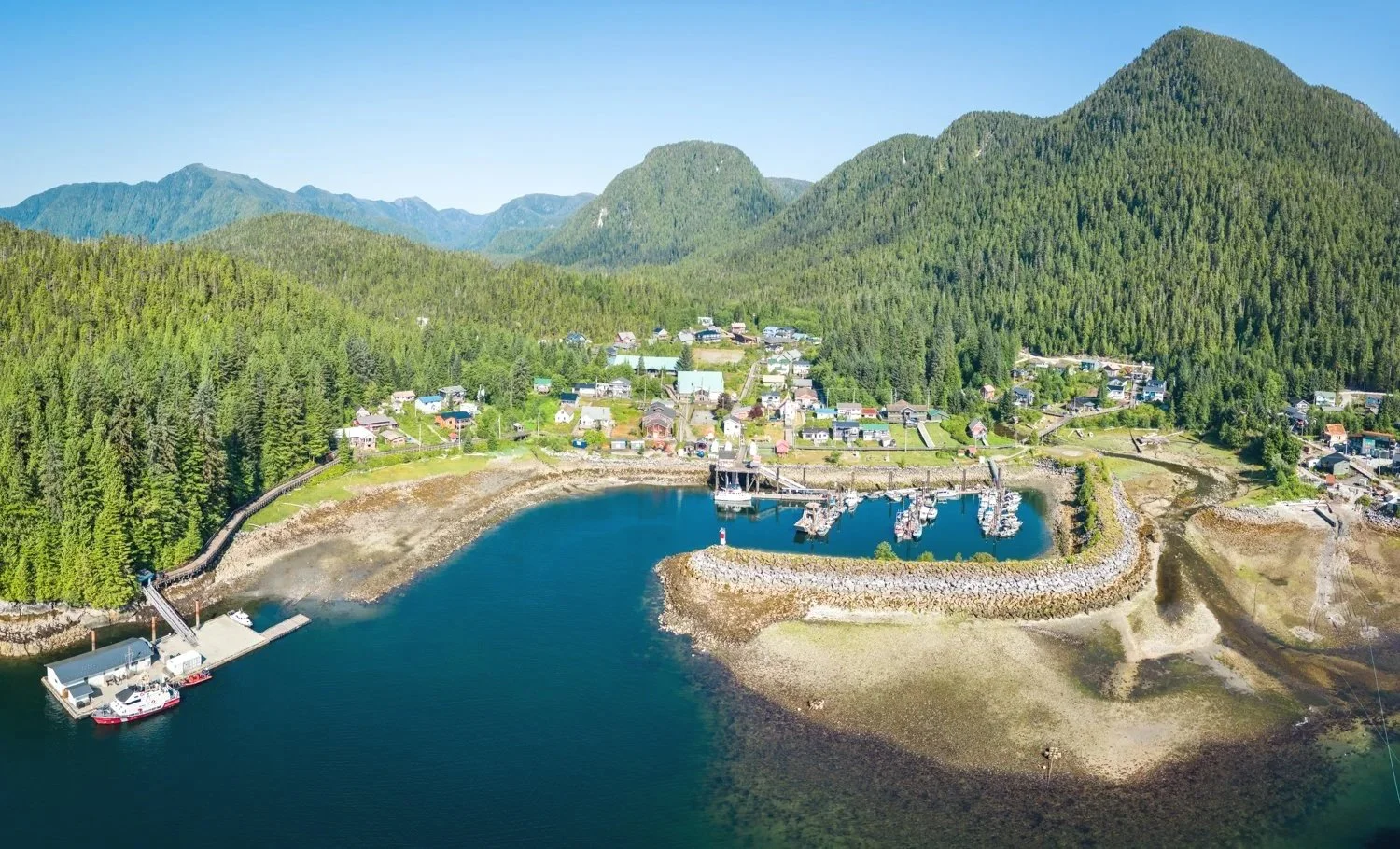
there is a lot more to hartley bay than you can see from the fuel dock
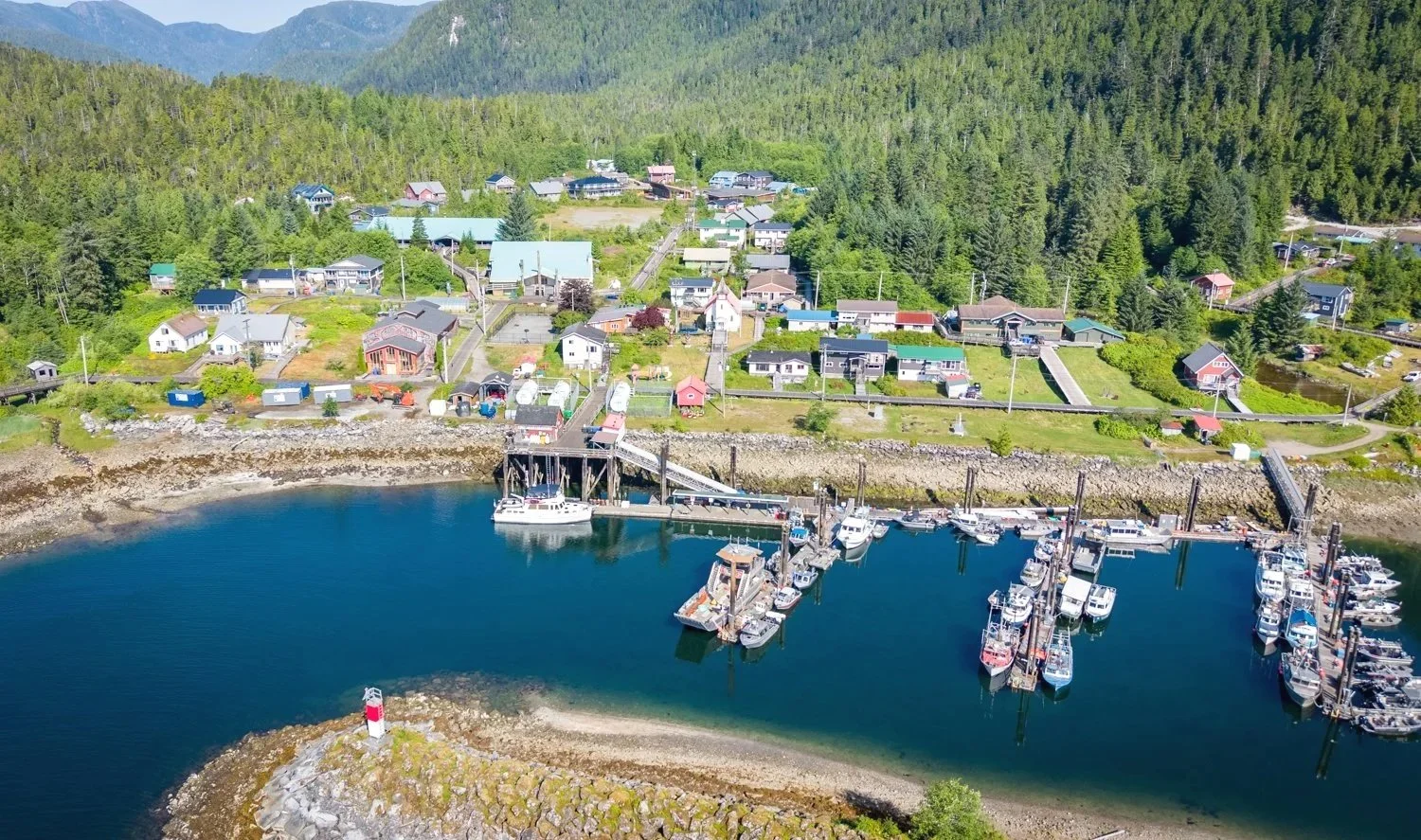
oceanflyer on the fuel dock at hartley bay
With a route through Whale Channel, our expectations naturally turned toward humpbacks. The name alone invites optimism, and previous trips had rewarded us with memorable sightings. This time the channel didn't disappoint. Over the course of the four-hour run, we spotted six or so humpbacks, most of them solitary animals patiently feeding along current lines and back eddies where the underwater terrain concentrates their prey. Watching these giants quietly go about their business never seems to grow old.
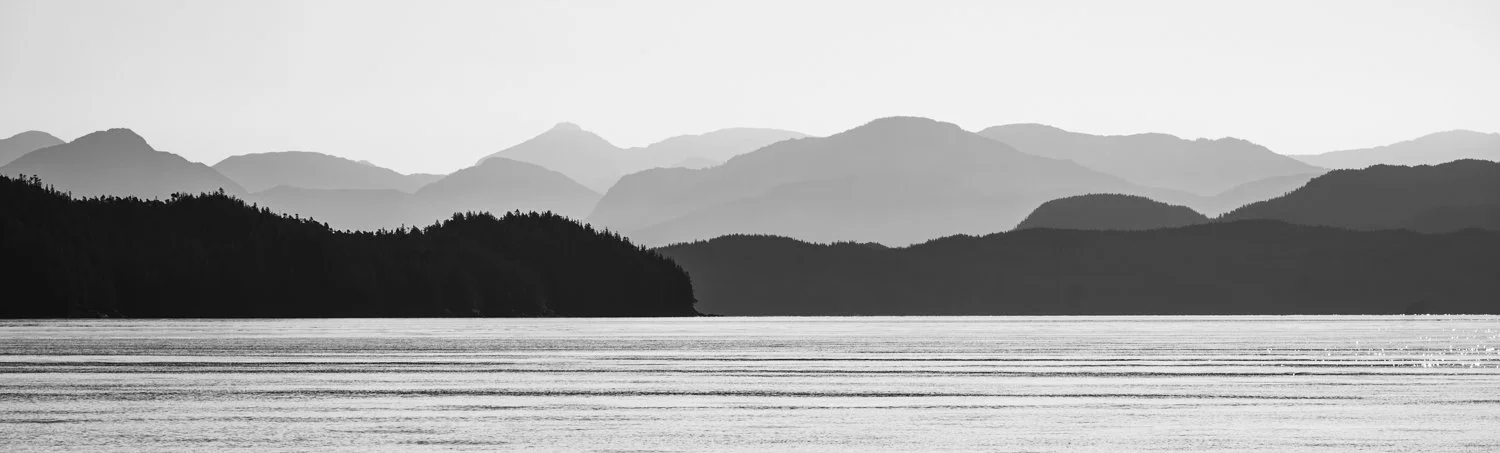
Emily Carr Inlet, however, remained something of an unknown. There is remarkably little written about it. We've visited neighboring Chapple Inlet twice over the years, but this season seemed like the perfect opportunity to satisfy our curiosity and explore somewhere new.
We anchored near the head of the inlet in 75 feet of water. Although there are two additional anchorages tucked farther inside, both require enough tide to comfortably enter and leave. Since we preferred not to have our departure dictated by the tide, the outer anchorage suited us perfectly.
It turned out to be exactly the kind of place we enjoy. The surrounding hills provide excellent protection, while scattered islets preserve broad views that keep the anchorage from ever feeling enclosed. In a strong southerly it would likely become less comfortable, but the persistent high-pressure ridge delivered another stretch of calm weather. Only the growing haze hinted that summer had firmly settled over the coast.
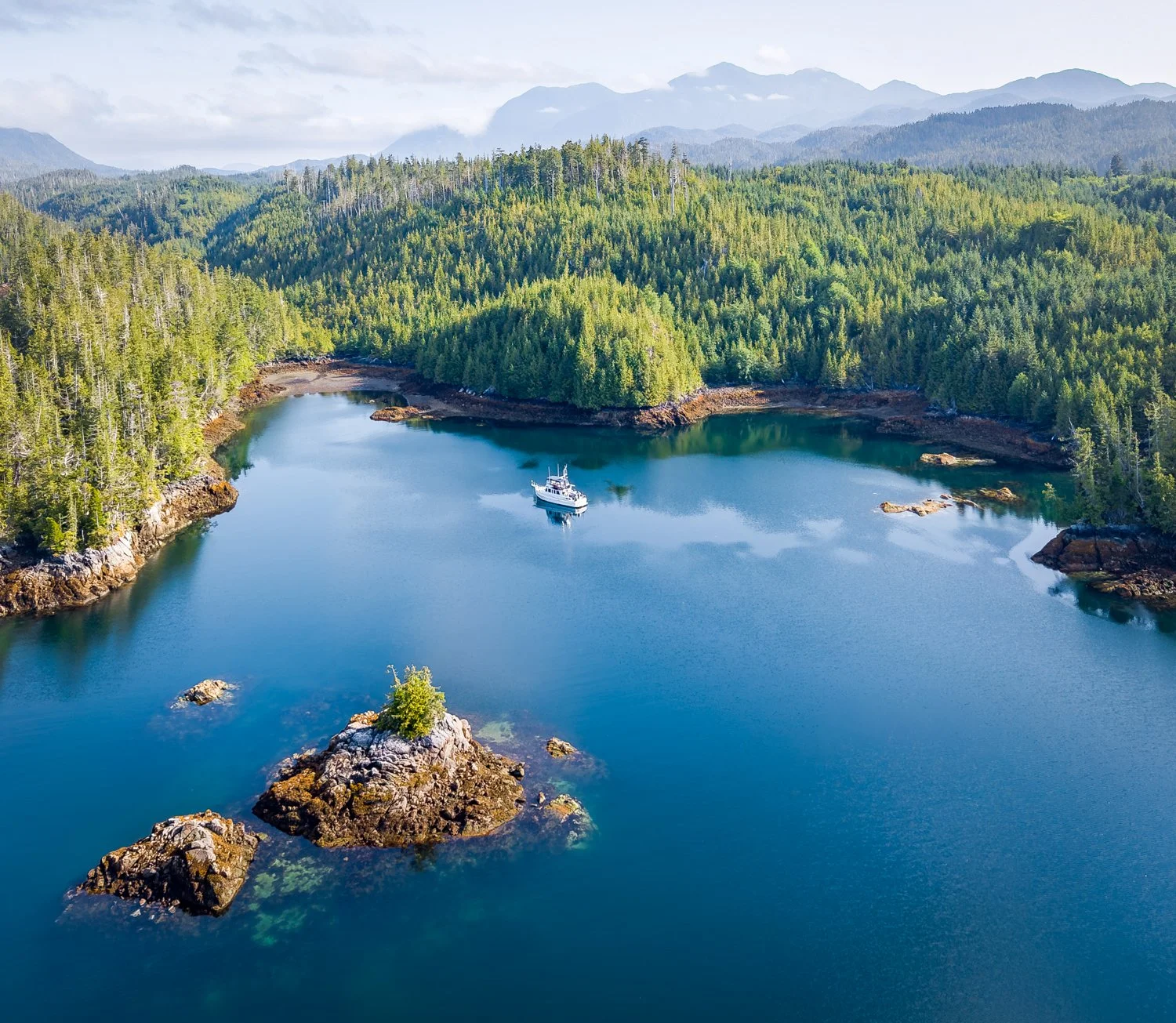
emily carr inlet anchorage
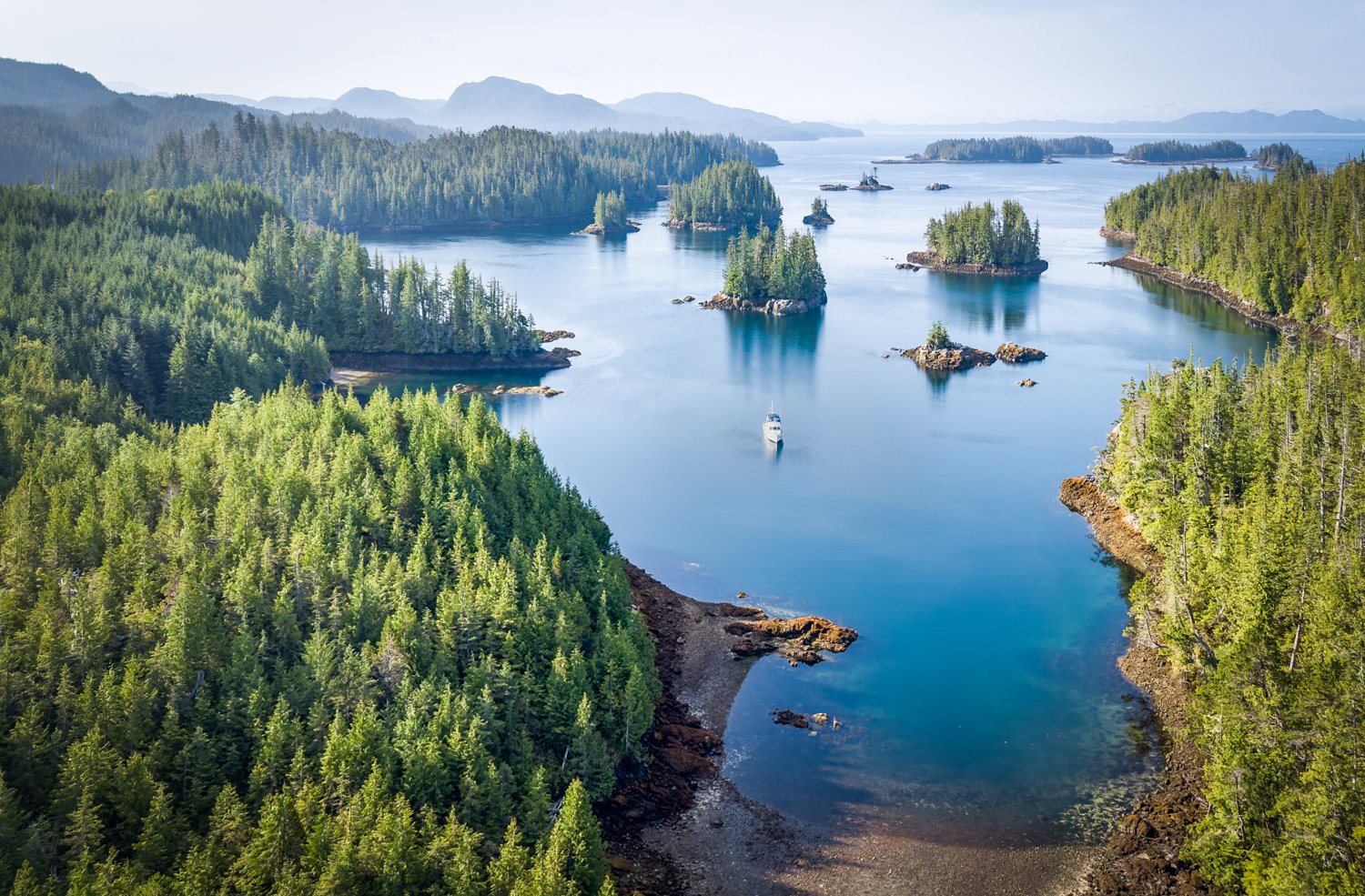
beautiful views looking out from emily carr inlet
The following day we launched the dinghy to explore the neighboring lagoons and see whether they offered anything better than our chosen anchorage.
The lagoon to the northwest proved to be the most inviting. Crossing the entrance, we recorded 24 feet of water at a 15.1-foot tide referenced to Barnard Harbour. At the second, non-drying bar, the depth decreased to 13 feet at the same 15.1-foot Barnard Harbour tide. Once inside, the basin opened into a surprisingly spacious and well-protected anchorage. If we return with OceanFlyer, we'd likely favor the upper northwest corner, either anchoring freely or taking a stern line ashore along the steep western shoreline. On our way out, we briefly saw 11 feet, suggesting I hadn't retraced our inbound track quite as precisely as I thought.
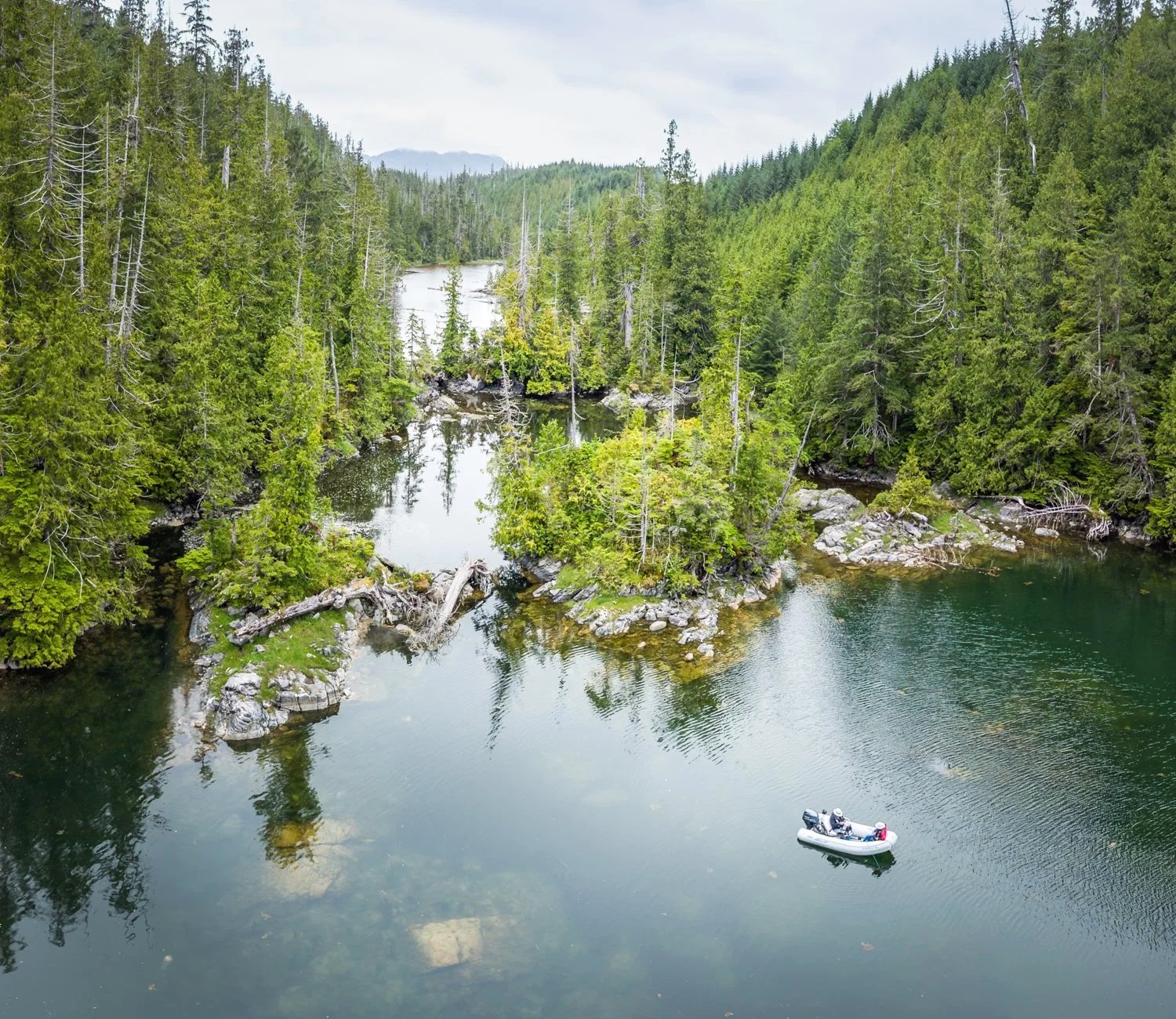
as far as we could go into the lagoon
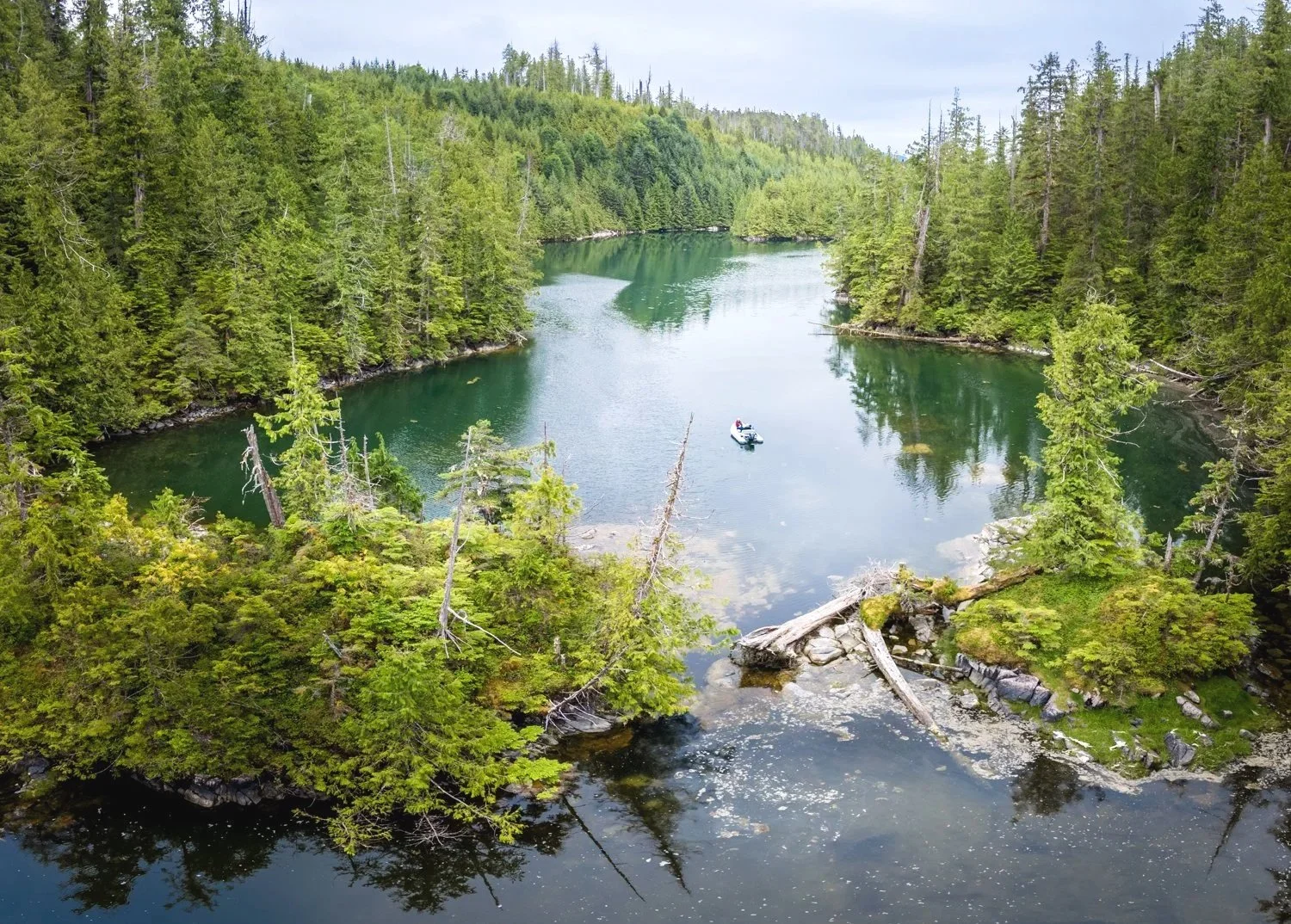
looking back toward the dinghy from the top of the lagoon
The southwest lagoon told a different story. Its entrance has generated considerable discussion over the years, particularly because the route described in the original Douglass & Douglass guide has since been corrected by later cruisers. We followed the updated route, crossing the outer drying bar where we recorded 17.5 feet at an 18-foot tide referenced to Barnard Harbour. The second obstacle—and the point where the updated guidance differs from Douglass & Douglass—is the rock near the center of the channel. Hugging the south shoreline, exactly as recommended, we never saw less than 11.5 feet at the same 18-foot Barnard Harbour tide. The revised route works, but it also confirms just how close you must come to the shoreline before the channel opens up again.
Once inside, we came away with mixed impressions. The anchorage itself is pleasant enough, particularly in the southwest corner where the views open back toward the entrance. For us, however, the reward simply doesn't justify the tension of threading a fifty-foot boat through such a narrow approach. It's certainly navigable—we proved that in the dinghy—but given the choice, we'd happily anchor outside and explore the lagoon by tender.
By the end of our stay, Emily Carr Inlet had quietly exceeded our expectations. It may not receive the attention of some of British Columbia's better-known anchorages, but perhaps that's part of its appeal. We arrived simply looking for somewhere new to spend a couple of nights. We left with another favorite anchorage, a few useful soundings for the next visit, and a better appreciation for one of the coast's lesser-known gems.