

Anger Inlet to Wilson Inlet
/Before leaving Anger Inlet, we took advantage of the morning's high tide to explore the other arm of the intricate maze of waterways at the head of the inlet.
Steady rain showers persisted throughout the morning, so the drone remained in its case. It was disappointing, as the aerial perspective would have done a much better job of capturing the network of narrow passages, hidden coves, and winding channels than any photograph taken from the dinghy.
Like so many places along this coast, the chart is deceiving. What appears to be a compact collection of waterways unfolds into an extensive area once you're weaving through it in the dinghy. At dead high slack, with little or no current, we found ourselves thinking that several of the coves would actually make viable anchorages for a larger cruising boat.
The only real challenge is the narrow entrance to the inner basin. A sharp 90-degree turn is required immediately after passing through the constricted channel. Water depth is not the issue—the passage is generally deep enough—but the current rarely stops flowing except at true slack water. A dinghy has no trouble making the turn, but a larger displacement boat could easily find itself committed before having enough room to complete the maneuver if any current were still running. With careful timing, however, it is certainly an intriguing place to explore.
With our reconnaissance complete, we returned to OceanFlyer, weighed anchor, and departed on the morning's high water for the short run to Wilson Inlet.
Today's move was more about tomorrow than today.
Our next destination is Saycuritey Cove, where the entrance is best approached on a favorable tide. Positioning ourselves in Wilson Inlet allows us to depart on our own schedule rather than waiting for another high tide at Anger Inlet.
The controlling depth is a small underwater pinnacle near the entrance. It is only a brief section of the route, but one worth respecting. On our previous transit we observed approximately 17 feet beneath OceanFlyer at a 12.6-foot tide as reported at Block Islands. That provides a comfortable margin for us, but at lower stages of the tide the available clearance decreases quickly enough that timing the arrival is simply good seamanship.
Wilson Inlet itself is a broad, open anchorage surrounded by steep forested mountains. We chose the southeast corner, where the chart suggested depths of about 30 feet. Reality, however, was rather different. Like many of the older soundings throughout this region, the chart proved optimistic, and we eventually found suitable holding in 60 feet of water.
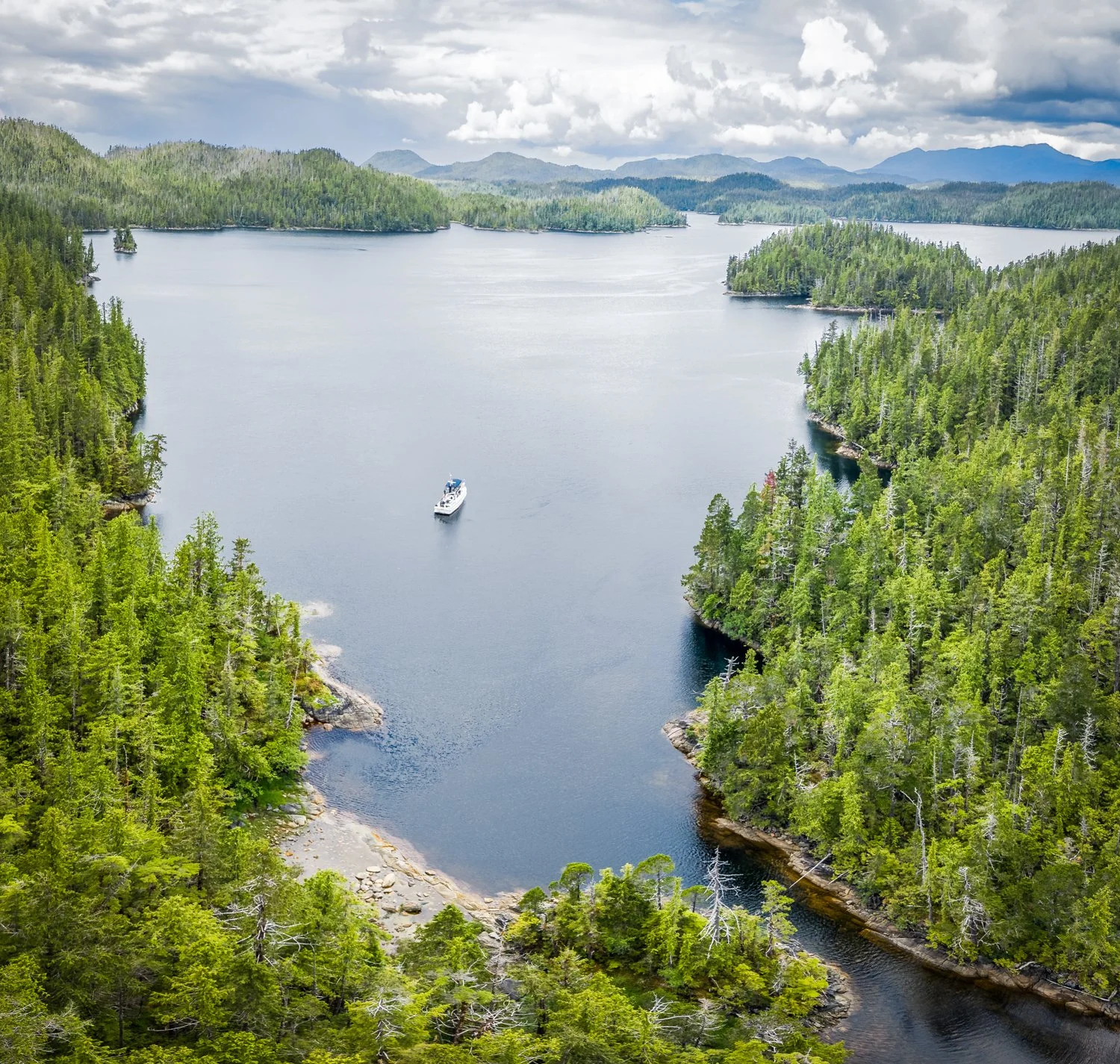
looking west from wilson inlet
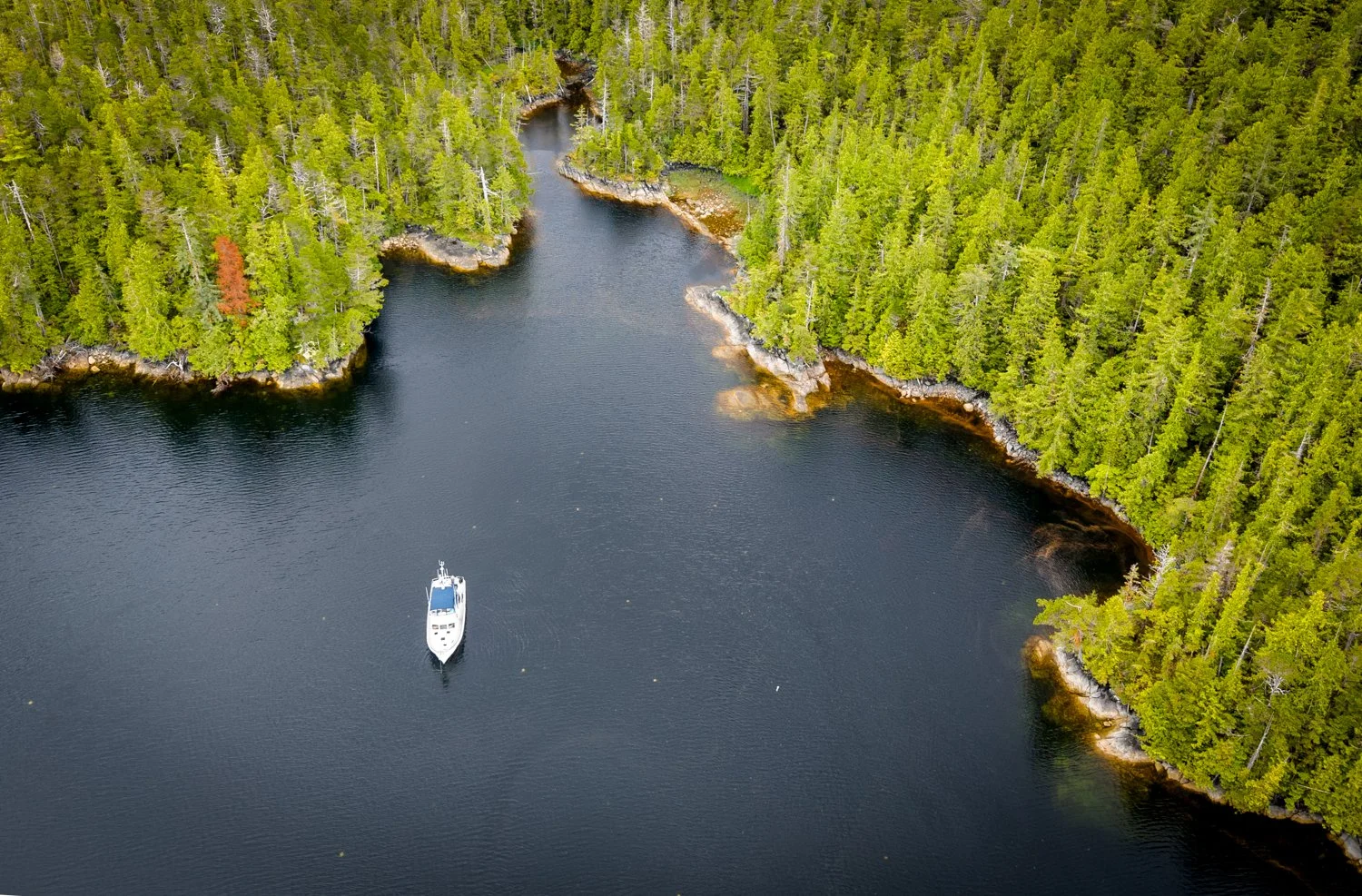
the white spots are large moon jellyfish
After balancing our scope with our distance from shore, the anchor set firmly on the first attempt. With tomorrow's tide window secured, we settled in to enjoy another quiet evening surrounded by one of British Columbia's spectacular mountain amphitheaters.
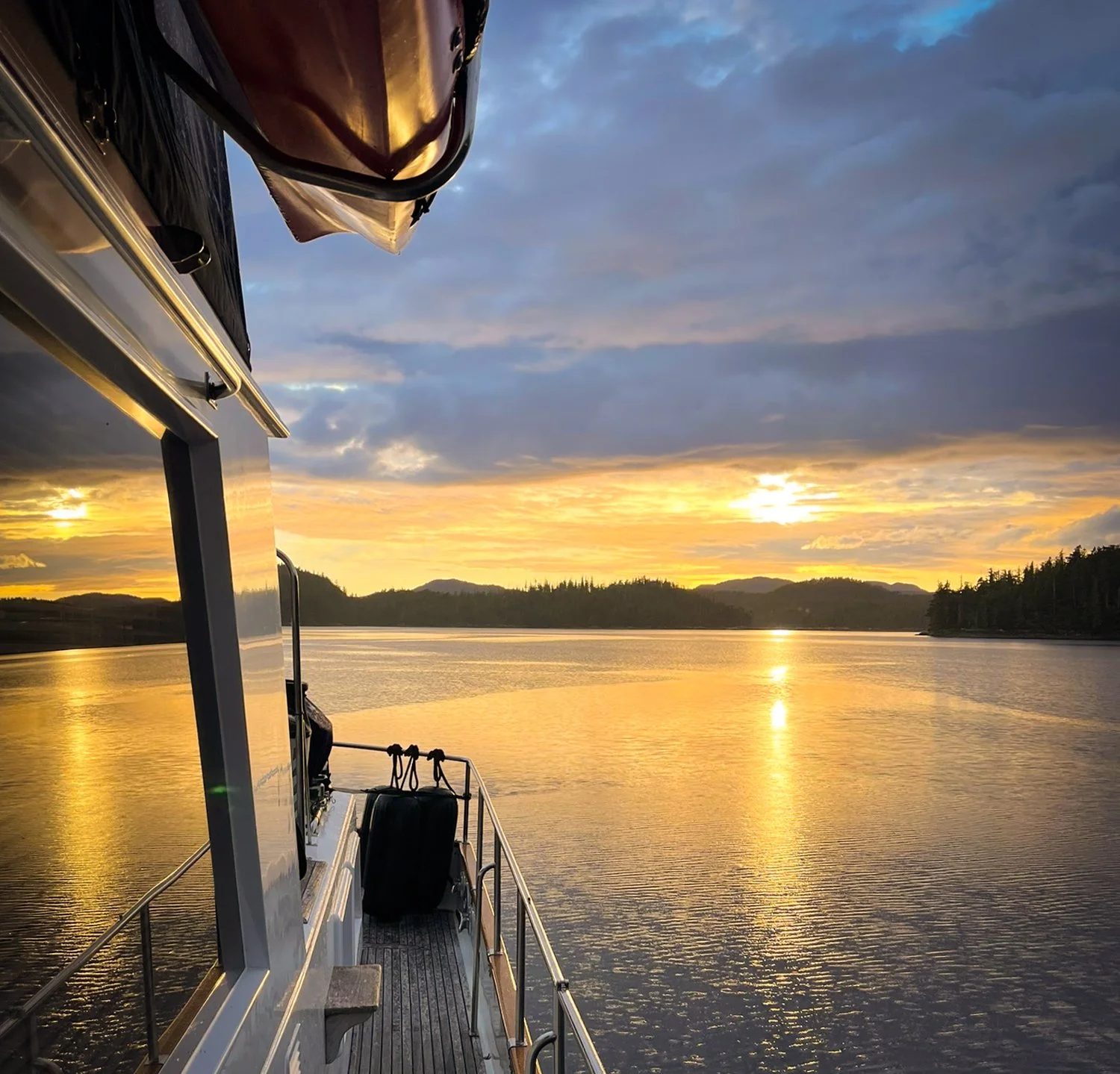
sunset in wilson inlet