

Boukind Bay to the Head of Roscoe Inlet
/One of the greatest joys of cruising the Pacific Northwest is discovering that there is always somewhere new to explore.
After decades of boating these waters, we sometimes catch ourselves saying, "We've been just about everywhere."
Then a place like Roscoe Inlet reminds us how wonderfully wrong we are.
Reaching the head of the inlet is anything but a straight run. Roscoe twists and turns through a maze of towering granite mountains, many rising almost vertically from the water. Around every bend another breathtaking vista comes into view, each one seeming more dramatic than the last. It's the kind of scenery that fills camera memory cards while somehow refusing to be captured by a photograph.
Some places are simply too big for a lens.
The journey reminded us of several of our favorite destinations—Gardner Canal, Alaska's Ford's Terror, and even the magnificent granite walls of Misty Fjords. Waterfalls spilled from hanging valleys, sheer cliffs disappeared into the sky, and despite being only a day's run from civilization, the landscape felt wonderfully untouched.
Curiosity led us on a short detour into Quartcha Bay.
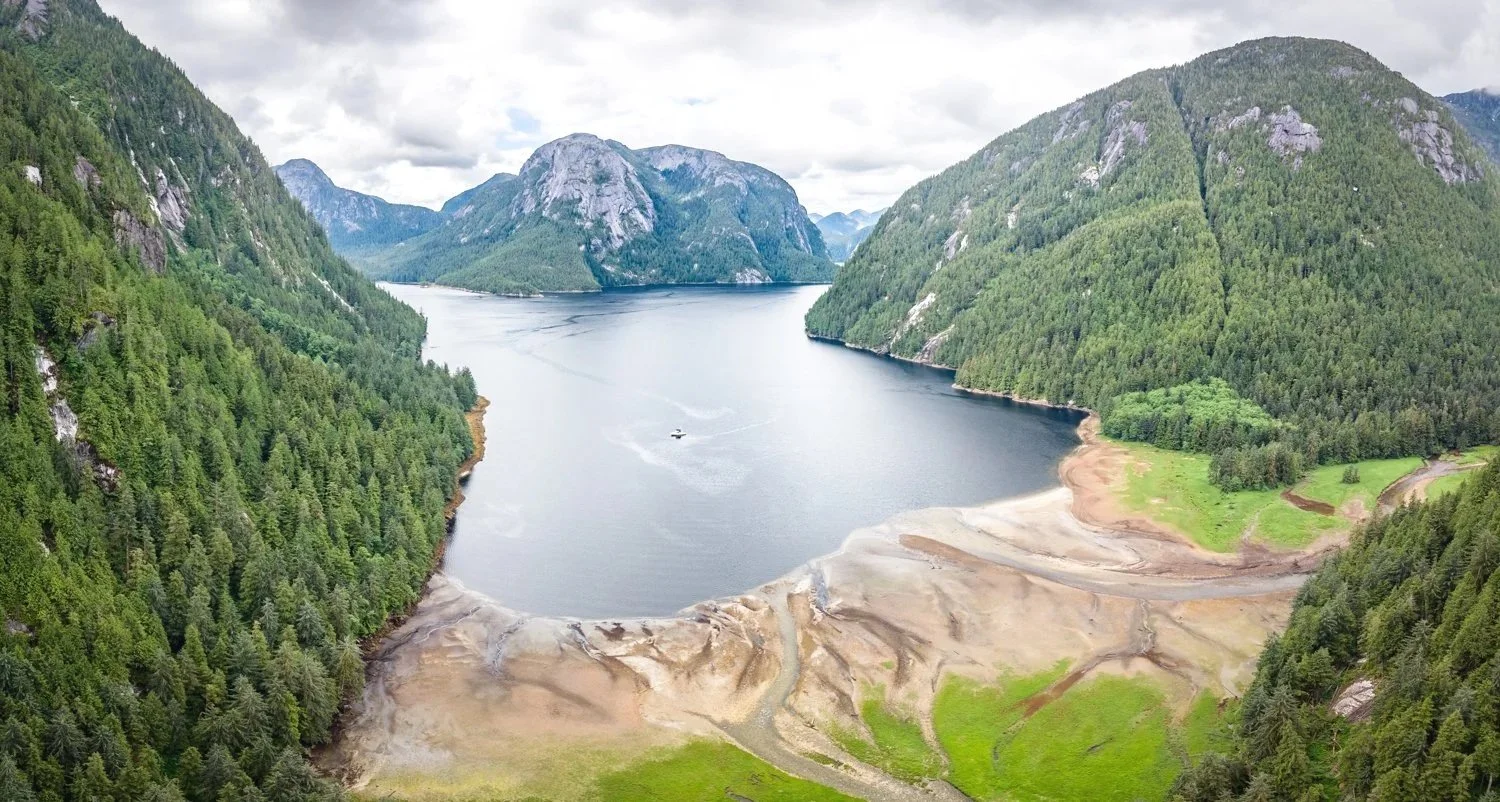
dramatic quartcha Bay
It quickly became apparent that finding a comfortable anchorage there would require more determination than we were prepared to invest, but the scenery alone made the side trip worthwhile. We shut down the engines, drifted in silence for a while, and simply admired the rugged beauty before continuing toward our destination.
The head of Roscoe Inlet proved every bit as rewarding.
Like many fjord anchorages, the water deepens rapidly away from shore, leaving only a narrow shelf suitable for anchoring. We settled OceanFlyer into 80 feet of water near the two creeks entering from the northeast shore, where the anchor dug in securely and the surrounding mountains wrapped around us like a natural amphitheater.
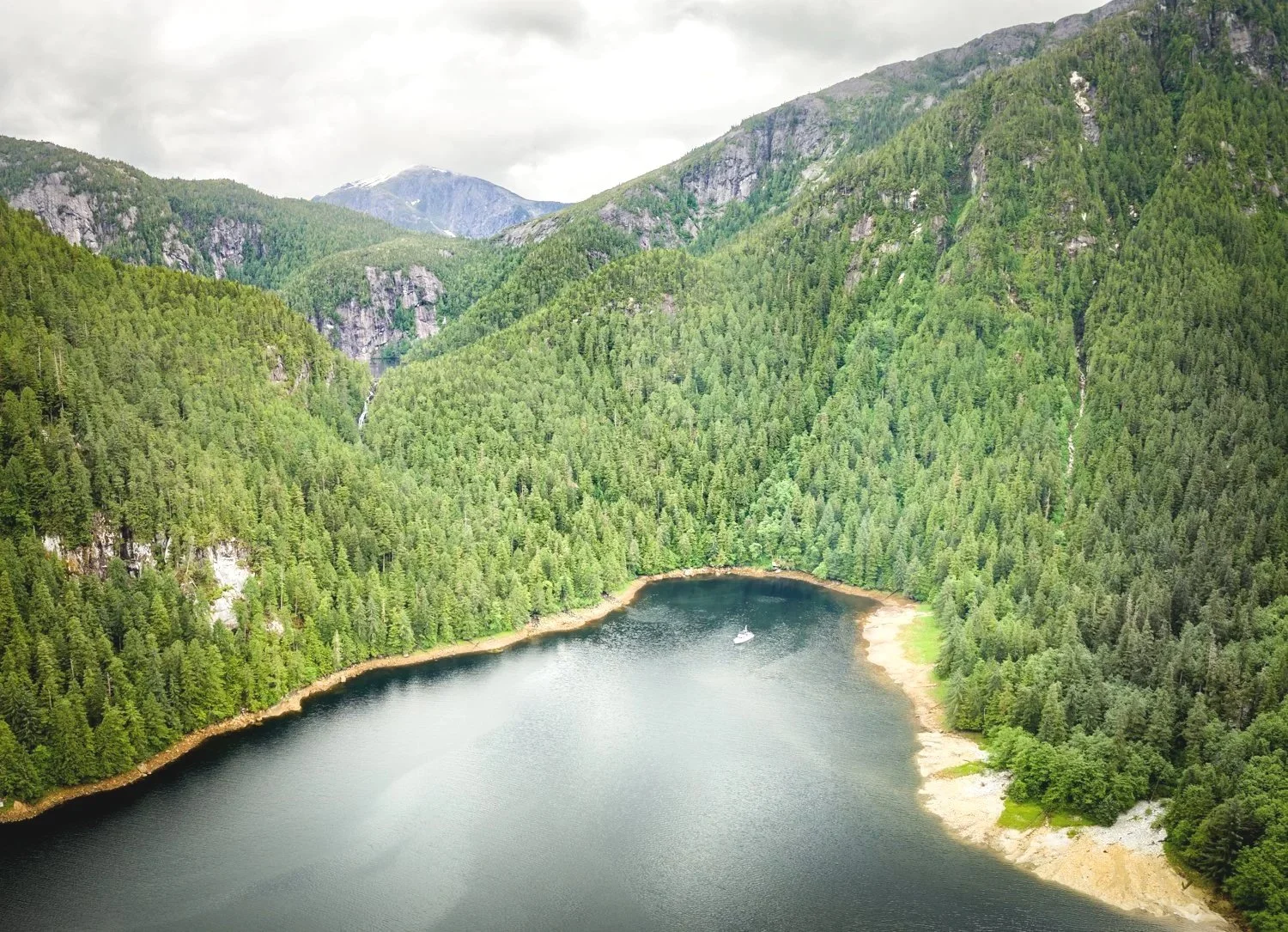
the head of roscoe inlet
As evening settled in, the sound of rushing water replaced the quiet hum of the engines.
Both creeks tumbled from hidden mountain valleys, their voices echoing across the anchorage long before the streams themselves came into view. It was one of those places where silence isn't measured by the absence of sound, but by the absence of people.
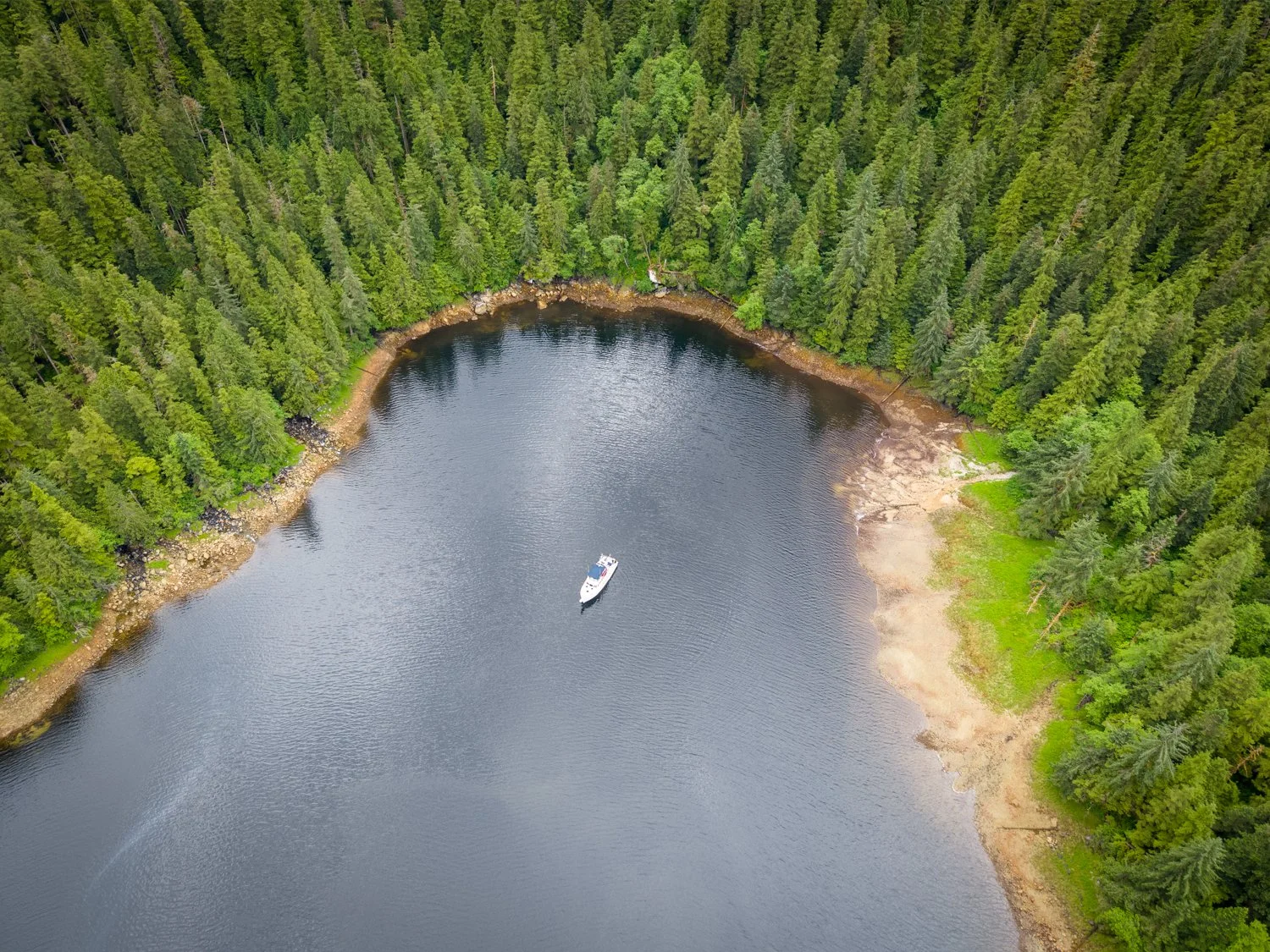
roscoe inlet solitude
The following day's 14-foot tide presented an opportunity too good to pass up.
By dinghy, we first explored Roscoe Creek on the north shore, about a mile and a half from the head of the inlet. The high water carried us across an extensive tidal flat that would normally be left high and dry. We eventually reached the mouth of the creek, where a large tangle of driftwood and fallen trees brought our exploration to an end. A kayak might have slipped a little farther upstream, but for us it marked a perfect turnaround point.
On the way back, we explored the smaller creek delta on the south shore, just a short distance from our anchorage. Here, depths ranged from three to nine feet beneath the dinghy, making for an easy and enjoyable excursion before another collection of boulders, logs, and driftwood reminded us who ultimately shapes these landscapes.
Neither side trip covered much distance.
Yet both offered a close-up view of the relentless forces that have been carving these fjords for thousands of years—and continue to do so today.
For a destination that had somehow escaped our cruising log for all these years, Roscoe Inlet left quite an impression.
Sometimes the best discoveries aren't famous anchorages or destinations with a long list of attractions. Sometimes they're simply places that make you slow down, look around, and quietly wonder how you managed to overlook them for so long.
Roscoe Inlet is one of those places.