Squirrel Cove to Laura Cove

With rain and strong southeasterly winds in the forecast, today's destination was dictated less by where we wanted to go and more by where we wanted to be when the weather arrived.

We chose Laura Cove.

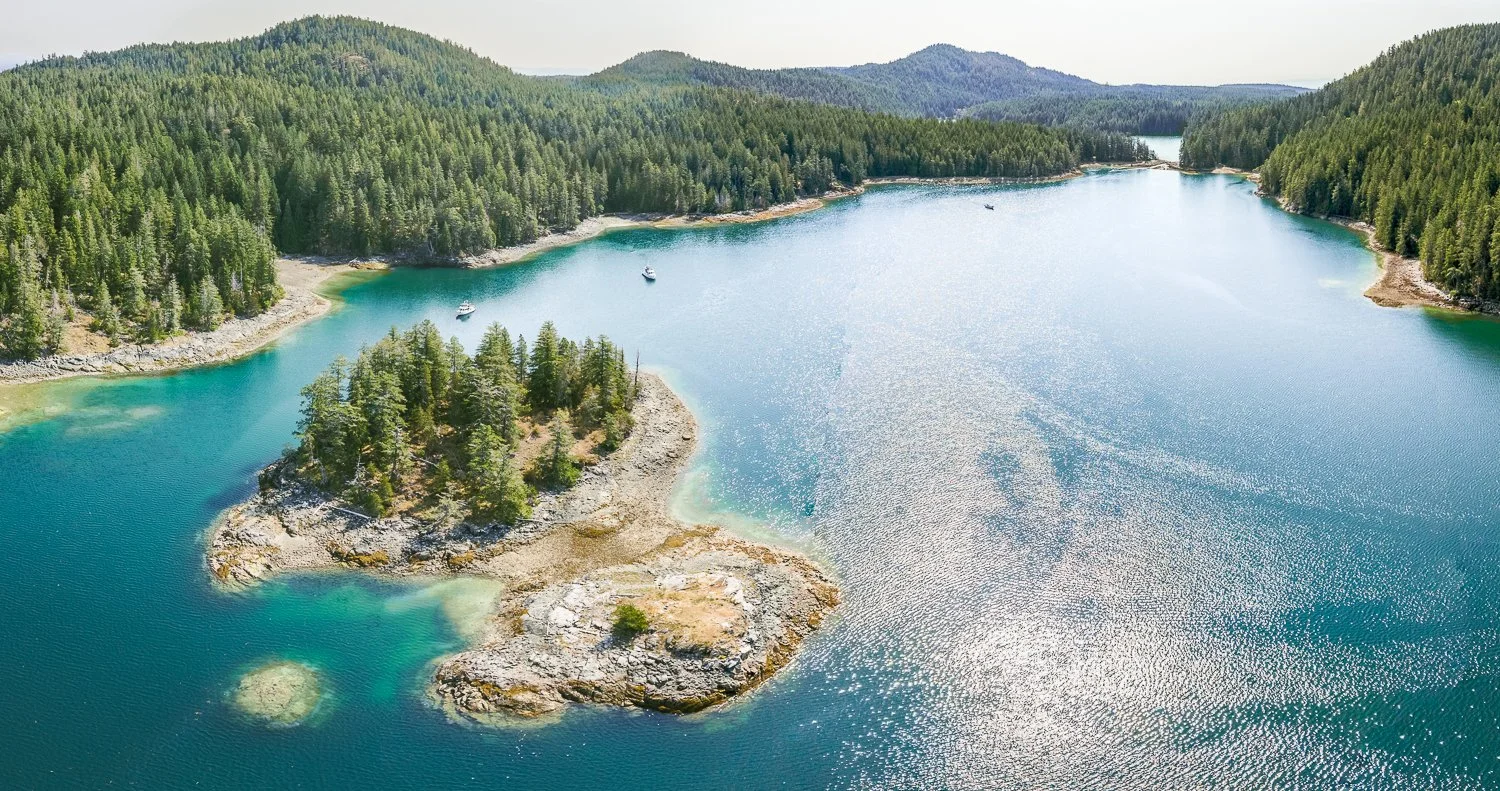
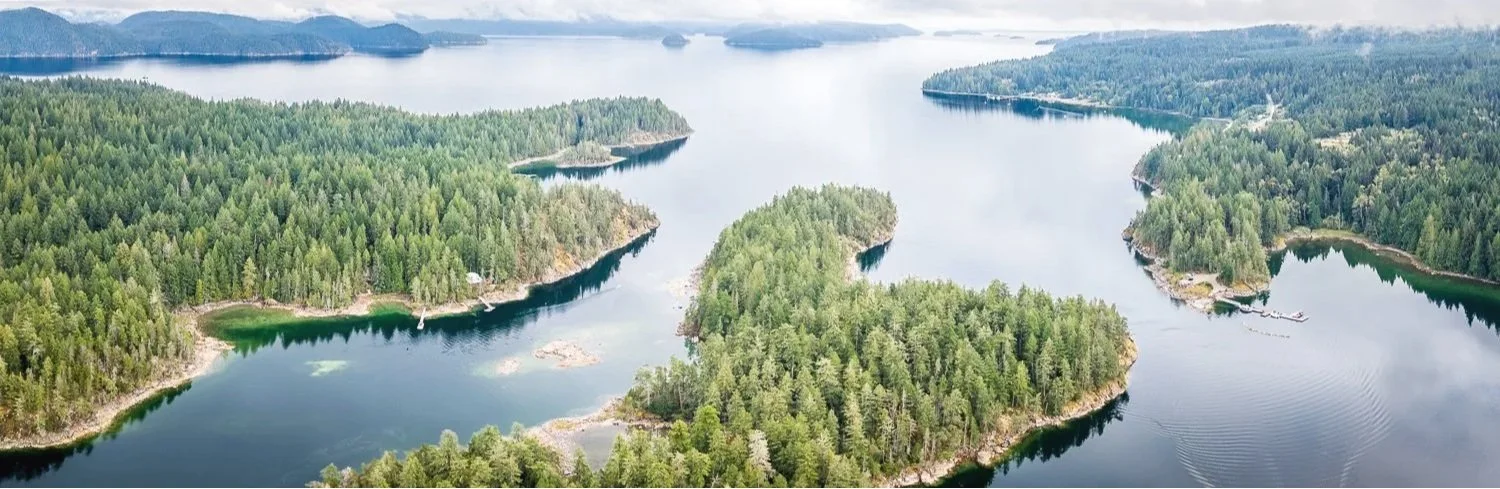
Tucked just northeast of the extremely popular Prideaux Haven in Desolation Sound Marine Park, Laura Cove offers excellent protection from a southeasterly. Our plan was to anchor and stern-tie to the southern wall of the cove, putting as much rock and forest as possible between OceanFlyer and the approaching weather.

We knew we wouldn't be alone.

Apparently, quite a few other cruisers had been studying the same forecast and reached the same conclusion. But when you're choosing a place to sit out a blow, solitude drops a few places on the priority list. Good holding and protection move straight to the top.
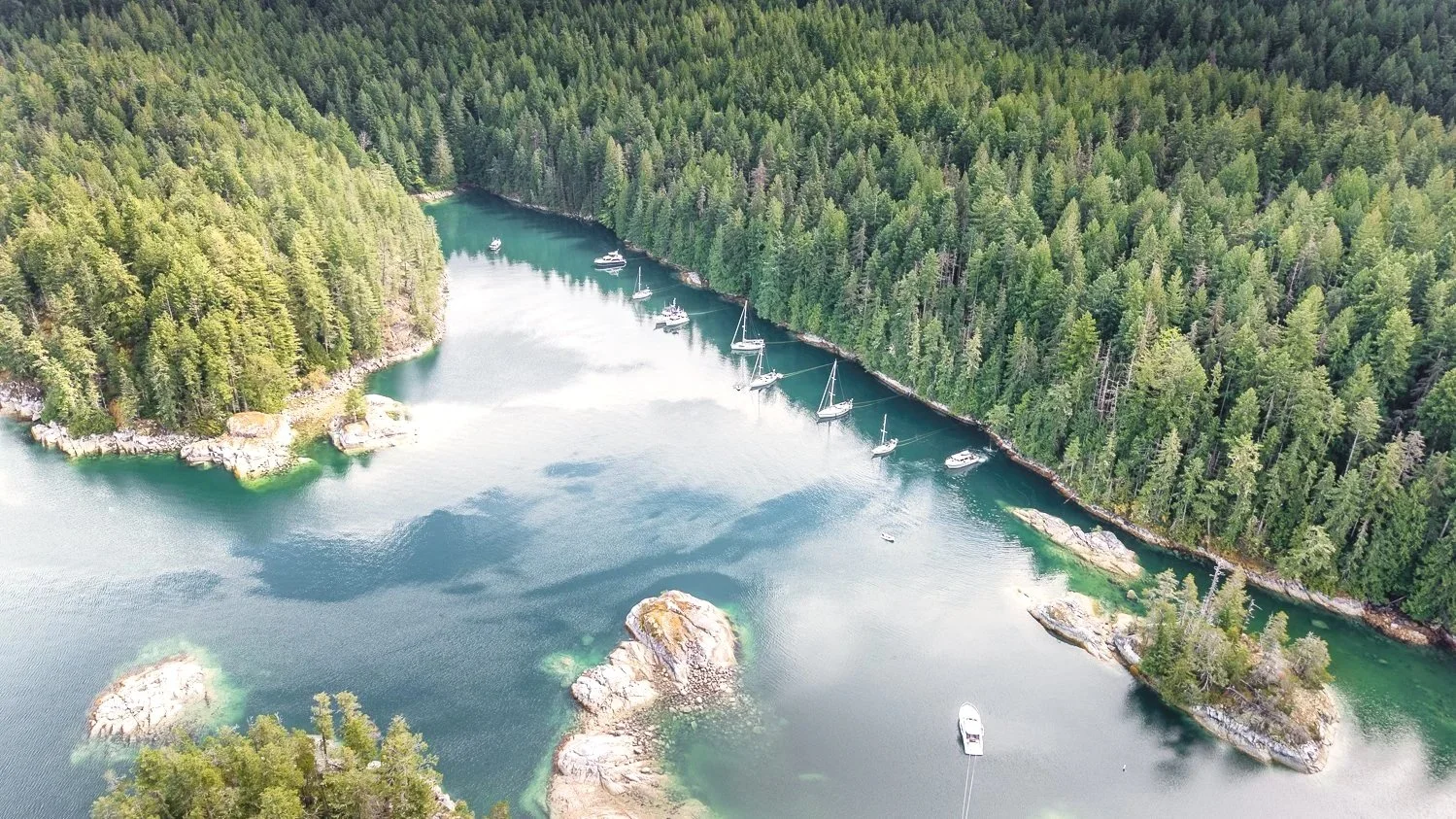
the lineup of boats stern-tied at laura cove
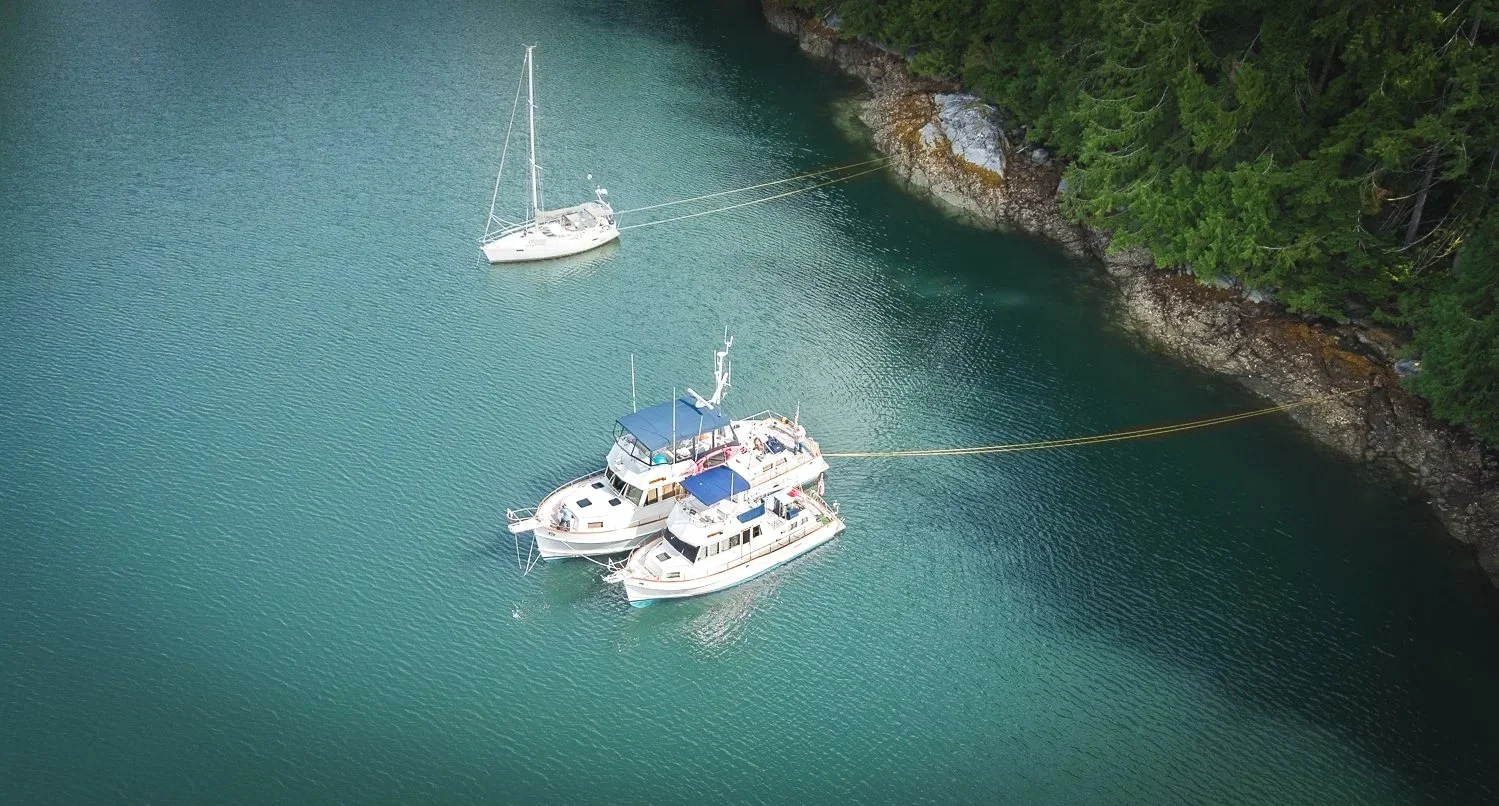
Oceanflyer and Spellbound snug in laura cove
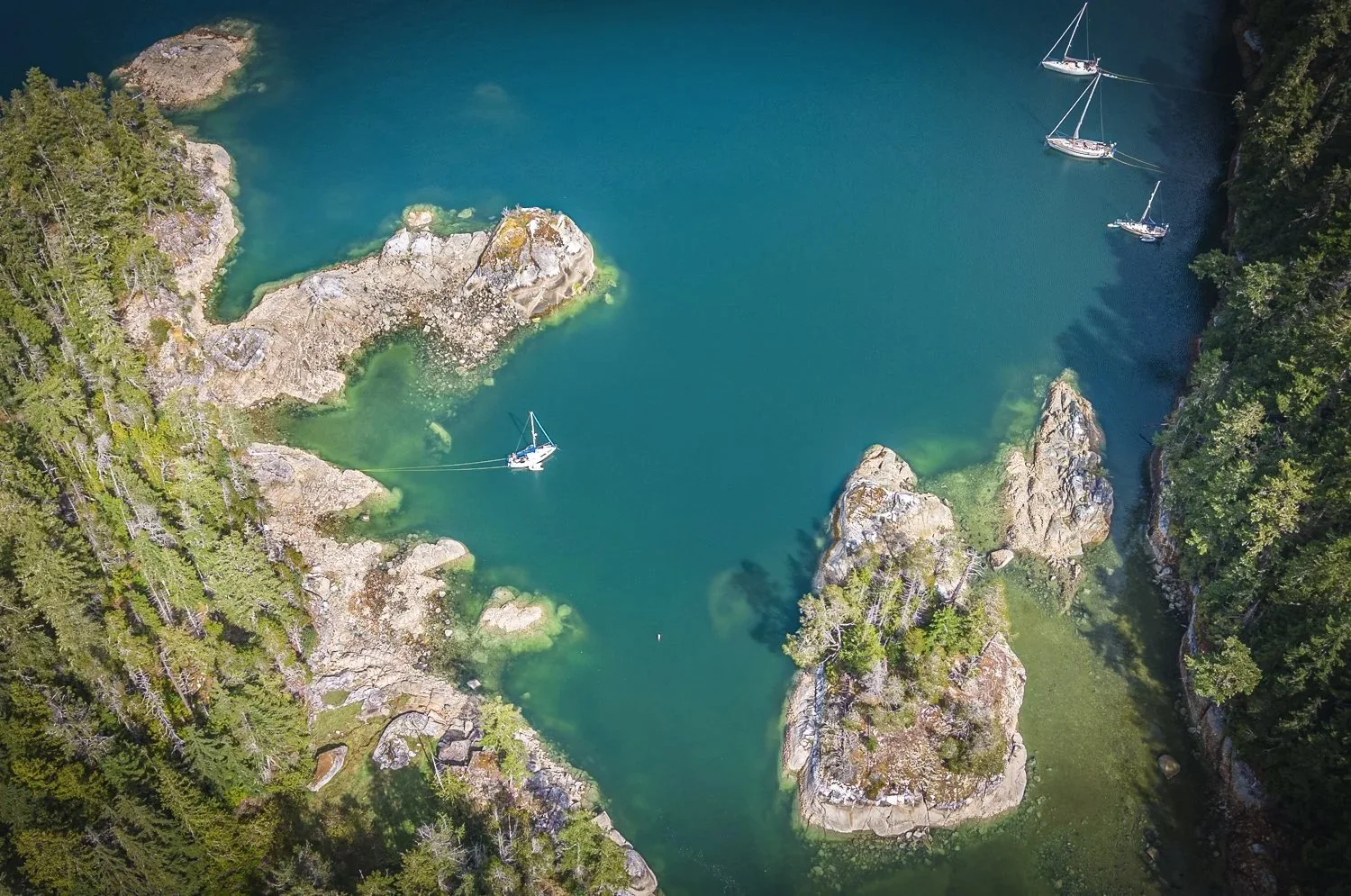
the one boat hole at the NW end of laura Cove

Besides, Laura Cove and the surrounding park offer plenty to do while waiting for the weather to pass. There are places to get ashore, trails to explore and, perhaps best of all, miles of shoreline and neighboring coves to investigate by dinghy.

Once OceanFlyer was securely anchored and stern-tied, we set off to explore.

The trails here are decidedly natural—narrow, uneven and requiring some attention to where you put your feet. Add a few elevation changes and what begins as a pleasant walk quickly becomes enough of a workout to remind you that you have actually been hiking.
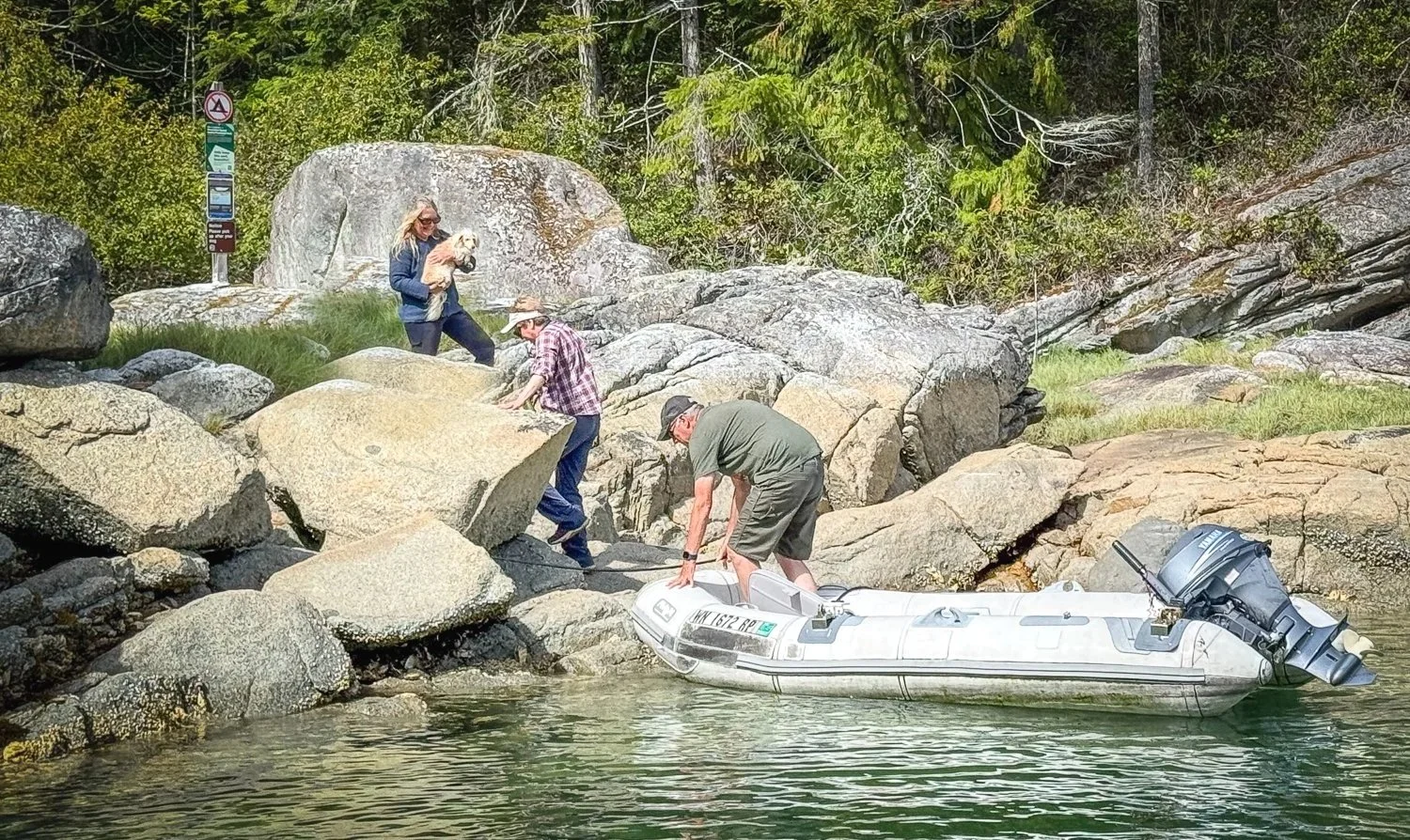
rocky landing in laura cove
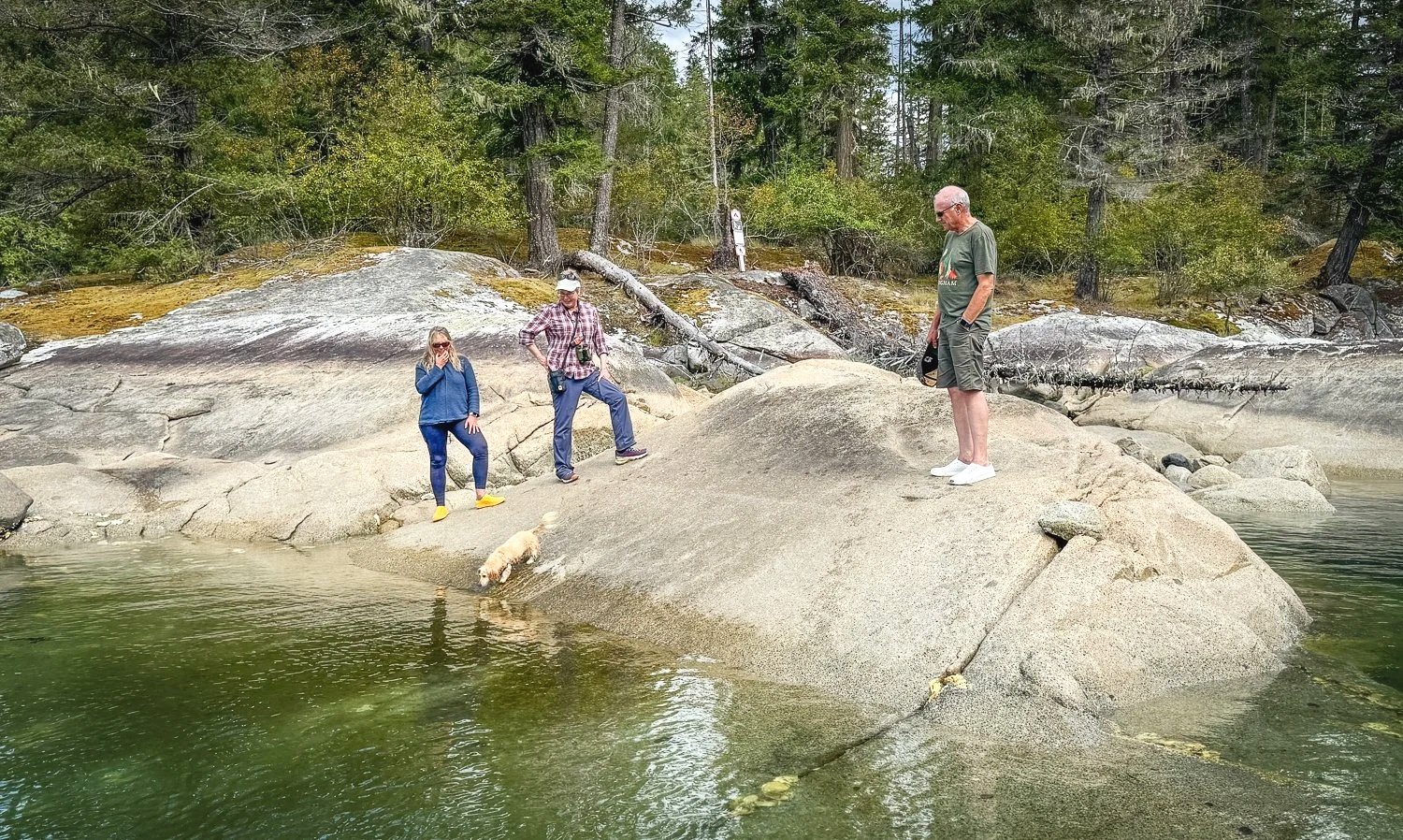
rocks can make for great “beaches”

But for us, the best exploring is from the dinghy.

Desolation Sound is particularly good for this because there is always something to see. As the afternoon wore on, we watched a steady procession of boats arrive, each looking for its own protected corner of the park for the next couple of days.
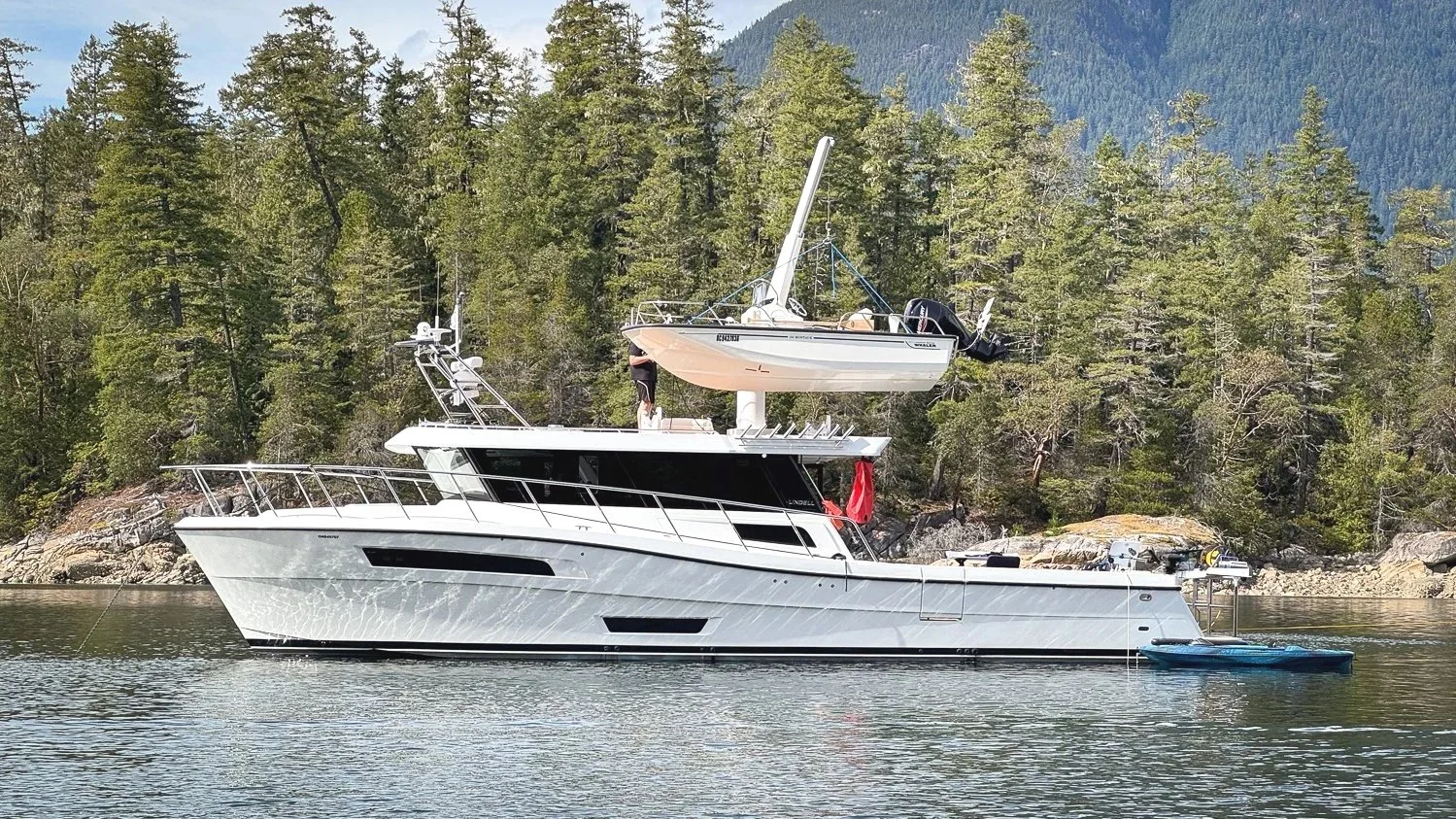
winner of the biggest dinghy relative to the size of my boat contest

And what a collection it was.

Small boats and very large boats. Sailboats and powerboats. Cruisers who made anchoring and stern-tying look effortless, and others for whom the process was clearly still a work in progress.

Exploring by dinghy provides a front-row seat to all of it.

There is, admittedly, a bit of nautical voyeurism involved. You admire the boats, study the anchoring techniques, notice clever pieces of equipment and occasionally watch a maneuver unfold while quietly wondering exactly how it is all going to turn out.
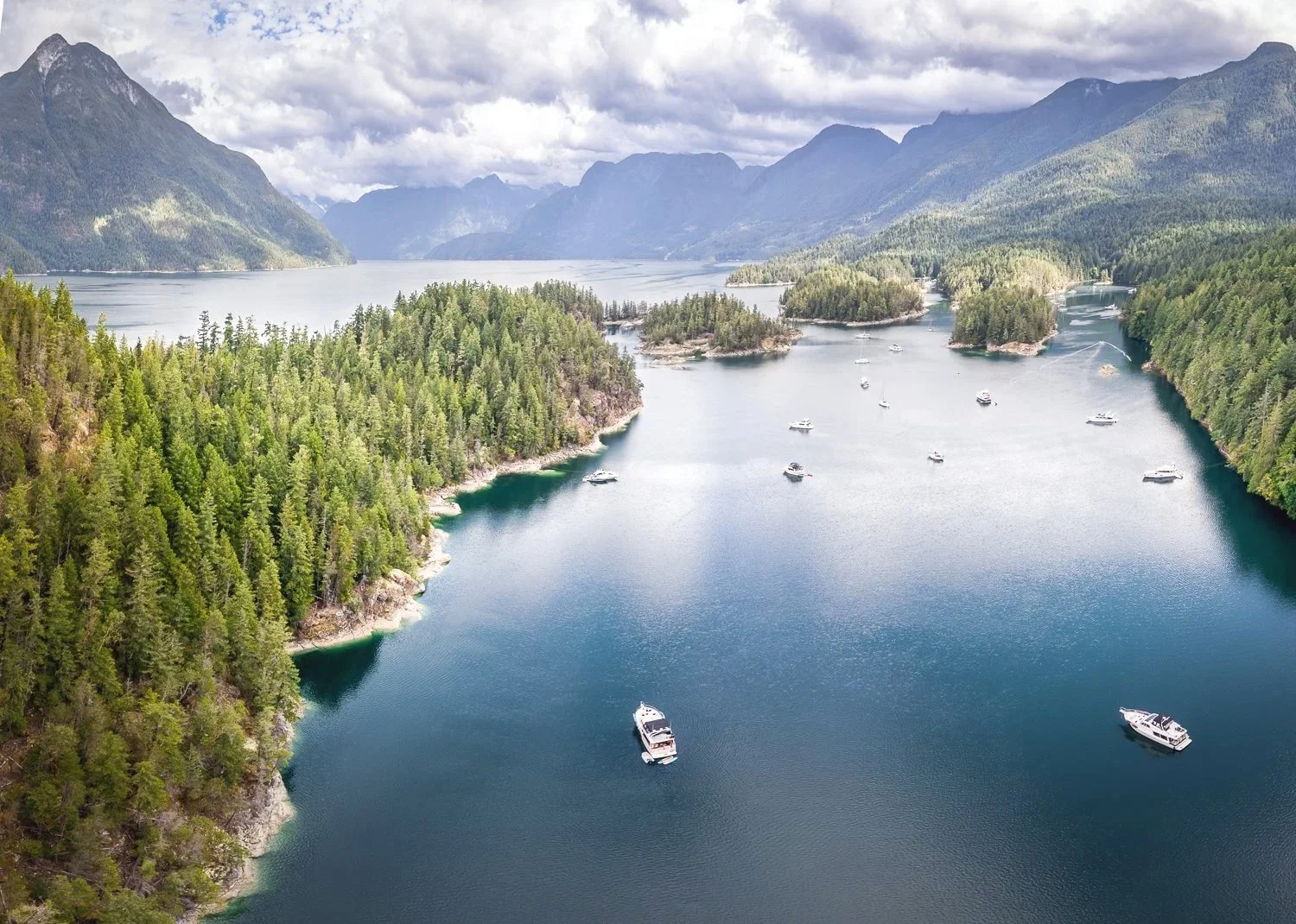
prideaux haven is always full in season
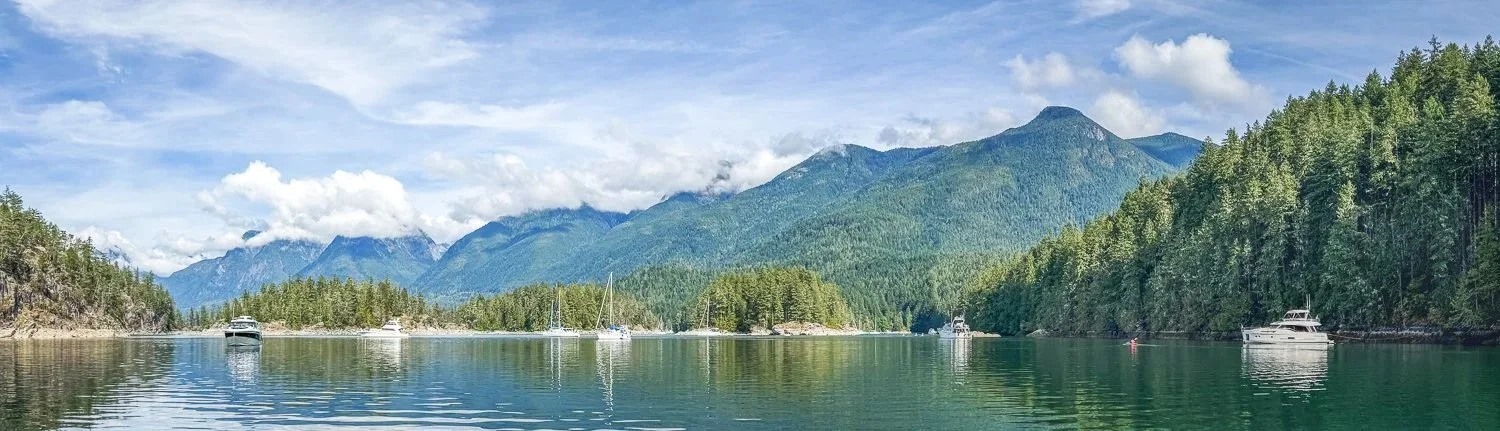
the view from prideaux haven is only one of its attractions
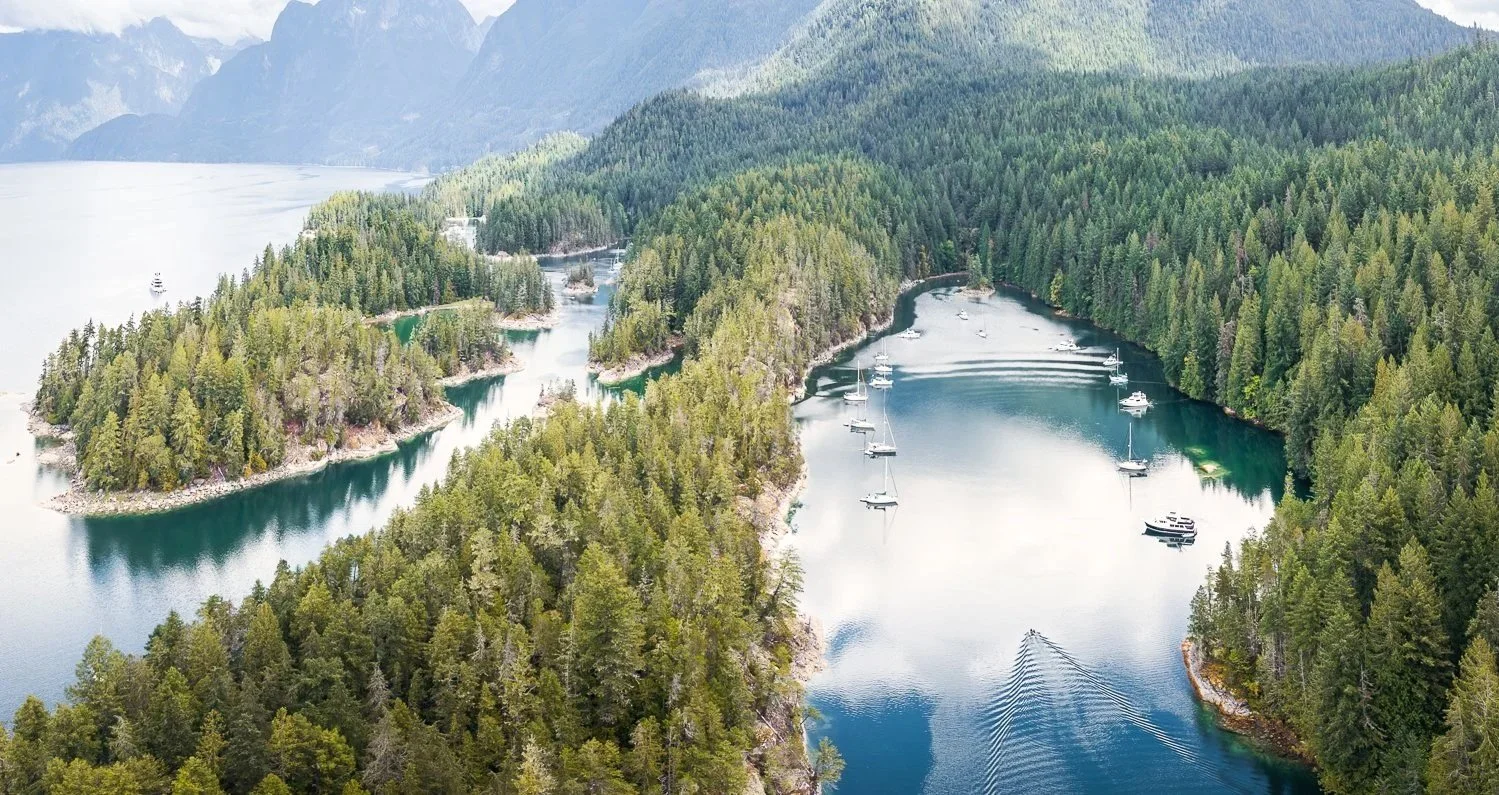
melanie cove is full again
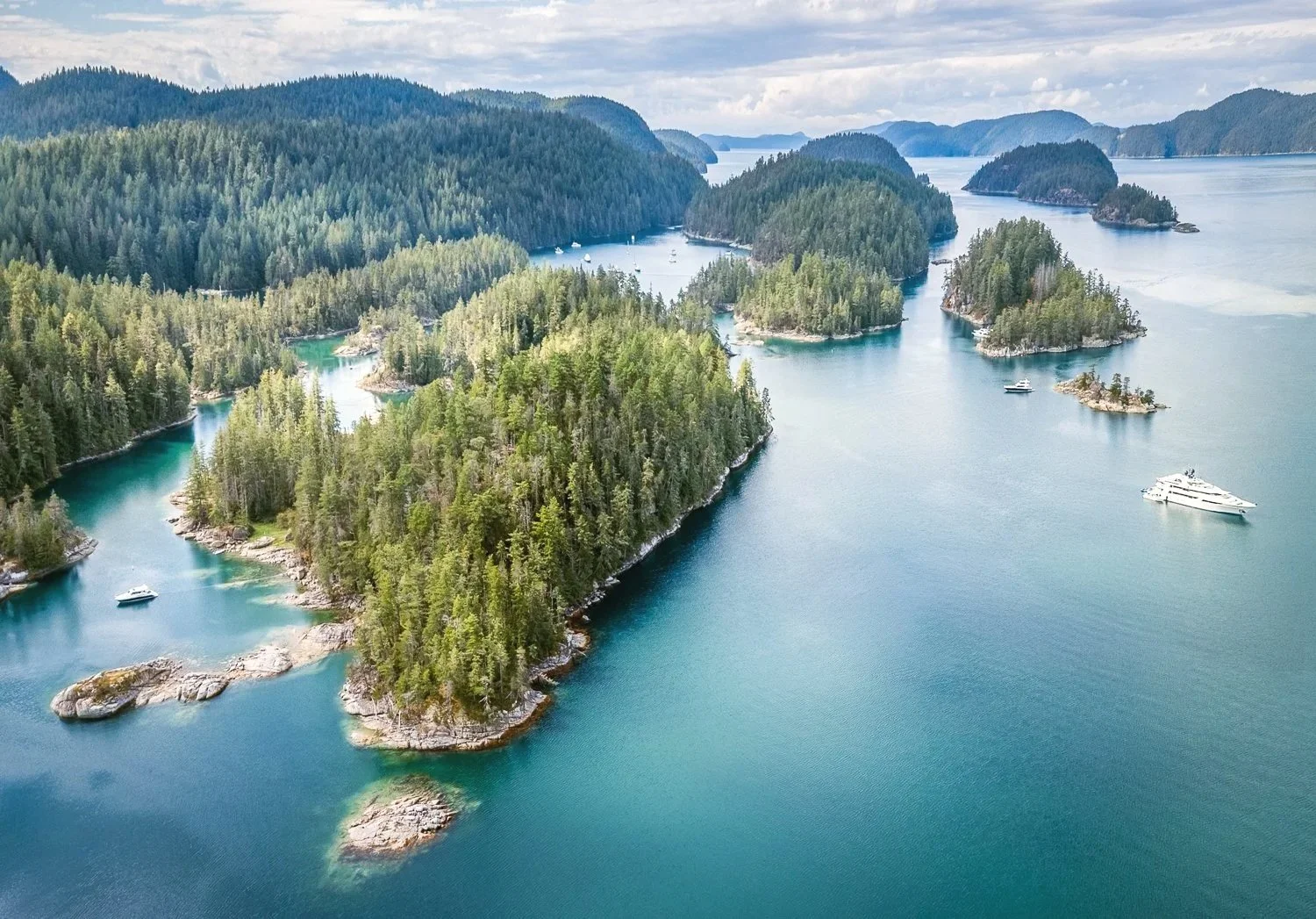
even the waters just outside deoliation sound park become anchorages
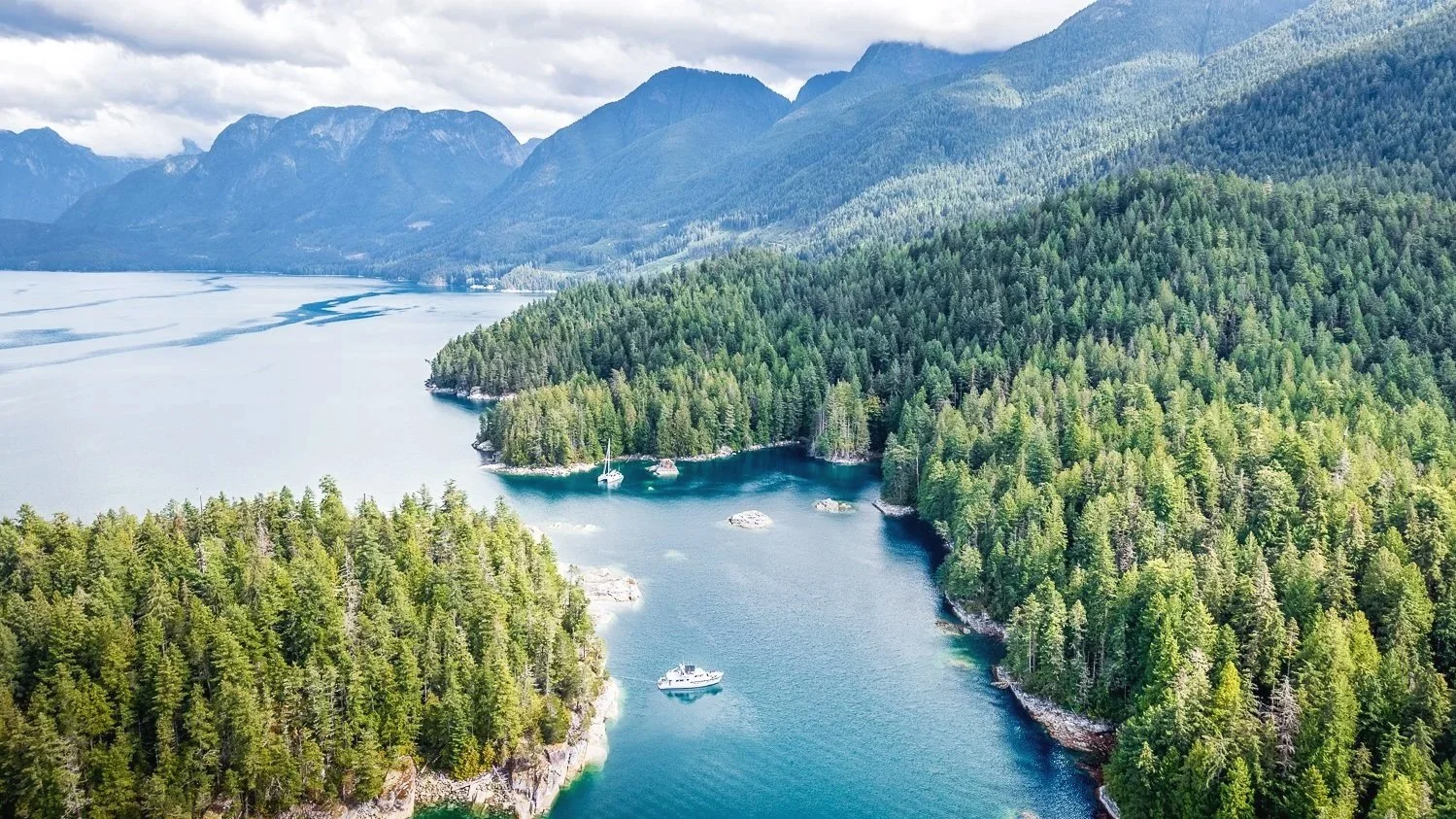
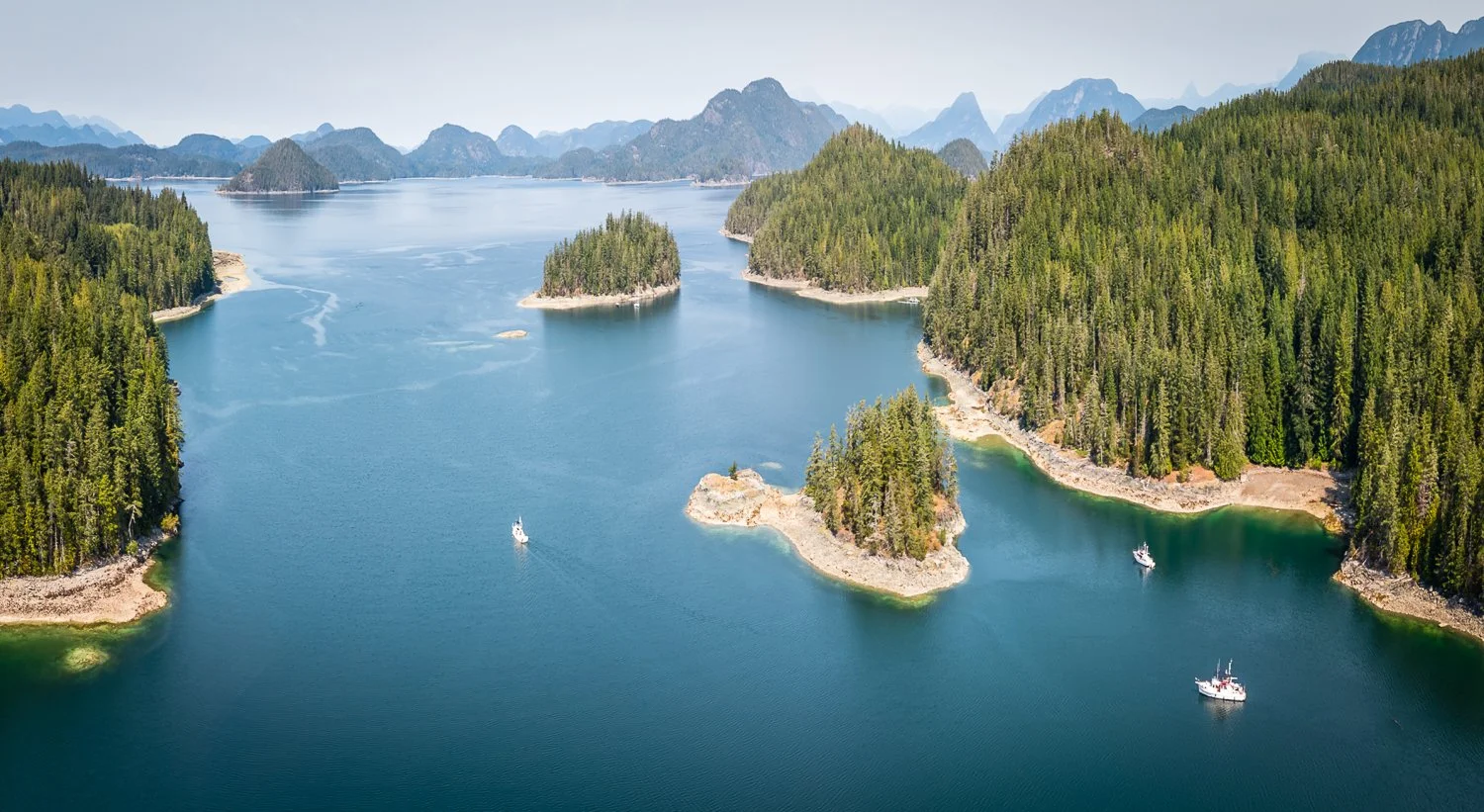
a few boats found their spots just to the ne of laura cove

Endless entertainment.

By evening, Laura Cove had become a small community of cruisers, all gathered for essentially the same reason. For the next two days, Desolation Sound Marine Park would be home while we collectively waited for the rain and wind to move through.

Days like these are a reminder that cruising the Pacific Northwest isn't always about moving on to the next destination. Sometimes the weather tells you to stay put.

And when it does, there are far worse places to wait than Laura Cove.
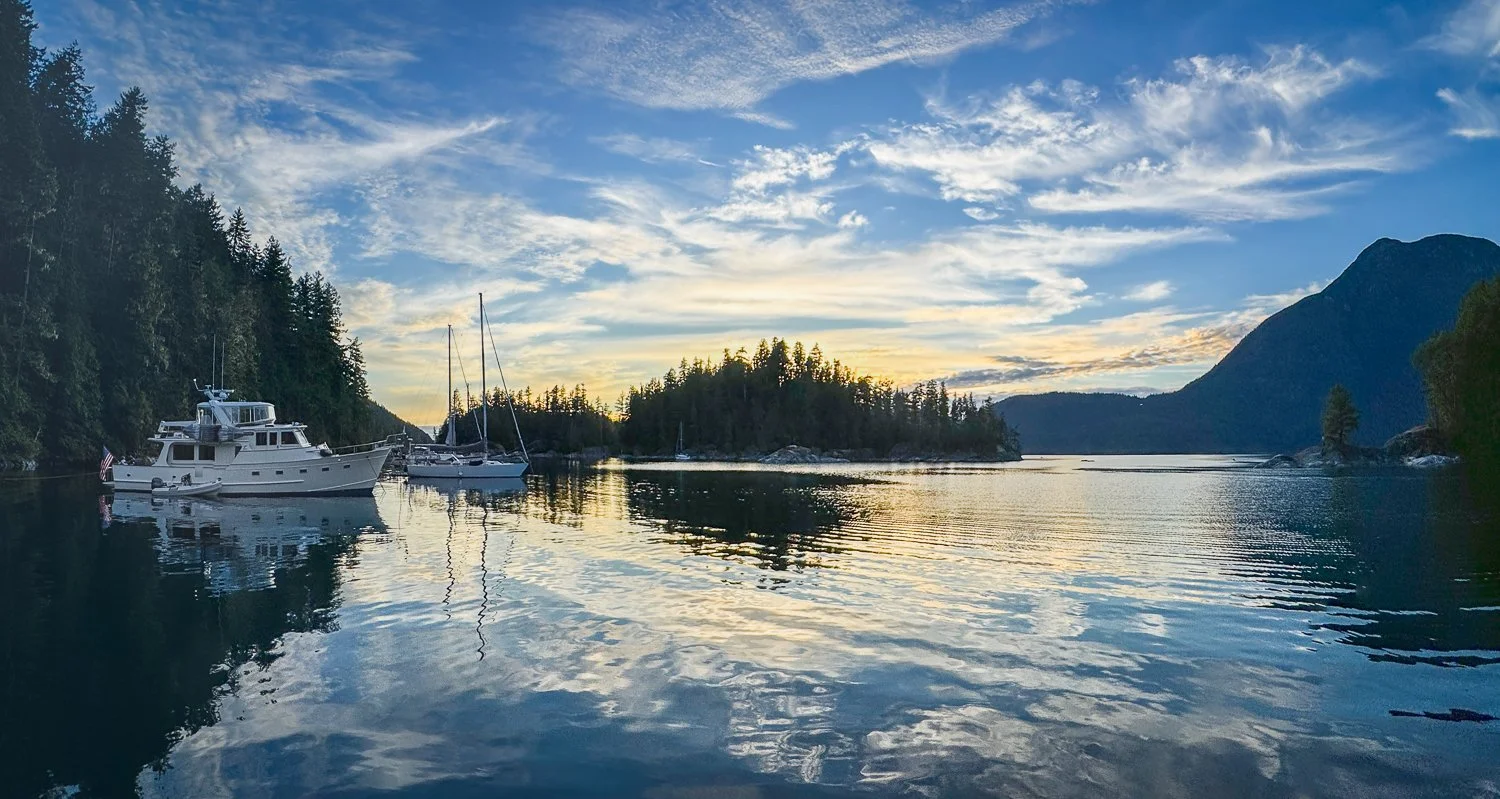
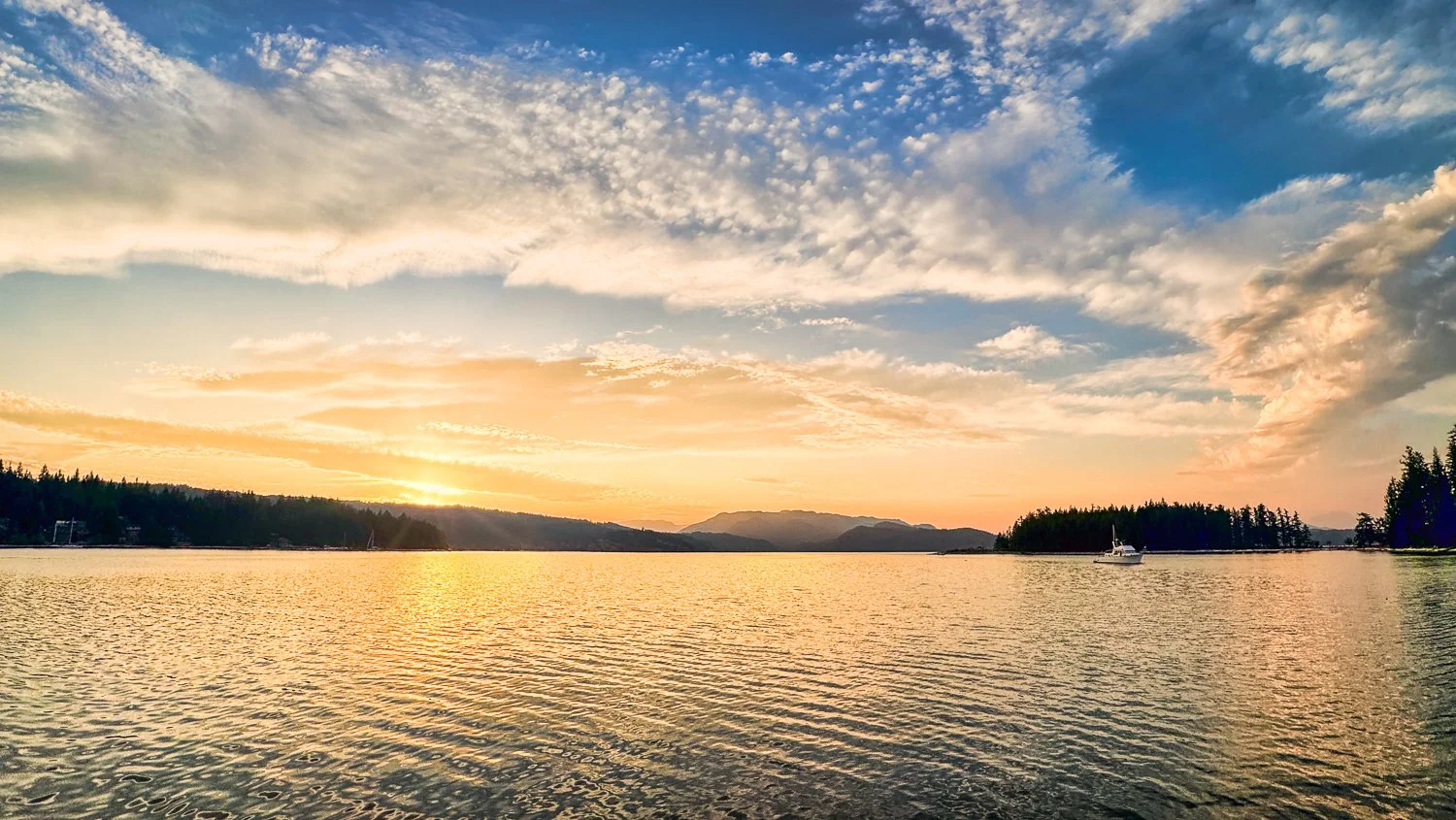
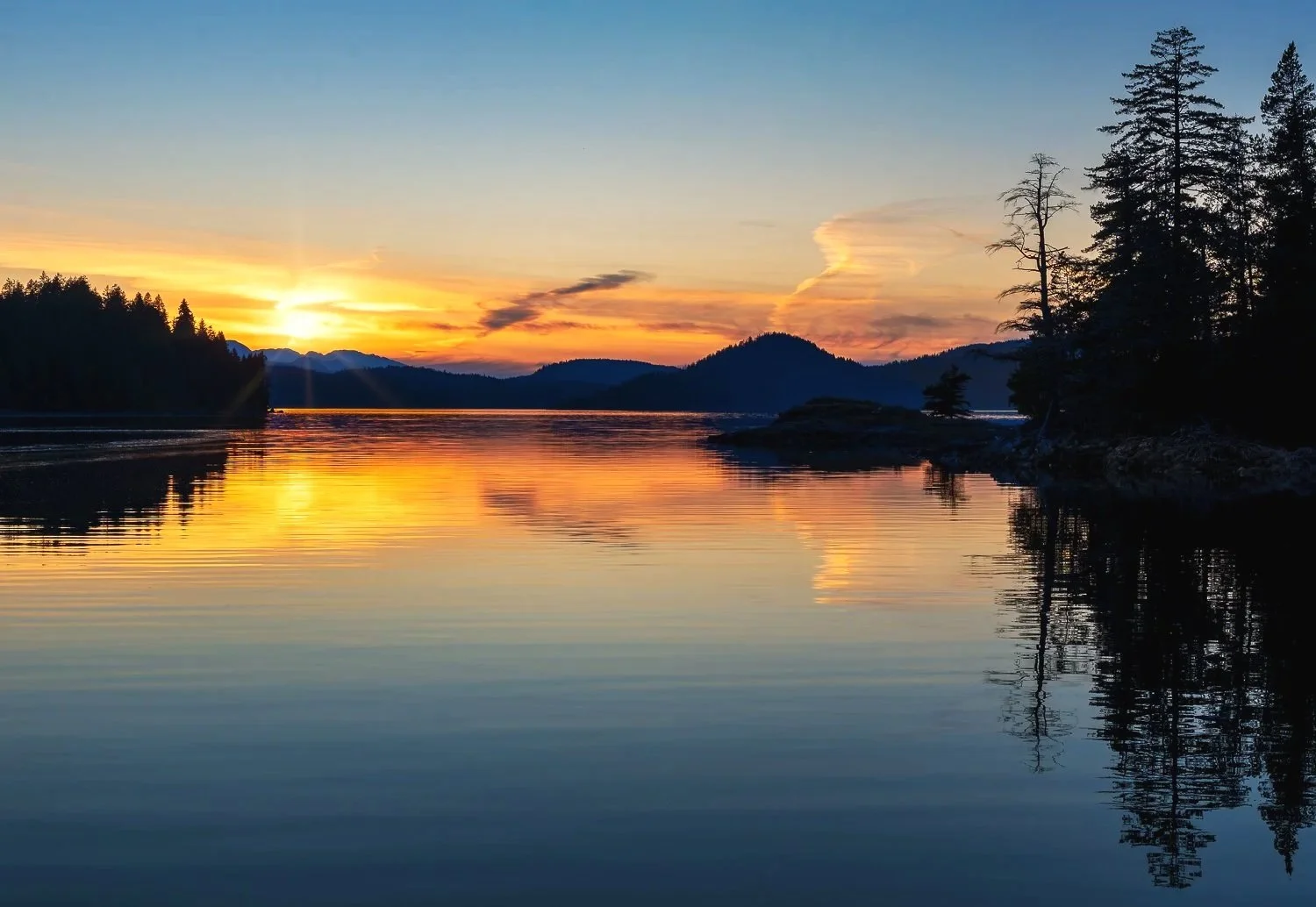
sunset in laura cove
Gorge Harbour to Squirrel Cove

Squirrel Cove is one of those anchorages that almost every cruiser seems to know.

For many, it is not a one-time stop but a place they return to again and again. The reasons are straightforward: good protection, plenty of room, and a convenient location whether you are working your way north or south through Desolation Sound.

There is also a useful little store just outside the cove, which makes Squirrel Cove an easy place to pause and replenish a few supplies before moving on.

looking out the entrance on the right toward the store and government dock in the distance

For those looking for something a little more adventurous, there is the lagoon.

Getting in and out is all about timing the tide. We made the trip once in our kayaks and quickly learned that lesson firsthand. The ride in was easy enough, but we did not linger long. By the time we turned around, the current had picked up and we had to paddle hard to work our way back out.

the entrance to the squirrel cove lagoon at a lower tide

Timing, as they say, is everything.

The store can be reached by dinghy at its drying dock when the tide is roughly eight feet or higher. At lower tides, the nearby government dock provides a more dependable option.

Because the store serves the local community as well as passing boaters, it carries a surprisingly broad selection. For cruisers looking to top off groceries or pick up a few forgotten items, it is a very handy stop.

For us, though, Squirrel Cove was less about provisioning and more about pausing.

squirrel cove looking back from just inside the lagoon

We were beginning to position OceanFlyer for the wind and rain forecast a few days ahead, and Squirrel Cove offered a comfortable place to spend a quiet day while we watched the weather develop.

Sometimes a familiar anchorage is exactly what you need.

I think the final line works well for this leg because it gives the post a reason to exist beyond simply describing Squirrel Cove.

Rebecca Spit to Gorge Harbour

An hour after leaving Rebecca Spit, we found ourselves back at Gorge Harbour.

We stopped here early in the season on our way north, when the docks were nearly empty and the resort had yet to shift into its summer rhythm. This time, we arrived to a very different Gorge Harbour. The docks were busy, the resort's summer activities were in full swing, and we were going to get a chance to experience another side of a place we thought we already knew.

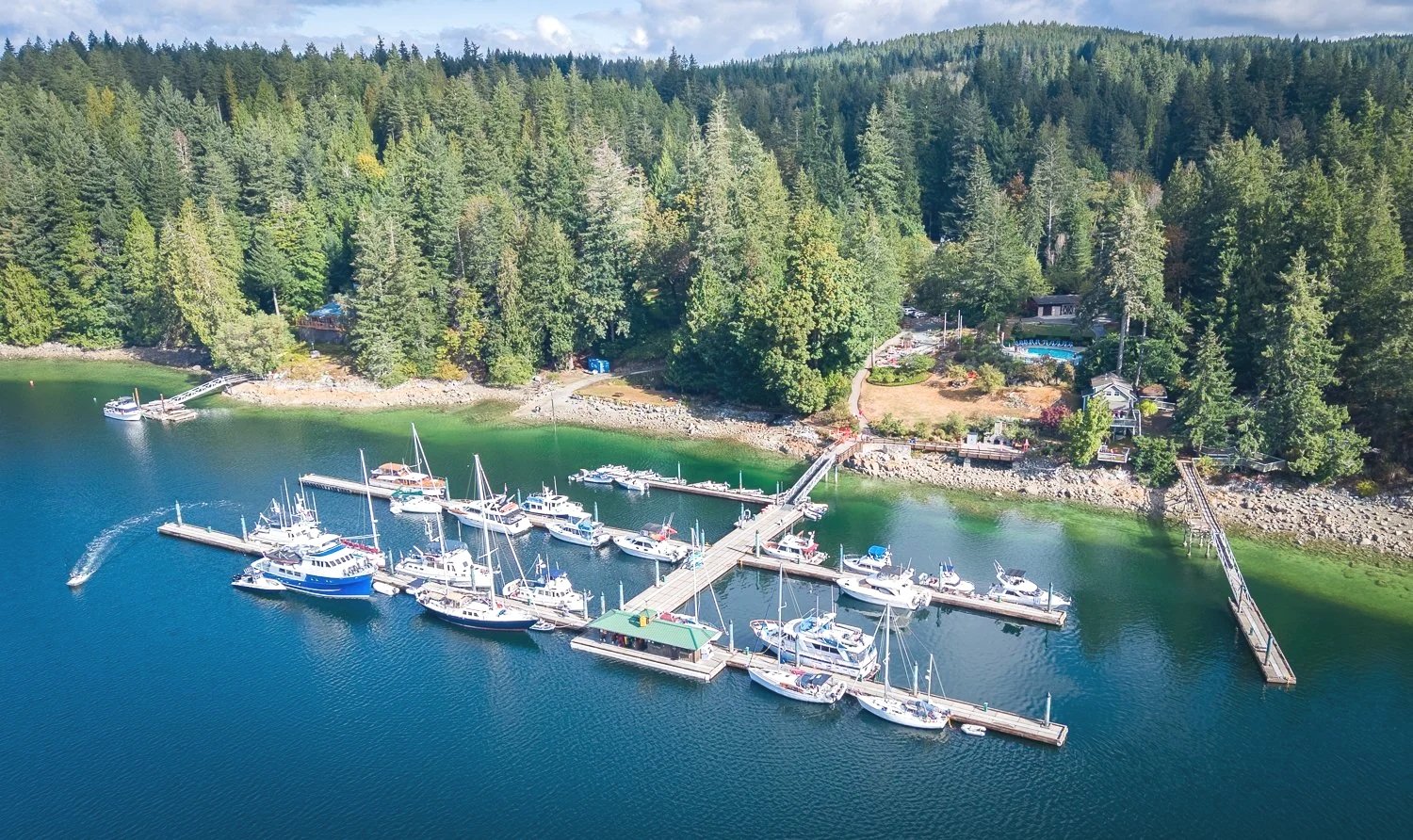
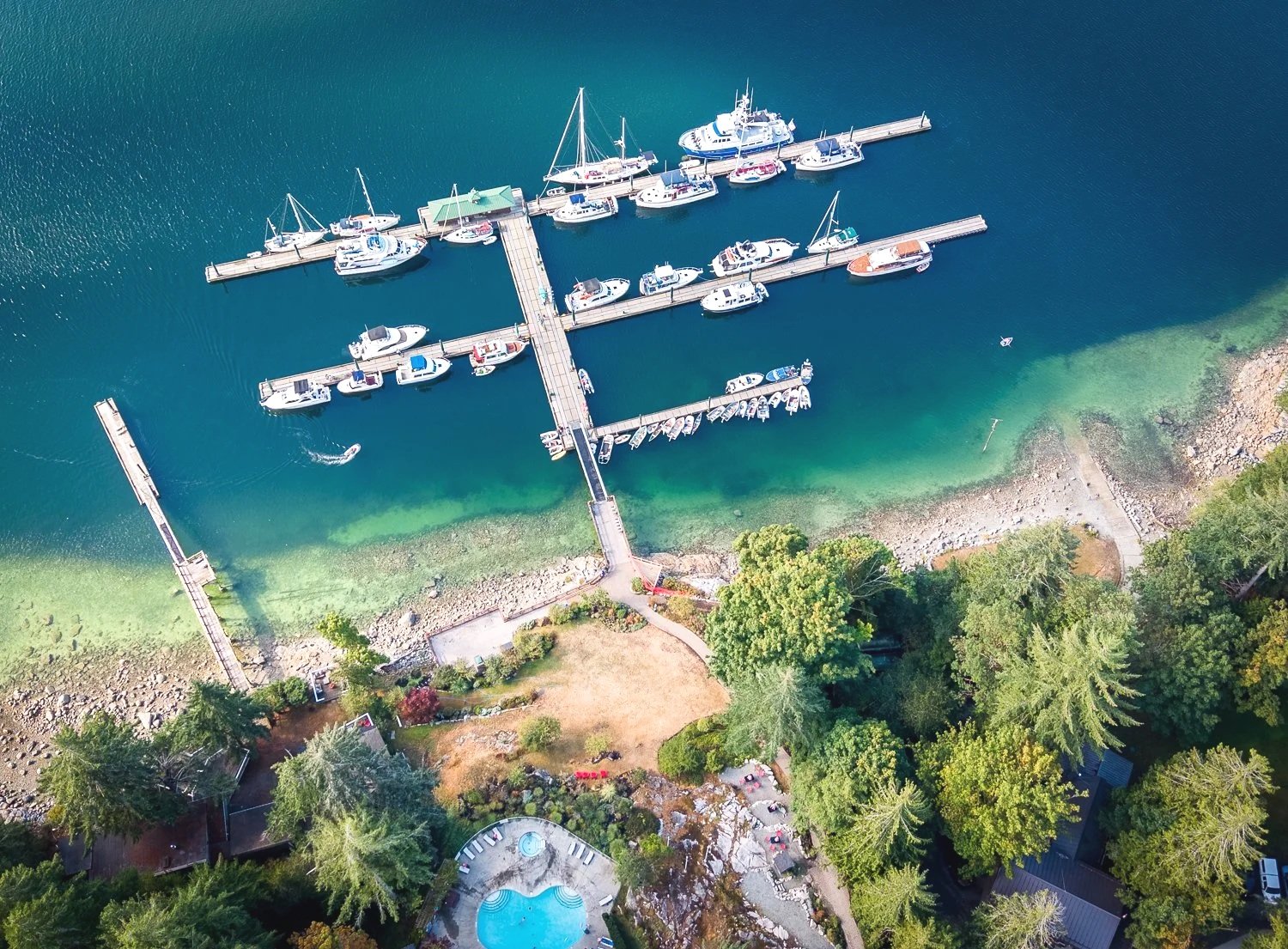
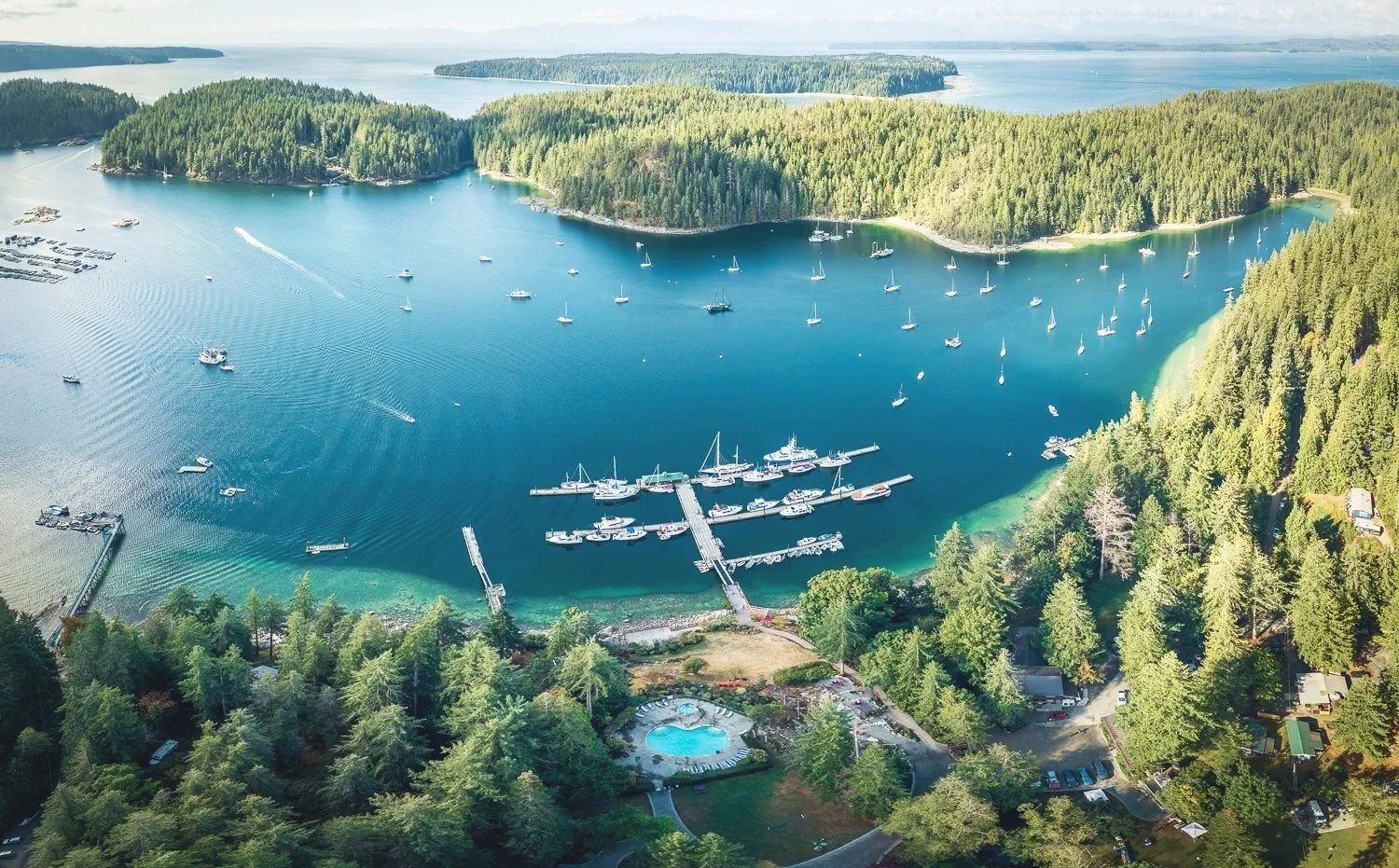
busy docks at gorge harbour

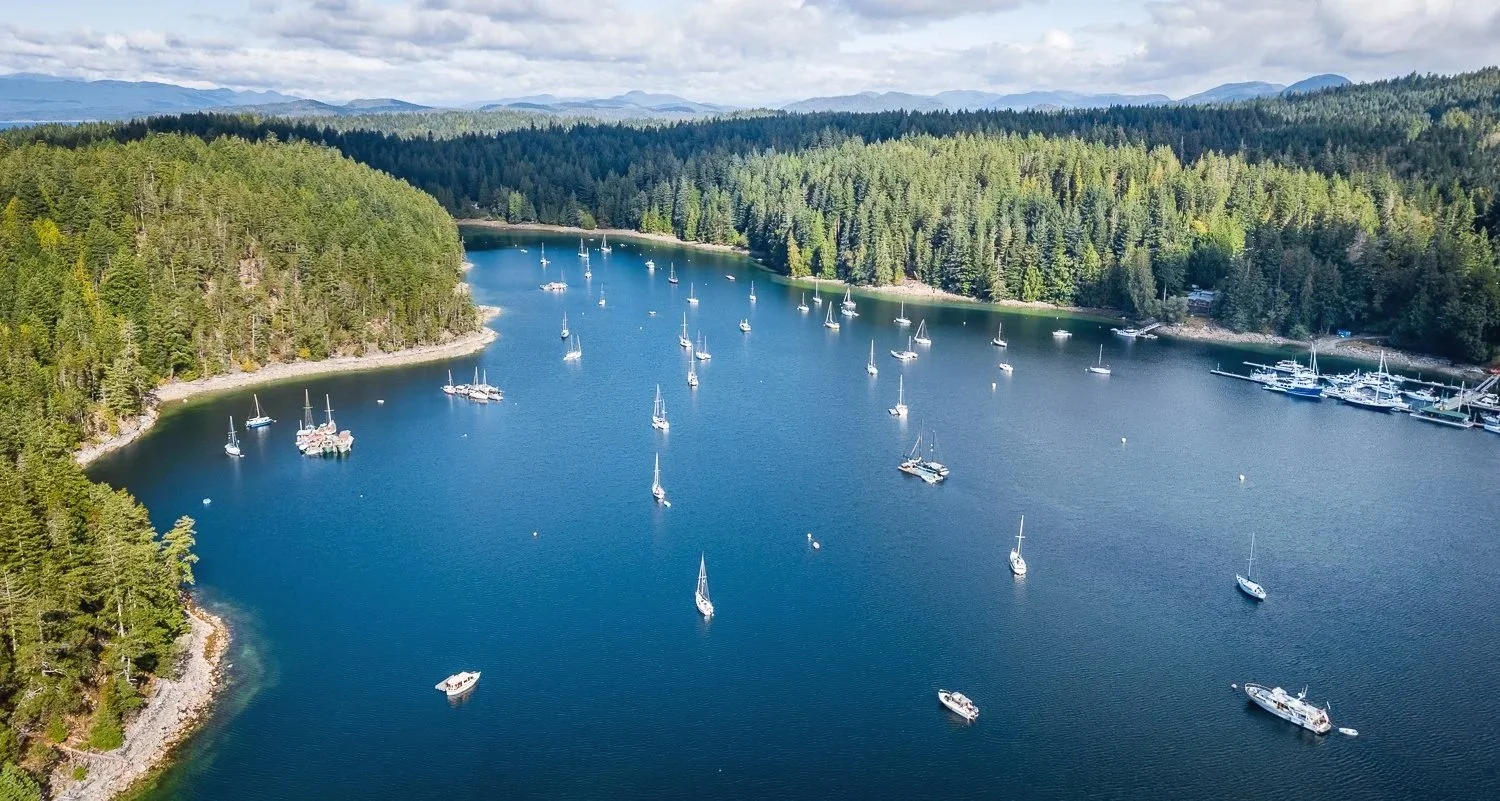
the anchorage in gorge harbour is also busy

The dock staff greeted us with plenty of smiles and enthusiasm, along with just a touch of uncertainty about exactly where they wanted to put OceanFlyer. The marina was expected to be full that night, and every foot of dock space mattered. There was some measuring, reconsidering and repositioning before the final verdict was delivered and our lines went ashore.

shoreside view of the docks

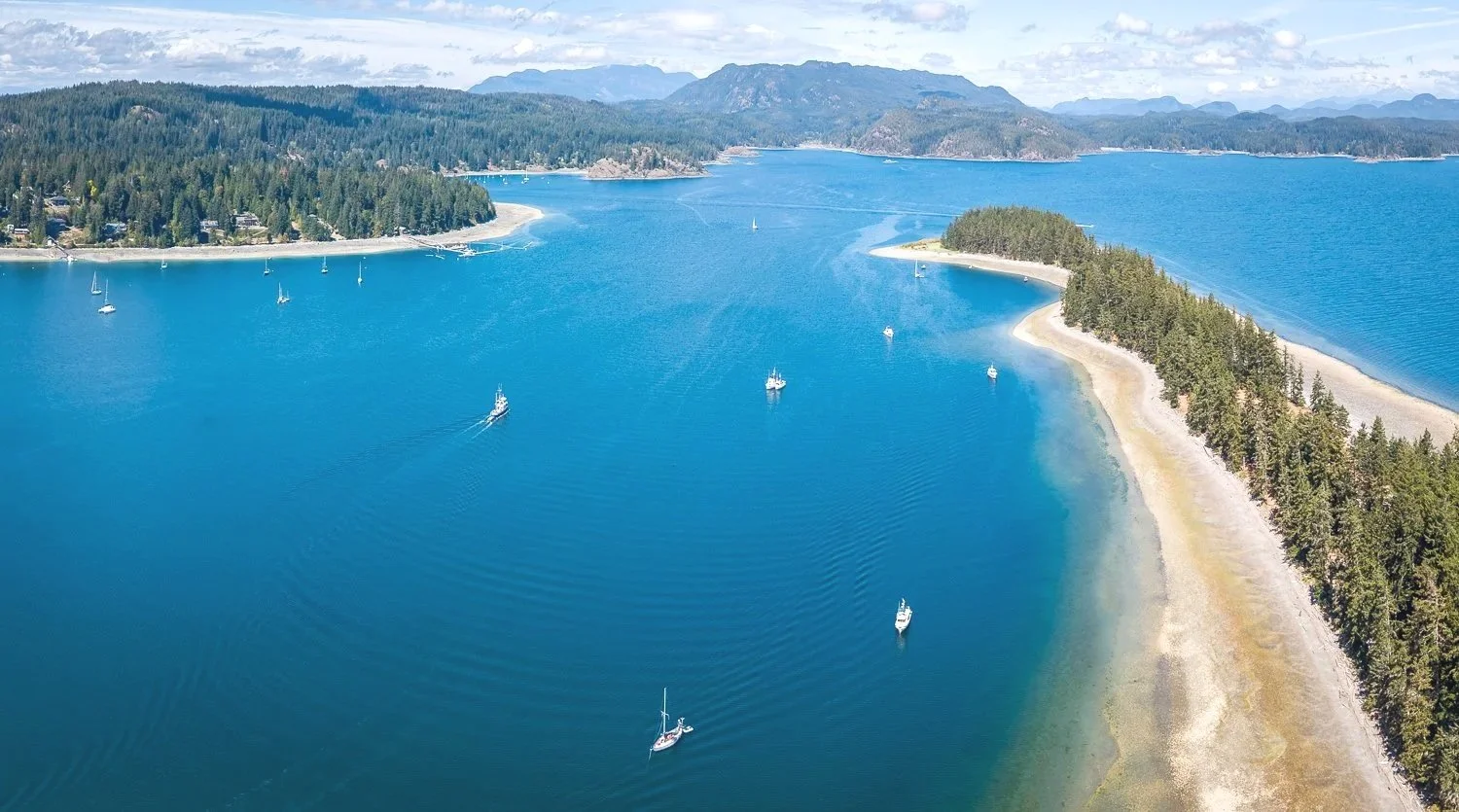
gorge is a large, well protected natural harbour with a dramatic entrance

Once settled, we turned our attention to what Gorge Harbour Resort had to offer. Beyond the practical attractions of the store, fresh water and fuel, the resort has a fireside patio overlooking the marina, with live entertainment scheduled throughout the summer. After weeks when our evening entertainment often consisted of watching the light fade over an empty anchorage, this promised a pleasant change of pace.

The next morning brought the local farmers and craft market, held on the resort grounds. At least, "farmers and craft market" was how it had been advertised. As it turned out, the farmers apparently had other plans, leaving the craftspeople to carry the day.

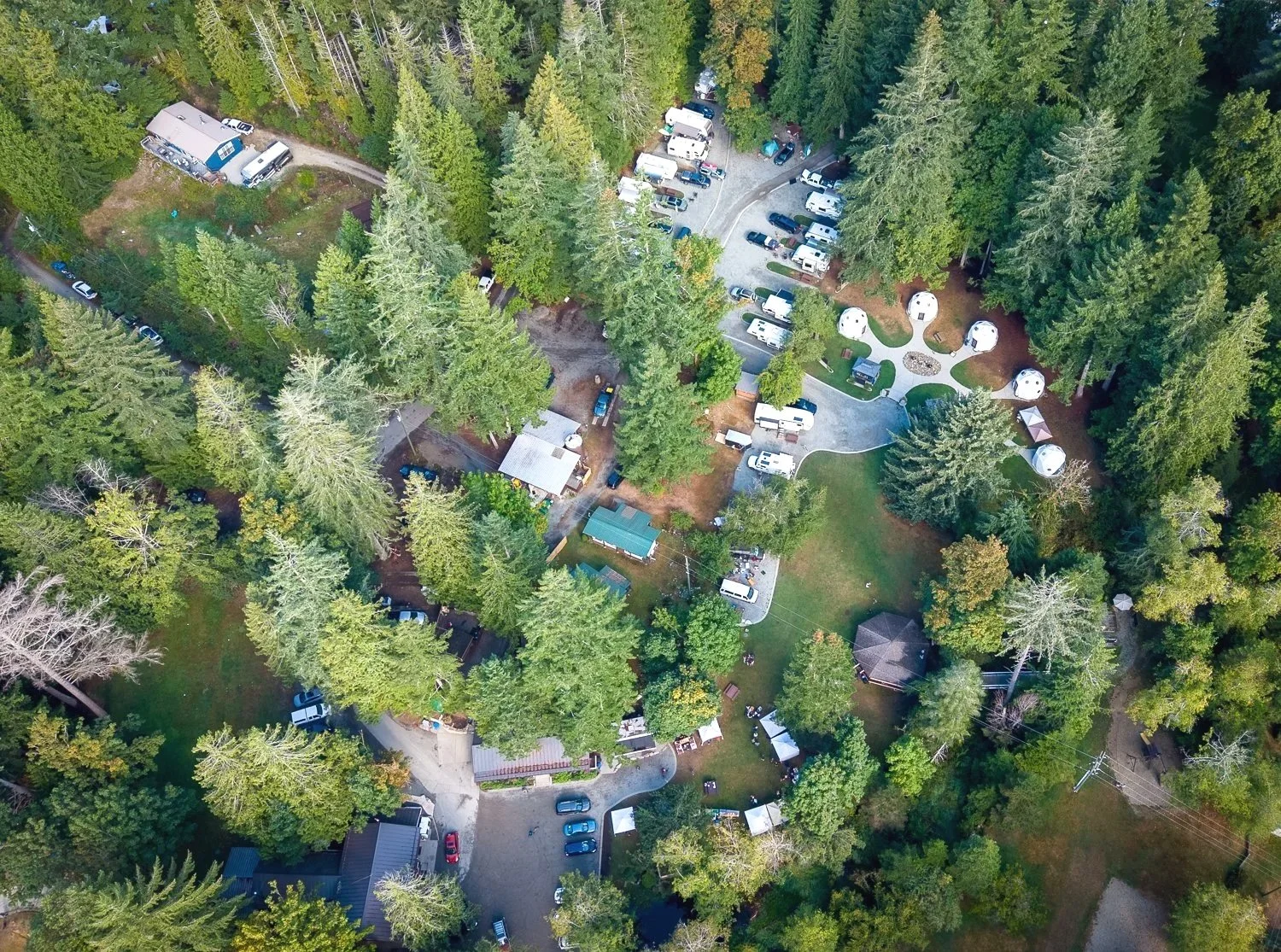
there is even more activity on the shore side of the gorge harbour marina and rv park

The more memorable event came later, when members of the local Indigenous community gathered to share traditional songs and stories. Their presentation quickly drew a crowd from both the marina and the campground and gave us an unexpected opportunity to learn a little more about the people and traditions of Cortes Island.

By evening, the fireside patio was again alive with music. Rather than join the crowd, we claimed our own private balcony on the flybridge. Dinner came from the resort's food truck, while the music drifted across the marina and over to us.

Not a bad way to spend an evening.

Gorge Harbour delivered on quite a few fronts, but perhaps the most interesting part of this return visit was how different it felt from the place we had stopped earlier in the summer. Same harbour, same docks, but an entirely different experience.

It is also becoming clear that our cruising is beginning to change. The quiet anchorages and wilderness stops that defined much of our summer are gradually giving way to busier harbours, marinas, restaurants and communities as we work our way south.

It is a different style of cruising, but not necessarily a lesser one.

Sometimes the trick is simply recognizing when the scenery has changed, adjusting your perspective, and enjoying what the next harbour has to offer.

Carrington Bay to Rebecca Spit

Well, today we doubled yesterday’s cruising time—to a full hour.

That is one of the pleasures of this part of British Columbia. Destinations are tucked remarkably close together, and for now we are happy to bank these short travel days. We know there will come a time when getting where we want to go will require most of the available daylight. Today was decidedly not one of those days.

Our destination was Rebecca Spit, a perennial favorite of ours and, judging by the company we usually find here, of plenty of other cruisers as well.

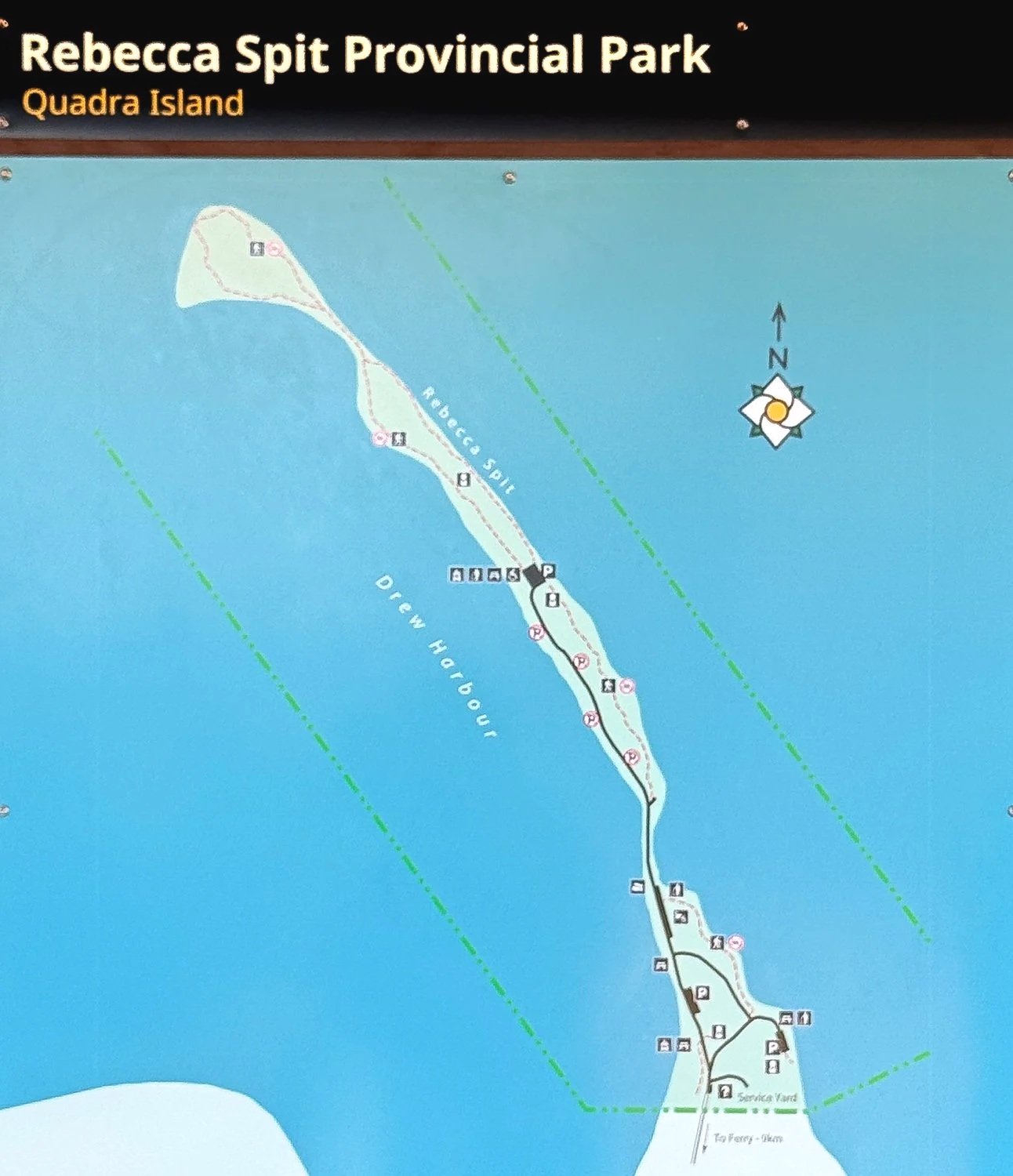
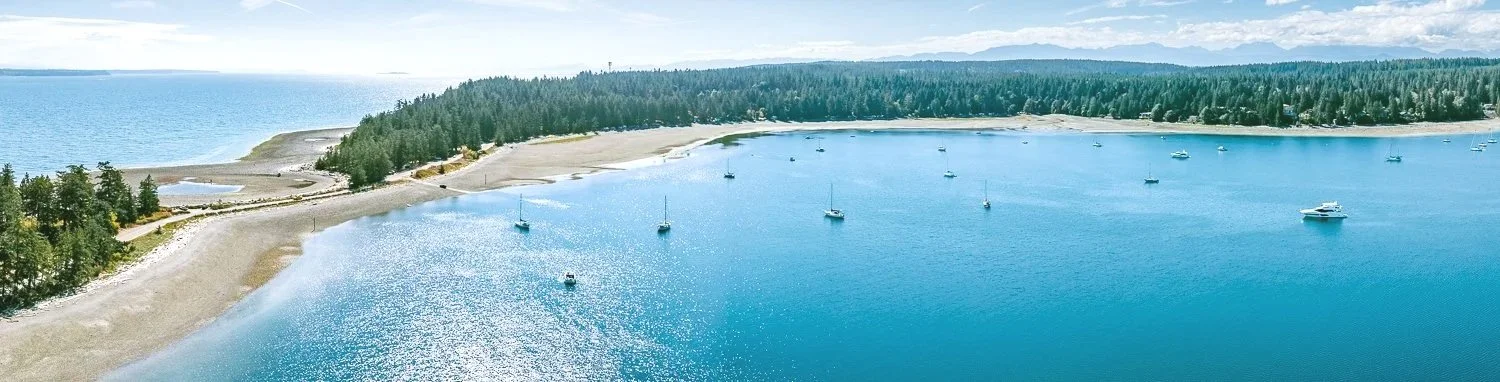
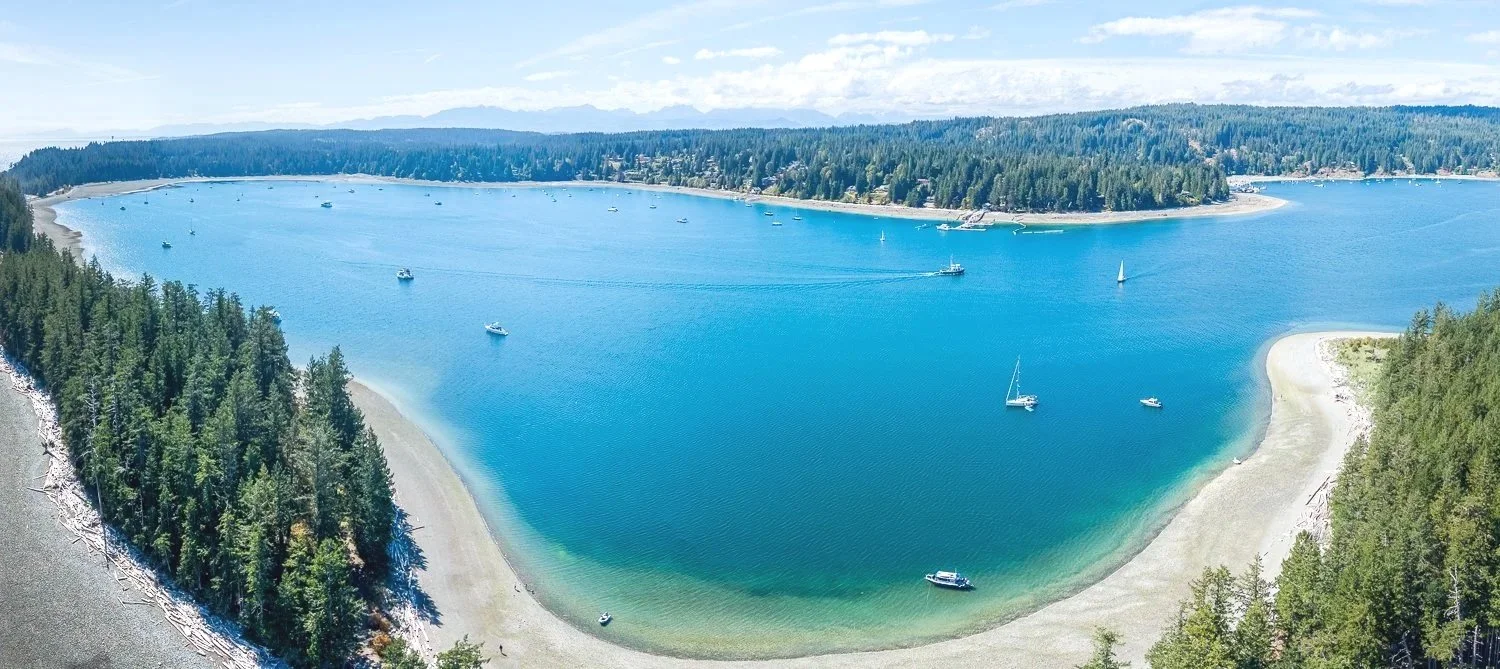
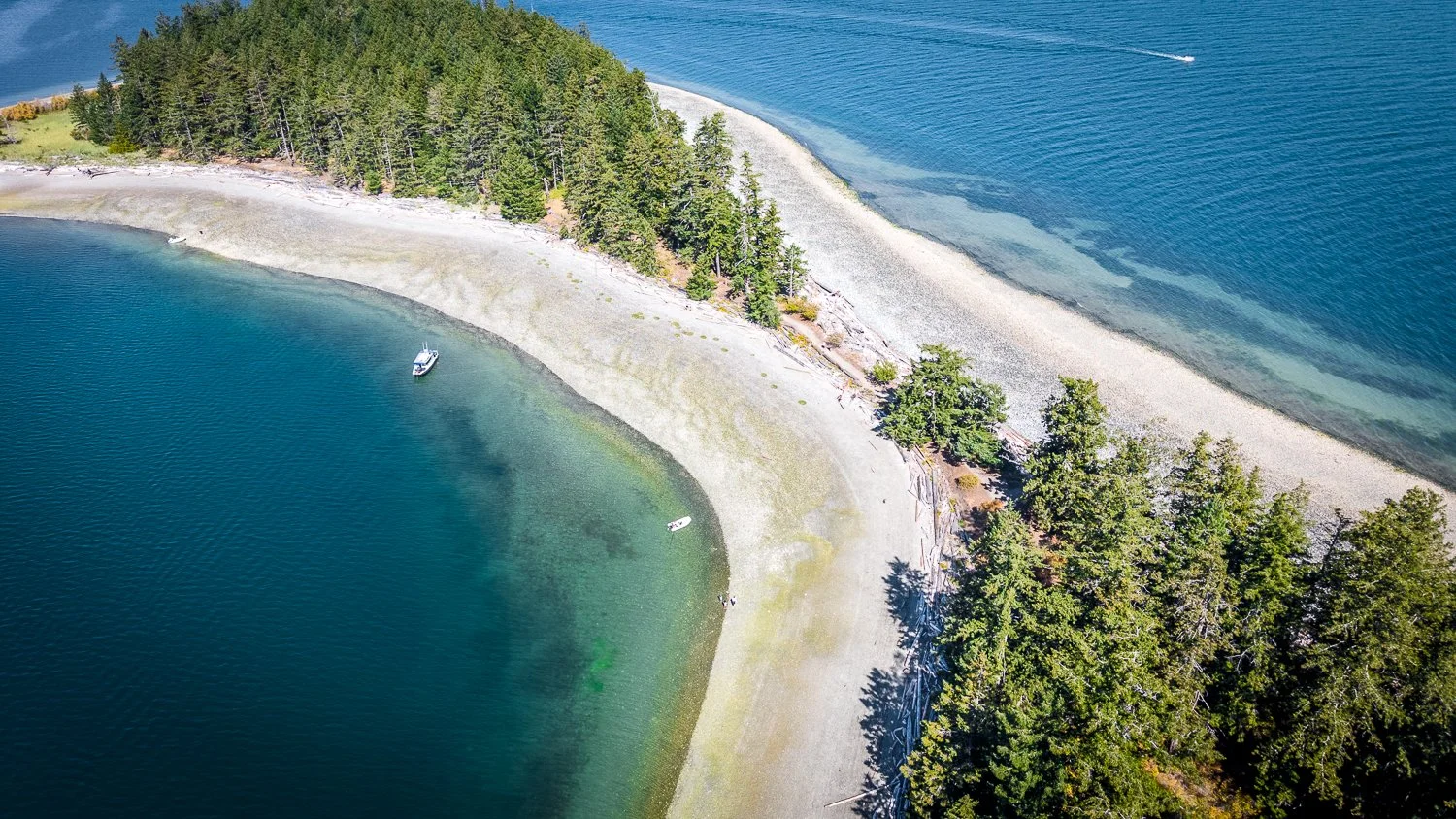
The spit forms a long, protected anchorage along the eastern shore of Quadra Island. It is popular from both directions: boats fill the water while campers and travel trailers occupy the park just beyond the shoreline. Yet despite all that activity, the anchorage is large enough that it rarely feels overwhelmed. There always seems to be room for one more boat.

the spit at rebecca spit

one of the most popular provincial parks in BC

the “Shallow” east end with campers on the shore

rebecca spit from east to west

Part of Rebecca Spit’s appeal is that it offers a little of everything.

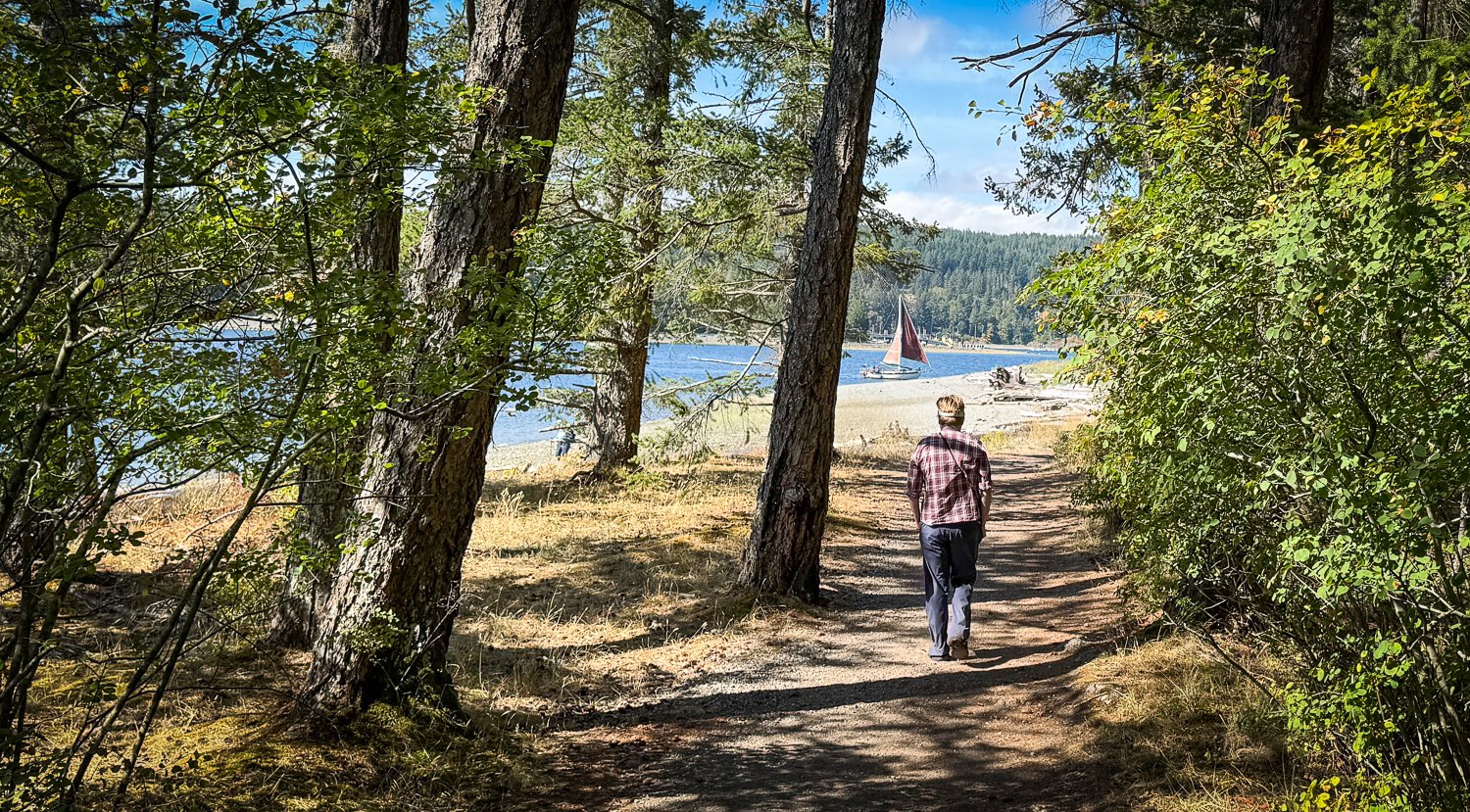
Going ashore on the spit itself could hardly be easier. There are numerous friendly dinghy landings along the beach, and from there a network of trails makes it possible to walk much of the length of the spit. Water is never far away. The trail winds beneath the trees with frequent opportunities to wander out onto the rocky beaches, first on one side and then the other. After spending days moving from anchorage to anchorage, it is a particularly pleasant place to stretch our legs.

the walks at rebecca spit are not to be missed

the tip of the spit is a never changing panorama of boats

M/V Oceanflyer and m/v spellbound rafted in rebecca spit

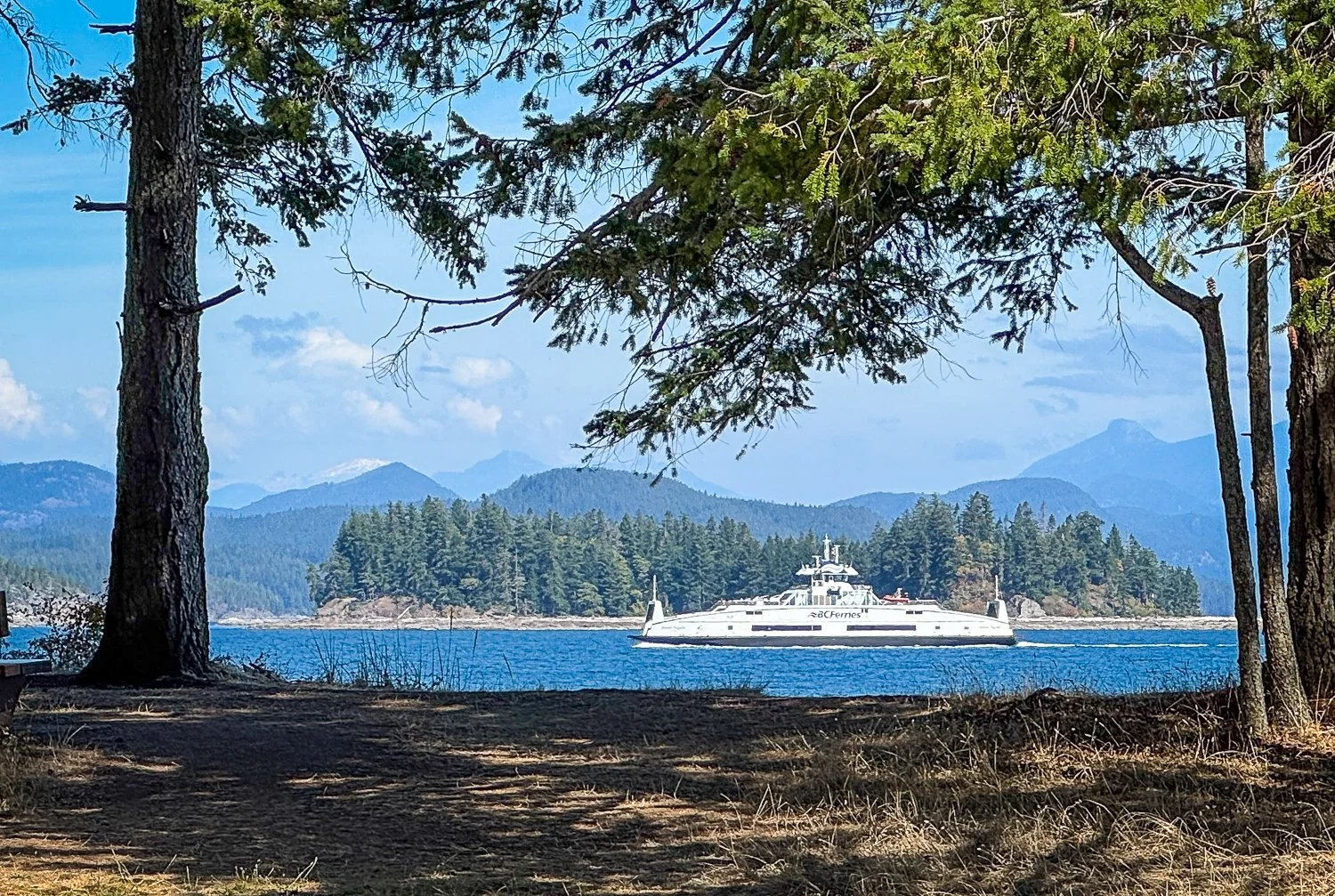
the ferry to whaletown is always on the move

our landing spot on the beach at rebecca spit

thena warror princess, admiral of the m/v spellbound, makes the most of the beach at rebecca spit

For a complete change of scenery, we can point the dinghy toward Heriot Bay.

Landing at the Heriot Bay Inn puts us within easy reach of its pub, restaurant, gift shop and pleasant grounds. The pub makes an easy lunch or dinner destination, while the restaurant offers something a little more ambitious when we have had our fill of pub food. Either way, simply sitting outside on solid ground for a while has its own appeal.

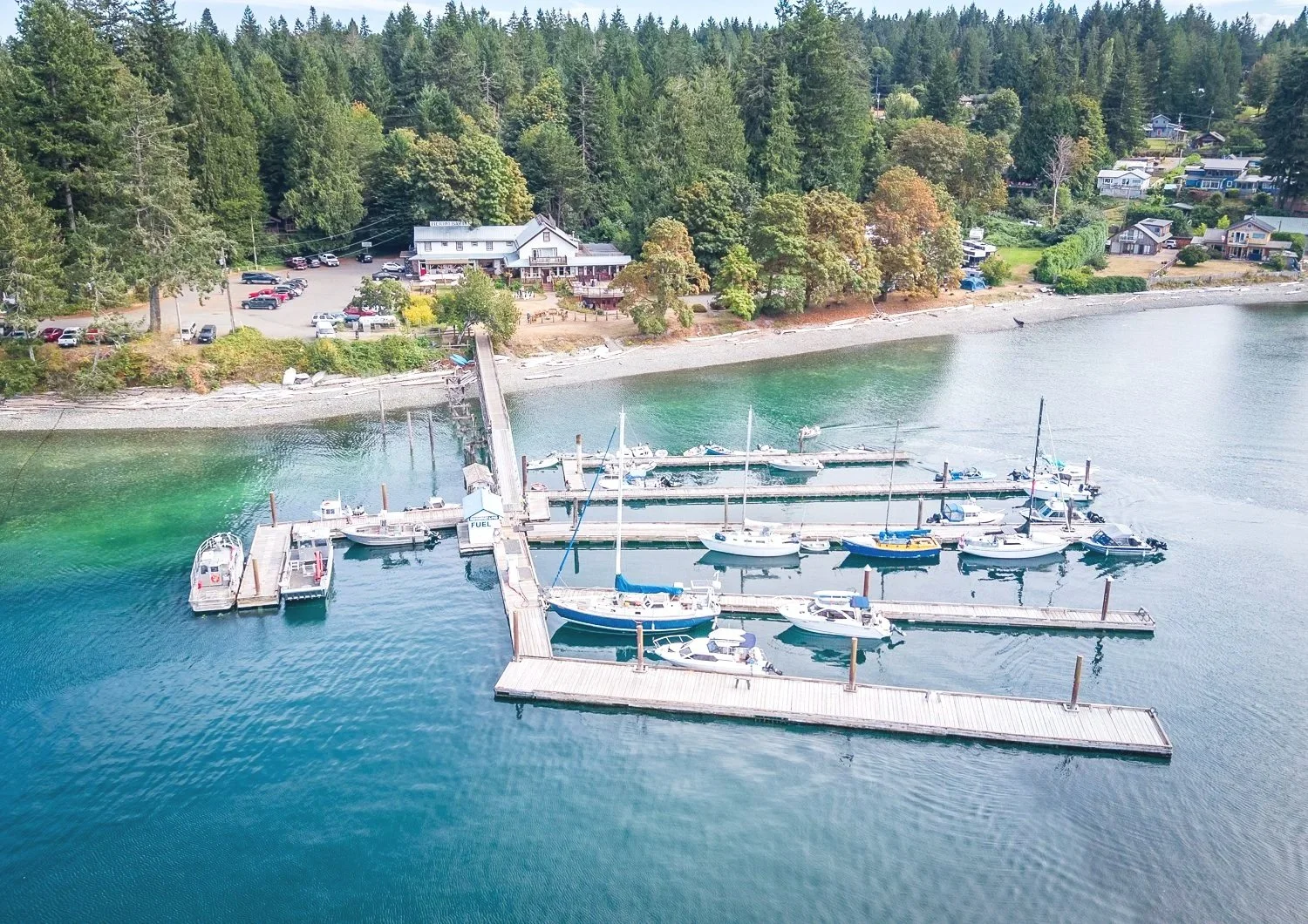
haroit bay inn and docks

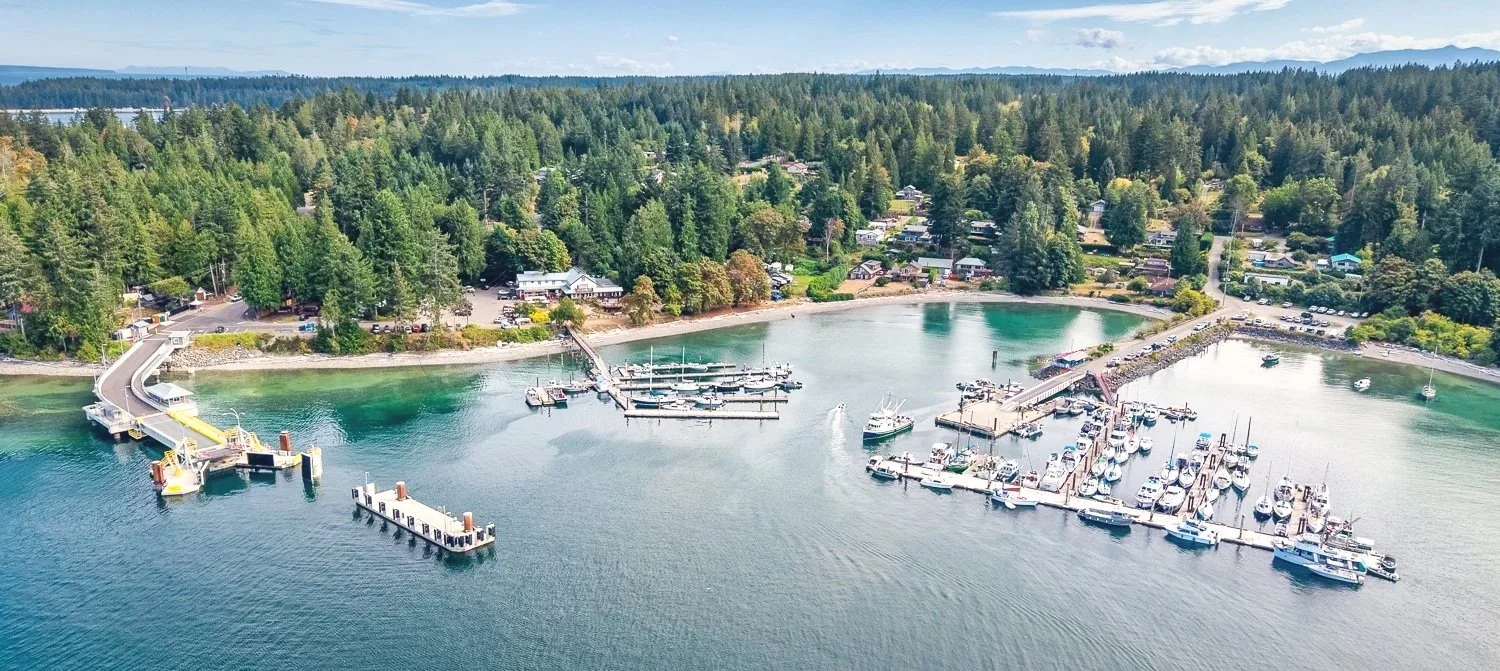
heroit bay is home to the ferry landing, heriot bay inn and the government docks

From the inn, a short walk along the road—often lined with vehicles waiting for the ferry—leads to the local shopping hub. The well-stocked grocery store is the main attraction for cruisers looking to replenish fresh provisions, but the same stop also offers a liquor store, post office, gift shop and coffee shop. After spending time in more remote anchorages, having so much within a short dinghy ride feels almost extravagant.

rebecca spit always seems to produce stuning sunsets

The ferry terminal adds another dimension to Heriot Bay. Boats, campers, island residents and ferry traffic all converge here, giving the little community a surprising amount of activity.

And for cruisers who prefer a dock to swinging on the hook, Taku Resort on the western shore offers a small marina that gets consistently good reports from those who stay there.

Rebecca Spit is hardly a secret, and that is part of what makes it different from many of the quiet anchorages we seek out along the coast. We do not come here for solitude. We come because it combines a protected anchorage, easy shore access, beautiful walks, provisioning and a bit of civilization—all within a few minutes of the boat.

With that combination, it is easy to understand why Rebecca Spit remains a perennial favorite.

And why we keep coming back.

oceanflyer enjoying the sunset show at rebecca spit

Von Donop Inlet to Carrington Bay

Today’s journey was little more than a short hop from Von Donop Inlet to Carrington Bay—another new anchorage for us this season.

Karen had read about several pleasant walks near the head of the bay, where a narrow channel opens into a tidal lagoon. The trails are part of Carrington Bay Regional Park and wind through one of Cortes Island’s more frequently visited stands of mature forest.

Carrington Bay with the lagoon at the head

looking back out from carrington bay NW to Sutil Channel

We have found that wherever a trail can also be reached by road, there is usually more development and upkeep—the natural result of easier access and heavier use. That was certainly the case here.

The unmistakable landmark at the lagoon entrance is an aluminum footbridge spanning the channel. We landed the dinghy just west of it, where broad granite slabs provided an easy, dry place to step ashore.

The trails lived up to what Karen had read. They were well maintained and threaded with the sort of rustic infrastructure that industrious visitors seem compelled to build when left to their own devices. Even the privy on the east side of the lagoon entrance—unexpected, thoroughly improvised and cleverly assembled from found materials—continues to serve the kayakers and boaters who camp nearby.

After our walk, we returned to OceanFlyer and settled in behind Little Jane Islet. The evening was calm, the anchorage quiet and the moon just short of full.

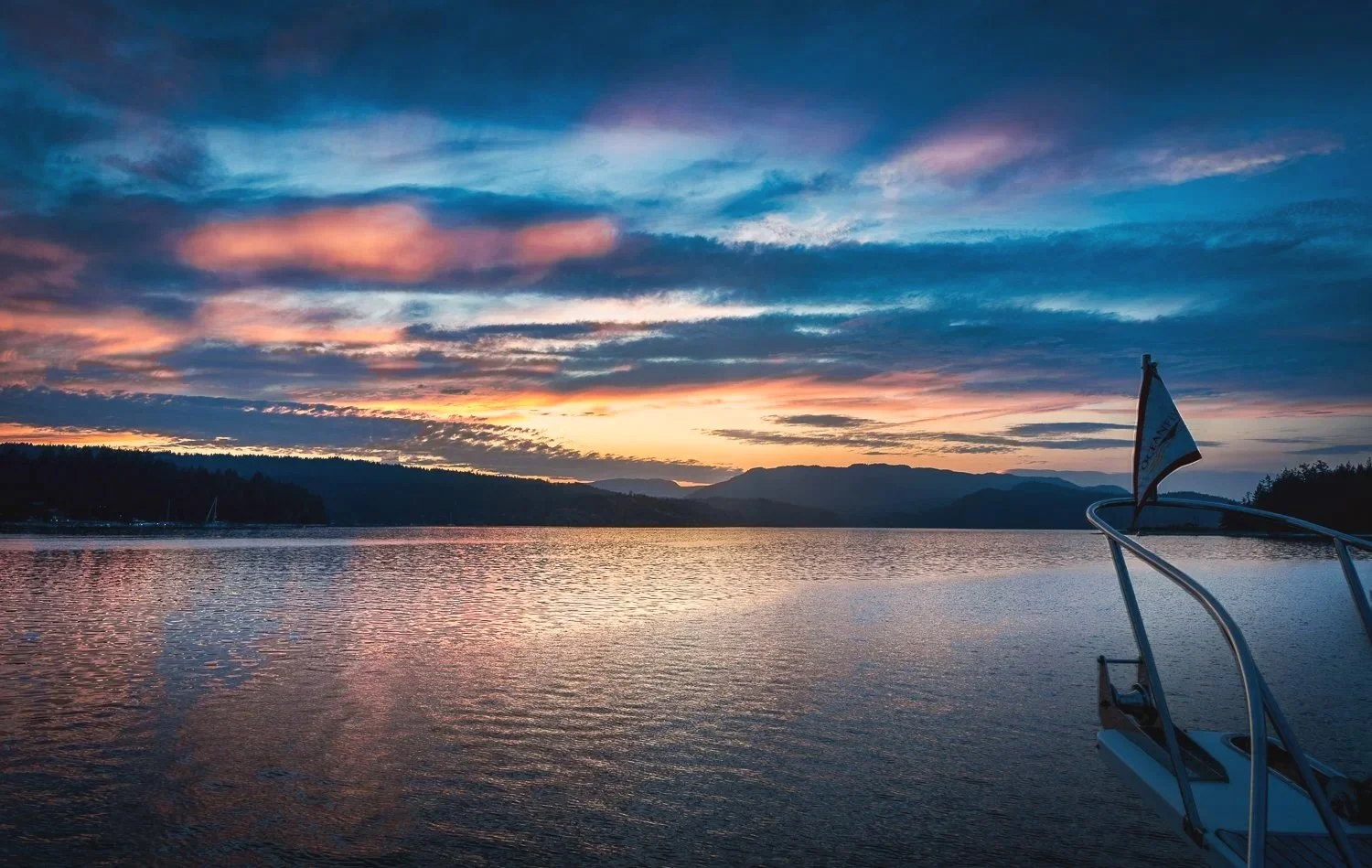
mother nature puts on another show for us

Some cruising days are defined by currents, weather and careful timing. Others ask for nothing more than a short passage, a walk through the forest and a peaceful night at anchor.