Hobart Bay to Windfall Harbor

After two soggy days in Hobart Bay, we pointed OceanFlyer north up Seymour Canal in search of a change of scenery—and hopefully, fewer clouds.

Our destination was Windfall Harbor, just a few miles shy of Pack Creek, the popular bear-viewing area managed by the Forest Service. Mid-June to mid-July is the slow season for bear activity there, so we skipped the permit hassle and opted for Windfall instead. Karen had read that you can see just as many bears from your own deck—and she wasn’t wrong.

The cruise up was quiet and smooth: low gray skies, light rain, calm seas. Whale blows and tail slaps marked our entrance into Seymour Canal, and a few Dall’s porpoise gave us a brief bow-ride—though they seemed as weary of the rain as we were, surfacing less often than usual.

We found just one other boat anchored in Windfall, leaving us plenty of room to choose our spot. The harbor is big, with good holding in 50–60 feet. Just watch out at the head: the shoal extends far beyond what’s charted, and we quickly bounced from 50 feet to 12 feet when we nudged too close. Crab pots mark the edge—consider them the unofficial boundary line.

Windfall Harbor
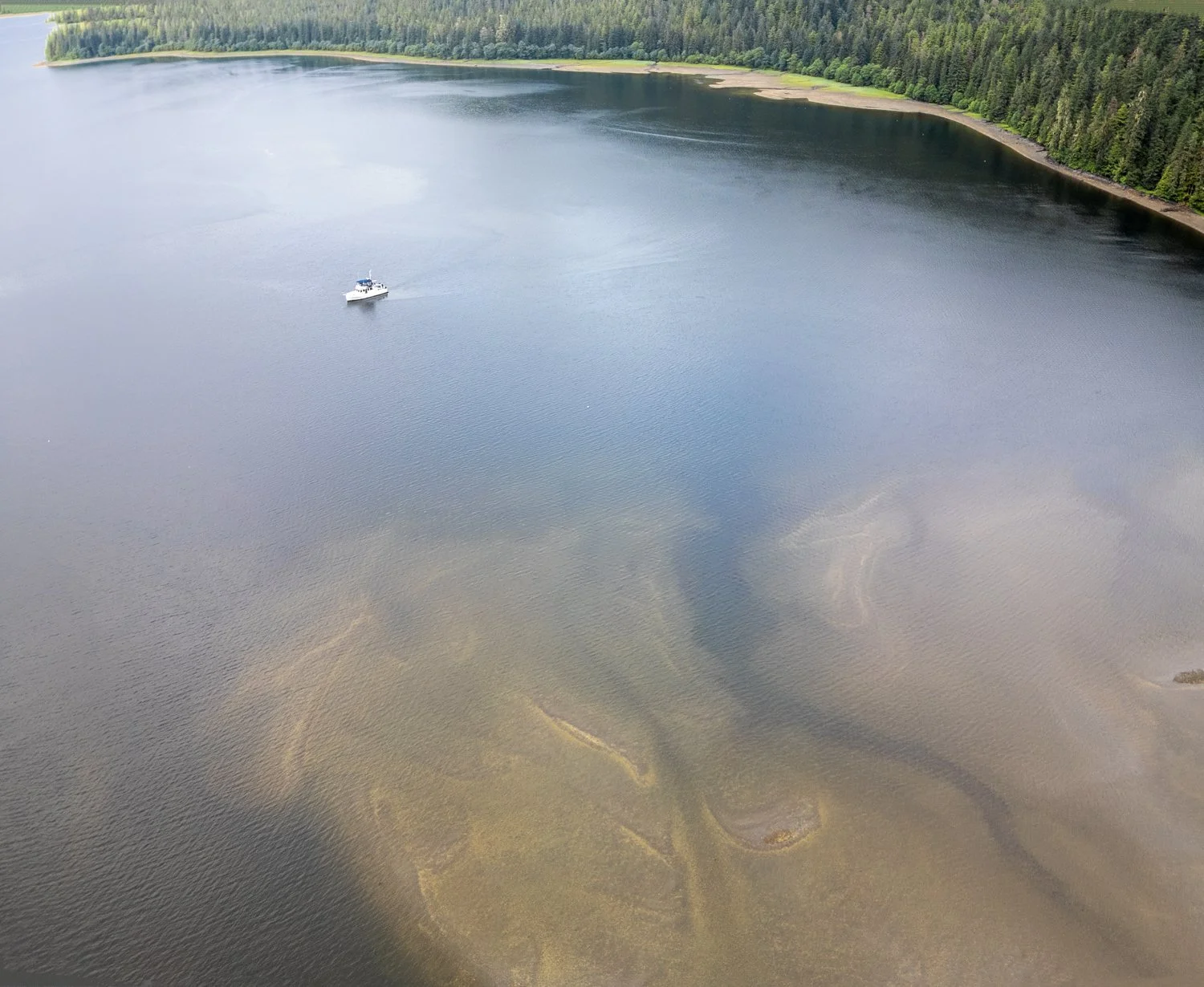
the shallow mud flats extend well into the anchorage

the aluvial fan at the head of windfall harbor

Once settled, the harbor lived up to its reputation. As the tide dropped, the bears came out—grizzlies lumbering along the shoreline, turning rocks and sniffing for snacks. Late in the day, the clouds lifted just enough to catch a glimpse of the mountains and sneak in a quick drone flight.

Alpenglow kisses the mountians in the clouds
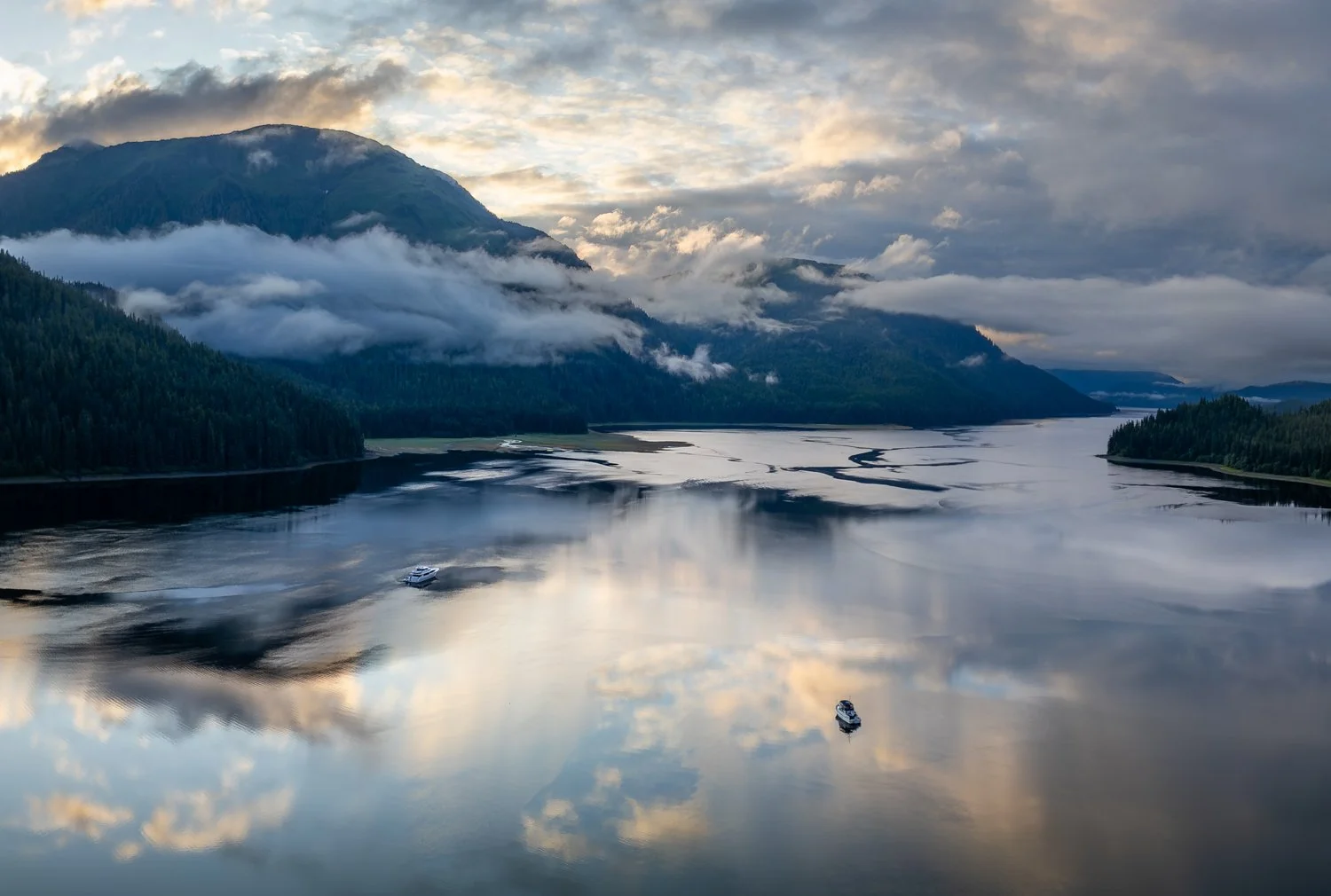
mother nature puts on a show at sunset in widfall harbor

Tomorrow we’re hoping for a dry morning to explore the creeks by dinghy. Fingers crossed.

Hobart Bay Lay Day

I woke early for no particular reason, but lucked into a five-minute break in the rain—just enough time to launch the drone and snap a few low-tide shots of the anchorage. Then the skies promptly closed back up, and the steady rain resumed.

hobart bay

good look at the surrounding mud flats

It was a day of shifting cloud layers and fleeting glimpses of the surrounding peaks—just enough to remind us what we were missing. With no letup in the weather, we declared it a “work day” and caught up on paperwork and business tasks from the dry comfort of the salon.

A lone fishing skiff made its rounds mid-afternoon, quietly checking a string of crab pots. He kept maybe half his haul—not exactly a big payday once you factor in the fuel—but he moved through the bay like a ghost, slipping away into the rain just as silently as he arrived.

Despite keeping watch, not a single critter showed itself—our first wildlife no-show in quite a while.

Even socked in, Hobart Bay is a peaceful and protected anchorage, and we can only imagine how beautiful it must be when the sun decides to return.

Honeydew Cove to Hobart Bay

Yesterday’s blue skies were just a tease—this morning brought a steady drizzle and low clouds, right on cue. With a possible weather break five days out, we decided to make some eastward progress toward Tracy Arm, Endicott Arm, and Windfall Harbor, hoping to time our visit with a patch of sunshine.

Today's destination: Hobart Bay. Friends on Empress and Escapade had recommended the North Cove, so we decided to check it out. Light winds and a favorable current made for a smooth, comfortable ride. We spotted several humpbacks along the way, including a few shoreline blows that hinted at just how many were nearby.

Approaching Hobart Bay, we were treated to a real show—a pod of Dall’s porpoise leaping and zigzagging in our bow wake for a solid 15 minutes. Karen, soaked in the rain but grinning ear to ear, had the best view from the bow.

The entrance past Entrance Island is well-charted, and the kelp helpfully marked the shoals and rocks. But the North Cove held a surprise: we steered north between two charted islets (keeping them to port), and suddenly the bottom shot up fast. We paused and drifted over just 8 feet under the keel on a +10.7' tide—clearly, the shoaling off the eastern shore extends much farther than charted.

Despite what the chart promises, you won’t find 30-foot depths in most of this cove. After sounding a 200-foot circle, we settled into 60 feet of water with decent swinging room and carefully avoided a minefield of a dozen crab pots. Alone in the anchorage, we dropped the hook and tucked in.

The scenery was subdued but still striking—low clouds shifted all afternoon, occasionally lifting just enough to reveal rugged peaks beyond the tree line. If tomorrow clears, Hobart Bay may yet show off the beauty it’s hiding behind the mist.

Honeydew Cove Lay Day

We woke to a patchwork sky—clouds dominating, but with hopeful streaks of blue breaking through. It was the perfect excuse for a slow morning filled with boat chores and a bit of remote work.

By afternoon, we had company. Karen had been tracking a boat on Marine Traffic and watched as it made a straight shot toward Honeydew Cove. Turns out, their original destination was Cannery Cove, but when they spotted a sliver of sunshine over Honeydew, they altered course on the spot—chasing that elusive bit of good weather.

neighbors arrive in honeydew cove

two to three boats can be comfortable in honeydew cove

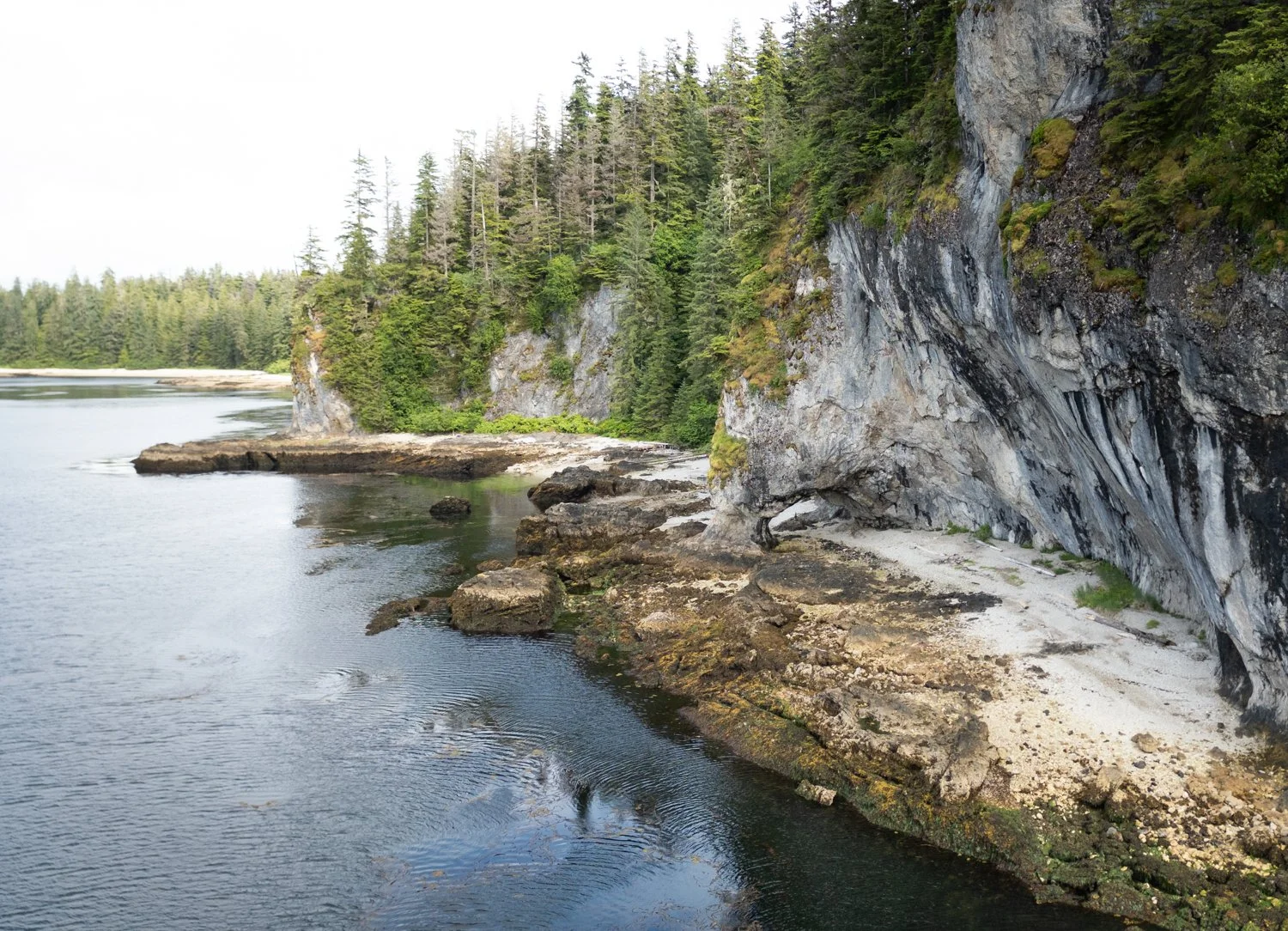
The grotto at Honeydew Cove. Picture does not show how big it is.

looking for a dinghy landing place to visit the “grotto”

We totally understood the impulse… and quietly relished our good fortune at having already enjoyed a couple of decent days here before the next round of rain rolls in.

Oceanflyer enjoying a honeydew cove sunset

Eye of the Needle to Honeydew Cove

We timed our departure from Eye of the Needle for the high tide and were sent off by a committee of wildlife: a deer, two otters, and a black bear—none too close, but all part of the charm of this critter-rich hideout.

Sitka Black tail deer watches us as we depart

You know when you’re cute

Guarding Tebenkof Bay is a large islet we call Eagle Rock, Because it is always covered in bald eagles

Tebenkof Bay reported about 10 feet of water at zero tide, and with a +8’ tide under us, the passage was smooth and drama-free.

Conditions couldn’t have been better—calm seas, light winds, and high clouds broken up just enough for the sun to peek through. We didn’t get much help from the current, but the ride was pure pleasure.

Today was all about whales. Dozens lined the east side of Chatham Strait, feeding lazily. Off Washington Bay, distant humpbacks put on a show with tail slaps, flipper flaps, and the occasional breach—too far for the camera but perfect through binoculars.

As we rounded the top of Kuiu Island past Security Bay Marine Park, we hit the jackpot: a pod of 10 to 12 humpbacks bubble feeding. We idled to watch, grateful for front-row seats to this stunning display.

Humback Whales Bubble Feeding

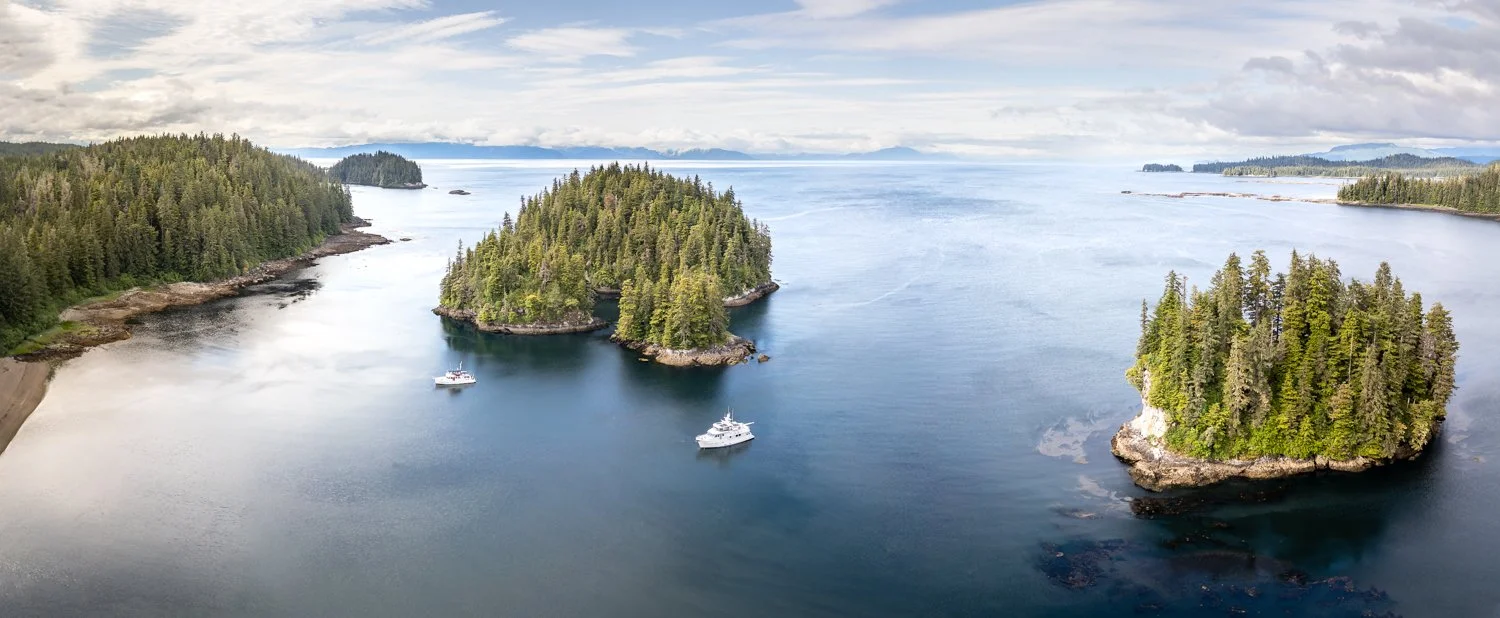
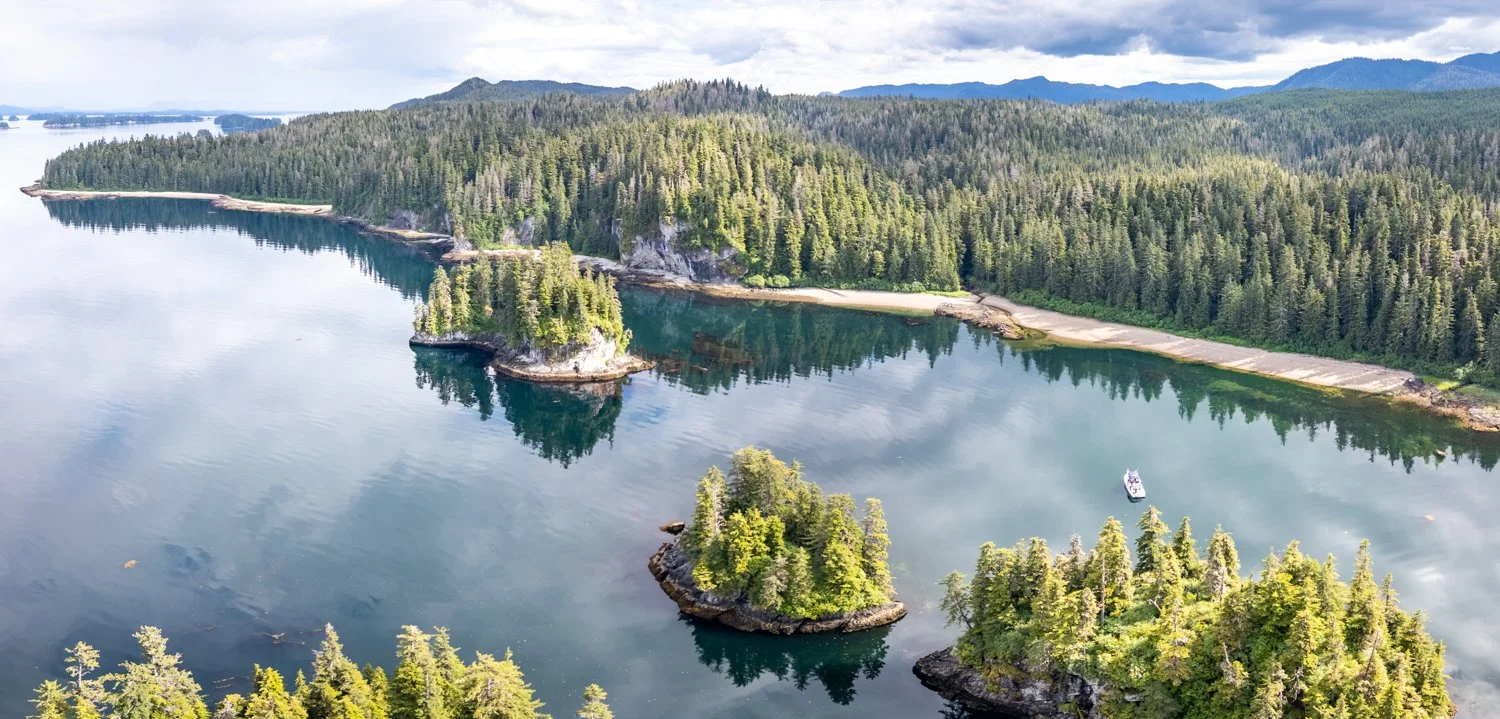
We ended the day at Honeydew Cove, a scenic nook tucked into the northeast corner of Kuiu Island, protected by small islets. With beaches, a hidden grotto, and no one else around, we dropped anchor in 24 feet and enjoyed the solitude of this peaceful hideaway.

honey dew cove

enter between the two islets

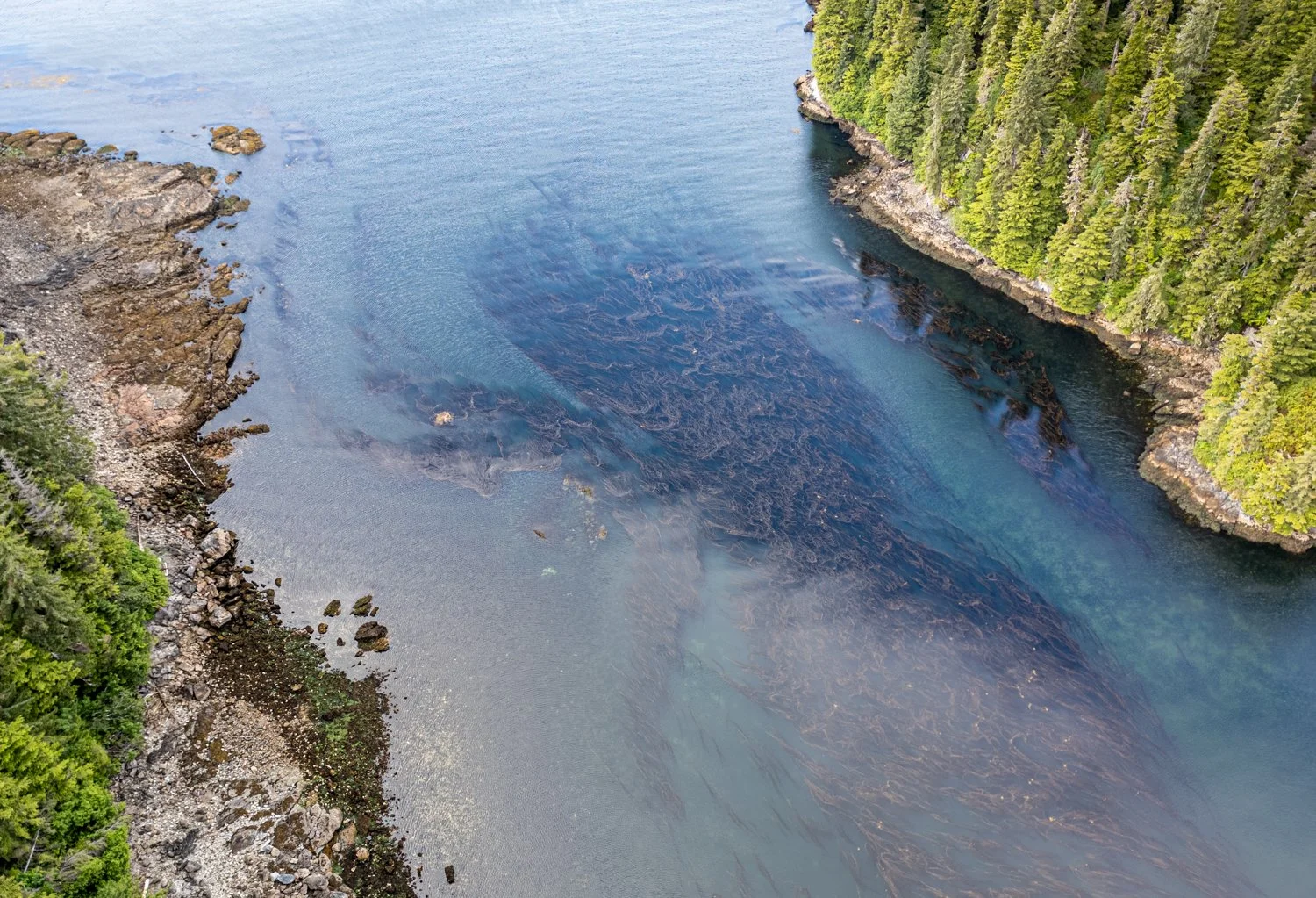
the “pass” to the northwest is full of kelp. dinghies only

here’s a good look at the kelp at low tide