
Tranquilito Cove

At the end of Tranquil Inlet behind Tofino lays the small one-boat cove known as Tranquilito. The depths on the charts list a generic 10 feet. However, it offers a secure anchorage in soft mud in about 25 feet. There is plenty of depth in the center with room to swing on at least a 3-to-1 scope. A favorite of our friends Lynn and Neal, we decided to give it a try.

As seems to be the norm in this area, these small coves have a much larger feel once inside. We have great views out to the Northwest and the drying river shoal at the head of Tranquil Inlet. Bears have been reported on this “beach”, so we’ll keep a lookout for their low water foraging. There is a dramatic slab of black granite wall on one side of the anchorage that adds to the ambiance.

Tranquilito Cove looking south down Tranquil Inlet

Our plan is to hang out in the forecast rain tomorrow and do boat chores, laundry, cooking, trip planning, blog entries and some radar troubleshooting.

Rain did come the next day as did the M/V Stornoway who unexpectedly stopped by to say hi and take a look at the anchorage.  We once had dinner their house in Port Madison on Bainbridge Island with our friends Greg and Jan from M/V Spellbound. It’s truly a small world.

Tranquilito Cove not for navigation

Holmes Inlet Nook

We lucked out today rounding Estavan Point and the Hesquiat Penninsula. Though not as intimidating as Cape Scott or the Brooks Peninsula, this is another place where winds and seas can be challenging. Once again, the Minkus weather dome held and we made the rounding in comfortable conditions. We also saw a sunfish, those are very weird-looking animals for sure.

Not being Hot Springs fans, we are always on the lookout for interesting places to anchor in and around Clayoquot Sound. Our friends on Navigator strongly recommended Holmes Inlet Nook, close to the head of Holmes Inlet off Sydney Inlet. A quick look at the chart reveals a few things. One, it’s a one way trip. The “Nook” is in a narrow offshoot of the main Holmes inlet, and there is no easy way to rejoin Holmes or Sydney inlet without retracing your steps. The second is that the turn into the inlet is more than 90 degrees, so situational awareness is critical.

HOLMES INLET COVE IS A ONE BOAT ANCHORAGE

We had following seas as we went up Sydney inlet and some winds. The seas died down as we entered the narrow offshoot, but the winds continued. As we lined up to make the turn into the entrance, the current was also working against us.  Nevertheless, we entered safely and this one-boat nook (we did not stern tie) became home for the next two days.

On the charts, it looks like this anchorage might feel totally enclosed and confined, but you could see out enough to make it interesting.

CALM AND COZY

On day 2, we headed off in the dinghy to explore. First, we went up to the head of Holmes Inlet to Pretty Girl Cove.  It was fairly attractive and a viable alternative to Holmes Nook, but the winds and fetch that day and the quickly shoaling depths would have made anchoring uncomfortable.

LOOKING OUT TO THE CHANNEL FROM INSIDE HOLMES INLET NOOK

THE VIEW FROM THE INET BACK INTO THE SMALL NOOK

We then decided to head south to Bottleneck Bay, a popular anchorage that we visited in 2012. The entry is narrow and interesting, and then it opens up to a large basin with multiple options for anchoring. We were totally shocked to find this bay empty. This has been a trend for us on this trip – we seem to be between “waves” of boaters who are heading south down the outside.

Thanks to the crew of M/V Navigator for the tip on this anchorage. We really enjoyed it.

Bligh Cove

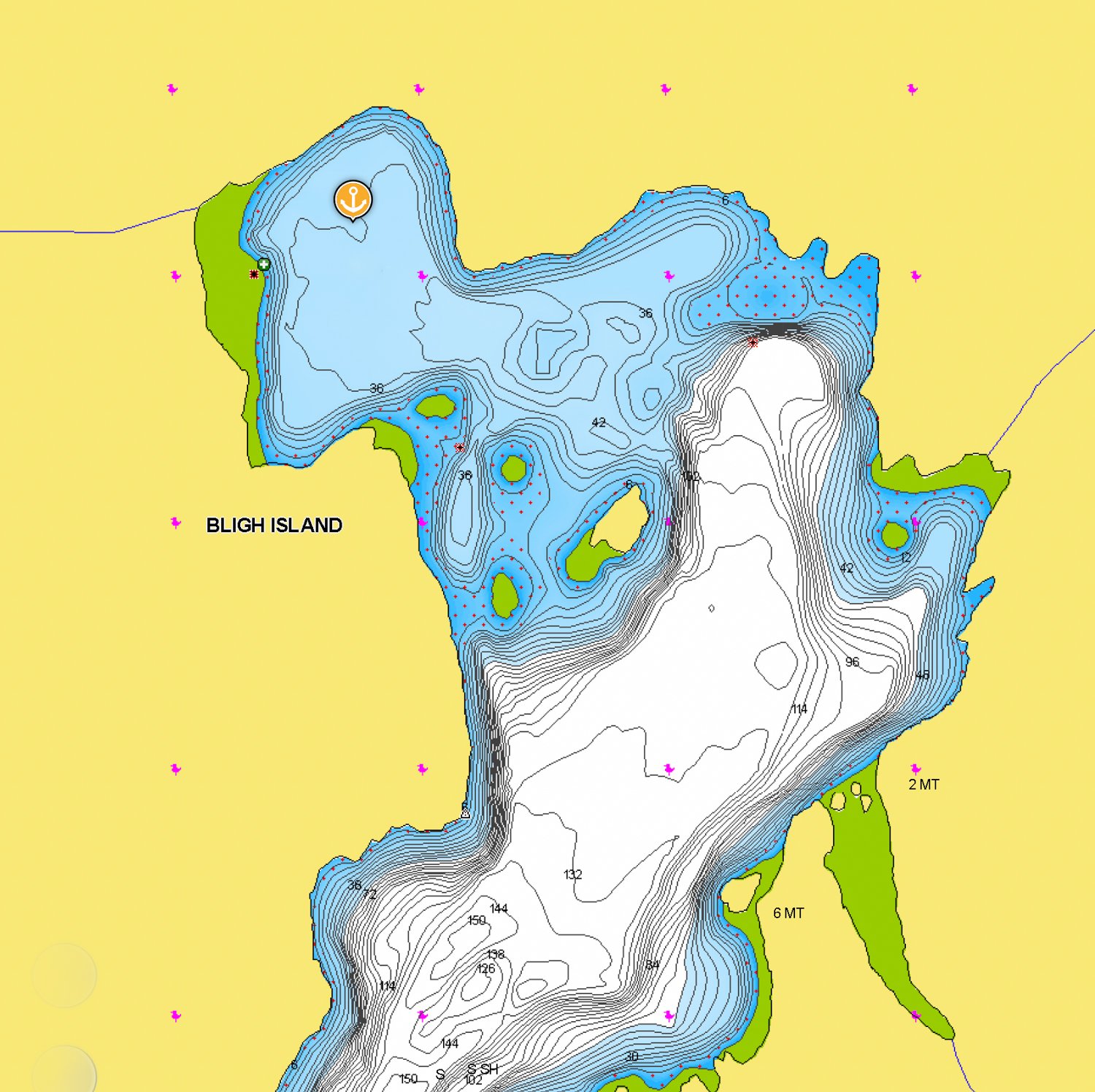
As Friendly Cove can be affected by the swell from the Pacific, we moved on to Bligh Cove in Ewin Inlet in the late afternoon. This s one of the few good anchorages near Friendly Cove. It’s very well protected with views of mountains to the SE and great holding in sticky mud. And just as at Bodega Cove, we were completely alone.

bligh cove

bligh cove not for navigation
Sunset produced a beautiful alpenglow on the distant mountains. Our night was peaceful and still.

bligh cove alpenglow


Bodega Cove

Before we headed for one of three anchorages in lower Tahsis inlet, I launched the drone to get a good look at Nuchatlitz at low tide. When you compare this video with the ones shot the previous day, the contrast is telling. Drying areas that extend right up the channel markers, back coves that are clearly only accessible at higher tides, and anchorage surrounding the main bay that shrink to one boat holes.

The day was grey and overcast. We passed a few fish farms and the old mission at Esperanza, and saw the Coast Guard “Cape Dauphin” as we exited the Tahsis narrows. The Cape Dauphin was traveling at warp speed, towing a search and rescue tender. We think they must have been doing a drill, as they’d slow way down, and then start back up again. Interesting.

And then it started to rain. Rather than pressing on to Santa Gertrudis, Karen picked Bodega Cove as our first anchorage to look at. It was reasonably attractive, not marred by logging and empty of other cruisers, so it became our home for the evening. The most interesting navigation element was the short transit of Princesa Channel.

Much is written about the “rocks” that populate this pass. They are well charted, but the visual picture is a bit confusing and there is some current. I slowed to a low cruise speed at 1000 rpm’s, which gave us plenty of rudder authority. More importantly,  it reduced the size of our turning radius. This added maneuverability and the fact that a slower speed gives you more time to assess the situation and make adjustments really helps with navigation in tight and winding spaces.

Bodega Cove is accessed through a narrow but straight channel with plenty of water and no surprises, Anchor in 30 feet in the first large opening and you’ll swing with the tide in good holding and great protection from all directions. The weather and tide cycle timing kept us from exploring the inner cove this time.

Bodega Cove

Bodega Cove Not for navigation